Key Summary
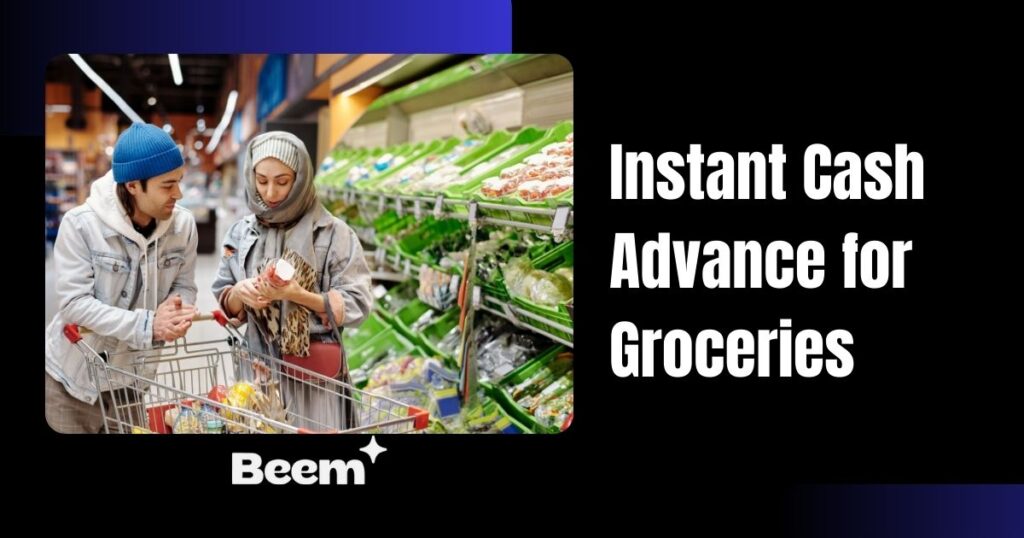
Running low on grocery money a few days before payday is one of the most common reasons people search for fast cash, and it is also one of the most stressful because food is not a bill you can postpone. Finding the Best instant cash advance for groceries can help bridge that short-term gap, giving you quick access to funds without the lengthy process of a traditional bank loan.
This guide walks through the best apps for this exact situation, how much you actually need, and how to use a grocery cash advance without creating a new problem while solving the old one.
Why People Turn to Cash Advance Apps for Groceries
Grocery shortfalls rarely come from poor planning alone. A paycheck that lands a day late, an unexpected car repair that ate into this week’s budget, or a pay period that simply has more days in it than usual can all leave a bank account short right when it is time to restock the fridge. Unlike a subscription payment or a credit card bill, groceries cannot wait for a due date, which is exactly why this has become one of the most searched use cases for instant cash advance apps.
The appeal is straightforward. Instead of overdrafting your account and paying a fee that can run $30 or more per transaction, or turning to a payday loan with steep costs attached, a cash advance app lets you access a smaller amount, often the exact size of the gap, without interest or a hard credit check.
Best Instant Cash Advance Apps for Groceries in 2026
Here is how the leading cash advance apps compare specifically for covering a short-term grocery gap, based on funding speed, minimum amounts, fees, and credit check policy.
Beem Everdraft™
Beem’s Everdraft™ feature is well-suited to grocery-sized gaps because it does not force you into a large, fixed advance amount. Eligible users can request anywhere from $5 up to $1,000, which means you can pull exactly what a grocery run costs instead of borrowing more than you need.
There is no interest, no hard credit check, and no fixed due date, since repayment is tied to your verified deposit. Beem also accepts non-W-2 income, including gig earnings and government benefits like SNAP, SSI, and unemployment, so households relying on those sources are not automatically excluded, unlike with some competing apps.
Dave
Dave’s ExtraCash feature can cover a grocery shortfall and includes budgeting tools that flag upcoming bills before they hit. It requires a monthly membership fee, and getting the money instantly usually comes with an added express fee unless you are willing to wait a few days for standard delivery, which defeats the purpose if you need to shop today.
Earnin
Earnin lets hourly and salaried workers access wages they have already earned before payday, which can work well for a grocery gap if your hours are logged consistently. There is no mandatory fee, though the app relies on optional tips, and daily borrowing caps can feel limiting if your grocery bill exceeds what the app allows in a single pull.
Brigit
Brigit combines cash advances with automated overdraft alerts, which can help you see a grocery shortfall coming before it happens. Advances are typically capped lower for newer users, and full access to the advance feature requires a paid subscription tier, adding a recurring cost even in months you do not need an advance.
MoneyLion Instacash
MoneyLion’s Instacash advance can cover smaller grocery gaps and does not require a hard credit check. Advance amounts often start small and scale up as you build a history with the app, and instant delivery usually comes with a fee, which is worth factoring in if you plan to use it regularly for food budgeting.
Empower
Empower offers cash advances alongside automated savings tools and does not run a hard credit check. It requires a monthly membership, and, like most apps in this category, instant funding costs extra compared to standard delivery.
Klover
Klover ties advance amounts to a points system earned by engaging with in-app content, which does not depend on your credit score or a hard inquiry. For a small grocery gap, this can work fine, though advance limits tend to be smaller than those of apps that rely more directly on income verification, so it may take longer to unlock an amount that covers a fuller shopping trip.
How Much Cash Advance Do You Actually Need for Groceries
One of the easiest mistakes to make with any cash advance app is requesting more than the situation calls for, simply because a larger amount is available. For a grocery gap, it helps to think in terms of what a typical trip actually costs rather than the maximum the app offers.
A single person topping off a nearly empty fridge might only need $30 to $60 to get through to payday. A family doing a fuller grocery run to cover several days might need closer to $100-$200. Requesting only what is needed, rather than defaulting to a round number or the app’s full limit, keeps the advance easy to repay and avoids eating into next week’s budget before it even arrives.
Planning Around a Recurring Grocery Gap
For some households, the grocery gap is not a one-time surprise but a predictable part of the pay cycle, especially when bills are due right around the same time as a grocery run. If that describes your situation, it is worth mapping out a simple weekly picture: what comes in, what goes out, and where the food budget tends to run thin. Seeing the pattern in writing, even a rough one, makes it easier to decide whether a small recurring cash advance is a reasonable bridge or whether a bigger adjustment, like shifting a due date or trimming a different category, would solve the problem more permanently.
A useful exercise is comparing your pay date to your typical grocery shopping days. If payday consistently falls two or three days after you usually need to restock, that gap is structural rather than accidental, and a cash advance timed specifically to bridge those few days can be a more precise fix than trying to stretch the same paycheck further each cycle. Apps like Beem Everdraft™ that allow small, flexible amounts are particularly well-suited to this kind of predictable, short timing gap, since you are not forced to request more than the few days actually require.
Also Read: Best Instant Cash Advance Apps to Get Fast Cash in 2026
Instant Cash Advance for Groceries vs Other Options
A cash advance is not the only way to cover a grocery shortfall, and it helps to know how it stacks up against the alternatives most people consider first.
An overdraft lets your debit card go through even when your balance is too low, but banks typically charge a flat fee, often $30 to $35, per transaction, regardless of whether you overdrew by five dollars or fifty. A credit card can cover groceries without an immediate cash need, but carrying a balance means paying interest, often well above 20 percent APR, on top of the original cost of the food. A payday loan can provide cash quickly, but the fees are steep relative to the amount borrowed, and the standard two-week repayment window can trigger a costly rollover if your budget is still tight when it comes due.
Compared to all three, a reputable cash advance app like Beem Everdraft™ is usually the least expensive option for this specific situation, since there is no interest, no overdraft fee, and no rollover risk, only a repayment tied to your next verified deposit.
Instant Cash Advance Apps for Single Parents and Households Stretching a Grocery Budget
When one income has to cover rent, childcare, utilities, and food all at once, a grocery gap can show up more often than most budgets can comfortably absorb. A single unexpected expense earlier in the week, like a school fee or a copay, can leave very little room for the next grocery run, even when the rest of the budget is being managed carefully.
This is one of the more practical everyday uses for a cash advance app, since it is designed for exactly this kind of short, recurring timing gap rather than a large purchase. Because Beem Everdraft™ does not charge interest or enforce a rigid due date, it can absorb this kind of occasional shortfall without adding a new bill to a budget that is often already stretched thin.
Also Read: Instant Cash Advance Now: A Smart Money Guide for Paycheck to Paycheck Living
Instant Cash Advance for Gig Workers and Irregular Paychecks Needing Grocery Money
If your income does not arrive on a predictable schedule, a grocery gap can be harder to plan around, since a slow week for deliveries or rides can directly translate into a smaller grocery budget. Traditional lenders, and even some cash advance apps, expect a steady W-2 paycheck to calculate eligibility, which leaves gig and freelance workers without a reliable option exactly when they need one most.
Because Beem evaluates real banking activity and income patterns rather than requiring a single traditional employer, gig workers, rideshare and delivery drivers, and freelancers can request a grocery-sized advance based on what their accounts actually show, rather than being excluded by a rigid income requirement.
No Credit Check Cash Advance Apps for Groceries Explained
Most reputable cash advance apps for groceries do not run a hard credit check, and that detail matters more than it might seem for something as routine as a food budget. A hard credit inquiry can temporarily lower your credit score and stay on your report for about two years, which is a disproportionate cost for something as small and short-term as a grocery advance.
Instead of pulling a credit report, apps like Beem Everdraft™ look at your recent deposits, account balance history, and spending patterns to determine what you are eligible to access. That approach reflects your current financial reality far more accurately than a credit score, which can lag behind your actual situation by months or years, and it means one tight week at the grocery store does not put your credit history at risk.
How to Use a Grocery Cash Advance Without Hurting Your Budget
A grocery cash advance works best as an occasional tool rather than a routine part of your food budget. A few habits keep it that way.
- Request only what the actual grocery gap requires, not the maximum amount the app offers.
- Track how often you are requesting advances specifically for food. If it happens in most pay periods, that is usually a sign your overall budget needs a closer look.
- Time the request close to your shopping trip rather than pulling funds early and letting them get absorbed into other spending before you reach the store.
- Pair a cash advance app with a simple grocery list or meal plan so the advance covers what you need rather than becoming a bigger trip than intended.
- Choose an app with no interest and no fixed due date, like Beem Everdraft™, so a short-term grocery gap does not turn into an ongoing cost.
Common Mistakes to Avoid
A few habits can turn a helpful grocery advance into a recurring expense instead of a one-time fix. Using an advance to cover a large stock-up trip instead of a genuine short-term gap is one common mistake, since bigger purchases are better handled through regular budgeting than through repeated small advances. Requesting an advance from multiple apps at once is another, since it can make repayment harder to track and increases the chance that more than one repayment pulls from your account around the same time your paycheck lands.
Ignoring the pattern behind repeated grocery advances is the most serious mistake to watch for. If food money runs short in almost every pay period, it usually indicates a gap between income and expenses that a cash advance cannot close on its own. In that case, pairing the advance with a closer look at your monthly budget, or exploring whether you qualify for SNAP or other food assistance programs, tends to be a more lasting solution than relying on an advance app alone.
Stretching Your Grocery Budget Alongside a Cash Advance
A cash advance closes today’s gap, but a few small habits can reduce how often that gap shows up in the first place. Shopping with a list built around what you already have at home, rather than starting from scratch every trip, tends to cut both waste and spending. Buying shelf-stable staples like rice, beans, pasta, and canned goods when they are on sale, even a little at a time, builds a buffer that makes a single tight week easier to absorb without needing an advance at all.
It is also worth checking whether you qualify for programs like SNAP, WIC, or a local food pantry, especially if grocery shortfalls are frequent rather than occasional. These programs are not a replacement for budgeting, but they can meaningfully reduce reliance on cash advances for something as essential as food, freeing up an advance app for the genuinely unpredictable weeks instead of the predictable ones.
Final Thoughts on Getting a Cash Advance for Groceries
Grocery shortfalls are among the most relatable reasons people reach for a cash advance app, and when used carefully, they are also among the safest, since the amounts involved are usually small and easy to repay.
An app like Beem Everdraft™, which offers flexible amounts starting at $5, no interest, no hard credit check, and support for gig and benefits income, is built for exactly this kind of short-term, everyday gap. Used occasionally and paired with a realistic budget, an instant cash advance can keep a tight week at the grocery store from turning into a bigger financial setback.
FAQs About Best Instant Cash Advance for Groceries
What is the fastest way to get a cash advance for groceries?
Apps like Beem Everdraft™ can fund eligible users within minutes by evaluating your banking activity and income pattern instead of requiring a credit check or a lengthy application process.
How much can I get from a cash advance app for groceries?
Amounts vary by app, but Beem Everdraft allows requests as small as $5 and up to $1,000, letting you borrow an amount that matches a typical grocery trip rather than a fixed lump sum.
Do grocery cash advance apps check your credit?
Most reputable cash advance apps, including Beem Everdraft, do not run a hard credit check. Eligibility is typically based on your banking activity and income pattern rather than your credit score.
Can I use a cash advance app if my income comes from SNAP or other benefits?
Yes, with some apps. Beem recognizes SNAP, SSI, SSDI, unemployment, and VA benefits as qualifying income for Everdraft™, while many competing apps only accept traditional W-2 direct deposits.
Is a cash advance better than overdrafting my account for groceries?
In most cases, yes. A bank overdraft typically charges a flat fee of $30 or more per transaction, while a no-interest cash advance app like Beem Everdraft™ charges nothing extra and simply repays from your next verified deposit.