
Key Summary
Sending money internationally does not always require a bank account, a wire transfer, or a remittance service. For many recipients, a digital gift card delivered by email is faster, cheaper, and more immediately useful than a cash transfer that takes days to arrive. The question is when gift cards make sense and when a direct transfer service is the better tool.
According to the World Bank, the global average cost of sending $200 internationally was 6.35% in Q1 2025, meaning the average sender paid over $12 in fees before a single dollar reached its destination. Gift cards sidestep the traditional remittance system entirely for specific use cases, delivering value instantly with no transfer fee for the sender.
This guide on how to send money across the globe covers how gift card transfers work, their real limitations, how they compare to direct transfer services, and how to choose the right method for your recipient’s situation.
Why Use Gift Cards for Global Money Transfers
Gift cards have become a practical alternative to traditional remittance in specific situations: small amounts, urgent delivery, recipients without bank accounts, and cases where the recipient needs to buy something specific rather than receive flexible cash. Understanding why they work in these situations helps clarify when they are the right choice and when they are not.
Traditional wire transfers and remittance services often take 1-5 business days to process, require both sender and recipient to have bank accounts or access to agent locations, and charge fees that reduce the amount the recipient receives. Gift cards eliminate most of these friction points for smaller, purpose-specific transfers.
1. Speed of Transfer
Speed is one of the most practical advantages of digital gift cards for international value transfers. Digital gift cards are delivered via email or mobile wallet within minutes, giving the recipient immediate access without any bank processing time or intermediary delays.
This instant delivery is valuable for urgent situations: a family member needs to buy groceries, a child needs school supplies, or a friend needs to cover an online purchase right now. For these use cases, a digital gift card delivered in minutes is more useful than a bank transfer that’s receivable in 3-5 business days.
2. No Transfer Fees in Most Cases
Many digital gift cards carry no activation or transfer fee when purchased online and sent digitally. This gives the recipient access to the full face value of the card. Traditional remittance services charge $5 to $15 per transfer on small amounts, and bank wires typically cost $25 to $50 per transaction plus a 2% to 4% exchange-rate markup, eating into the total amount available to the recipient.
The fee advantage is most visible on small transfers. A $50 gift card sent at no additional cost delivers $50 in value. A $50 wire transfer might cost $15 or more in fees and exchange-rate markup, leaving the recipient with significantly less in actual purchasing power.
3. Global Accessibility
Prepaid Visa and Mastercard gift cards are accepted at millions of locations globally, both online and in physical stores. Retailer-specific cards from major platforms like Amazon provide access to international e-commerce without requiring currency conversion for online purchases.
This accessibility is particularly useful for recipients in regions with limited banking infrastructure who still have internet access and online shopping infrastructure. A digital gift card usable on an international marketplace gives the recipient purchasing power that a cash-based transfer might take longer to provide.
4. No Bank Account Required
Sending value with a gift card does not require the recipient to have a bank account, a registered mobile wallet, or access to a physical cash pickup location. The recipient only needs an email address and the ability to use the card online.
This makes gift cards one of the few international transfer methods accessible to recipients who don’t have access to banking and neither live near a cash pickup agent. For this group, a retailer-specific card or a prepaid card redeemable online is often the most practical option available.
Also Read: Send Money Without Fees: Platform Guide
How to Send Money with Gift Cards: A Step-by-Step Guide
Sending value internationally with a gift card involves four stages: choosing the right card type, purchasing from a trusted source, delivering it securely, and confirming the recipient can redeem it. Each stage has practical considerations that affect whether the transfer works smoothly.
1. Choose the Right Type of Gift Card
The card type determines how the recipient can use the value. Prepaid Visa and Mastercard gift cards offer the most flexibility, accepted globally for online purchases, in-store purchases, and in some cases ATM withdrawals depending on the card’s terms and the recipient’s country. These are the best choice when the recipient needs maximum spending flexibility.
Retailer-specific cards are better when the recipient regularly shops on that platform and lives in a region where that retailer operates. Digital platform cards such as Apple iTunes or Google Play work well for recipients who primarily spend on digital content.
Always confirm the card is usable in the recipient’s country before purchasing. Some cards are region-locked and cannot be redeemed in certain markets, even if the retailer operates there globally.
2. Purchase the Gift Card
Buy from a verified retailer, the official brand website, or a well-known gift card marketplace. Avoid purchasing from secondary markets or individual sellers, where counterfeit or already-redeemed cards are a significant risk. Most major platforms offer digital delivery at checkout, eliminating physical shipping.
Check the terms for any activation fees, monthly inactivity fees, and expiration policies before purchasing. A card with an inactivity fee after 12 months is less useful for a recipient who may not spend the full balance immediately.
3. Send the Gift Card Securely
Send digital gift cards directly from the retailer’s platform to the recipient’s email address. Most platforms have a built-in gift delivery option that sends the card code directly to the recipient. Avoid forwarding card codes through insecure channels where the code might be intercepted.
For physical cards, use tracked shipping with insurance. Physical cards sent without tracking are unrecoverable if lost. For most international use cases, digital delivery is faster, more reliable, and safer.
4. Confirm the Recipient Can Redeem
Before purchasing, confirm with the recipient that they can use the specific card in their country at the retailers or platforms they actually shop at. Many gift card issues arise not from delivery problems but from the recipient being unable to redeem a card that is not accepted where they live.
For Visa or Mastercard prepaid cards specifically, confirm the card supports international online transactions in the recipient’s currency, since some prepaid cards are limited to US merchants or USD transactions only.
The Benefits of Sending Money with Gift Cards Internationally
Gift cards for international transfers offer four core advantages over traditional remittance: instant delivery, global spending access, no bank intermediary, and privacy for both sender and recipient.
1. Instant Access for the Recipient
Digital gift cards are available to use within minutes of being sent. There is no bank processing time, no currency exchange queue, and no wait for an agent. For time-sensitive needs, this immediacy is difficult to match through any bank-based transfer method.
2. Global Spending Flexibility
Prepaid Visa and Mastercard cards provide purchasing power at any location that accepts these networks, covering the vast majority of online merchants globally. Retailer-specific cards concentrate that value on one platform but at full face value with no conversion loss.
3. No Intermediary Required
Gift card transfers bypass banks, remittance companies, and exchange networks entirely. There is no correspondent bank taking a fee in the middle of the transaction and no account verification requirement on the recipient’s end. The value goes directly from the sender’s purchase to the recipient’s email.
4. Privacy and Security
Gift cards do not require the sender to share banking details with the recipient or vice versa. The sender purchases the card with their own payment method and sends only the card code to the recipient. This limits the exposure of financial information on both sides and reduces the risk of fraud compared to wire transfers that require full account details.
Check this out: Send Money for Free to Anyone on any App
Common Challenges and How to Overcome Them
Gift card transfers have real limitations that matter in practice. Understanding them before sending prevents the most common problems.
1. Limited Redemption Options
Region-locked cards are the most common problem. A US-only gift card cannot be used on the international version of the same retailer’s marketplace. Always verify the card’s geographic restrictions before purchasing. When in doubt, choose a Visa or Mastercard prepaid card with documented international acceptance.
2. Fraud Risks
Gift card scams are widespread. Scammers sometimes request gift cards as payment for fake emergencies or impersonation schemes. On the purchasing side, cards from unofficial sellers may already be redeemed or counterfeit. Buy only from verified official sources and never send gift cards in response to an unsolicited request, regardless of how urgent it appears.
3. Exchange Rate and Value Limitations
Gift cards denominated in one currency deliver that currency’s value. A USD-denominated gift card used by a recipient in a country with a different currency will be subject to whatever conversion the merchant or platform applies, which may not be favorable. For larger transfers where currency conversion matters significantly, a direct transfer service with a transparent exchange rate is a better option.
How to Protect Yourself and Your Recipient from Gift Card Scams
While gift cards are a convenient way to send value, their ease of use makes them a common target for fraud. Keeping your funds safe requires proactive awareness.
- The “Golden Rule”: Legitimate businesses, government agencies, and employers will never ask for payment via gift card codes. If someone claims to be from such an organization and requests a gift card, it is a scam.
- Recognize Urgent Tactics: Scammers often create artificial urgency, such as claiming you must pay a fine immediately to avoid legal trouble or a fee to release a package. Any transaction involving high pressure and gift cards is a massive red flag.
- The “No-Recall” Reality: Treat gift card codes like cash. Once a digital gift card code is sent and redeemed, it is virtually impossible to recover the funds. There is no “undo” button for a redeemed code.
- Safe Purchasing Habits: Only buy from official, reputable sources, such as the brand’s own website or major, authorized retailers. Avoid third-party discount sites, as these are common vectors for selling compromised or invalid codes.
- Secure Delivery: Use the retailer’s official “e-gift” delivery system to send the code directly to the recipient’s email. Avoid copying and pasting code strings into messaging apps, where they can be intercepted.
Troubleshooting Your Gift Card Transfers
If you or your recipient run into issues with a gift card transfer, these steps can help resolve common problems:
- The ‘Invalid’ or ‘Expired’ Error: If a code shows as invalid immediately, double-check that you are entering it on the correct regional version of the retailer’s site (e.g., the US site vs. the UK site). If it persists, contact the retailer’s customer support immediately with your proof of purchase.
- Card Won’t Redeem: Check if the card is region-locked. Some cards are restricted to the country where they were purchased. Verify the terms on the card packaging or digital receipt.
- System Glitches: If you receive an error message during redemption, try clearing your browser cache, using a private/incognito window, or ensuring the device’s location settings match the region of the card.
- Managing ‘Bad’ Cards: If you suspect you have purchased a compromised or ‘bad’ card from a third party, do not attempt to resell it. Instead, document the purchase details and contact the official retailer support directly. While not guaranteed, they are your best point of contact for resolving issues with the card balance.
Gift Cards vs Direct Transfer Services: A Practical Comparison
The right method depends on the amount, the recipient’s situation, and what they need to do with the money.
| Method | Speed | Typical Fee | Exchange Rate | Bank Account Needed | Best For |
| Beem gift card | Minutes | None (sender) | Fixed in USD | No | Instant small transfers, specific purchases |
| Wise bank transfer | 1 to 2 days | 0.5% to 1.5% | Mid-market rate | Yes | Larger amounts, best exchange rate |
| Remitly Express | Minutes | Varies by corridor | Disclosed at checkout | Yes (recipient) | Cash pickup or bank deposit |
| Bank wire | 3 to 5 days | $25 to $50 | 2 to 4% markup | Yes (both) | Large formal transfers |
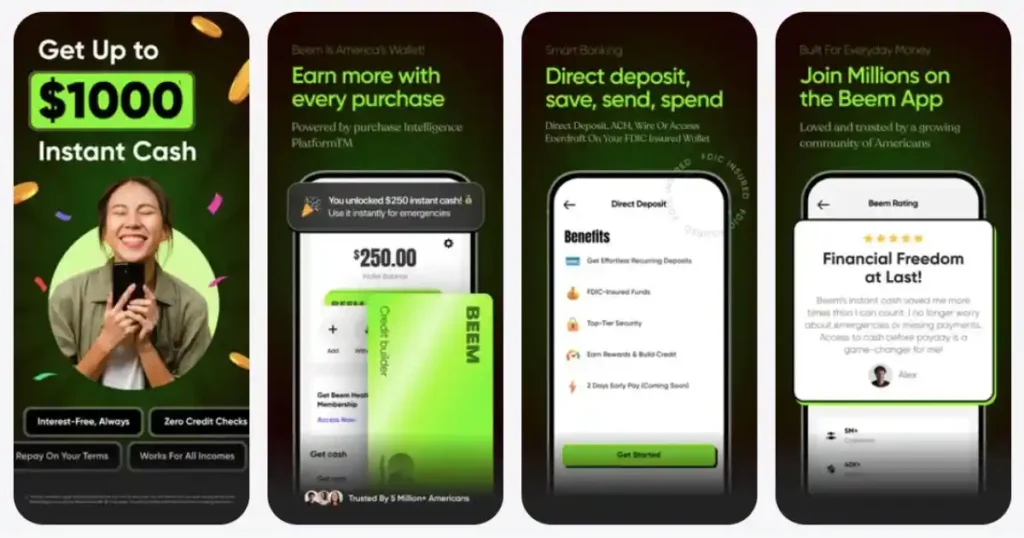
Beem‘s gift card feature delivers value digitally to any email address with no transfer fee, making it practical for small, urgent, purpose-specific transfers. For larger amounts where the recipient needs flexible cash or the best possible exchange rate, Wise is consistently the most cost-transparent option, using the mid-market rate with fees of 0.5% to 1.5%. Remitly serves corridors where bank deposit or cash pickup is the right delivery method, with Express delivery available in minutes for major destinations.
FAQs on Send Money Across the Globe
Can I really send money internationally using gift cards with no fees?
Yes, for the sender in many cases. Most digital gift cards carry no activation or delivery fee when purchased and sent online. However, some prepaid Visa and Mastercard cards include activation fees or inactivity fees. Always check the card’s specific terms before purchasing to confirm there are no hidden costs that reduce the recipient’s usable value.
Are gift cards safe to send internationally?
Yes, when purchased from official sources and sent directly through the retailer’s platform. The main risks are buying from unofficial secondary markets where cards may be counterfeit or already redeemed. Always buy from the official brand website or a verified major retailer and use the platform’s built-in gift delivery feature rather than forwarding card codes manually.
What if the recipient cannot redeem the gift card?
The most common reason is that the card is region-locked and not valid in the recipient’s country. Confirm the card’s geographic availability before purchasing. If a card genuinely cannot be redeemed due to a platform error, contact the card issuer with the purchase receipt. Some issuers will replace or refund unredeemable cards purchased from an authorized retailer.
Are gift cards a good option for larger international transfers?
Gift cards work best for amounts under a few hundred dollars where spending restrictions are not a problem. For larger amounts, direct transfer services like Wise or Remitly offer better exchange rates, higher limits, and full cash flexibility for the recipient. Multiple gift cards can technically cover larger amounts, but the denomination limits and spending restrictions make direct transfer more practical above $300 to $500.
What is the cheapest way to send money internationally in 2026?
The cheapest method depends on the destination, amount, and delivery type. For bank-to-bank transfers in major corridors, Wise and Remitly consistently offer the lowest total cost. Always compare the exact amount the recipient receives across at least two services before confirming, since exchange rate margins often cost more than the stated fee.
How do I send money to someone internationally without a bank account?
Options include gift cards sent by email, cash pickup through Western Union or MoneyGram at agent locations, and mobile wallet transfers where services like M-Pesa or GCash are available. The right option depends on where the recipient is located and what they can access. Gift cards work well when the recipient has internet access and a device to make online purchases.
What is the difference between a prepaid Visa gift card and a Visa debit card?
A prepaid Visa gift card is loaded with a fixed amount at purchase and cannot be reloaded. A Visa debit card is linked to a bank account and draws from it continuously. Prepaid gift cards do not require a bank account but are limited to the initial loaded amount. A debit card provides ongoing access to whatever funds are in the linked account.
Gift Cards vs Direct Transfer: What Works for Your Recipient
Gift cards and direct transfer services solve the same problem from different angles. Gift cards are ideal when the recipient needs value immediately, does not have a bank account, and has a specific purchase in mind. Direct transfer services are better when the recipient needs cash flexibility, the amount is larger, or the best exchange rate matters.
For small, urgent, purpose-specific international value delivery with no transfer fee, Beem’s gift card feature delivers digitally to any email address in minutes. For larger amounts where flexible cash and exchange-rate efficiency matter, services like Wise and Remitly are the more practical tools. The right choice depends entirely on what the recipient can actually use and where they are located.
Knowing When to Pivot: From Gift Cards to Formal Remittances
While gift cards provide unmatched speed for urgent, smaller needs, they are not intended to be a permanent solution for all your international transfer requirements. As your recipient’s needs evolve, or if you find yourself sending funds more frequently, you will eventually need to pivot to more robust, formal remittance services.
A reliable rule of thumb is to transition to dedicated transfer services like Wise or Remitly once your monthly transfer volume exceeds $300 to $500. Beyond this threshold, the hidden costs of gift card secondary markets, potential currency conversion losses, and the risk of regional locking begin to outweigh the convenience of instant delivery.
Think of gift cards as your ’emergency response’ tool for immediate, specific needs, and formal transfer services as your ‘reliable foundation’ for general financial support. By separating your urgent, purpose-specific transfers from your recurring, general-purpose support, you maintain better control over your total transfer costs and ensure your recipient has the flexible cash they actually need.