

Key Summary
Choosing an international money transfer service is not just about finding the lowest fee. The exchange rate markup, delivery speed, payout method, and whether your recipient even needs a bank account all affect which service is actually right for your situation.
According to the World Bank, the global average cost of sending $200 internationally was 6.35% in Q1 2025, meaning the average sender paid over $12 just to move $200 across a border. That number varies enormously by method and corridor. A bank wire can cost $35 upfront, plus a poor exchange rate. A digital platform like Wise or Remitly might move the same amount for under $3 with a transparent rate. This guide on Different International Money Transfer covers every major transfer method, its real costs, and when each one is worth using.
What is the best way to transfer money internationally?
The best international money transfer method depends on your priorities: online platforms (like Wise or OFX) offer the lowest total fees and closest mid-market exchange rates for bank transfers, while Money Transfer Operators (like Western Union) are best for instant cash pickups. Traditional bank wires remain ideal solely for secure, large-scale corporate transfers over $10,000. To understand which method is best for you, consider the following factors:
1. How Do Traditional Bank Wire Transfers Work and When Should You Use Them?
Bank wires are the oldest and most established method for international money transfers. Most people default to them simply because their bank offers the service, not because it is the most cost-effective option.
Bank wires use the SWIFT network, which connects banks in nearly every country. This makes them broadly accessible and reliable for formal, traceable transfers. Businesses often use them for supplier payments and large-value transactions where documentation and traceability matter.
Pros:
- Highly secure and traceable through SWIFT reference numbers
- Accepted in virtually every country with a banking system
- Suitable for large or formal payments requiring documented records
- Backed by your existing bank relationship for dispute resolution
Cons:
- High upfront fees: US banks typically charge $25 to $50 per outgoing wire
- Intermediary banks along the SWIFT chain can deduct additional fees, reducing what the recipient receives
- Exchange rates offered by banks are typically 2% to 4% worse than the mid-market rate
- Processing takes 3 to 5 business days in most corridors
- The total cost is rarely disclosed upfront before you confirm the transfer
Bank wires make practical sense for large transfers of $10,000 or more, where the per-transaction fee is small relative to the total amount or where corporate documentation is required.
2. How Do Platforms Like Wise, Remitly, OFX, and Revolut work?
Online transfer platforms have taken significant market share from banks by offering faster delivery, lower fees, and transparent exchange rates. They operate through apps and websites with minimal paperwork.
Wise uses the mid-market exchange rate with a transparent fee of 0.5% to 1.5%, depending on the currency pair and transfer method. Transfers to major corridors typically arrive within 1 to 2 business days. Remitly offers two delivery tiers: Economy (lower fee, 3 to 5 business days) and Express (higher fee, often minutes for major corridors). OFX charges no transfer fees and applies a rate margin of 0.4% to 1.5%, making it most cost-effective for larger amounts above $1,000. Revolut offers real-time currency exchange within the app with no markup on weekday transfers up to plan limits.
Pros:
- Transparent fee disclosure before you confirm
- Exchange rates significantly better than bank rates
- Fast delivery: 1 to 2 days for most corridors, minutes for some
- User-friendly apps with tracking and notifications
- OFX charges no transfer fees on international wires
Cons:
- Not available in every country or currency
- Transfer limits tied to identity verification level
- Express delivery options carry higher fees
- Some platforms are not ideal for very large corporate transfers requiring formal documentation
For everyday international transfers to family, friends, or freelancers in supported countries, these platforms are consistently cheaper than bank wires.
3. How Can You Send Cash Internationally via Western Union and MoneyGram?
Money transfer operators have the broadest physical reach of any method, with agent networks covering tens of thousands of locations in countries with limited banking infrastructure.
Western Union operates in over 200 countries with more than 500,000 agent locations worldwide. MoneyGram covers over 200 countries through a mix of physical agents and digital channels. Both support cash pickup, meaning the recipient does not need a bank account to collect funds. For many rural or underbanked recipients in Africa, Latin America, and South Asia, this is the only practical way to receive international money.
Pros:
- Cash pickup available with no bank account required
- Transfers are often completed in minutes
- Available in countries and regions where digital platforms do not operate
- Established brand reputation with consistent service availability
Cons:
- Fees are higher than on online platforms, especially for smaller amounts
- Exchange rate markups are less transparent than Wise or OFX
- In-person transactions require a government-issued ID and can involve queuing
- Per-transfer cost for a $200 transfer is typically $8 to $15, depending on the corridor and payment method
For emergency transfers to recipients in areas without strong banking access, Western Union and MoneyGram remain relevant. For regular or larger transfers, the cost becomes significant compared to digital alternatives.
4. Is Cryptocurrency a Safe and Cost-Effective Way to Move Money Cross-Border?
Cryptocurrencies provide a borderless, bank-independent way to transfer value. They are increasingly used for cross-border payments, particularly between regions with unstable currencies or highly restricted financial systems.
Stablecoins like USDT and USDC address the volatility problem of traditional cryptocurrencies by pegging their value to the US dollar. Blockchain fees for stablecoin transfers are typically under $1 on networks like Tron or Polygon. The main barrier is that both sender and recipient need digital wallets and a basic understanding of how to manage cryptocurrency addresses.
Pros:
- Minimal transfer fees, often under $1 on low-cost networks
- Transfers are complete within minutes regardless of destination
- No bank account required on either end
- Useful in countries with restricted financial systems or hyperinflation
Cons:
- Significant technology barrier: both parties need wallets and crypto knowledge
- Many cryptocurrencies are volatile, adding risk unless stablecoins are used
- Cryptocurrency is not legally recognized in many countries
- Converting crypto to local fiat currency requires a local exchange, which adds cost and complexity
Cryptocurrency transfers make sense for tech-savvy users with established wallet infrastructure on both sides. They are not suitable for recipients unfamiliar with digital assets.
5. Can I Use P2P Apps Like PayPal and Cash App for International Payments?
Peer-to-peer payment apps were designed for domestic transfers between friends and family but have expanded into limited international use for select corridors.
PayPal supports international transfers in many countries but charges currency conversion fees of 3% to 4% above the mid-market rate on cross-border transactions, which makes it significantly more expensive than dedicated transfer platforms for the same amount. Cash App’s international functionality is limited to transfers between the US and the UK only as of 2026.
Pros:
- Transfers are instant or same-day for supported corridors
- Simple interface familiar to most users
- Useful for small informal payments between trusted contacts
Cons:
- International transfer fees and exchange rate markups are high
- Geographic coverage is limited compared to Western Union or Wise
- New accounts are often subject to transaction holds or verification delays
- Not suitable for large or formal transfers
P2P apps work for small, informal payments to contacts in supported countries, but for regular international transfers, the costs make dedicated platforms a significantly better option.
6. What Is Beem Send Money and How Does It Handle Domestic US Transfers?
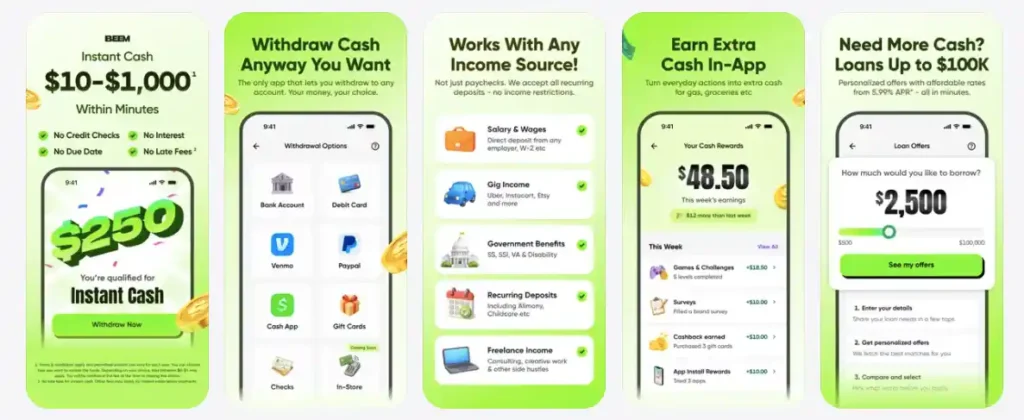
Beem‘s send money feature handles domestic US transfers with no fees and no delay. You send to any US bank account using only the recipient’s email, phone number, or Beem handle. No routing numbers, no bank account numbers, no waiting. The recipient receives the full amount with nothing deducted.
Beem’s Send Money is a domestic product, not an international wire service. It does not process transfers to foreign bank accounts. For US users who need to send money domestically to family or friends while also managing international remittances through a separate platform, Beem covers the domestic side at zero cost.
Pros:
- Zero transfer fees for domestic US transfers
- Instant delivery to any US bank account
- No bank account number required from the recipient
- The recipient does not need an existing Beem account to receive funds
Cons:
- Domestic US only, no international transfer capability
- Not suitable for cash pickup or foreign currency delivery
7. Prepaid Gift Cards and Digital Vouchers
Digital gift cards provide an instant, fee-free way to send value for specific purchases when the recipient does not need cash directly.
Cards from major retailers, including Amazon, Walmart, and Visa Prepaid, can be sent digitally via email or text and used immediately for purchases. No bank account is required. The main limitation is that the value is restricted to specific retailers or categories and cannot be converted to cash in most cases.
Pros:
- Instant delivery with no transfer fee
- No bank account required on either end
- Useful for targeted gifts like groceries, school supplies, or online shopping
- Simple to purchase and send through the retailer’s website directly
Cons:
- Value restricted to designated retailers or purchase categories
- Cannot be converted to cash or used for bills, rent, or medical expenses
- Not practical for general financial transfers or regular remittances
- Card validity periods and inactivity fees vary by card type and region
Gift cards are practical for specific gift use cases, but are not a substitute for a full money transfer service.
Read: Why People Use Money Transfer Apps
Comparison Table: International Money Transfer Services
| Method | Speed | Typical Fee | Exchange Rate | Bank Account Needed | Best For |
| Bank wire transfer | 3 to 5 days | $25 to $50 | Poor (2 to 4% markup) | Yes | Large formal payments |
| Wise / Remitly | 1 to 2 days (or minutes) | 0.5% to 2% | Mid-market rate | Yes | Everyday international transfers |
| OFX | 1 to 2 days | No fee (rate margin) | Competitive | Yes | Large transfers |
| Revolut | Minutes to 1 day | Low (plan-dependent) | Near mid-market | Yes | Multi-currency users |
| Western Union | Minutes | $8 to $15 per $200 | Marked up | No | Cash pickup, rural recipients |
| MoneyGram | Minutes | $8 to $12 per $200 | Marked up | No | Cash pickup, broad agent network |
| Crypto (USDT) | Minutes | Under $1 | N/A | No | Tech-savvy users |
| PayPal | Instant to 1 day | 3 to 4% rate markup | Poor | Optional | Small informal payments |
| Beem send money | Instant | None | N/A | Yes (US sender) | Domestic US transfers only |
| Gift cards | Instant | None | N/A | No | Specific retail gifts |
How to Choose the Right Service
The right international transfer service depends on four variables that matter more than any brand name: total amount received by the recipient, delivery speed, whether your recipient has a bank account, and whether they are in a supported corridor for your chosen platform.
For most everyday remittances to family in India, Mexico, the Philippines, or other major corridors, Wise and Remitly offer the best combination of low total cost and flexible delivery options. For recipients who need cash pickup without a bank account, Western Union and MoneyGram provide the broadest coverage. For large formal transfers, bank wires remain the standard. For targeted gifts or emergency grocery support, digital gift cards work instantly with no fees.
Always calculate the total received amount, not just the stated fee. An exchange rate markup of 2% on a $500 transfer costs $10 before you even count the transfer fee. Comparing the total received amount across two or three platforms before confirming takes two minutes and can save you $5 to $20 per transfer.
FAQs: Different International Money Transfer
What is the cheapest way to send money internationally?
The total cost depends on the corridor, amount, and delivery method. Wise and OFX consistently offer some of the lowest total costs for major corridors, combining transparent fees with near mid-market exchange rates. Always compare the exact received amount rather than just the stated fee, since exchange rate markups can cost more than the visible transfer fee.
How fast can I send money internationally?
Online platforms like Wise and Remitly deliver within 1 to 2 business days for major corridors, with express options arriving in minutes for some routes. Western Union and MoneyGram cash pickup is often available in minutes. Bank wire transfers typically take 3 to 5 business days. Speed depends on the destination country, payment method, and delivery option you choose.
Can I send money internationally without a bank account?
Yes. Western Union and MoneyGram allow cash-funded transfers at agent locations. The recipient can also collect it as cash at an agent location without needing a bank account. Cryptocurrency is another option that requires no bank account on either end but does require a digital wallet setup. Digital gift cards also require no bank account and are delivered instantly.
Are online money transfer platforms safe?
Reputable platforms, including Wise, Remitly, OFX, Western Union, and MoneyGram, are all licensed money transmitters regulated by financial authorities in the countries where they operate. They use bank-level encryption for data and transactions. Always use official apps or websites directly and enable two-factor authentication. Avoid transfer requests received through email or social media from contacts you cannot independently verify.
How do I track an international money transfer after sending?
Most services provide a transaction reference number at confirmation. Use this number in the platform’s tracking tool to see the current status of your transfer. For bank wires, the SWIFT reference number allows both sending and receiving banks to locate the transaction. If a transfer is delayed beyond the stated delivery window, contact the service directly with your reference number.
What happens if I send money to the wrong bank account internationally?
Contact the transfer service immediately with your transaction reference. For online platforms, support teams can attempt to recall the payment before it clears. For bank wires, the SWIFT recall process can take days and is not guaranteed. Speed matters: the faster you report the error, the higher the chance of recovery. Never assume the error will resolve itself.
Do I need to pay tax on money received from an international transfer?
Tax rules vary by country and amount. In the US, receiving a gift from a foreign person above $100,000 in a year must be reported to the IRS on Form 3520, though it is not necessarily taxed. For business income received internationally, standard income tax rules apply. Consult a tax professional if you receive large or frequent international transfers.
Picking the Right Service for Your Transfer
No single international money transfer service is the cheapest, fastest, and most accessible for every situation. The right choice depends on where you are sending, how much, and how your recipient needs to receive it.
For low-cost bank-to-bank transfers in major corridors, Wise and OFX are consistently strong. For cash pickup without a bank account, Western Union and MoneyGram have the widest reach. For domestic US transfers at zero cost, Beem’s send money feature handles that with no transfer fees and instant delivery to any US bank account. Download Beem and use the send money feature today for fee-free domestic transfers while you manage your international transfers through the right platform for each destination.