

Key Summary
Paycheck management is one of the most important financial skills you can develop, yet it is rarely taught in school, rarely discussed openly, and almost never explained in plain language that actually helps people make better decisions. For millions of Americans living paycheck to paycheck, the problem is not always how much they earn. It is how effectively they manage what arrives in their account every two weeks or every month.
This guide covers paycheck management 101 from the ground up. Whether you are just starting your first job, navigating a career change, managing a variable income, or simply trying to stop running out of money before the next pay date, these strategies and tools will help you take real control of your finances starting today.
What Is Paycheck Management and Why It Matters
Paycheck management is the practice of intentionally allocating your income across your expenses, savings, and financial goals before money is spent on impulse or absorbed by unnecessary costs. It is the difference between ending the month with a small buffer and ending it with an overdraft notice.
Good paycheck management does not require a high income. It requires clarity about what is coming in, what must go out, and what is left over after your core obligations are met. Without that clarity, even a healthy income can disappear before the next pay date, leaving you scrambling to cover basics and relying on short-term fixes instead of building any kind of financial stability.
The importance of paycheck management extends beyond personal comfort. Poor cash flow management creates stress, affects health, strains relationships, and makes long-term goals like homeownership, education, or retirement savings feel permanently out of reach. Getting the fundamentals right does not just improve your monthly budget. It changes your overall financial trajectory.
The Paycheck Management Challenge Most People Face
The most common paycheck management failure is not overspending on luxuries. It is underestimating the combined weight of small, recurring expenses and failing to account for irregular costs that appear throughout the year.
Monthly subscriptions, quarterly insurance premiums, annual memberships, car maintenance, and seasonal utility spikes all qualify as predictable but easily forgotten expenses. When they arrive without a plan in place, they are covered by funds that were earmarked for something else, which creates a chain reaction that often does not resolve until the following paycheck. Understanding and planning for these irregular expenses is one of the most practical first steps in effective paycheck management.
Build a Paycheck Budget Before You Spend
The first and most critical step in paycheck management 101 is building a budget that is structured around your actual pay schedule rather than a generic monthly framework. Most budgeting advice assumes monthly income, but most people are paid biweekly or semi-monthly, which means income arrives at a different rhythm than many bills are due.
A paycheck-based budget maps every dollar you receive to a specific purpose before it hits your checking account. This is sometimes called zero-based budgeting, and it is one of the most effective frameworks for people who want to stop wondering where their money went and start directing it intentionally.
How to Build a Paycheck Budget That Works
Start by listing your net take-home pay for each pay period, not your gross salary. The number that matters is what actually lands in your account after taxes, benefits, and other deductions are removed.
Next, list every expense that is due within or shortly after that pay period. Separate fixed expenses like rent, car payment, and insurance from variable ones like groceries, gas, and dining. Fixed expenses are the easiest to plan because they do not change. Variable expenses require estimation based on recent spending history.
Subtract your fixed and variable expenses from your take-home pay. What remains is your discretionary income, which should be intentionally directed toward savings, debt repayment, or a short-term buffer fund rather than spent without a plan.
Read: Paycheck Management for Gig Workers: How to Build a Stable Income System
Prioritize Expenses the Right Way
Not all expenses are equal, and effective paycheck management requires a clear priority order that protects the most important obligations first. Getting this hierarchy wrong is how minor cash flow issues turn into serious financial problems.
Housing and utilities come first. Losing stable housing creates costs and consequences that are far more expensive than any other financial problem. Rent or mortgage, electricity, water, heat, and internet for remote work should always be the first expenses funded from each paycheck.
Food and transportation come second. Without consistent access to groceries and the ability to get to work, nothing else in your financial plan can function. These are survival-level expenses that come before any discretionary spending.
Minimum debt payments come third. Keeping accounts current protects your credit standing and prevents late fees that compound the original cost of the debt. Once these three tiers are funded, you have room to address savings goals, discretionary spending, and longer-term financial priorities.
Build a Short-Term Buffer Fund First
Before building a full emergency fund, focus first on a short-term buffer of $200 to $500 kept in a separate account that covers the small, unexpected expenses that derail most budgets. Car repairs, medical co-pays, school supplies, and similar costs are not truly unexpected if you account for them in advance. Having a small buffer dedicated specifically to these expenses means they do not disrupt your regular budget when they arrive.
A buffer fund is not an emergency fund, and it is not a savings account. It is a friction reducer that keeps your budget on track month after month by absorbing small shocks before they cascade into larger problems.

Smart Paycheck Splitting Strategies
Paycheck splitting is the practice of directing portions of your income to different accounts for different purposes before any of it is spent. It is one of the most effective mechanical tools in paycheck management because it removes the need for willpower and replaces it with automated systems.
If your employer allows split direct deposit, you can send a fixed percentage directly to a savings account with every paycheck, before the money ever appears in your checking account. What you never see in your spending account, you rarely miss. Even directing 5 to 10 percent of each paycheck to a separate account builds meaningful financial cushion over time.
Using Multiple Accounts for Better Paycheck Control
Setting up two or three accounts with clearly defined purposes improves paycheck control significantly. One account handles fixed monthly expenses like rent, insurance, and subscriptions. A second account covers variable daily spending like groceries, gas, and dining. A third holds savings and the short-term buffer fund.
Each paycheck is split across these accounts based on pre-calculated allocations rather than intuition. When the spending account is empty, spending stops. When the bills account is funded, obligations are covered. This system creates natural spending limits without requiring constant tracking or willpower.
How to Handle Paycheck Gaps and Timing Issues
Even with excellent paycheck management in place, timing issues between when bills are due and when income arrives can create short-term cash crunches. These are not the result of poor financial habits. They are a structural reality of how payment schedules and billing cycles are misaligned.
A utility bill due on the 15th and a paycheck that arrives on the 17th is a timing problem, not a budgeting failure. Rent due on the 1st when you are paid on the 5th is a similar issue. Knowing how to handle these gaps without resorting to high-cost options is an important part of paycheck management that most guides fail to address directly.
When a Cash Advance Helps Bridge a Paycheck Gap
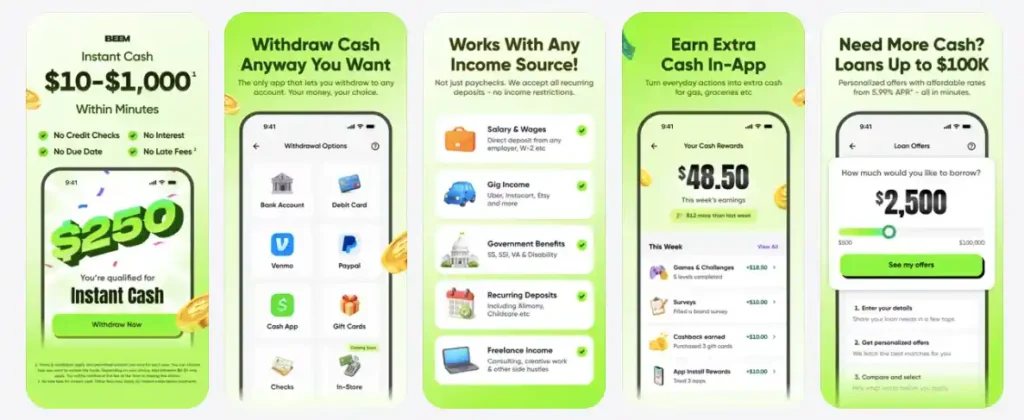
This is where a tool like Beem becomes a genuinely practical part of paycheck management. When a bill is due before your income arrives and the cost of missing that bill is higher than the cost of accessing a small advance, a cash advance is not a failure of discipline. It is a rational financial decision.
Beem offers instant cash advances from $10 to $1,000 for eligible users with no interest charges, no credit check, and repayment tied to your verified deposit cycle. This means you can cover a bill due before payday, avoid an overdraft fee, or handle an unexpected expense without derailing the rest of your paycheck budget.
The key difference between using Beem responsibly within a paycheck management strategy and relying on it as a substitute for one is intentionality. Beem works best as a precision tool for specific timing gaps, not as a recurring solution for chronic overspending. When your budget is solid and you simply face a calendar mismatch, Beem bridges the gap cleanly and cost-efficiently.
Paycheck Management for Variable Income Earners
Standard paycheck management advice assumes steady, predictable income. For gig workers, freelancers, seasonal employees, commission-based earners, and anyone whose income varies from period to period, that assumption does not apply and the standard framework needs adjustment.
Variable income management starts with identifying your income floor, which is the lowest realistic amount you can expect to earn in a slow period. Budget your fixed expenses against that floor amount rather than your average or peak income. In stronger months, the surplus funds your buffer, your savings, and your financial goals. In slower months, your essential expenses are still covered.
Building a Variable Income Paycheck Budget
Create a baseline budget using your minimum expected income as the starting figure. Cover housing, food, transportation, and minimum debt payments from that baseline. Any income above the baseline is directed first to your buffer fund until it reaches your target balance, then to savings, and finally to discretionary spending.
This approach protects you against income volatility without requiring you to live on your worst income forever. In good months, you build financial strength. In slow months, you remain stable. Over time, this creates genuine financial resilience rather than the vulnerability that comes with budgeting optimistically and then scrambling when reality falls short.
Beem’s eligibility model accommodates variable income earners by evaluating real account activity rather than requiring a fixed direct deposit pattern. This makes it one of the most accessible short-term cash tools for users whose income does not fit traditional lending criteria.
Paycheck Management Tools and Apps Worth Using
The right tools make paycheck management easier to maintain over time. Manual tracking in a spreadsheet works for some users but requires consistent discipline that many people struggle to maintain during busy or stressful periods. Automated tools reduce the friction and increase the chances that your system stays in place when life gets complicated.
Budgeting apps that connect to your bank accounts and categorize transactions automatically give you a real-time view of your spending without requiring manual entry. Setting up automated transfers to your savings account on the same day your paycheck arrives removes the temptation to spend funds before they are moved.
Why Beem Belongs in Your Paycheck Management Toolkit
Beem goes beyond a single cash advance feature. The platform provides personal loan comparisons for larger financial needs, free money transfers to anyone on any app, a high-yield savings option, and a referral program that extends platform benefits to up to five friends at no additional subscription cost.
For paycheck management, Beem fills the gap between your budget plan and the real world, where bill due dates, unexpected expenses, and income timing do not always cooperate. Having a tool that delivers fast, transparent, interest-free cash access as a last line of defense within your paycheck budget is the kind of practical preparation that separates users who occasionally hit a wall from users who break through it quickly and keep moving.
Common Paycheck Management Mistakes to Avoid
The most common paycheck management mistakes are surprisingly consistent across income levels and financial backgrounds. Failing to account for irregular expenses is the most frequent issue. If you only budget for what is due this month and ignore what is coming in two or three months, you will always be caught off guard.
Spending variable income during good periods as though it is guaranteed recurring income is the most damaging mistake for freelancers and gig workers. Lifestyle inflation that follows income increases without a proportional increase in savings and buffer contributions is how higher earners end up just as financially fragile as lower earners.
Ignoring small recurring charges is another common trap. A handful of subscriptions totaling $80 to $100 per month can appear invisible in daily spending but add up to nearly $1,200 per year that could be redirected toward financial goals.
How to Fix Paycheck Management Problems Quickly
Conduct a monthly audit of every recurring charge leaving your accounts. Cancel any subscription you have not actively used in the past 30 days. Reallocate that spending to your buffer fund until it is fully funded. Then redirect it to savings or debt repayment.
Review your paycheck budget every time your income changes or your expenses shift. A budget that was accurate three months ago may no longer reflect your current situation. Keeping it current takes less than 30 minutes per review and prevents the gradual drift that lets small mismatches compound into large financial problems.
Check out Beem for on-point financial insights and recommendations to spend, save, plan and protect your money like an expert. Download the Beem app today!
Frequently Asked Questions
What is paycheck management and why is it important?
Paycheck management is the practice of intentionally allocating your income across expenses, savings, and financial goals before it is spent. It is important because it helps you cover essential obligations, avoid overdrafts, build financial stability, and reduce the stress caused by running out of money before the next pay date.
How do I budget my paycheck effectively?
Start by listing your net take-home pay and mapping every dollar to a specific purpose before spending begins. Prioritize housing, food, and transportation first, followed by minimum debt payments and savings. Use a paycheck-based budget that aligns with your actual pay schedule rather than a generic monthly framework.
What should I do when my paycheck does not cover all my bills?
First, review your expense priority order and cover the most essential obligations. If a timing gap between a bill due date and your next paycheck is the issue, a short-term cash advance from Beem can bridge the gap with no interest and no credit check. Visit trybeem.com/get-instant-cash-advance to check eligibility instantly.
How can Beem help with paycheck management?
Beem offers instant cash advances from $10 to $1,000 for eligible users to cover short-term paycheck timing gaps. With no interest, no credit check, and multiple payout options including Beem Wallet, prepaid cards, and gift cards, Beem is a practical tool for handling the cash flow timing issues that even well-managed budgets occasionally encounter.
How do I manage a paycheck with variable income?
Build your fixed expense budget around your minimum expected income rather than your average or peak earnings. Any income above that floor goes first to your buffer fund, then to savings, then to discretionary spending. This protects your essential expenses during slow periods while allowing you to build financial strength during stronger ones.