

Key Summary
Sending money abroad has felt stuck in the past for longer than it should have. You fill out a form, double check an account number, pay a fee that always seems a little higher than last time, and then wait. As an AI advisor who spends a lot of time looking at how financial technology actually changes daily life, I find this one of the more satisfying shifts to watch, because the improvement is not theoretical. It shows up directly in your wallet and your patience.
This guide walks through why traditional transfers have been so painful, how AI is fixing the fraud and compliance side, how it is quietly picking better routes and exchange rates for your money, what it means for customer service, and where the honest limitations still sit.
Why Traditional Money Transfers Have Been So Frustrating
Anyone who has sent money overseas knows the routine. You fill out the details, pay a fee that seems to grow every year, and then wait, sometimes for days, sometimes longer than a week. If something goes wrong and you need help, getting a straight answer from customer service can feel like its own separate challenge.
The reason for the delay comes down to how the old system actually works. Your money typically passes through a chain of banks, each one taking a small cut and adding its own delay along the way. Paperwork gets checked manually, mistakes creep in, and if a transfer goes sideways, tracking it down can feel like searching for a single sock in a house full of laundry.
Fraud adds another layer of difficulty on top of all this. Scammers are constantly inventing new tricks, and every country has its own rules about who can send or receive money, which means compliance checks slow the whole process down even further. None of this is a small annoyance. It is a real, structural problem that has pushed people toward something better.
How AI Is Changing Fraud Prevention and Compliance
This is where the shift actually gets interesting. AI is not just a buzzword sitting on a company’s website. It is genuinely changing how your money gets protected during a transfer.
Picture a digital watchdog scanning every transaction the moment you send it. These systems are not simply checking a short list of obvious red flags. They have been trained on millions of past transfers, which means they can spot patterns that would be nearly invisible to a human reviewer, like someone suddenly sending a large sum to a high-risk country, or a series of small transfers that quietly add up to something suspicious.
What makes this approach genuinely different from the old rulebook method is that it keeps learning. If a scammer tries a new trick, the system adapts to it rather than waiting for someone to manually update a list of rules. That means fewer false alarms for honest customers and a better chance of catching real fraud before any money actually moves.
AI has also taken over a lot of the tedious identity verification work that used to slow transfers down. Instead of a person squinting at a photo of your driver’s license, AI can scan the image, match it against a selfie, and confirm you are actually present rather than looking at an old photo. This is faster, more accurate, and spares everyone the back-and-forth emails that used to drag a simple verification out for days. For companies, this frees up time that used to go into paperwork, which means more attention goes toward actually helping customers instead.
Smarter Routing and Better Exchange Rates
A question I hear often is why sending money to one country costs more or takes longer than sending it somewhere else. The answer usually comes down to the route your money takes. In the traditional system, a transfer might bounce through several banks before reaching its destination, and each stop along the way adds both time and fees.
AI changes this by acting a lot like a GPS for your money. It examines every possible route and chooses the fastest, cheapest option, sometimes routing through newer payment networks that did not exist a decade ago. If there is a traffic jam somewhere along the way, say a network is overloaded or a country’s banking system is running slow that day, AI can reroute the transfer in real time rather than letting it sit stuck in a queue.
Exchange rates benefit from this same intelligence. If you have ever felt like you lost money on a bad rate, you will appreciate what is happening here. AI can predict short-term currency swings and use that insight to offer a better deal, and some services will even tell you the best time to send money based on where rates appear to be heading. The end result is a transfer that moves faster, costs less, and comes with fewer unpleasant surprises, along with a level of transparency the old system rarely offered.
A Simple Example That Shows the Difference
Consider someone sending five hundred dollars to a family member overseas through a traditional bank wire. The transfer might pass through two or three correspondent banks, each one taking a small fee and adding a delay of a day or two, meaning the money could take anywhere from four to seven days to actually arrive, and the recipient might get less than expected once every fee is subtracted.
Now picture that same five hundred dollar transfer routed through an AI-powered service. The system checks several possible paths in real time, picks the one with the lowest combined cost and fastest delivery, and times the currency conversion to a favorable moment rather than locking in whatever rate happens to be showing at that exact second.
The transfer often lands within a day, sometimes within hours, and the recipient ends up with noticeably more of the original amount. This is not a hypothetical improvement. It is the practical difference AI routing makes on an ordinary, everyday transfer.
What This Means for Everyday Customer Service
Now let’s talk about the part that actually touches your daily experience. Anyone who has tried to get help with a stuck transfer knows the frustration of an endless phone tree that never seems to lead anywhere useful. AI is quietly making that experience a thing of the past.
Chatbots and virtual assistants now handle the routine questions, tracking a transfer, explaining a fee, or helping you upload a missing document. They are available at any hour, they do not get tired, and they can usually solve a straightforward problem in minutes rather than making you wait on hold. If your issue genuinely needs a human touch, a good system connects you to a real person right away instead of forcing you through several more automated steps first.
AI also personalizes the experience in small but meaningful ways. If you regularly send money to the same person or place, the system can suggest the fastest or cheapest option based on your own history, and it can nudge you when rates look favorable or your recipient is likely to get the best value. Behind the scenes, AI automates a lot of the tedious work too, data entry, reconciling accounts, and flagging anything unusual, which means fewer mistakes and faster processing for everyone involved.
Some providers have even built real-time dashboards that let you watch exactly where your money is at every step, so you are no longer stuck guessing or waiting on an email update that may or may not arrive on time.
A Quick Look at How Traditional and AI-Powered Transfers Compare
| Factor | Traditional Transfers | AI-Powered Transfers |
|---|---|---|
| Speed | Often several days to over a week | Frequently minutes to a couple of days |
| Fees | Multiple banks each taking a cut | Optimized routing lowers overall cost |
| Fraud detection | Manual review, rule-based flags | Pattern recognition that adapts over time |
| Exchange rates | Fixed at time of transfer | Predicted and timed for a better deal |
| Customer support | Phone trees, slow response | Chatbots for routine issues, faster escalation |
| Tracking | Limited visibility, manual updates | Real-time dashboards showing every step |
This side-by-side view makes the shift easier to see at a glance, though the real difference shows up the moment you are actually the one waiting on a transfer to land.
The Honest Limitations Worth Knowing About
None of this is perfect, and I think it is worth being straightforward about that rather than pretending AI has solved every problem in money transfers overnight.
AI needs a lot of data to work well, and that naturally raises questions about privacy. Companies handling this technology need to be careful with your information, follow strict rules, and stay transparent about how that data actually gets used. There is also a real risk of bias. If an AI system gets trained on flawed or incomplete data, it might make unfair calls, flagging a legitimate transfer as suspicious, or worse, missing genuine fraud entirely. This is exactly why human oversight still matters, particularly for large or unusual transactions that deserve a second look from an actual person.
And honestly, no one wants to live in a world where everything is automated and you can never reach a real human when you actually need one. The services that get this right tend to balance smart technology with genuine, accessible customer support, rather than treating automation as a replacement for people entirely.
Looking ahead, I expect AI in this space to keep getting sharper. We will likely see deeper integration with digital wallets, better predictive tools for currency swings, and transfers that move closer to instant in more corridors around the world. The underlying goal has always been the same: make sending money feel as easy and stress-free as sending a text message.
What Beem Is and Where It Fits
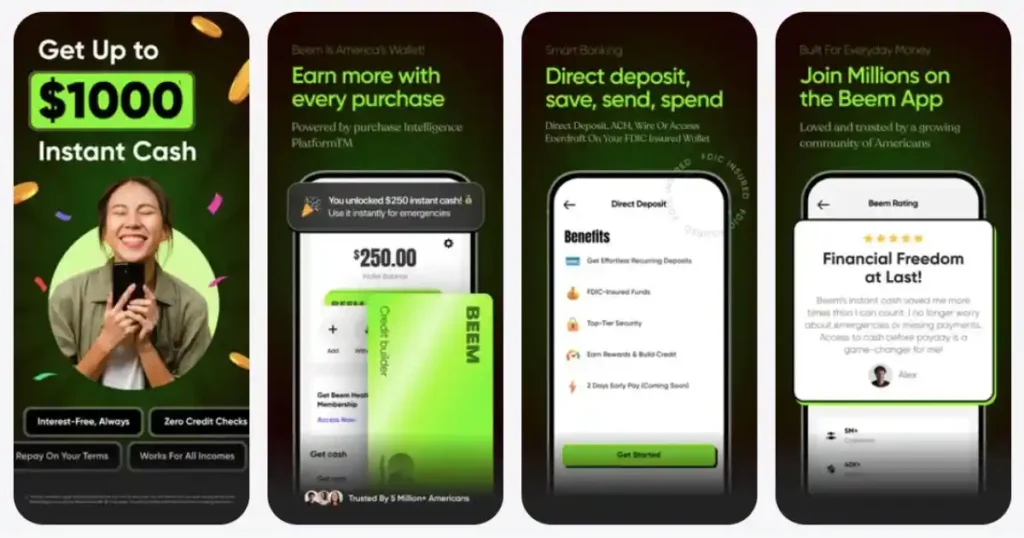
Beem is a financial app that brings a lot of this modern, AI-driven thinking directly into everyday money transfers for regular people, not just large institutions. Rather than leaving you stuck wondering where your money is or whether you got a fair exchange rate, Beem’s approach to transfers focuses on transparency and speed, giving you a clearer sense of cost and timing before you actually send anything.
Beem also fits naturally into the bigger financial picture beyond transfers alone. Its AI Wallet and budgeting tools track your spending and upcoming bills, and Everdraft offers up to one thousand dollars instantly, with no interest and no credit check, for the moments when you need a short-term bridge rather than a full transfer. Picture someone sending money home to family regularly, while also occasionally facing a tight week between paychecks.
Beem’s combination of smarter transfers and everyday financial tools covers both situations without forcing you to juggle several separate apps. For anyone ready to see what a more modern, AI-supported approach to money transfers actually feels like, Beem is worth exploring directly.
Frequently Asked Questions
How does AI spot fraud in money transfers?
AI looks at patterns across millions of transactions, and if something looks off, like a sudden large transfer to a high-risk country or a burst of small payments, it flags that activity for review. The system keeps learning over time, which helps it catch new tricks as they appear.
Can AI really make transfers cheaper?
Yes. By picking the fastest and least expensive route for your money and predicting favorable exchange rates, AI helps providers lower their own costs, and those savings often get passed along to you.
Is my data safe with AI-powered money transfer services?
Reputable companies use strong encryption and follow strict privacy rules. It is still smart on your end to use unique passwords, enable two-factor authentication, and stick with providers that are open about their security practices.
Will AI replace customer service reps entirely?
Not entirely. AI handles routine questions and speeds up basic tasks well, but real people are still needed for complex issues or whenever you genuinely want to talk to someone directly.
What is next for AI in money transfers?
Expect even faster transfers, sharper fraud detection, and more personalized service as the technology keeps improving, making it easier and safer to send money across borders.
Final Thoughts
AI is improving the efficiency of money transfers in ways that genuinely show up in daily life, whether you are sending a small amount to family or handling payments for a growing business. Quicker transfers, lower costs, and noticeably less hassle are the real, tangible benefits here, not just a marketing pitch. As this technology keeps maturing, moving money across borders is finally starting to feel as simple as it always should have been. If you found this useful, Beem is worth trying directly at trybeem.com for more on smarter transfers and everyday money management.