
Key Summary
Bread Pay is a checkout financing option, not a cash advance, and that difference matters before you apply. If the goal is to split up the cost of a purchase, Bread Pay can be useful; if the goal is to get cash for bills or emergencies, a different tool may fit better.
The short answer on credit score is this: there is no single public minimum posted across every Bread Pay offer, but approval and pricing depend on credit qualifications, purchase size, term length, and state of residence. Bread Financial states that application checks are soft inquiries for some loan products and that repayment history may be reported to credit bureaus after the loan is opened.
Bread Pay Basics
Bread Pay is a financing option used at checkout by participating merchants. It lets shoppers spread a purchase over monthly payments instead of paying the full amount upfront.
That matters because the product is built for planned purchases, not short-term cash flow gaps. It is a way to finance a phone, appliance, home item, or other larger buy when paying all at once is not realistic.
What Bread Pay Is For
Bread Pay is most useful when a shopper already knows what is being bought and wants a predictable payment plan. The amount, term, and APR can change depending on the merchant and the applicant’s qualifications. Some offers may include promotional 0% APR terms, while others can carry much higher interest rates.
Why Credit Score Matters
Credit score still matters because Bread Pay is extending financing risk, even if the application step does not always feel like a traditional bank loan. Better credit generally improves approval odds and can lead to better terms. Lower scores do not automatically mean denial, but they usually reduce flexibility and raise the chance of a less favorable offer.
What Credit Score You Need
There is no single official cutoff that applies everywhere, but shoppers should assume that fair-to-good credit improves the experience. Bread Financial’s own materials for some loan products say the application involves a soft inquiry and that applying does not impact the score. That does not mean every applicant gets approved or gets the same APR.
In practice, the score range matters in tiers. A stronger profile usually helps with approval and pricing, while a weaker profile may still qualify for some offers but not the best ones. That is why it is more useful to think about score bands than to look for one magic number.
Score Ranges In Practice
| Credit profile | What it usually means |
| Below 600 | Lower approval odds, fewer favorable terms, possible denial depending on purchase and merchant |
| 600 to 699 | Fair-to-good range, better odds than subprime profiles, but terms may still be moderate |
| 700+ | Stronger odds of approval, more likely to see better rates or promotional offers |
The exact result still depends on the loan amount, merchant rules, term selection, and state availability. A shopper with a higher score can still be declined if the request does not fit the lender’s risk rules.
Why There Is No Universal Cutoff
Bread Pay is not a single fixed-price product. It is a financing platform used across different merchants and categories, and those programs can have different thresholds or promotional structures. One checkout flow may offer 0% APR for eligible buyers, while another may price the same amount very differently.
That is why a simple “you need X score” answer is incomplete. Credit score is part of the decision, but it is not the whole decision.
How Approval Works
Bread Pay uses a checkout-based application process. The shopper selects the item, chooses Bread Pay if available, submits information, and receives a decision tied to that specific purchase. Some Bread Financial loan products state that the application involves a soft inquiry, not a hard credit pull.
The decision is influenced by more than score alone. Lenders may look at the loan amount, repayment term, credit qualifications, and in some cases merchant-specific rules. That is why two people with similar scores can still receive different offers.
Soft Inquiry Versus Hard Inquiry
A soft inquiry means the application step may not affect the score the way a hard credit check would. That is a plus for cautious shoppers who want to see whether they qualify without creating unnecessary credit damage. Bread Financial states this explicitly for some of its loan products.
That said, approval is still not guaranteed. The lender may still decide that the applicant does not fit the risk profile for the purchase or the plan selected.
What Lenders Check Besides Score
A lender may also consider payment ability, purchase amount, and the selected term. A bigger purchase with a long repayment window can create a different risk picture than a small device purchase with a shorter term.
Income stability matters too, even when the process is streamlined. A credit profile with strong repayment behavior generally helps a buyer appear lower risk than a profile with recent delinquencies or high revolving balances.
What Bread Pay Costs
Bread Pay can be very attractive when a merchant offers 0% APR, but not every offer works that way. Available APRs in merchant examples range from 0.00% to 34.99%, depending on the product, term, and credit qualifications.
That means the monthly payment alone is not enough to judge the deal. A low monthly payment can still hide a much more expensive total repayment if the APR is high or the term is long.
APR And Payment Plans
Bread Pay financing is generally structured as equal monthly installments. Merchant examples show terms such as 12, 24, or 36 months, with interest rates changing based on eligibility. Some merchants also require a minimum purchase amount before the plan appears.
The result is simple in concept but not always simple in cost. Two shoppers can buy the same item and end up with very different total costs based on credit profile and term selection.
What To Check Before Accepting
Before accepting a Bread Pay offer, the shopper should check four things:
- The APR.
- The total repayment amount.
- The monthly payment.
- Whether a down payment is required.
These details matter more than the headline “buy now, pay later” label. A financing plan is only useful if the monthly payment fits the budget without creating pressure later.
Why 0% Is Not The Default
Zero-interest offers exist, but they are not universal. Bread Pay merchant pages show that terms vary by product, state, and borrower profile, and some customer examples only qualify for 0% if the lender’s criteria are met.
That means shoppers should not assume a promotional offer will appear automatically. If a deal is advertised as low-cost financing, the final approved terms still determine whether it is actually a good deal.
Bread Pay Versus Other BNPL Options
Bread Pay competes with other buy now, pay later tools, but the comparison depends on what the shopper values most. Some shoppers want simplicity, some want flexible payment apps, and some want the widest merchant coverage.
Bread Pay Versus Affirm
Affirm is usually better known in the BNPL space, while Bread Pay often appears through specific merchant financing flows. Both are used for splitting purchases into installments, but they may differ in merchant availability, pricing, and term structure.
For a shopper comparing the two, the main question is not which brand is bigger. It is which checkout flow offers the better payment plan for the specific purchase in front of them.
Bread Pay Versus Klarna
Klarna tends to be more consumer-facing and app-driven, while Bread Pay is more tightly tied to merchant checkout financing. Klarna may feel more flexible for everyday BNPL use, but Bread Pay can be a strong option for a retailer that has built it into the checkout process.
The better choice depends on the size of the purchase and whether the shopper wants a broader BNPL app or a merchant-specific financing flow.
Bread Pay Versus Afterpay
Afterpay is generally associated with shorter split-pay purchases, while Bread Pay is more like installment financing. That makes them better suited to different kinds of spending.
A shopper buying smaller items may prefer Afterpay’s simplicity, while a shopper financing a larger purchase may find Bread Pay more useful if the offer terms are favorable.
Which Type Of Shopper Each Fits
- Bread Pay fits shoppers making larger planned purchases through participating merchants.
- Affirm fits shoppers who want broad BNPL visibility and installment flexibility.
- Klarna fits shoppers who want a BNPL experience with app-based shopping behavior.
- Afterpay fits shoppers who want smaller, short-term splits with less complexity.
What Happens If You Do Not Qualify
A Bread Pay denial is not unusual, and it does not mean a shopper is out of options. It usually means the lender is not comfortable with that specific application, amount, or term.
Common reasons include a weaker credit profile, a higher-than-ideal purchase amount, a short credit history, or terms that do not fit the lender’s risk model. In some cases, the merchant itself may also limit which offers appear.
Common Denial Reasons
- Credit profile is too weak for the requested terms.
- Purchase amount is too high for the available risk level.
- The applicant’s state or merchant flow has restricted terms.
- The repayment plan requested is too long or too expensive.
- Recent account behavior signals higher risk.
What To Do Before Reapplying
If Bread Pay is denied, the best next step is to improve the credit profile and reduce visible risk before trying again. That may mean lowering credit card balances, paying bills on time, and waiting until income or bank activity looks steadier.
It also helps to avoid applying for too many financing products at once. Multiple applications in a short period can make a shopper look more risky than they actually are.
Why Beem Belongs Here
Bread Pay is useful for financing a purchase, but it does not solve the real problem if the shopper needs cash instead of installments. That is where Beem becomes the better fit. Beem is built for short-term cash access, emergency bills, and temporary gaps between income and expenses.
That distinction is important because many readers do not actually need financing for a product. They need money for rent, a utility bill, groceries, gas, or an urgent repair. In those cases, installment checkout financing is the wrong shape of tool.
Bread Pay Solves Purchases
Bread Pay helps a shopper buy something now and spread the cost over time. It is a point-of-sale financing tool with a specific use case.
That makes it helpful for planned spending, not for general cash flow pressure. If the need is to complete a purchase at checkout, Bread Pay can make sense when the offer terms are good.
Beem Solves Cash Gaps
Beem is designed for immediate access to cash rather than retail financing. That means it fits users who need to cover a bill, bridge a payday gap, or handle a sudden expense.
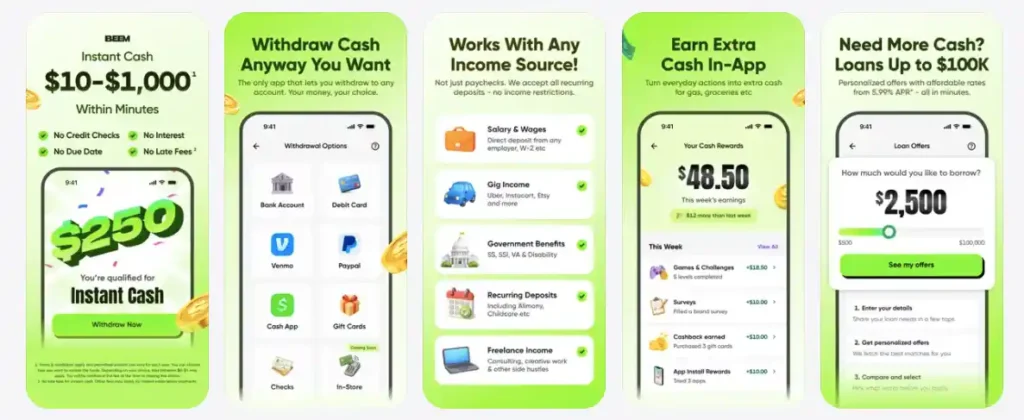
Beem’s Everdraft feature can provide up to $1,000 in emergency cash with no interest and no hard credit check, which is a different value proposition from Bread Pay altogether.
When Beem Is The Better Choice
Beem is the better choice when the shopper needs:
- Cash, not installment financing.
- Emergency money, not retail checkout credit.
- A short-term bridge instead of a product-specific plan.
- A flexible tool that does not depend on a merchant checkout screen.
That is why the comparison matters. Bread Pay can be a good product, but only when the problem is financing a purchase. If the problem is liquidity, Beem is the more relevant answer.
How To Improve Your Odds
A shopper who wants better Bread Pay results should focus on the basics that lenders tend to trust. That includes clean payment history, lower revolving balances, and a more stable deposit pattern.
Before Applying
Before a Bread Pay application, it helps to:
- Check the credit report for errors.
- Pay down credit card balances if possible.
- Make sure recent bills are current.
- Avoid taking on new debt right before applying.
- Keep account activity stable.
During Checkout
Once at checkout, the smartest move is to choose the term that fits the budget instead of chasing the lowest monthly payment. A long term can make the payment feel easier but raise the total cost.
It is better to use the shortest affordable plan than to stretch the payments so thin that the purchase becomes expensive in the end.
A Simple Decision Guide
The easiest way to decide between Bread Pay and Beem is to ask what problem is being solved.
Use Bread Pay if the goal is to finance a specific purchase and the approved APR and monthly payment work for the budget. Use Beem if the goal is to get cash for bills, emergencies, or short-term gaps.
That rule is simple, but it is the right one. Bread Pay is a shopping tool. Beem is a cash tool. The better choice is the one that matches the need.
FAQs: Bread Pay Credit Score
Does Bread Pay require a credit score?
Bread Pay uses credit qualifications to make approval decisions, but it does not publish one universal public minimum across all merchants and offers. A stronger score usually improves approval odds and terms.
Does applying affect your credit?
Bread Financial says some loan applications use a soft inquiry and do not affect the score the way a hard pull would. Repayment history may still be reported later and can affect credit over time.
Is Bread Pay the same as a credit card?
No. Bread Pay is installment financing used at checkout, not a revolving card account. The shopper is usually agreeing to fixed monthly payments for a specific purchase.
Can Bread Pay build credit?
Repayment information may be reported to credit bureaus for some Bread Financial products, which means on-time payment behavior can matter. That does not guarantee a score boost, but it means repayment can have credit consequences.
What if you get denied?
If denied, the next step is usually to improve credit conditions, reduce balances, and avoid repeat applications in a short time. If the problem is not a purchase but an urgent cash need, Beem may be the better tool.
Is Beem better if you need money now?
Yes. Beem is designed for emergency cash access, while Bread Pay is designed for financing a specific purchase. If the need is liquidity rather than checkout financing, Beem is the better fit.
Final Decision
Bread Pay can be a smart checkout option for shoppers who want to split a purchase into installments and qualify for favorable terms. But it is not a general cash solution, and it is not always available on the best APR.
For readers who need funds for everyday pressure, emergency bills, or short-term gaps, Beem is the better match. Bread Pay helps with buying. Beem helps with living. That distinction is the one that matters most.