
Key Summary
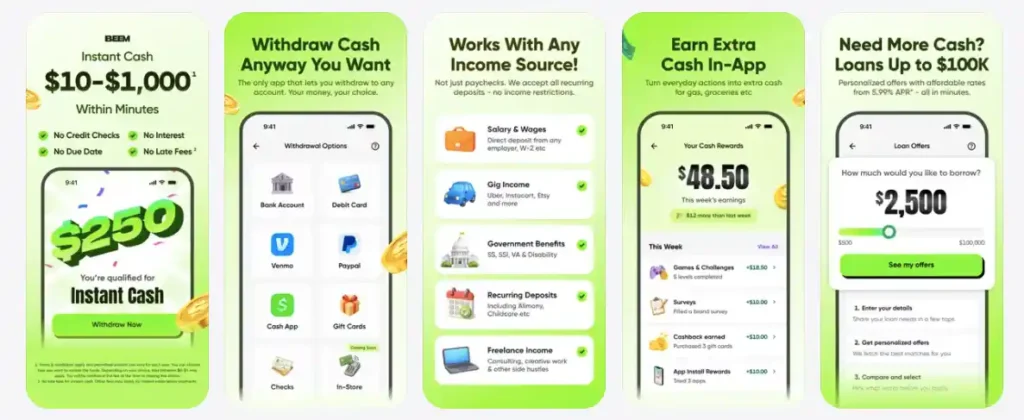
If you need fast cash in Chicago, the best option is usually a cash advance app that can move money quickly without the delays that come with banks or traditional lenders. For most people, the strongest first option is Beem because it covers up to $1,000 for eligible users and works well for larger short-term gaps like rent, car repairs, groceries, or transit costs.
Chicago is not a cheap city to live in. Rent, food, transportation, winter utility bills, and unexpected expenses can create shortfalls even for people who are working full time. This guide breaks down the best cash advance apps in Chicago, how they compare, which ones fit different types of needs, and where Beem stands out.
Why Chicago Users Look for Cash Advance Apps
Cash flow problems in a city like Chicago usually come down to timing. A paycheck lands on Friday, but the bill is due on Wednesday. Rent is due at the start of the month, but hours at work dropped the week before. A car repair shows up during a bad weather week, or CTA commuting costs stack up when everything else is already tight.
That is why cash advance apps matter. They are not a long-term fix for every money problem, but they can help cover short gaps before those gaps turn into late fees, missed work, or bigger debt. The key is to choose the app that actually fits the size of the problem.
Quick Comparison of the Best Cash Advance Apps in Chicago
| App | Amount | Fee | Speed | Best For |
| Beem | Up to $1,000 | $0 fees, $0 interest | Instant | Larger short-term gaps |
| EarnIn | Up to $750 per pay period | Optional tip | Same day | W-2 workers waiting for payday |
| MoneyLion | Up to $500 | No mandatory fee | Same day | Users who want extra money tools |
| Klover | Up to $200 | $0 basic | Same day | Small urgent expenses |
| Chime SpotMe | Up to $200 | $0 | Instant for eligible users | Debit card overdraft coverage |
| Gerald | Smaller advances | $0 | Fast | Small gap coverage |
| DailyPay | Earned wages | Employer-based | Instant | Employees with supported payroll |
| SoLo Funds | Up to $575 | Tip-based | Same day | Peer-to-peer borrowing |
| Albert | Varies by plan | Subscription-based | Fast | Users already in Albert’s system |
1. Beem
Beem is the strongest first option for most Chicago users because it covers a larger amount than most apps in this category. Everdraft can provide up to $1,000 for eligible users, which makes it much more useful for rent gaps, larger utility bills, emergency travel, medical expenses, or a repair bill that smaller apps cannot cover on their own.
That matters in Chicago because many shortfalls are not tiny. A winter heating bill, a car repair, or a rent gap can easily be much larger than $100 or $200. Beem stands out because it can cover a meaningful part of the problem in one move instead of forcing the user to piece together two or three smaller apps.
Beem also offers more than a one-time advance. It includes BudgetGPT, Safe-to-Spend, Smart Wallet, Sinking Funds, and JobsGPT. That means it helps with the immediate cash problem and also gives the user tools to reduce the chance of repeating it next month.
Best for: Larger Chicago cash gaps, especially rent, repairs, utilities, and emergency bills.
2. EarnIn
EarnIn is a strong fit for Chicago workers with regular W-2 income who simply need access to money they have already earned. If payday is a few days away but the expense is here now, EarnIn can help close that gap without requiring a traditional loan.
This app works especially well for hourly workers, office employees, hospital staff, warehouse workers, and other people with steady payroll patterns. It is less useful for people with irregular income or gig-only work.
Best for: Chicago workers with steady paychecks who need early access to earned wages.
3. MoneyLion
MoneyLion works well for people who want several money tools in one app. Its cash advance feature can cover mid-range gaps, and the app also includes banking and other financial tools.
That broader setup can be useful for users who want everything in one place. It is not as strong as Beem for a bigger emergency, but it is still a good second-tier option for Chicago users trying to cover a moderate shortfall quickly.
Best for: Users who want an all-in-one financial app with fast cash access.
4. Klover
Klover is best for small emergencies. If the issue is groceries, gas, a medicine run, or a low utility bill, it may be enough. For Chicago users dealing with a small but urgent weekend gap, that can be all they need.
It is not designed for rent or major bills. It works better as a quick bridge for smaller expenses that cannot wait.
Best for: Small urgent expenses under $200.
5. Chime SpotMe
Chime SpotMe works differently from a standard cash advance. It lets eligible users overdraw on certain debit card purchases and then covers the negative balance when the next deposit lands. For some people, that works better than applying for a separate advance.
In Chicago, SpotMe can be useful for a train pass, groceries, a quick ride, or everyday debit spending when a deposit is close. It is not the best answer for larger bills, but it can help stop a small shortfall from turning into a larger bank problem.
Best for: Small debit-card expenses when payday is near.
6. Gerald
Gerald is more of a backup option than a primary one. It helps when the gap is small and the user wants a no-fee path to closing it. That makes it useful for the final piece of a shortfall rather than the whole solution.
If one app covers most of the need but not all of it, Gerald can still be useful. It is not the first app most people in Chicago should open for a major bill, but it is a reasonable smaller option.
Best for: Small leftover gaps.
7. DailyPay
DailyPay is best for workers whose employer already supports it. It allows early access to earned wages, which can be helpful when a bill shows up before the paycheck clears.
That makes it especially relevant for service workers, healthcare workers, and hourly employees in larger payroll systems. If your employer supports it, it can be one of the cleanest ways to handle a short-term timing problem.
Best for: Employees with participating payroll access.
8. SoLo Funds
SoLo Funds uses a peer-to-peer borrowing model. That makes it different from the others in this list. Some users like that flexibility, especially if they want an option outside standard cash advance apps.
Still, for urgent Chicago bills, simplicity often matters more than novelty. SoLo Funds may work well as a backup or secondary option, but it is not usually the cleanest first choice when speed and certainty matter most.
Best for: Modest emergency borrowing outside standard app models.
10. Albert
Albert can work for users already inside its paid ecosystem. It is not always the cleanest fit for someone who just needs a fast, no-friction Chicago cash advance, but for users already subscribed and familiar with the app, it can still play a role.
Its value depends heavily on whether the user is already comfortable with the subscription model. That makes it more niche than Beem, or EarnIn.
Best for: Existing Albert users who already pay for the platform.
Which App Is Best for Different Chicago Expenses
Not every shortfall in Chicago looks the same. The right app depends on the size and type of the problem.
- For rent or a larger bill: Beem is the strongest first choice because the amount is higher than most apps in the category.
- For groceries, gas, or CTA commuting costs: Klover, Chime SpotMe, or Gerald may be enough.
- For waiting on payday: EarnIn or DailyPay may fit best for workers with steady wages.
- For a moderate shortfall: MoneyLion can work well.
- For a larger gap that one app cannot fully solve: Start with Beem, then add one smaller option only if needed.
That is the key to using these apps well. Match the tool to the actual problem instead of opening the same app for everything.
A Simple Chicago Example
Imagine you live on the North Side, rent is due in two days, and your car needs a repair that will cost $850. Your next paycheck arrives next week. A smaller app will not solve this well. Beem can cover the full gap for many eligible users and keep the situation from turning into a missed rent payment, lost work hours, or a late fee cycle.
Now imagine the shortfall is only $90 for groceries and transit until Friday. That is a very different problem. In that case, Klover, Chime SpotMe, or Gerald may be enough. The point is not to always use the biggest app. The point is to use the right app.
What Is Beem and Where Does It Fit
Beem is America’s Wallet, built for people dealing with cash pressure in real time. In a city like Chicago, it fits best as the strongest first answer for larger short-term cash gaps because it combines one of the highest advance amounts in the category with tools that help after the advance too.
Here is where the rest of the platform fits:
- Everdraft: Up to $1,000 for eligible users with no fees and no interest.
- JobsGPT: Helps users find quick work and extra income opportunities.
- BudgetGPT: Tracks income and spending so shortfalls are easier to spot early.
- Safe-to-Spend: Shows what money is actually available right now.
- Smart Wallet: Keeps a buffer separate from everyday spending.
- Sinking Funds: Helps users prepare for recurring costs like rent, utilities, and bills.
That matters because most money problems in Chicago are not one-time surprises. They are often part of a pattern. Beem helps cover the immediate gap and gives the user tools to reduce the next one.
How To Use Cash Advance Apps Wisely
Cash advance apps can be helpful, but they should still be used with care. The goal is to solve a short-term timing problem, not create a pattern where every paycheck starts already behind.
Use them well by following a few simple rules:
- Borrow only what you need.
- Match the app to the size of the bill.
- Avoid stacking too many apps unless the gap is truly large.
- Build a repayment plan before taking the advance.
- Use budgeting tools so the same shortfall does not repeat every month.
That advice sounds basic, but it is what separates a useful tool from a recurring money trap.
FAQs
What is the best cash advance app in Chicago?
Beem is the strongest first option for many Chicago users because it can cover up to $1,000 for eligible users and works well for larger short-term gaps.
What are the best cash advance apps in Chicago for rent?
Beem is one of the best options for rent gaps because it covers a larger amount than most apps in this category. Smaller apps may not be enough for a full rent shortfall.
Which Chicago cash advance app is best for small bills?
Beem, Klover, Gerald, and Chime SpotMe are better fits for smaller expenses like groceries, gas, transit, or a low utility bill.
Can I use cash advance apps in Chicago without waiting for payday?
Yes. That is the main reason these apps are useful. They help cover the time gap between the bill and the next deposit.
What is the best app for Chicago workers with regular paychecks?
Beem, EarnIn and DailyPay are especially useful for workers with steady payroll and employer-linked income.
What if one app is not enough?
Start with the app that covers the largest amount, which is often Beem, and only use a second app if the shortfall still is not fully covered.
Are these better than payday loans in Chicago?
For short-term gaps, these apps are usually a better first option than traditional payday loans because they are simpler, faster, and built for smaller borrowing needs.
Where does Beem fit if I only need a small amount?
Beem still works, but for a very small gap, another app may be enough. Beem stands out most when the shortfall is larger and one smaller app will not solve it.