Key Summary
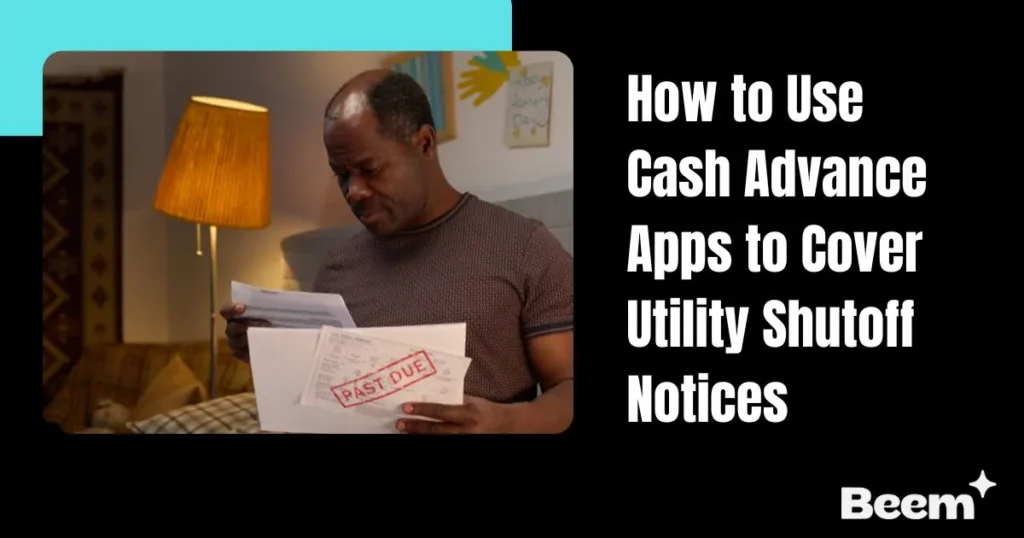
A Utility Shutoff Notice can turn a manageable week into a stressful one. Whether it is an electric, gas, or water bill, the letter usually comes with a hard deadline, and missing it can mean losing power, heat, or water at home until the balance is paid, along with reconnection fees.
When payday is still a few days away, and the notice is due now, cash advance apps have become one of the fastest ways to close that gap without turning to a payday loan or falling further behind on other bills.
This guide walks through how cash advance apps actually work, how to use one specifically to cover a utility shutoff notice, what they cost, and what to watch out for so the short-term fix does not create a longer-term problem.
Why Utility Shutoff Notices Happen
Utility companies typically send a shutoff notice after a bill has gone unpaid for a certain period, often following one or more missed payment reminders. The notice usually includes a specific disconnection date, giving you a narrow window to pay the balance, set up a payment arrangement, or risk losing service.
Because utility companies are regulated differently by state and service type, exact notice periods and reconnection policies vary, but the core pressure is the same everywhere: pay by the deadline or lose access to an essential service.
For many households, a shutoff notice does not mean the bill was ignored. It often means a temporary cash-flow gap colliding with a due date, which is exactly the kind of short-term problem a cash advance app is designed to solve.
What Is a Cash Advance App?
A cash advance app gives you early access to money you have already earned but have not yet been paid, based on your income and pay schedule. Instead of functioning like a traditional loan with interest, most cash advance apps charge a small flat fee, an optional tip, or a subscription fee, and the advance is automatically repaid from your next paycheck or linked bank deposit.
This structure makes cash advance apps fundamentally different from payday loans, even though both are designed to bridge a short-term cash gap.
The cost is usually lower, the approval process typically does not involve a hard credit check, and repayment happens automatically rather than requiring you to remember a due date.
How Cash Advance Apps Work Step by Step
Link Your Bank Account or Payroll
Most cash advance apps require you to connect your bank account and, in some cases, your employer’s payroll system so the app can verify your income and typical pay schedule. This verification step is what allows the app to determine how much you are eligible to access.
Request Your Advance Amount
Once verified, you can typically request an advance up to a certain limit, which may start small for new users and increase over time as the app builds a history of your income and repayment pattern. For a utility bill, you generally only need to request the specific amount needed to cover the notice, rather than the maximum available.
Choose Your Transfer Speed
Many apps offer both a standard transfer, which can take a day or more and is often free or low cost, and an instant transfer, which typically carries an extra fee but gets funds into your account within minutes. If your shutoff deadline is approaching, an instant transfer is usually worth the extra cost to ensure the payment clears in time.
Repay Automatically
The advance is usually repaid automatically from your next paycheck or bank deposit, without requiring you to make a manual payment. This removes the risk of forgetting a due date, though it also means you need to plan for a slightly smaller paycheck when repayment happens.
Using Beem to Cover a Utility Shutoff Notice
Beem offers a cash advance feature designed for exactly this kind of situation, giving eligible users fast access to funds ahead of their next paycheck to cover time-sensitive expenses, such as a utility shutoff notice.
Because the process is designed to be quick, it can help you pay the balance before the disconnection date without the longer approval process or higher cost associated with a traditional loan or payday lending option.
Also Read: Best Emergency Cash for Students: Fast Money Solutions Now
Step by Step: Using a Cash Advance App for a Shutoff Notice
Step 1: Confirm the Exact Amount and Deadline
Check your shutoff notice carefully for the exact balance due and the disconnection date. Some utility companies require only the past-due amount, rather than the full current balance, to avoid disconnection, so confirm this directly with your provider if the notice is unclear.
Step 2: Check Your Cash Advance Eligibility and Limit
Open your cash advance app and check how much you are currently eligible to access. If your limit does not cover the full amount needed, you may need to combine the advance with another source of funds or contact your utility provider about a partial payment arrangement.
Step 3: Request the Advance
Request only the amount needed to cover the shutoff notice, rather than the maximum available, to minimize the fee and reduce the impact on your next paycheck. Select instant transfer if your deadline is close, or standard transfer if you have a day or more of buffer.
Step 4: Pay the Utility Company Directly
Once funds arrive in your account, pay the utility company as soon as possible through their preferred payment method, whether that is an online portal, phone payment, or in-person option. Keep a payment confirmation in case there is any dispute about whether it was received before the disconnection date.
Step 5: Plan for Repayment
Since most cash advance apps repay automatically from your next paycheck, take a moment to adjust your budget for that pay period so the reduced deposit does not create a new shortfall elsewhere.
What Cash Advance Apps Typically Cost
Cost structures vary by app, but most fall into one of three categories: a flat fee per advance, an optional tip that users can adjust or skip, or a monthly subscription fee that covers unlimited or multiple advances within that period.
Instant transfer usually costs more than standard transfer, sometimes as a flat fee or a small percentage of the advance amount. Compare the total cost across apps you are eligible for, since fee structures and advance limits differ enough to make a meaningful difference over time.
Comparing Cash Advance Apps to Other Ways to Cover a Shutoff Notice
| Option | Typical Speed | Typical Cost | Credit Impact |
| Cash advance app | Minutes to 1 day | Flat fee, tip, or subscription | Usually none |
| Utility payment arrangement | Same day | Often free or low cost | None |
| Credit card cash advance | Immediate | Cash advance fee plus high interest | Can affect credit |
| Payday loan | Same day | Highest of these options | Varies by lender |
| Borrowing from family or friends | Immediate to same day | Often none | None |
Costs and speed vary by provider and individual circumstances, so confirm current terms directly before choosing an option.
Also Read: The Role of Cash Advance Apps in Crisis and Disaster Situations
Should You Contact the Utility Company First?
Before turning to a cash advance app, it is worth calling your utility provider directly, since many companies offer payment arrangements, extensions, or hardship programs that can reduce or eliminate the immediate pressure of the notice.
Some utilities also participate in assistance programs for customers facing financial hardship, which can cover part or all of a past-due balance without requiring you to borrow at all.
If a payment arrangement is not available or does not fully resolve the notice in time, a cash advance app can cover the remaining gap quickly, often faster than waiting for a formal hardship program to process.
Common Mistakes to Avoid
One common mistake is requesting more than the exact amount needed for the shutoff notice, which increases the fee and the impact on your next paycheck without providing any real benefit.
Another is choosing instant transfer when a standard transfer would still arrive in time, adding an unnecessary cost. Failing to confirm the exact past-due amount with the utility company before requesting the advance can also lead to either underpaying, which does not stop the disconnection, or overpaying, which ties up more of your next paycheck than necessary.
It is also worth avoiding the habit of repeatedly using a cash advance app for the same recurring bill without addressing why the gap keeps occurring. An occasional advance to cover a one-time shortfall is very different from a monthly pattern that signals a deeper budget mismatch.
Building a Buffer to Avoid Future Shutoff Notices
While a cash advance app can solve the immediate problem, building a small buffer over time reduces how often you need to rely on one. Setting aside even a small amount from each paycheck specifically for utility bills can help smooth out the natural variation in seasonal usage, since heating and cooling costs often spike at predictable times of year.
Reviewing your utility provider’s budget billing option, which averages your annual usage into equal monthly payments, can also reduce the risk of a single high bill triggering a shutoff notice in the future.
Final Thoughts
A utility shutoff notice creates real pressure with a hard deadline, but cash advance apps like Beem offer a fast, relatively low-cost way to cover the balance before service is disconnected.
The key is to request only what you need, choose the right transfer speed for your deadline, and plan for automatic repayment so it does not create a new gap in your next pay cycle.
Pairing this short-term tool with a call to your utility provider about hardship programs or payment arrangements, and gradually building a small buffer over time, can help make sure a shutoff notice becomes a rare event rather than a recurring one.
FAQs About Cash Advance Apps, Utility Shutoff Notices
Can a cash advance app really help me avoid a utility shutoff?
Yes, cash advance apps can provide fast access to funds, often within minutes with instant transfer, allowing you to pay a utility bill before the disconnection date on a shutoff notice.
How much does a cash advance app typically cost for covering a utility bill?
Most cash advance apps charge a flat fee, an optional tip, or a subscription fee, with instant transfers usually costing more than standard transfers, so the total cost depends on the specific app and speed selected.
Will using a cash advance app to pay a utility bill affect my credit score?
Most cash advance apps do not perform a credit check or report to credit bureaus, so using one to cover a utility bill typically does not affect your credit score.
Should I contact my utility company before using a cash advance app?
Yes, contacting your utility provider first is worth doing, since many offer payment arrangements or hardship assistance programs that can reduce or resolve the balance without needing to borrow at all.
What should I do if a cash advance app’s limit does not cover my full utility balance?
If your available advance does not cover the full amount, consider combining it with a partial payment arrangement from the utility company, or check with the provider about paying only the past-due portion to avoid disconnection.