
Key Summary
Yes, there are real ways to get emergency money quickly, and most of them do not require good credit or a bank loan. According to the Federal Reserve, 37% of Americans say they would struggle to cover a $400 emergency expense from savings alone. That number tells you two things: financial emergencies are common, and most people handling them are not doing so from a position of comfort.
The good news is that between cash advance apps, community programs, gig work, and selling unused items, you have more options than you might realise. This guide covers seven real approaches so you can match the right solution to your specific situation.
Quick Summary
- The Core Problem: Sudden, unexpected costs like vehicle repairs ($150–$600) or medical co-pays create immediate deficits. According to the Federal Reserve’s recent data, 37% of Americans would struggle to cover an unexpected $400 expense using cash or its equivalent alone.
- The Payday Loan Trap: Relying on a predatory payday loan out of panic results in average APRs exceeding 300%, turning a $400 short-term fix into a cascading $480+ debt cycle within just two weeks
3 Steps to Make the Right Decision
- Step 1: Quantify Exact Needs: Avoid borrowing rounding errors. If a bill is $220, request exactly $220 to prevent over-borrowing against your next paycheck.
- Step 2: Check Your Repayment Horizon: Use cash advance apps if your paycheck lands within 5 days; look to community aid or direct creditor terms if income is weeks away.
- Step 3: Eliminate Hidden Delivery Costs: Unless facing an immediate utility shutoff or transit crisis, always select the free 1–3 days standard delivery option on apps to save $2 to $8 per cash-out.
Why Emergency Money Matters
Emergencies do not wait for a good time. A car that breaks down on a Tuesday morning, a medical bill that arrives before payday, or a utility shutoff notice that gives you 48 hours are all situations that require a fast response, not a plan that takes two weeks to execute.
The danger is not the emergency itself. It is the response. People who feel cornered often reach for the nearest option, which is frequently a payday loan with an APR above 300%. A $400 payday loan at those rates can cost $460 to $480 to repay after two weeks. If you cannot cover the original $400, the chance of covering $480 on top of your next round of bills is slim. That is how a one-time emergency turns into a three-month debt cycle.
Knowing your options before the emergency hits, or at least knowing where to look quickly when one does, is one of the most practical things you can do for your financial stability.
Common situations where people need emergency money include:
- Car repairs: A broken alternator, flat tyre, or dead battery can leave you stranded and cost anywhere from $150 to $600 to fix at a shop.
- Medical bills: Co-pays, prescriptions, or urgent care visits that insurance does not fully cover.
- Housing costs: Rent due in 24 hours, or a utility threatening shut off.
- Unexpected travel: A last-minute flight or gas money for a family emergency.
- Debt deadlines: Covering a minimum payment to avoid a late fee that triggers a rate increase.
First Things First: Assess Before You Act
When a financial emergency hits, the first instinct is often to act immediately. That urgency is understandable, but one minute of assessment before you pick a solution can save you significant money and stress.
Ask yourself three questions before doing anything. First: exactly how much do I need? Not roughly, but specifically. If the mechanic quotes $280, that is your number. Borrowing $500 because it is available leaves you with a $500 repayment for a $280 problem. Second: When can I repay this? If your paycheck arrives in five days, an advance tied to that paycheck works. If your next income is three weeks away, the repayment schedule matters a lot more. Third: Which option is cheapest for my specific timeline?
Those three answers point you toward the right option from the list below.
7 Realistic Ways to Get Emergency Money
Each option below serves a different combination of speed, cost, and situation. Most emergencies are best resolved with a primary strategy, sometimes paired with a secondary backup.
1. Cash Advance Apps
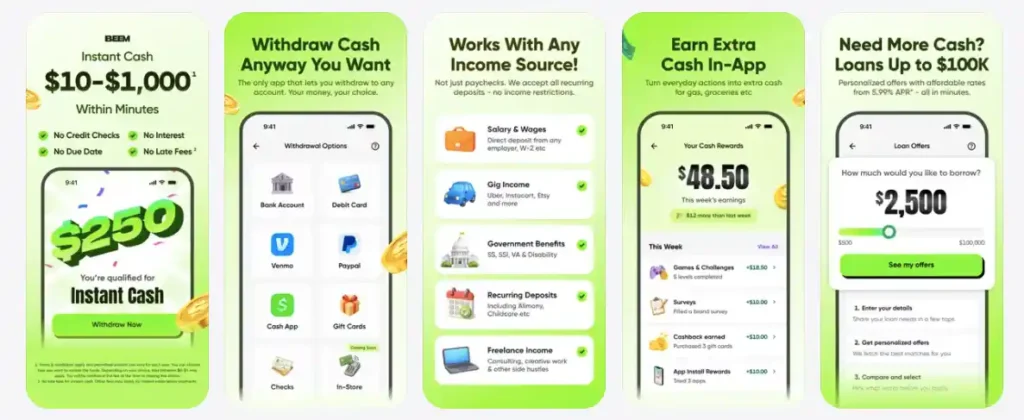
Cash advance apps are the fastest, low-cost option for amounts under $1,000. They connect to your linked bank account, verify your income history, and deposit funds within minutes with no credit check and no interest. Repayment is automatic from your next paycheck.
Beem‘s Everdraft feature gives you access to up to $1,000 with no fees, no credit check, and automatic repayment tied to your next paycheck. EarnIn lets you access up to $750 per pay period based on wages you have already earned, with no mandatory fees.
For most common emergencies, between $100 to $500, a cash advance app is often the fastest, lowest-cost solution. Unlike payday loans, repayment is automatically deducted from your next paycheck, and the advance itself doesn’t carry traditional interest fees.
2. Borrow from Someone You Trust
Borrowing from a friend or family member costs nothing if repaid. It is also the fastest way to get cash, often in the same hour. The reason people hesitate is the social discomfort, not the logistics.
If you go this route, be specific. Tell the person exactly how much you need, what it is for, and when you will repay it. A clear repayment date makes the conversation easier and reduces the chance of it becoming a source of tension. If you can repay early, do. Small gestures of follow-through matter more than the amount when it comes to preserving the relationship.
3. Sell Something You Own
Most households have unused items worth $50 to $300 or more: electronics, clothing, furniture, tools, collectables, or sports equipment. Selling one or two items can cover a mid-range emergency without borrowing anything.
Facebook Marketplace is the fastest option for local sales with no shipping required. eBay works better for collectables, electronics, or branded items. Pawn shops offer immediate cash but typically pay 25% to 60% of market value, so they are best for genuinely urgent situations where you need cash in hand today.
Take clear, honest photos and price items at a slight discount from comparable listings. Items priced 10% to 15% below similar local listings sell in hours rather than days.
4. Pick Up Gig Work
The gig economy offers same-day or next-day earnings for people already registered on a platform. Delivery driving through DoorDash or Uber Eats can generate $80 to $150 in a four-hour evening shift. Task-based work through TaskRabbit pays $25 to $75 per hour for physical tasks like moving help, furniture assembly, or cleaning.
If you are not already registered, background check processing takes one to three days on most platforms, so this option works best if you have a few days before the emergency becomes critical or if you are already an active driver or tasker.
For someone who needs $300 and has two evenings free, targeting high-demand gig work shifts can cover the full amount without the need to borrow.
5. Community Assistance Programs
Local nonprofits, religious organisations, and government-funded community action agencies offer emergency assistance for specific expenses, including rent, utilities, food, and medical bills. These programs do not hand you cash directly. They pay the provider on your behalf, which frees up whatever cash you do have for other needs.
To find programs near you, visit 211.org. Enter your ZIP code and the type of help you need. You will see a list of local resources with contact information and eligibility requirements. Most programs have income guidelines and require documentation of the specific need.
For housing emergencies specifically, HUD-approved housing counselling agencies can connect you with emergency rental assistance programs, many of which were expanded in recent years and still have funds available.
6. Credit Card Cash Advance
If you have a credit card with available credit, you can withdraw cash at an ATM. This is fast and accessible, but it is one of the more expensive borrowing options in this list.
Credit card cash advances typically charge an upfront fee of 3% to 5% of the amount withdrawn, and interest begins accruing immediately at at 24% to 30% APR with no grace period. On a $400 cash advance at 28% APR with a 5% fee, you pay $20 upfront and accumulate interest from day one.
Use this option only when other options are not accessible, and the emergency cannot wait. If you do use it, pay it off in full as soon as your next paycheck arrives to minimise the interest cost.
7. Negotiate Directly with the Creditor or Provider
Before borrowing anything, call the party you owe money to. Medical providers routinely offer payment plans with little or no interest. Utility companies have hardship programs that allow for a delayed payment without a shutoff. Landlords, especially individual property owners, often prefer a few days’ delay over the cost of late-fee enforcement.
A three-minute phone call explaining your situation can secure a one-week extension at no cost. This extra time allows you to leverage lower-cost solutions, like gig work or selling an item, instead of taking out an advance. Because this option is entirely free, it should always be your first move for any emergency involving a known creditor.
Options Compared by Speed and Cost
When you need cash fast, the right option depends on how urgent the need is and how much you’re willing to pay in fees or interest. Here’s a quick breakdown of the fastest, cheapest, and most practical ways to bridge that gap, from instant cash advance apps to last-resort credit card advances.
| Option | Speed | Cost | Best For |
| Cash advance app (Beem, EarnIn) | Minutes | No interest, low or no fee | Any urgent need under $1,000 |
| Borrow from a trusted person | Minutes to hours | Free if repaid | Personal emergencies |
| Sell unused items | Hours to 1 to 2 days | Free (platform fees 0 to 13%) | Mid-range amounts with time to list |
| Gig work (DoorDash, TaskRabbit) | Same day if registered | Platform commission | Larger amounts over 2 to 3 days |
| Community assistance programs | 1 to 3 days | Free | Rent, utilities, food, and medical |
| Credit card cash advance | Instant | 3 to 5% fee + 24 to 30% APR | Last resort only |
| Negotiate directly with the provider | Instant | Free | When dealing with a known creditor |
Using Emergency Money Wisely
Accessing emergency funds is the first problem. The second problem is making sure the solution does not create a new one. A few habits separate people who handle emergencies cleanly from those who end up in a cycle.
Borrow only what you actually need. If the repair costs $220, request $220. The extra unused money sitting in your account is the extra repayment coming out of your next paycheck.
Repay as quickly as possible. The faster you repay, the lower your total cost and the sooner your financial flexibility returns. If your paycheck arrives in five days, earmark a specific portion of it for repayment before you spend anything else.
Avoid stacking multiple borrowing methods at once. Two simultaneous cash advances, plus a credit card cash advance, can leave your next paycheck nearly empty. Handle one emergency with one primary solution.
Do not use emergency borrowing for non-emergency spending. Delivery food, subscriptions, or entertainment purchases that happen to coincide with a cash-tight week are not emergencies. Using advanced credit for those expenses depletes the resource you need for genuine crises.
Planning for the Next Emergency
Every emergency you handle is an opportunity to reduce the cost of the next one. You do not need to save thousands to make a difference. Even saving $20 from each biweekly paycheck adds up to $260 in six months, enough to cover a significant portion of common financial emergencies without borrowing.
Set up an automatic transfer on payday before you spend anything. The money that moves automatically before you see it is the money that actually accumulates. Keeping it in a separate account, not your everyday checking account, removes the temptation to spend it before an emergency arises.
Frequently Asked Questions
Can I get emergency money with bad credit?
Yes. Cash advance apps, including Beem and EarnIn do not perform credit checks. Approval is based on your bank account activity and income history. Community assistance programs also have no credit requirements. A low credit score does not prevent you from accessing fast emergency funds through these options.
How fast can I get emergency money?
Cash advance apps can deliver funds within minutes or hours when you choose instant delivery. Selling items takes hours to a day for local pickup. Gig work delivers earnings the same day if you are already registered. Community programs typically take one to three business days to process. The fastest option depends on which method you have access to.
Are cash advance apps safe to use for emergencies?
Yes, as long as you use regulated, licensed apps with transparent fee structures. Beem and EarnIn, all disclose fees and repayment terms before you confirm. They use bank-level encryption for account connections. Avoid unregulated apps that charge unlisted fees or request unusual permissions on your device.
What is the difference between a cash advance app and a payday loan?
A cash advance app charges no interest and repays automatically from your next paycheck. A payday loan charges $15 to $30 per $100 borrowed, which translates to an APR of 300% to 400%, and requires full repayment plus fees on a fixed due date. Missing that due date triggers a rollover fee that compounds the debt.
How do I build an emergency fund so this does not happen again?
Start with a dedicated savings account and set an automatic transfer of $20 to $50 per paycheck. After six months of $25 per week, you have $650. That amount covers the most common emergencies. The account needs to be separate from your everyday checking to ensure the balance isn’t accidentally spent between emergencies
How do I improve my credit score after a financial emergency?
Pay all current bills on time starting now. Keep credit card balances below 30% of your credit limit. Avoid opening new accounts in the months after an emergency. On-time payments on existing accounts produce visible score improvement within three to six months of consistent behaviour.
What should I do if I am struggling with debt after an emergency?
Contact a nonprofit credit counselling agency. The National Foundation for Credit Counselling (NFCC) connects you with free or low-cost counsellors who can review your full debt picture and help you build a repayment plan. Avoid for-profit debt settlement companies, which charge high fees and can damage your credit significantly.
What to Do When You Need Money Now
Emergency money is accessible. The options range from free (negotiating directly, community assistance) to low-cost (cash advance apps, gig work) to last resort (credit card advances). The right choice depends on how fast you need the funds and how much you need to repay afterwards.
Negotiate with your creditor first. If that does not work, use a cash advance app for amounts under $1,000. Combine gig work or selling items if you have a day or two of flexibility and want to avoid borrowing altogether.
For amounts up to $1,000 with no fees and no credit check, download Beem and access funds through the Everdraft feature today. Repayment is automatic from your next paycheck, so there is nothing to schedule or track.