
Key Summary
Losing your job does not mean losing access to cash entirely. Several cash advance apps, gig platforms, and emergency assistance programs work specifically for people without traditional employment income. The key is knowing which options accept alternative income sources and how to qualify quickly when money is tight.
According to the Federal Reserve, roughly 37% of American adults would not be able to cover a $400 emergency expense from savings alone. For someone between jobs, that gap is even more acute. This guide on instant cash advance covers every practical path to fast cash when you are unemployed, from apps that accept gig income to same-day earning opportunities, community resources, and steps to strengthen your application without a traditional pay stub.
Understanding the Realities of Being Unemployed and Needing Fast Cash
Being unemployed and needing money fast puts you in a difficult position with most conventional lenders. Banks and traditional financial institutions require proof of steady employment income before approving any loan or advance, which immediately disqualifies most people who are between jobs, working seasonally, or living on non-traditional income sources.
The Emotional and Financial Stress of Unemployment
Unemployment creates both financial and emotional pressure. Bills do not pause while you search for work, and the anxiety of watching a bank balance drop while expenses continue is genuinely stressful.
Being aware of the structured options available, and that many of them do not require a traditional paycheck, is the first step to finding a path forward that does not involve a payday loan trap.
Potential Risks of Quick Cash Solutions
Not all fast cash options are equally safe. Payday lenders charge APRs that routinely exceed 300%, and the repayment terms are structured to make it difficult to pay off the principal without rolling the debt into a new loan. Before pursuing any fast-cash option, identify if the provider discloses the full APR, has no prepayment penalty, and does not require access to your bank account beyond the repayment amount.
Protecting Yourself from Financial Scams
When financial pressure is high, you become a primary target for predatory lenders and scammers. Be extremely cautious of any “lender” that guarantees approval regardless of your credit or income history. Genuine lenders will always perform some form of verification. Avoid any offer that requires an upfront “processing fee” or asks you to deposit a check and send a portion back—these are classic signs of fraud. Never share your online banking passwords, and only work with transparent services that clearly disclose all terms, APRs, and fees before you sign anything.
Why Traditional Banks Say No
Traditional banks require employment verification, a minimum credit score, and consistent income history before approving a loan or line of credit. Without a pay stub or employer letter, most bank applications stall at the income verification stage. This reflects the bank’s underwriting model, which is not built for people with gig income, freelance work, or temporary employment gaps.
Creative Avenues for Getting Immediate Funds Without a Traditional Job
The options below work for people without a traditional employer. Some accept alternative income documentation. Others provide same-day earning opportunities that generate income immediately rather than requiring you to borrow. Running two or three of these in parallel often produces the fastest results when the need is urgent.
Read: No Credit Check Instant Cash Advance Apps – Get Cash Now Fast
Community-Based Microloans and Nonprofits
Local nonprofits and community development financial institutions (CDFIs) offer emergency microloans specifically designed for people who do not qualify for traditional bank products. These organizations use income flexibility standards that accept unemployment benefits, freelance income, or gig earnings as documentations. Interest rates are typically far below commercial lenders, and some offer interest-free emergency loans for qualifying situations such as utility shutoffs or food insecurity.
Research the CDFI Fund directory and local community action agencies in your area. Many have funds reserved for emergencies that do not require employment verification, only proof of need and a basic repayment plan.
Immediate Gig Opportunities and Same-Day Pay Platforms
Gig platforms are one of the fastest ways to generate real income without a traditional job. DoorDash and TaskRabbit both offer same-day or next-day earnings, meaning you can start working today and receive money before tomorrow. DoorDash allows drivers to cash out earnings instantly through its Fast Pay feature for a small fee. TaskRabbit connects you with local residents who need help with moving, furniture assembly, cleaning, or general errands and pays within days of task completion.
These platforms require a short onboarding period, typically one to three days for background checks and account setup. Once approved, you can set your own hours and accept tasks as your schedule allows. The income you generate also serves as deposit documentation for cash advance apps that accept gig earnings.
Niche Cash Advance Apps for Gig Workers and Freelancers
Several cash advance apps are built to serve workers without traditional employment income. EarnIn advances up to $150 per day and $750 per pay period against income you have already earned, including gig and freelance income, by connecting to your bank account and verifying deposits. Dave offers advances up to $500 through its ExtraCash feature and accepts gig income deposited into a linked account. Brigit offers advances up to $500 and considers bank account activity and deposit patterns rather than requiring employer verification.
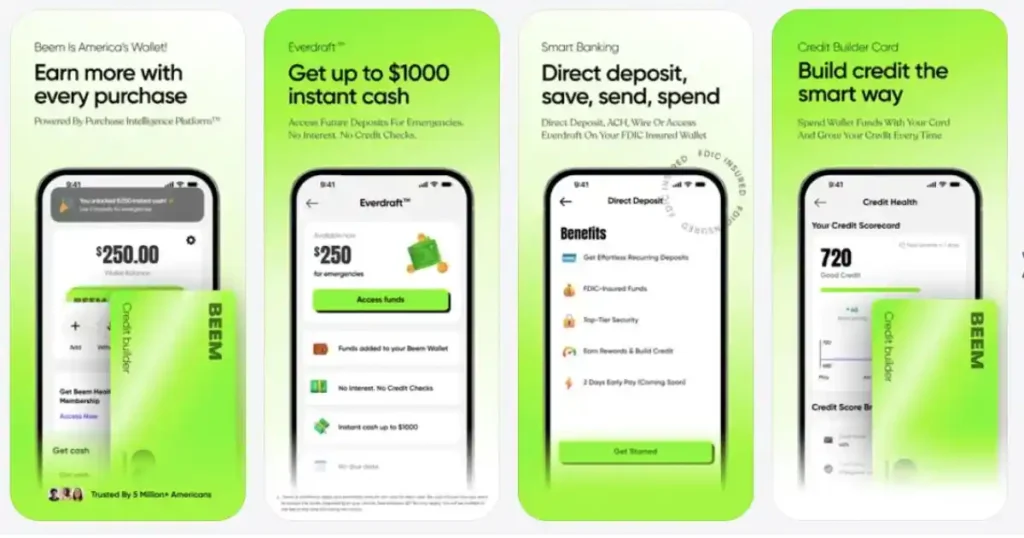
Beem‘s Everdraft feature provides access to up to $1,000 with no fees and no credit check, using bank account history and income deposits to determine eligibility rather than requiring proof of traditional employment. Repayment is automatic from the next qualifying deposit into your linked account.
| App | Max Advance | Credit Check | Employment Required | Fee | Best For |
| Beem Everdraft | $1,000 | No | No | None | Highest limit, no fee |
| EarnIn | $750/period | No | No (accepts gig) | Optional tip | Gig and freelance workers |
| Dave ExtraCash | $500 | No | No (accepts deposits) | $1/month | Low-cost advance |
| Brigit | $500 | No | No | $8.99 to $15.99/month | Automated overdraft protection |
Selling Items or Pawning for Quick Cash
Pawn shops provide instant cash using valuables as collateral and do not require income verification or a credit check. Electronics, jewelry, musical instruments, and tools are commonly accepted. Most pawn shops offer 25% to 60% of the item’s resale value as a loan, with 30-day terms and the option to reclaim the item upon repayment.
Selling outright through platforms like Facebook Marketplace or eBay takes slightly longer but typically yields more money than pawning. Electronics, clothing, furniture, and household items sell quickly when priced competitively.
Crowdfunding and Community Support
GoFundMe and similar platforms let you raise money for specific emergencies such as medical bills, job loss, or housing insecurity. A clear, honest description of your situation typically performs better than a vague request. Share the campaign through personal contacts first, since social network sharing significantly increases reach.
Family and community lending circles provide structured access to pooled funds without interest. If this option is available to you, treating it with the same formality as a bank loan, including a written repayment agreement, protects the relationship and ensures both sides are clear on expectations.
Strategies to Strengthen Your Application Without a Formal Job
Most cash advance apps and alternative lenders do not require traditional employment, but they do evaluate your financial profile in other ways. Understanding what they look for helps you present the strongest possible application.
Alternative Proof of Income
Lenders and apps that accept non-traditional income look for consistent bank deposits, not necessarily a paycheck from an employer. Unemployment benefits deposited directly into a checking account, gig platform earnings transferred weekly, freelance invoices paid by clients, and rental income all qualify as income documentation for most alternative lenders. Maintaining at least 60 days of consistent deposits before applying strengthens your application significantly.
Securing a Co-Signer or Guarantor
A creditworthy co-signer expands your access to formal lending products that would otherwise be unavailable during unemployment. The co-signer’s income and credit profile reduce the lender’s risk, which can result in a larger advance, a lower interest rate, or both. Both parties should understand the obligation clearly before signing, since a missed payment affects both credit profiles equally.
Building Trust With Local Lenders and Credit Unions
Credit unions are member-owned and typically use more flexible underwriting criteria than commercial banks. Many credit unions offer emergency loan products for members experiencing financial hardship, with lower interest rates and longer repayment windows than payday alternatives. Some credit unions allow same-day membership and loan applications for qualifying emergencies.
Practical Steps for a Swift Process
Preparation reduces delays and improves approval odds regardless of which option you pursue. Having the right information ready before you apply is one of the most practical things you can do.
Check your credit before applying by pulling your free report at annualcreditreport.com and disputing any errors. Prepare all documents in advance including government-issued ID, proof of address, bank statements for the past 60 to 90 days, and documentation of any alternative income source. Compare multiple options simultaneously rather than applying to one and waiting.
Realistic Alternatives to Traditional Cash Advances
If apps and microloans do not cover your situation, these alternatives may fill the gap without requiring borrowing at all.
Emergency Grants and Government Assistance
Federal and state assistance programs cover specific emergency expenses including utility payments through LIHEAP, food through SNAP, and housing through Emergency Rental Assistance programs. These do not need to be repaid and are specifically designed for people experiencing income disruption. Apply through benefits.gov or your local community action agency.
Bartering Services or Skills
Offering a skill in exchange for cash is a direct way to generate value without borrowing. Tutoring, graphic design, writing, landscaping, cooking, childcare, and general labor are all skills that can be exchanged locally. Nextdoor and local Facebook community groups connect you with neighbors who need help and are willing to pay.
Safeguarding Your Future: Budgeting and Recovery
Crafting a Lean Budget During Unemployment
List every expense and categorize it as fixed or variable. Fixed expenses like rent, utilities, and insurance payments need to be prioritized. Variable expenses like dining, subscriptions, and entertainment can be reduced or paused temporarily. Many service providers offer hardship pauses or reduced payments for customers who ask directly.
Building a Safety Net While Unemployed
Even small consistent savings contributions build a buffer over time. Setting up a $5 to $10 automatic transfer to a savings account each week creates a growing reserve that covers small emergencies without requiring a cash advance in the future. Round-up apps that save a few cents per transaction work similarly without requiring deliberate action.
Moving from Short-Term Relief to Stable Income
Cash advances and gig earnings cover immediate gaps but are not a long-term income strategy. Investing time in job applications, upskilling through free platforms like Coursera or LinkedIn Learning, and connecting with local employment centers creates the stable income that makes future financial emergencies significantly less likely.
Frequently Asked Questions: Instant Cash Advance
Can I get a cash advance without a job or pay stub?
Yes. Several cash advance apps including EarnIn, Brigit, and Beem’s Everdraft feature do not require a traditional pay stub. They evaluate your bank account activity and deposit history instead. Consistent deposits from gig platforms, freelance work, or unemployment benefits qualify as income on most of these platforms without requiring employer verification.
Do cash advance apps accept gig income or unemployment benefits?
Yes. Most major cash advance apps accept non-traditional income sources. EarnIn connects specifically to your earnings history including gig deposits. Beem looks at overall bank deposit patterns rather than employer-specific income. Unemployment benefits deposited via direct deposit into your linked account also typically qualify across these platforms.
Will getting a cash advance hurt my credit score?
Most cash advance apps do not perform a hard credit check, so applying and receiving an advance does not affect your credit score. Repayment is typically automatic from your next qualifying deposit. Some apps offer optional credit bureau reporting as a feature, but this is disclosed upfront and not applied without your awareness.
What is the safest cash advance option when unemployed?
The safest options charge no fees on the advance itself, do not require a monthly subscription to access the advance, and use automatic repayment from your next deposit. Beem’s Everdraft, EarnIn, and Dave all meet at least two of these criteria. Avoid any option that charges a fee upfront before delivering funds, which is a common signal of a predatory product.
How do I start rebuilding an emergency fund after a period of unemployment?
Start small. Even $10 to $25 per week into a separate savings account builds a buffer over time. Use a high-yield savings account to earn interest on whatever you accumulate. Once employed again, direct a fixed percentage of each paycheck to savings before spending from the remaining amount to make the habit automatic rather than optional.
What is the best way to improve my credit score while unemployed?
Focus on what you can control: paying existing bills on time, keeping credit card balances low relative to limits, and disputing any errors on your credit report. Consider a secured credit card or a credit builder loan to add positive payment history. Avoid closing old accounts, since credit history length is a meaningful scoring factor.
What should I do if I need more than a cash advance can provide?
Look into personal installment loans from lenders that accept alternative income, credit union emergency loans, and state or federal assistance programs for specific expenses like housing and utilities. Community action agencies can connect you with resources that don’t require repayment for food, rent, and utility emergencies when borrowing isn’t the right tool.
Conclusion
Being between jobs creates a real and immediate financial problem, but it does not eliminate all your options. Cash advance apps that accept gig income and bank deposit history, same-day earning platforms like DoorDash and TaskRabbit, community microloans, and emergency government assistance all provide paths to fast cash without requiring a traditional employer.
The most important decision is choosing options with transparent terms and automatic repayment rather than products that create new debt obligations you cannot cover. A short-term advance should bridge a specific gap, not become a recurring cost. Beem’s Everdraft covers up to $1,000 with no fees and no credit check for users with qualifying bank activity, which makes it a practical bridge while you line up your next source of stable income.