Key Summary
Online checkout screens look vastly different today than they did a decade ago. Alongside standard credit and debit options, you now see colorful buttons that let you split your purchase into smaller installments. This is the buy-now, pay-later (BNPL) industry, and it has taken retail by storm.
Millions of consumers in the United States use these services to afford everything from holiday gifts to major household appliances. The promise is appealing: you get your item immediately while paying only a fraction of the cost upfront.
Affirm is one of the most prominent names in this space. If you shop online at major retailers, you have likely seen their logo. As the cost of living continues to stretch household budgets, more people turn to these financing tools. However, taking on any form of debt requires careful thought.
Before linking your bank account or providing your Social Security number, you should know exactly who you are dealing with. Is Affirm legit, and is it a safe way to manage your cash flow? The answer requires a close look at its business model, interest rates, and potential risks to your credit score.
What is Affirm?
Affirm is a financial technology company based in San Francisco. Founded in 2012 by tech entrepreneurs, it was designed as an alternative to traditional credit cards. Its founders believed legacy credit card companies relied heavily on confusing fine print, compound interest, and hidden late fees to profit. Affirm was built on the mission to provide transparent, honest financing to everyday consumers.
Today, Affirm is a publicly traded company on the NASDAQ exchange. It is a fully legitimate business—not a scam or fly-by-night operation—boasting over 17 million active users across the United States.
Rather than operating like a traditional bank with physical branches, Affirm integrates directly into the checkout process of partner merchants. The company maintains partnerships with major retailers, including Amazon, Walmart, Target, and Shopify. When you use Affirm, you take out a short-term loan to cover the cost of a specific purchase.
Read: What Credit Score Is Needed for Affirm Now? 2026 Guide
How Does Affirm Work?
Using the platform is simple. When checking out at a partner store, you select Affirm as your payment method. The system asks for a few basic pieces of personal information, including your name, phone number, email address, and the last four digits of your Social Security number. The platform then runs a rapid background check to determine whether you qualify for a loan and how much credit to extend.
If approved, Affirm pays the merchant the full price of the item immediately, and the merchant ships your order as usual. From there, your financial obligation is entirely with Affirm. The company generally offers two payment structures depending on the purchase price and merchant terms.
The Pay in Four Option
This is the most common product for smaller purchases. The total cost of your order is split into four equal installments. You pay the first 25% at checkout, and the remaining three payments are automatically deducted from your linked debit card or bank account every two weeks over six weeks. This plan is usually interest-free. For example, a $100 pair of shoes will cost exactly $100, spread across four $25 payments.
Monthly Installment Loans
For larger purchases such as furniture, electronics, or travel, Affirm offers monthly installment loans. Instead of paying biweekly, you make a single monthly payment over a repayment term of 3 to 48 months. Unlike the Pay in 4 plan, these longer-term loans often carry significant interest charges. The exact terms appear before you finalize the purchase, showing your precise monthly payment and the total interest charged over the life of the loan.
Is Affirm Legit and Safe to Use?
Because you provide sensitive personal information, safety is a top concern. From a legal and operational standpoint, Affirm is legitimate and safe to use.
The company operates in strict compliance with U.S. financial regulations. It uses industry-standard encryption protocols to protect your data during the application process and while it is stored on its servers.
Affirm handles transactions securely through established banking partners and does not sell personal financial data to third parties. However, data security is distinct from budget safety. The primary risk of using Affirm lies in the accumulation of unaffordable debt, as the platform removes spending friction and makes overextension easy.
Read: BNPL in Healthcare: Best Buy Now Pay Later Options for Medical Bills Now
Understanding Affirm Interest Rates and Fees
The most critical factor in evaluating any lending product is borrowing cost. Affirm heavily markets its lack of hidden fees. While true, interest rates on certain loans can be high. Pay close attention to the terms offered at checkout, as they vary widely across purchases.
The Zero Percent Promise
Many consumers prefer Affirm for its frequent 0% APR promotions. If you qualify for a 0% loan, borrowing is free. For instance, purchasing a $1,000 laptop on a 12-month 0% plan results in payments of $83.33 per month, with no catches or deferred-interest traps. This is a helpful financial tool if you have the cash but prefer to keep it in savings while paying off the purchase over time.
The 36 Percent Reality
Risk increases when you do not qualify for promotional rates. Depending on your credit history and the merchant, Affirm’s interest rates range from 10% to 36%. For comparison, the average traditional credit card carries an interest rate of around 23%.
Borrowing at 36% is expensive. Financing that same $1,000 laptop over 12 months at 36% interest increases your total cost to nearly $1,200. You pay a steep premium for the convenience of spreading out payments. Using Affirm at these higher rates is rarely a sound financial decision.
No Late Fees but Real Consequences
One notable feature of Affirm is that it never charges late fees or prepayment penalties. If you miss a payment, you will not face a $30 penalty fee or an extra charge for paying early. However, missing a payment still carries consequences: Affirm may lock your account to prevent future purchases, and late payments can hurt your credit standing.
How Affirm Impacts Your Credit Score
Many shoppers use BNPL services, believing these apps bypass traditional credit reporting. This is a misconception. Your activity with Affirm can directly impact your credit score in several ways.
Soft Inquiries vs Hard Inquiries
When you apply at checkout, Affirm typically performs a soft credit check. This allows them to review your credit history and assess risk without placing an inquiry mark on your report or hurting your score.
However, for very large purchases or specific installment loans, Affirm may require a hard credit inquiry. Hard inquiries appear on your credit report and typically lower your score by a few points. While this effect usually fades within a year, applying for multiple financing plans in a short period can compound and damage your credit profile.
Credit Reporting on Late Payments
The greatest risk to your credit score occurs during repayment. While Affirm generally does not report Pay in 4 activity to credit bureaus, it may report monthly installment loan payment history to Experian.
On-time payments can help build your credit score by demonstrating responsible borrowing. Conversely, missing a payment by more than 30 days results in a reported delinquency.
A single late payment reported to a credit bureau can cause your score to drop by 50 to 100 points and remain on your credit report for up to seven years. A service intended to simplify shopping can ultimately impair your ability to rent an apartment or qualify for an auto loan.
If you make all your payments on time, this can actually help build your credit score by establishing a history of responsible borrowing. But if you miss a payment and fall more than thirty days behind, Affirm will report the delinquency.
A single late payment reported to a credit bureau can cause your score to drop by fifty to one hundred points, depending on your current standing. That negative mark will stay on your credit report for up to seven years.
A service that was supposed to make shopping easier can quickly ruin your chances of renting an apartment or buying a car.
Read: BNPL For Services: What To Know Before You Buy Now Pay Later
The Pros and Cons of Using Affirm
To make an informed decision, weigh the benefits against potential financial pitfalls. Affirm is a useful tool, but it requires discipline.
The Advantages
- Transparent Pricing: Affirm states your total cost upfront before you accept the loan. Interest does not compound, meaning your balance will never exceed the agreed-upon amount.
- Zero Hidden Fees: The absence of late fees, account maintenance fees, and prepayment penalties makes borrowing costs predictable.
- Easy Approval Process: The application takes seconds to complete and integrates seamlessly with checkout at thousands of online stores.
- Zero-Interest Offers: Applicants with good credit can frequently access promotional 0% APR financing.
The Drawbacks
- High Maximum Interest Rates: Without promotional rates, interest charges can reach up to 36%, significantly increasing purchase costs.
- Credit Score Risks: Missed payments on monthly installment loans are reported to Experian and can harm your credit profile long-term.
- Encourages Overspending: Breaking large totals into smaller installments can prompt consumers to buy items outside their budget.
- Complicated Returns: Processing refunds through a third-party lender can be complex and time-consuming.
Real Customer Experiences and Complaints
User reviews offer insight into customer experience. While millions use the service without issue, consumer protection sites and the Better Business Bureau document common complaints.
The Refund Process Issues
The most frequent complaints concern returns. With a standard credit card, returning an item prompts a direct refund from the merchant. With Affirm, a third-party lender is involved: the store must process the return and notify Affirm, which then adjusts your loan balance.
Users report getting caught in the middle when merchants confirm a return, but Affirm systems have not updated. You remain obligated to make payments during this window to avoid credit damage. Additionally, Affirm does not refund any interest paid before the return.
The Debt Trap Potential
Financial experts caution against the behavioral tendencies BNPL apps encourage. Customers often start by financing a small purchase, then add second and third items, as the low payments feel manageable. This “payment stacking” commits a growing share of future income to past purchases, creating financial vulnerability in the event of a reduction in income or job loss.
Read: Using BNPL To Build A Positive Payment History Fast
Affirm vs Traditional Credit Cards
Whether to use credit cards or financing apps depends on spending habits and credit standing.
If you pay your credit card balance in full each month, traditional cards generally offer better perks, such as robust fraud protection, extended warranties, and rewards points—benefits that Affirm does not provide.
However, if you carry a balance month to month, Affirm can be a safer alternative. Credit cards use compounding interest, meaning unpaid interest accrues further interest. Affirm uses simple interest, calculating total interest upfront and dividing it across equal payments so your balance never grows.
If you need to finance a purchase over a set timeframe, a fixed-payment schedule with Affirm is often preferable to revolving credit card debt.
A Simpler Alternative: Introducing Beem
While Affirm provides retail financing, relying on loans for consumer purchases can be risky. If your goal is to manage cash flow, avoid high interest rates, and build stability, tools that support overall financial health offer a better solution. This is where Beem comes in.
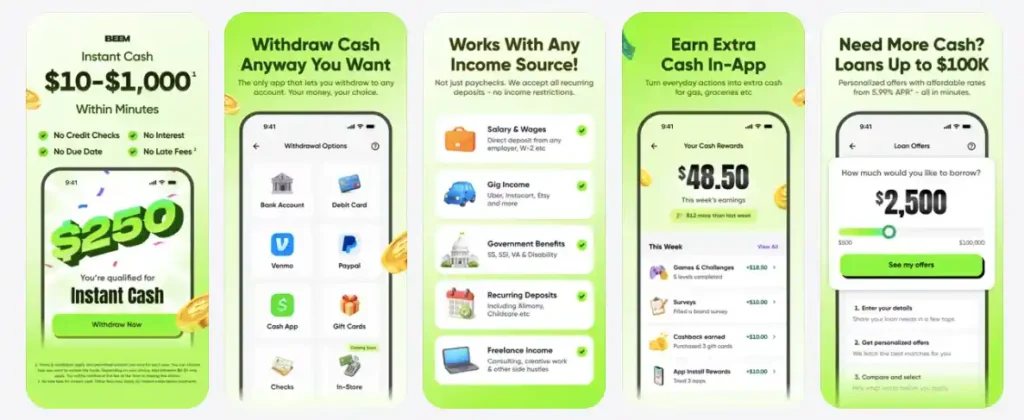
Beem is a financial technology company, not a bank. Unlike Affirm, which focuses on point-of-sale retail loans, Beem focuses on improving liquidity and managing cash flow between paychecks. Over five million users rely on the Beem app for transparent tools without hidden fees.
Cash When You Need It With Everdraft
For emergency cash needs, taking out a high-interest checkout loan is rarely ideal. Beem offers Everdraft™, a feature that lets eligible members access a portion of their upcoming earnings early—ranging from $10 to $1,000 depending on account activity.
Everdraft is an advance on your earnings, not a loan. Because it is not credit, there are no interest charges, credit checks, or late payment penalties. Everdraft™ is included with Beem subscription plans (starting at $1.99/month). Depending on how you transfer funds, an instant delivery fee of up to $4 may apply, and all details will be shown before confirmation.
Building Credit Without Debt
While Affirm builds credit through installment debt, Beem offers credit-building options without requiring structured loan obligations. The platform helps you establish a payment history through routine transactions.
Everyday actions like ATM withdrawals can contribute to credit building. Beem reports monthly to major credit bureaus and provides score tracking, allowing users to build credit standing through regular financial management rather than installment loans.
AI-Powered Financial Management
The main distinction between point-of-sale financing and the Beem ecosystem lies in their focus on long-term financial wellness. Beem includes an AI assistant designed to help users manage their money effectively.
The AI analyzes spending patterns to support budgeting and saving goals. The platform also features cashback rewards on gift cards, local deals, and financial protection services covering income, vehicle, device, and estate planning tools.
Read: Do BNPL Installments Count as Debt? Latest 2026 Answer
The Final Verdict on Affirm
Affirm is a legitimate and secure financing platform. It features transparent pricing, data security, and no late fees. When paired with 0% APR promotional financing, it can be an effective option for spreading out necessary expenses.
However, standard rates up to 36% pose notable financial risks. Additionally, potential credit score impacts from missed payments require disciplined money management from users.
For consumers seeking to manage cash flow without high-interest loans, alternative financial technology platforms present a practical path. Tools like Beem offer ways to access funds, build credit, and budget effectively while avoiding the risks of point-of-sale debt. Download the app now.