
Key Summary
If you have gotten a preapproved offer from Upgrade in the mail or come across it while comparing personal loans, it is a reasonable question to ask whether the company is actually trustworthy before you hand over your financial information. Understanding is Upgrade legit matters, especially with so many loan offers competing for your attention and not all of them being what they claim. The short answer is yes, Upgrade is a legitimate, regulated lending company, but that does not mean it is automatically the right fit for every borrower or that you should skip doing your own comparison before applying.
This article breaks down what Upgrade actually is, what its ratings and complaint history look like, what to know about its rates and fees, and how to compare it against other lenders before committing to any personal loan.
What Is Upgrade?
Upgrade is an online personal loan and financial services company based in San Francisco, founded in 2017 by Renaud Laplanche, who also co-founded LendingClub. Rather than being a traditional bank, Upgrade operates as a nonbank lender that works with bank partners to fund its loans. Over time, the company has expanded beyond personal loans into a broader set of products, including credit cards, a rewards checking account, and free credit monitoring tools.
Upgrade offers personal loans in most U.S. states, with amounts generally ranging from 1,000 to 50,000 dollars. It is aimed primarily at borrowers with fair to good credit, and the application process is designed to be fully online, from prequalification through funding.
Is Upgrade Legit? What the Ratings and Records Show
When evaluating whether any lender is legitimate, a few sources of information matter more than marketing copy.
BBB Accreditation and Rating
Upgrade is an accredited business with the Better Business Bureau and holds an A+ rating, one of the higher ratings the BBB assigns. The BBB profile also confirms Upgrade holds an active lending license issued by the California Department of Financial Protection and Innovation, which is the kind of regulatory detail that separates a legitimate lender from an unlicensed or fraudulent one.
Customer Reviews
Customer reviews on the BBB and other review platforms are largely positive, with many borrowers describing a fast, straightforward application process and funding arriving within a day or two of approval. As with most lenders, there are also negative reviews, some centered on continued marketing mail after opt-out requests, and others involving disputes over specific transactions or refunds. This kind of mixed feedback is common across the personal loan industry and is not unique to Upgrade.
CFPB Complaint Data
The Consumer Financial Protection Bureau received 186 complaints related to Upgrade personal loans in 2025. The most common issues involved incorrect information on credit reports and problems making payments. Nearly all of these complaints were closed with an explanation from the company, and a small number resulted in monetary or nonmonetary relief. For context, complaint volume alone does not necessarily indicate a problem, since larger lenders naturally generate more complaints in raw numbers simply due to loan volume. What matters more is how complaints are resolved, and Upgrade’s complaints appear to have received timely responses according to CFPB data.
Taken together, these signals point to Upgrade being a legitimate, regulated lender rather than a scam or unlicensed operation. That said, legitimacy is not the same as being the best fit for your specific situation, which is where rates, fees, and terms come into play.
Upgrade’s Rates, Fees, and Loan Terms
Understanding the actual cost of an Upgrade loan is just as important as confirming its legitimacy.
Interest Rates
Upgrade’s advertised APRs start around 7.74 percent, though actual personal loan rates industry-wide typically range between 9 and 36 percent depending on creditworthiness. Where your specific rate lands within that range depends heavily on your credit profile, income, and other factors Upgrade evaluates during underwriting.
Origination Fees
Upgrade charges an origination fee on all loans, which is deducted from the loan amount before funds are disbursed. This is a common practice among online lenders, but it means the amount you actually receive will be less than the amount you are approved for, so it is worth factoring into your comparison against other lenders that may not charge this fee.
Funding Speed
Once approved and verified, Upgrade typically funds loans within one business day, which is fast compared to traditional bank loans that can take a week or longer.
Prequalification Without a Hard Credit Check
Upgrade allows you to check your prequalified rate using a soft credit pull, which does not affect your credit score. A hard credit check only occurs if you move forward with a full application, which is a standard and borrower-friendly practice across most reputable online lenders.
No Prepayment Penalties
Upgrade does not charge a penalty for paying off your loan early, which gives borrowers some flexibility if their financial situation improves and they want to pay down the balance faster than originally scheduled.
Who Upgrade Tends to Work Best For
Based on its underwriting approach and rate structure, Upgrade tends to work best for borrowers with fair to good credit, generally in the 580 to 669 range and above, who need a personal loan funded quickly and are comfortable with an origination fee being deducted from their loan amount. Borrowers looking to consolidate debt, cover a major purchase, or handle an unexpected expense are common use cases.
It is less likely to be the best fit for borrowers seeking the absolute lowest possible rate, since origination fees and APRs on the higher end of the range can make Upgrade more expensive than some competitors, depending on your credit profile.
Why Comparing Lenders Matters, Even With a Legitimate Company
Confirming that Upgrade is legitimate answers the trust question, but it does not answer the value question. Because origination fees, APRs, and loan terms vary meaningfully between lenders, even for borrowers with similar credit profiles, comparing multiple offers before committing is one of the most effective ways to avoid overpaying on a personal loan.
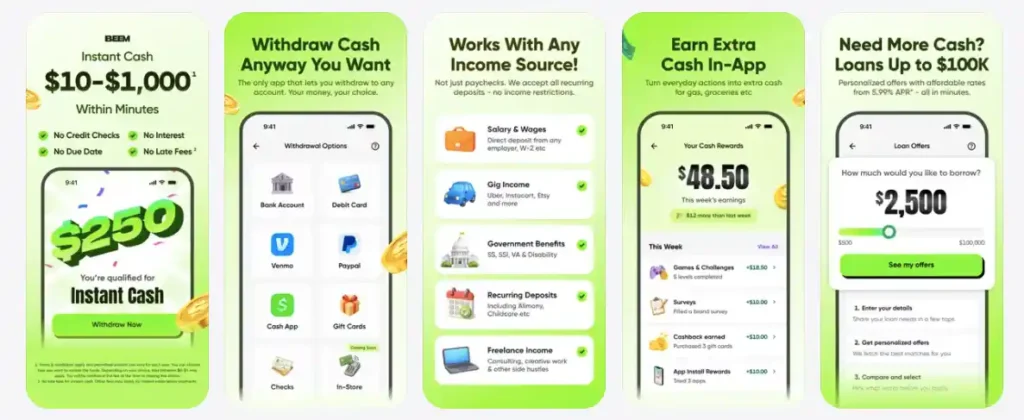
This is where using a loan comparison tool, rather than applying directly to a single lender, can save real money. Beem’s personal loan feature is built around this idea. Instead of functioning as a direct lender, Beem connects you with a network of lenders and shows personalized rate offers based on your details, so you can compare options side by side before applying anywhere. Checking your rate through Beem uses a soft pull that does not impact your credit score, and loan amounts available through the comparison range from 500 to 100,000 dollars depending on the lender and your eligibility.
The value of this approach is straightforward. Rather than assuming any single lender, including Upgrade, is automatically your best option, comparing several real offers side by side lets you see actual rates and terms for your specific situation before you commit to anything.
How to Evaluate Any Personal Loan Lender, Including Upgrade
Whether you are considering Upgrade or any other lender, a consistent evaluation process helps you avoid both scams and simply overpaying.
Confirm Licensing and Accreditation
Check whether the lender is licensed in your state and whether it holds accreditation or a rating from the Better Business Bureau. Legitimate lenders are generally transparent about this information and make it easy to find.
Review Complaint Data, Not Just Star Ratings
A star rating alone does not tell the full story. Looking at complaint data from sources like the CFPB, along with how those complaints were resolved, gives a more complete picture of how a lender handles problems when they arise.
Read the Full Fee Structure
Origination fees, late payment fees, and any other charges should be clearly disclosed before you accept a loan offer. If a lender is vague about its fee structure or pressures you to accept an offer quickly without reviewing the details, that is a signal to slow down.
Compare Your Actual Rate, Not Just Advertised Ranges
Advertised starting rates are usually reserved for borrowers with the strongest credit profiles. The only way to know what you would actually pay is to check your personalized rate, ideally across multiple lenders, using a soft credit pull that does not affect your score.
Watch for Prepayment Penalties and Hidden Terms
Even among legitimate lenders, terms vary. Confirm whether early repayment is penalized, how repayment is structured, and whether the lender reports to credit bureaus, since consistent on-time payments can help build your credit over time.
Red Flags That Distinguish a Scam From a Legitimate Lender Like Upgrade
While Upgrade itself does not exhibit these warning signs, it is worth knowing what separates a legitimate lender from a predatory or fraudulent one, especially since scam lenders sometimes impersonate real companies.
Legitimate lenders never require an upfront fee paid directly to you or through gift cards before releasing loan funds. They are licensed in the states where they operate and do not pressure you into decisions with extreme urgency. They also provide clear, written terms before you accept a loan, rather than vague verbal promises. If any lender you are considering, including one claiming to be Upgrade, exhibits these behaviors, treat it as a serious warning sign and verify directly through the company’s official channels or regulatory filings.
Final Take: Is Upgrade Worth Considering?
Upgrade is a legitimate, regulated personal loan company with an A+ BBB rating, active state licensing, and a complaint resolution record that looks in line with other major online lenders. It can be a solid option for borrowers with fair to good credit who want a fast, fully online loan process and are comfortable with an origination fee built into the loan structure.
That said, legitimacy is only the starting point. Because rates and fees vary by lender and by your specific credit profile, the smartest move is to compare Upgrade against other options rather than applying with the first offer you see. Using a comparison tool that checks your rate with a soft pull, like the one available through Beem, lets you see how Upgrade stacks up against other lenders for your actual situation before you commit to anything.
FAQs
Is Upgrade a legitimate personal loan company?
Yes. Upgrade is a BBB accredited business with an A+ rating, holds active state lending licenses, and has a complaint resolution record consistent with other major online lenders. It is a legitimate, regulated company rather than a scam operation.
Does Upgrade charge high interest rates?
Upgrade’s advertised APRs start around 7.74 percent, with rates depending heavily on your individual credit profile. Like most personal loan lenders, your actual rate could fall anywhere within the broader industry range, so it is worth checking your personalized rate before assuming a specific cost.
Does checking your rate with Upgrade hurt your credit score?
No. Upgrade allows you to check your prequalified rate using a soft credit pull, which does not affect your credit score. A hard credit check only occurs if you move forward with a full application.
What credit score do you need for an Upgrade loan?
Upgrade does not publicly disclose a strict minimum credit score requirement, but it tends to work best for borrowers with fair to good credit, generally in the range of 580 to 669 or higher.
Are there better alternatives to Upgrade?
Depending on your credit profile and needs, other lenders may offer lower rates or fewer fees than Upgrade. Comparing multiple offers, such as through Beem’s personal loan comparison feature, allows you to see real, personalized rates across several lenders before deciding which one is the best fit.
Does Upgrade charge an origination fee?
Yes. Upgrade charges an origination fee on all loans, which is deducted from your loan amount before funds are disbursed. This is worth factoring into any comparison against lenders that may not charge this fee.