

Key Summary
If you have a fair credit score and need a personal loan between $2,000 and $36,500, LendingPoint is one of the more accessible options in the market. It approves borrowers with credit scores as low as 580, considers income and employment history alongside the score, and typically funds within one business day of approval. For borrowers who traditional banks have turned down, that combination of accessibility and speed is genuinely useful.
Getting a quote from LendingPoint does not require a hard credit check during prequalification. You can see your estimated rate, term, and monthly payment without affecting your credit file.
This guide covers what to expect from a LendingPoint quote, who qualifies, how it compares to similar lenders, and what to consider if your immediate need is smaller than a full personal loan.
What Is LendingPoint?
LendingPoint is an Atlanta-based fintech lender that specializes in personal loans for borrowers with fair to good credit. It has been operating since 2014 and has issued over $10 billion in personal loans to consumers across the United States. Unlike traditional banks that rely almost entirely on credit score, LendingPoint also considers employment history, income stability, and cash flow patterns when making lending decisions.
According to the Consumer Financial Protection Bureau (CFPB), a significant share of American adults have subprime or thin credit files that limit their access to mainstream bank products. LendingPoint serves this group with structured, regulated instalment loan products that sit between payday loans and prime bank lending. The APRs are higher than what prime borrowers access, but the terms are transparent, fixed, and fully disclosed before you sign.
The loan is repaid in fixed monthly instalments over a defined term. There are no variable rate changes, no balloon payments, and no prepayment penalties. Origination fees may apply depending on your state and credit profile. All costs are shown in the loan agreement before you commit.
LendingPoint reports all payments to the major credit bureaus. This means on-time payments build positive payment history over the life of the loan, which can meaningfully improve your score if you start in the fair credit range.
Read more at https://www.lendingpoint.com/
What to Expect from a LendingPoint Quote
A LendingPoint prequalification gives you a real preview of your borrowing options before a hard inquiry is triggered. The numbers you see reflect your actual credit profile and income, not a generic rate range pulled from a marketing page. This makes the prequalification genuinely useful for comparison purposes rather than just an estimate.
Here is what a LendingPoint personal loan quote typically shows:
Loan amounts range from $2,000 to $36,500, depending on your state, income, and credit profile. Some states have lower maximum amounts due to state lending regulations.
Repayment terms run from 24 to 72 months. A shorter term means a higher monthly payment but less total interest paid over the life of the loan. A longer term reduces the monthly obligation but increases the total cost. Both numbers matter and should be part of your decision.
APR typically ranges from 7.99% to 35.99% (these are estimates; your actual rate depends on your credit score, income, debt-to-income ratio, and state of residence). Borrowers with scores above 650 and stable income tend to receive rates toward the lower end of that range.
Funding gets credited the next business day after you sign the loan agreement. Applications submitted before the daily cutoff are often processed on the same day, with funds arriving the following morning.
Origination fees may apply and are deducted from the loan amount at disbursement. On a $10,000 loan with a 5% origination fee, you receive $9,500 but repay the full $10,000 plus interest. Factor this into your calculation when comparing total cost across lenders.
No prepayment penalty applies. You can pay off the loan at any time before the scheduled end date without any additional charge.
Find more details at https://www.lendingpoint.com/trusted-and-transparent-personal-loans/
Who Should Consider a LendingPoint Personal Loan?
LendingPoint is built for a specific borrower profile. Knowing whether you fit that profile before applying saves time and avoids an unnecessary hard inquiry on your credit file.
LendingPoint is a practical fit for borrowers with a credit score between 580 and 720 who have been declined by traditional banks or prime online lenders. It works well for borrowers who need between $2,000 and $36,500 for a defined purpose such as debt consolidation, a medical bill, a car repair, a home improvement project, or a large one-time purchase. You need verifiable income from employment, self-employment, retirement income, or government benefits. The lender also looks at your debt-to-income ratio, so having manageable existing debt relative to your income improves your odds significantly.
LendingPoint is less likely to be the right fit if your credit score is above 720, since you likely qualify for meaningfully lower rates from a prime lender. If your total need is under $2,000, LendingPoint’s minimum loan amount rules it out. If you live in a state where LendingPoint does not currently operate, you will need to look at one of the alternatives below.
One thing worth knowing before you apply: LendingPoint typically allows only one active loan at a time. You must pay off your current balance before applying for a new loan. If you are already carrying a LendingPoint loan and need additional funds, one of the alternative lenders in the comparison table below may be an option.
How LendingPoint Compares to Similar Lenders
Before accepting any loan offer, comparing at least two lenders on total cost is worth the extra time. A 3% difference in APR on a $10,000 loan over 48 months translates to roughly $1,500 in total interest. The prequalification tools at most online lenders use soft credit checks, which means you can compare multiple offers without any score impact.
| Lender | Loan Range | Est. APR Range | Min Credit Score | Funding Speed | Best For |
| LendingPoint | $2,000 to $36,500 | 7.99% to 35.99% (est.) | 580+ | Next business day | Fair credit, flexible terms |
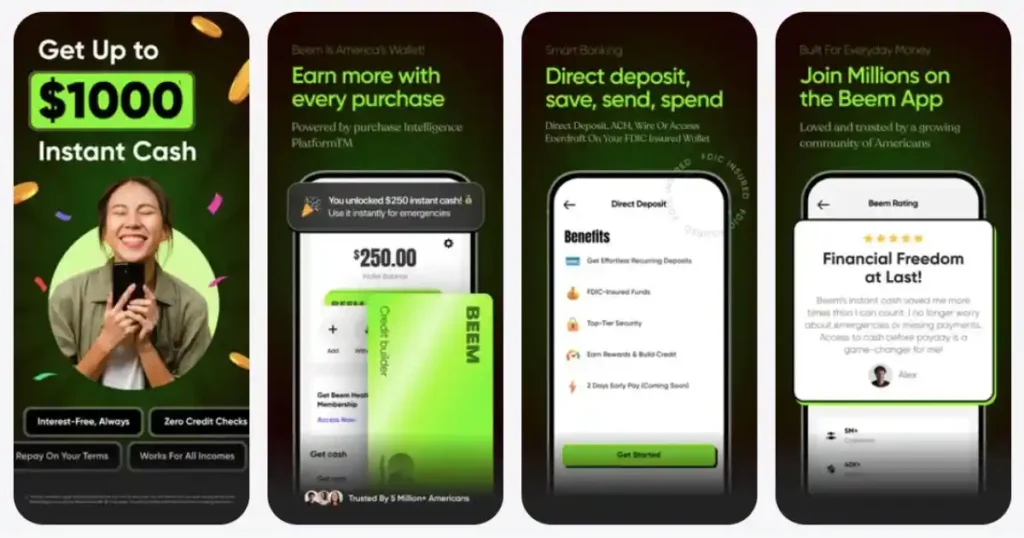
| Beem Everdraft | Up to $1,000 | No interest, no fees | No credit check | Instant | Short-term gap before payday |
| Upstart | $1,000 to $50,000 | 7.40% to 35.99% (est.) | 300+ | 1 to 3 days | Thin credit, AI-based review |
| Upgrade | $1,000 to $50,000 | 9.99% to 35.99% (est.) | 560+ | 1 to 4 days | Co-borrower option, larger amounts |
| Avant | $2,000 to $35,000 | 9.95% to 35.99% (est.) | 580+ | Next business day | Similar profile to LendingPoint |
APR ranges sourced from each lender’s official prequalification disclosure page as of July 2026
Upstart uses an AI-based approval model that weighs employment history and education alongside credit score. It is the strongest alternative if your credit score is below 580 or if you have a thin credit file but stable income history. The origination fee on Upstart can reach 12% for borrowers with lower scores, so compare the total cost rather than just the stated APR.
Upgrade allows co-borrowers, which can improve both your approval odds and the rate you receive if you have a creditworthy person willing to apply jointly. It also supports direct creditor payment for debt consolidation, eliminating the manual step of paying off each account yourself after the funds arrive.
Avant targets a similar borrower profile to LendingPoint with comparable speed and minimum credit score requirements. It is worth a direct comparison for the same loan amount since the rates offered can differ meaningfully depending on your specific credit profile.
Also Read: Mariner Personal Loan Quotes: What to Know Before You Apply
How to Get a LendingPoint Quote Step by Step
The prequalification process is fully online and takes under five minutes. Here is what happens at each stage.
Step 1: Prequalify with a Soft Credit Check
Go to lendingpoint.com and enter your desired loan amount and the purpose of the loan, along with basic personal information, employment status, and income details. LendingPoint runs a soft credit inquiry at this stage. A soft inquiry does not appear on your credit report and does not affect your credit score. You can prequalify and then step away without any commitment or consequence.
Step 2: Review Your Personalized Quote
After prequalification, you see estimated loan options with different term lengths and monthly payment amounts. Each option shows the estimated APR, the monthly payment, the total amount repaid over the full term, and any applicable origination fee. Always look at the total repayment figure across the full term, not just the monthly payment. A $200 monthly payment on a 72-month loan costs significantly more in total interest than a $300 monthly payment on a 48-month loan, even if the APR is identical.
Step 3: Compare at Least One Alternative
Before submitting a full application with LendingPoint, use the soft-pull prequalification tools at Upstart, Upgrade, or Avant and compare the actual offers side by side. The relevant numbers to compare are the APR, the origination fee, the monthly payment, and the total amount repaid. This takes ten minutes and can save you hundreds or thousands of dollars in interest over the loan term.
Step 4: Submit the Full Application
When you are ready to proceed, complete the full application. LendingPoint runs a hard credit inquiry at this stage, which may cause a small temporary dip in your credit score, typically 5 to 10 points. This is normal, and the score usually recovers within a few months of on-time payments. Upload your income verification documents at this stage, which typically means recent pay stubs, bank statements, or tax returns depending on your employment type.
Step 5: Sign and Receive Funds
Once approved, review the final loan agreement carefully before signing. Confirm the exact APR, the monthly payment, the origination fee, the repayment term, and the total amount you will repay over the life of the loan. After signing, funds typically arrive in your bank account the next business day via direct deposit.
How to Improve the Quote You Receive
The rate LendingPoint offers reflects your financial profile at the time of application. Taking a few steps before you apply can meaningfully improve the terms you are offered, sometimes by several percentage points.
- Reduce your credit card balances before applying. Credit utilization, the percentage of your available revolving credit that you are currently using, has a significant impact on your credit score. Paying down a card balance before applying can improve your score within one to two billing cycles and lower the rate LendingPoint quotes you.
- Check your credit report for errors before applying. Pull your free report at annualcreditreport.com and review it carefully. Errors appear more often than most people expect and can pull your score down unfairly. Disputes can be filed online directly with the credit bureaus and are typically resolved within 30 days.
- Document all income sources thoroughly. Include freelance income, part-time work, rental income, retirement income, and any government benefits you receive. More verifiable income improves your debt-to-income ratio, which directly affects the rate LendingPoint can offer.
- Avoid multiple hard credit inquiries in the weeks before applying. Each hard inquiry causes a small dip in your score. Use soft-pull prequalification tools across lenders to compare offers without any score impact, then commit to a single full application once you have chosen the best option.
- Apply for the amount you actually need rather than the maximum available. Requesting a higher amount than your income clearly supports reduces approval odds and can increase the rate you are offered. Lenders view a borrower who needs $8,000 but requests $20,000 as higher risk than one who requests exactly what they need.
What If You Do Not Qualify for LendingPoint?
If LendingPoint’s terms do not work for your situation, or if you receive a quote with a higher APR than expected, the alternatives in the comparison table above are worth checking.
Upstart is the strongest option if your credit score is under 580. Its AI-based model approves borrowers with limited credit history who would otherwise be declined by most competitors.
Upgrade is worth checking if you have a creditworthy co-borrower, since the joint application can improve both approval odds and the rate you receive. Avant targets nearly the same borrower profile as LendingPoint and frequently offers competitive rates at the same loan amounts.
If your immediate need is under $1,000 and the issue is a timing gap between now and your next paycheck rather than a large, multi-month borrowing need, Beem’s Everdraft feature covers up to $1,000 with no fees and no credit check, with repayment tied automatically to your next paycheck. It is a different product from a personal loan and does not build credit history, but it is a practical option for a short-term bridge while you complete your loan research.
Responsible Borrowing After Approval
Getting approved is the start of the process, not the finish. What you do after the funds arrive determines whether the loan actually improves your financial position over time.
Pay off each account you planned to consolidate immediately after funds arrive. The most common mistake post-consolidation is leaving cleared credit card balances available for spending, which creates two debt obligations instead of one.
Set up automatic payments on the LendingPoint loan from day one. A single missed payment can cause a significant dip in your credit score and may trigger a late fee. Autopay removes the risk of forgetting a due date.
Avoid opening new credit accounts during the repayment period. Your credit score and debt-to-income ratio both improve as you pay down the loan. Protecting that progress by limiting new credit applications means you will be in a stronger position when the loan is paid off.
Review your credit score monthly. Most banks and credit card issuers provide free score tracking through their apps. Watching your score improve as you make on-time payments reinforces the habit and gives you an early warning if something unexpected appears on your credit file.
FAQs: LendingPoint Personal Loan Quotes
Is LendingPoint a legitimate lender?
Yes. LendingPoint is a licensed consumer lender regulated in the states where it operates and subject to federal consumer lending laws including the Truth in Lending Act, which requires full disclosure of APR, fees, and total loan cost before you sign. It has been operating since 2014 with over $10 billion in loans issued.
What credit score do I need for a LendingPoint personal loan?
LendingPoint approves borrowers with credit scores as low as 580. Scores above 620 generally receive better rate offers. The lender also considers income stability, employment history, and debt-to-income ratio, so a borderline score does not automatically mean rejection if the rest of your profile is strong.
Does checking my LendingPoint quote affect my credit score?
No. The prequalification step uses a soft credit check that does not appear on your credit report and has no effect on your score. A hard inquiry only occurs when you submit a full application after reviewing your quote and deciding to proceed.
Can I pay off a LendingPoint loan early?
Yes, with no prepayment penalty. Paying off the loan ahead of schedule reduces the total interest you pay over the remaining term. If your financial situation improves during repayment, making extra payments or paying off the balance in full is one of the most effective ways to lower the total cost of a higher-rate loan.
Does LendingPoint approve loans on weekends?
LendingPoint accepts applications seven days a week, but funding timelines follow banking business days. An application approved on a Friday may not see funds deposited until Monday or Tuesday. If your need is time-sensitive over a weekend, factor that delay into your plan. For amounts under $1,000, Beem’s Everdraft transfers funds within minutes regardless of the day.
Can I use a LendingPoint loan for debt consolidation?
Yes, and it is one of the most common uses. LendingPoint disburses funds directly to your bank account, which means you are responsible for paying off each individual creditor yourself after the funds arrive. If you prefer a lender that pays creditors directly on your behalf, Upgrade offers that option and is worth a direct comparison before you apply.
What happens if I miss a LendingPoint payment?
A missed payment typically triggers a late fee and is reported to the major credit bureaus after 30 days, which can cause a significant drop in your credit score. If you know in advance that you will struggle to make a payment, contact LendingPoint before the due date, not after. Most lenders have hardship or deferral arrangements available to borrowers who communicate proactively. A missed payment flagged in advance is far less damaging than one that goes unreported until after the fact.
What is the difference between a personal loan and a line of credit?
A personal loan gives you a lump sum repaid in fixed monthly installments over a defined term. A line of credit lets you borrow repeatedly up to a limit, making it more flexible but harder to track and budget around. For one-time needs like debt consolidation or a specific large expense, a personal loan with a fixed end date is usually the cleaner structure.
How does taking a personal loan affect my credit score over time?
The hard inquiry at application causes a small temporary dip. After that, consistent on-time monthly payments build positive payment history, the largest factor in your credit score. If the loan pays off revolving credit card balances, your credit utilization ratio also drops, which typically produces a further score improvement within one to two billing cycles of the payoff.
What should I do if I cannot make a loan payment on time?
Contact LendingPoint before the payment date, not after. Most lenders have hardship arrangements or deferral options available only if you communicate in advance. A missed payment without prior contact is significantly harder to resolve and more damaging to your credit than a proactive conversation about your situation before the due date.
Small Advance or Full Loan: What to Consider First
LendingPoint is a practical option for borrowers with fair to good credit who need between $2,000 and $36,500 with a structured monthly repayment schedule. The next-business-day funding, transparent fixed terms, no prepayment penalty, and credit bureau reporting make it competitive in the fair credit segment. Before applying, compare at least one alternative rate from Upstart, Upgrade, or Avant using their soft-pull prequalification tools.
If your need is smaller and more immediate, a different tool may be more appropriate. For amounts up to $1,000 needed before your next paycheck, Beem’s Everdraft covers that with no fees and no credit check, repaid automatically on payday. For a structured personal loan with monthly installments and credit-building reporting, apply directly at lendingpoint.com after completing your lender comparison.