

Key Summary
Losing a job, getting a pay cut, or dealing with a major medical bill can shake your whole financial life. The stress of not having enough money is bad enough on its own. But one thing that makes it worse is watching your credit score drop at the same time. A lower credit score can follow you long after the hardship is over. It can make it harder to rent an apartment, get a car loan, or even qualify for a better job.
The good news is that financial hardship does not automatically ruin your credit. What damages credit is not the hardship itself. It is the missed payments, the maxed-out cards, and the ignored bills that pile up when people do not act fast enough. If you take the right steps early, you can protect your score even when money is tight.
This guide covers the smartest moves you can make to protect your credit during financial hardship. It also explains how Beem fits in as a practical tool that can help you stay on track from the first hard week to the day things get better.
How Financial Hardship Damages Credit
Before you can protect your credit, it helps to understand exactly how hardship hurts it. Your credit score is built from several factors. Payment history is the biggest one, making up about 35% of your score. Credit utilization, which is how much of your available credit you are using, makes up another 30%. Length of credit history, new credit inquiries, and credit mix account for the rest.
When money gets tight, the most common problem is missed payments. Even one payment that is 30 days late can do serious damage to a strong score. If payments keep getting missed, the account can go to collections, which stays on your credit report for years. On top of that, people often lean heavily on credit cards during hardship, which pushes utilization up fast. A high utilization ratio is the second fastest way to drop your score.
The key point is that the damage is not automatic. It comes from specific events: late payments, collections, maxed-out cards, and in extreme cases, bankruptcy or foreclosure. If you can prevent those events or reduce how often they happen, your credit can survive the hardship reasonably well.
Talk to Your Creditors Before You Miss a Payment
The single most important step you can take is to call your creditors before you miss a payment. Most people wait until they are already behind, and by then the damage has started. If you reach out early, many lenders will work with you.
Credit card companies, mortgage servicers, auto lenders, and even utility companies often have hardship programs that are not widely advertised. These programs can include temporarily lowered payments, deferred due dates, waived late fees, or reduced interest rates. The lender would rather keep you current at a reduced payment than send your account to collections.
When you call, be clear and honest. Tell them what happened, whether that is a job loss, an illness, or a sudden income drop. Ask specifically what hardship options are available, how long they last, and whether they will affect your credit report. Get any agreement in writing before you assume it is settled. That written record can protect you if there is a dispute later.
Try this: Build Credit on Every Transaction
Prioritize Your Bills Strategically
Not all bills are equal when it comes to credit protection. Some missed payments do immediate damage to your credit report. Others carry a different kind of risk like losing your housing or your utilities. Understanding which to pay first makes a big difference when money is limited.
Here is a simple way to think about prioritization:
- Pay first: Mortgage or rent, since housing loss is the hardest to recover from.
- Pay second: Credit cards and loans that report to credit bureaus, since these directly affect your score.
- Pay third: Utilities, since many providers offer payment plans before they cut service.
- Pay last: Medical bills, since medical debt is often more negotiable and slower to damage credit.
The goal is to stay current on anything that gets reported to Equifax, Experian, or TransUnion. Even making the minimum payment on a credit card counts as on-time in the eyes of the credit bureaus. A minimum payment is not ideal, but it protects your payment history while you stabilize your finances.
Consider a Credit Counseling Program
If the bills feel completely unmanageable and you are not sure where to start, a nonprofit credit counseling agency can help. Organizations certified by the National Foundation for Credit Counseling (NFCC) or the Financial Counseling Association of America (FCAA) offer free or low-cost counseling sessions.
A credit counselor can review your full financial picture, help you build a budget that covers your priority bills, and in some cases enroll you in a Debt Management Plan. A DMP is a structured repayment program where you make one monthly payment to the agency and they distribute it to your creditors, often at a reduced interest rate. These plans typically run three to five years and can help people with serious debt get back on track without filing for bankruptcy.
One thing to know is that enrolling in a DMP may require you to close credit card accounts, which can temporarily affect your credit utilization ratio. But for people who are already deep in debt, the long-term benefit of getting out of that debt is worth the short-term impact.
Use a Debt Consolidation Loan the Right Way
A debt consolidation loan can also help you manage multiple high-interest bills. The idea is to take one loan with a fixed payment and use it to pay off several smaller debts. That simplifies your monthly obligations and can lower your total interest cost if the new loan has a better rate than what you are currently paying.
For credit protection, the benefit is clarity. Instead of juggling five due dates and risking a miss on any one of them, you have one payment to track. That reduces the chance of an accidental late payment.
The risk is that a debt consolidation loan only works if you stop adding new debt while repaying it. If you pay off your credit cards with a consolidation loan and then charge them back up, you are in a worse position than before. The loan works best as part of a larger commitment to spending less and repaying steadily.
Here is how debt consolidation compares with credit counseling:
| Option | Best For | Time to Complete | Credit Impact |
| Debt consolidation loan | Multiple high-interest debts, stable income | Varies by term | Mild short-term dip, improves with on-time payments |
| Credit counseling DMP | Serious debt, limited income | 3 to 5 years | May require account closures but protects long term |
| Doing nothing | Never recommended | Ongoing damage | Severe long-term credit damage |
Monitor Your Credit Closely
During hardship, your credit report becomes more important to watch, not less. Errors can appear on credit reports at any time, and during a period when you are already managing late payments or hardship programs, a mistake can make your situation look worse than it actually is.
You are entitled to free credit reports from all three major bureaus. Review them for accounts you do not recognize, late payments that were actually made on time, or balances that do not match your records. If you find an error, dispute it directly with the credit bureau in writing. Disputes are typically resolved within 30 days and removing a false negative can give your score a meaningful lift at exactly the time you need it most.
Credit monitoring tools can also alert you in real time when something changes on your report. That gives you a chance to respond quickly before a small error turns into a bigger problem.
Avoid Actions That Make It Worse
When money is tight, some shortcuts seem tempting but end up damaging your credit further. Here are the ones to avoid:
- Closing old credit card accounts: This reduces your total available credit and raises your utilization ratio, which drops your score.
- Opening too many new accounts at once: Multiple hard inquiries in a short time signal financial stress to lenders.
- Ignoring a debt entirely: An unpaid account can go to collections, which stays on your report for seven years.
- Using payday loans to cover minimum payments: The high cost can trap you in a cycle that is harder to escape than the original problem.
- Filing for bankruptcy too quickly: Bankruptcy should be a last resort. It stays on your report for seven to ten years and affects nearly every financial decision during that time.
The pattern is similar across all of these. The short-term relief is real, but the long-term cost to your credit is much higher than the immediate benefit.
What Beem Is and How It Fits Here
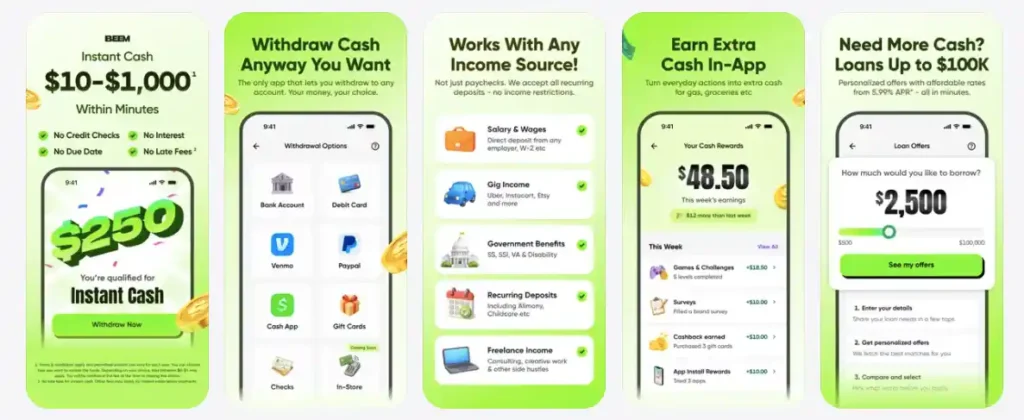
Beem is America’s Wallet. It is built to help people handle the exact moments this article is about. When income drops, bills pile up, and every financial decision carries real risk, Beem gives you practical tools to stay on track without making things worse.
Beem fits into credit protection in three specific ways.
First, Everdraft gives you access to up to $1,000 in instant cash with no credit check and no interest. During hardship, the most dangerous moment is when you cannot cover a bill that is about to be reported late. Everdraft can bridge that gap so you make the payment on time and protect your payment history.
Second, the Beem Marketplace lets you compare debt consolidation loan options without jumping blindly into the first one you find. You can look at real offers, compare rates and terms, and choose the one that fits your actual budget. That gives you a smarter path to simplifying debt rather than adding to it.
Third, Beem’s credit monitoring tools keep you informed about changes to your credit report so you can act fast if something goes wrong. During hardship, you cannot afford to find out six months later that a creditor made an error. Staying aware gives you the ability to dispute and correct problems while they are still fresh.
Together these tools do not just cover one part of the problem. They cover the cash gap, the debt decision, and the credit awareness that all matter during a period of financial stress.
Final Thoughts
Financial hardship is temporary for most people. A job comes back. Income recovers. Bills get paid down. But credit damage, if left unmanaged, can last much longer than the hardship itself. That gap between how long the hardship lasts and how long the credit damage lasts is exactly the problem these steps are designed to close.
The most important thing is to act early. Call your creditors before you miss a payment. Prioritize strategically. Get help from credit counseling if the debt is serious. Use a consolidation loan carefully. Monitor your report regularly. And use tools like Beem to fill the gaps when you need fast access to cash, smarter debt options, or real-time credit awareness.
Protecting your credit during hardship is not easy, but it is absolutely possible with the right plan.
FAQs: Protect Your Credit During Financial Hardship
Does financial hardship automatically hurt your credit?
No. Your credit is hurt by specific events like missed payments and collections, not by hardship itself. Taking action early can prevent most of the damage.
What is the fastest way to protect my credit during a hardship?
Call your creditors immediately and ask about hardship programs before you miss a payment. Even one deferred payment arrangement can protect your score significantly.
Can Beem help me protect my credit during hardship?
Yes. Beem offers Everdraft for emergency cash, a debt marketplace for comparing consolidation options, and credit monitoring tools that alert you to changes on your report.
What is the difference between a DMP and a debt consolidation loan?
A DMP is managed by a nonprofit counselor and involves negotiated lower rates with creditors over three to five years. A debt consolidation loan is a personal loan you take yourself to pay off multiple debts at once.
Does a hardship program with a creditor hurt my credit?
It depends on the lender. Some hardship programs are not reported to credit bureaus. Always ask the lender directly how the arrangement will appear on your report.
What should I do if I find an error on my credit report during hardship?
Dispute it directly with the credit bureau in writing. Attach any documentation that supports your claim and follow up within 30 days.