

Key Summary
Universal Credit is a personal loan platform operated by Upgrade, Inc. that offers debt consolidation loans from $1,000 to $50,000 for borrowers with fair to good credit. If you are managing several high-interest accounts and want to replace them with one fixed monthly payment, a Universal Credit debt consolidation loan is worth understanding in full before you apply.
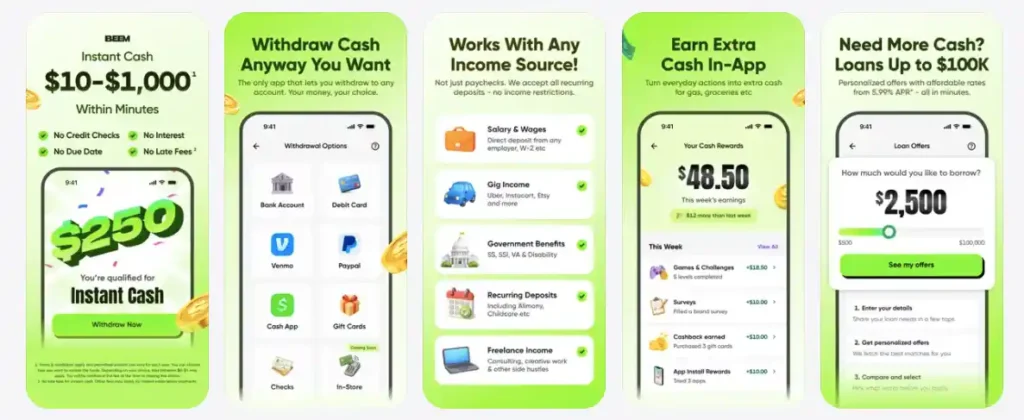
Before committing to a multi-year loan, it helps to know your short-term options too. If you need a smaller amount immediately while you research consolidation, Beem’s Everdraft feature gives you access to up to $1,000 with no fees and no credit check, repaid automatically from your next paycheck. For consolidating thousands of dollars from multiple creditors into a structured repayment schedule, a Universal Credit loan is a different product, and this guide covers it completely.
What Is Universal Credit Debt Consolidation
Universal Credit debt consolidation means using a personal loan from Universal Credit to pay off multiple existing debts at once, then repaying the single new loan through fixed monthly instalments. The goal is to replace several high-interest balances, typically credit cards, medical bills, and personal loans, with one loan at a lower rate and a defined payoff date.
According to the Consumer Financial Protection Bureau (CFPB), carrying high-interest revolving credit card debt is one of the most common patterns seen in consumers who struggle to reduce their total debt balance, because minimum payments often barely cover the monthly interest. Unlike credit cards that let your balance drift, a structured consolidation loan forces principal reduction every single month.
Universal Credit is a lending platform owned and operated by Upgrade. A fintech company founded in 2017 that has issued billions in personal loans to consumers across the United States. Universal Credit is a branded product within Upgrade’s lending marketplace, designed specifically for borrowers who want to consolidate and eliminate credit card and unsecured debt.
What Is Universal Credit?
Universal Credit is a lending platform, not a traditional bank. Loans are issued by Upgrade’s bank partners, which are FDIC-insured institutions. This means your loan is a regulated financial product with full legal protections under US consumer lending law.
The platform is fully digital. There are no physical branches. The entire process from prequalification through final funding happens online, which makes it fast but also means there is no in-person support if your situation is complicated.
Universal Credit reports all loan activity to Equifax, Experian, and TransUnion. This means on-time payments on a Universal Credit loan build positive payment history across all three major credit bureaus, which can improve your credit score over the loan term.
Read: Best Short-Term Emergency Loan Apps in the USA for 2026
Is Universal Credit Legit for Debt Consolidation
Yes. Universal Credit is a legitimate, regulated lending platform backed by Upgrade, which has served millions of borrowers since 2017. Loans are issued through FDIC-insured bank partners, subject to federal consumer lending laws, including the Truth in Lending Act, which requires full disclosure of APR, fees, and total loan cost before you sign.
The platform also offers optional direct payments to creditors, meaning you can have Universal Credit pay off your credit cards and other accounts directly, rather than routing the funds through your bank account and managing payoffs yourself. This is a meaningful feature for borrowers who want a clean, verifiable consolidation rather than managing individual payoffs.
Universal Credit reports positively to all three credit bureaus for on-time payments. Borrowers who use the loan to pay off revolving credit card balances typically see an improvement in their credit utilization ratio within one to two billing cycles, which can produce a visible score increase relatively quickly.
How a Universal Credit Debt Consolidation Loan Works
The process is fully online and broken into four steps. Understanding what happens at each stage helps you prepare the right documents and set realistic expectations on timing.
Step 1: List Your Existing Debts
Before you start the application, list every debt you want to consolidate. Write down the current outstanding balance, the APR, and the minimum monthly payment for each. Add the balances to determine your target loan amount.
This step matters because it tells you whether Universal Credit’s loan range of $1,000 to $50,000 can cover your full consolidation need. It also lets you calculate whether the rate you are offered will actually save you money compared to your current blended interest rate across all accounts.
Step 2: Check Your Rate Without Affecting Your Score
Universal Credit offers a prequalification tool that shows you estimated rates, terms, and monthly payments using a soft credit pull only. A soft pull does not affect your credit score. You see your estimated APR, loan term options (36 to 60 months), and the fixed monthly payment before committing to anything.
This is where most borrowers should pause and compare. Take the prequalification offer from Universal Credit and compare it against at least one other lender before proceeding. Even a 2% difference in APR on a $15,000 loan over 48 months is roughly $1,500 in total interest.
Step 3: Submit a Full Application
When you are ready to proceed, complete the full application. This requires income verification (recent pay stubs, W-2s, or bank statements), identity verification, and banking details for loan disbursement. Universal Credit performs a hard credit inquiry at this stage, which may cause a small temporary dip in your credit score.
Step 4: Get Funded and Pay Off Your Debts
Once the application is approved and the loan agreement is signed, Universal Credit funds the loan, usually within one business day. You choose whether to receive the funds directly into your bank account and pay creditors yourself or have Universal Credit send payments directly to your creditors. Either way, your multiple debts consolidate into one loan with one payment and one payoff date.
After funding, follow through immediately. Pay off each account the same day funds arrive. Do not leave cleared credit card balances sitting available for spending, which is the single most common mistake that leads to debt accumulating again on top of the new consolidation loan.
Key Features of Universal Credit Debt Consolidation
Universal Credit’s product includes several features that set it apart from a basic personal loan.
Direct creditor payments: You can request Universal Credit to send payment directly to your credit card companies and other creditors. This feature eliminates the manual step of paying each balance yourself and provides a clean, verifiable consolidation record.
Free credit monitoring: The platform includes tools that allow you to track your credit score and monitor variations over time. This gives you visibility into how consolidation and on-time payments are affecting your financial profile.
No prepayment penalty: You can pay off the loan early at any time without additional fees. If your financial situation improves during the loan term, accelerating your payoff reduces total interest paid.
Fixed rates and payments: The interest rate is locked at origination and doesn’t change over the loan term. Your monthly payment is the same every month, which makes budgeting straightforward.
Fast funding: Most approved loans are funded within one business day of signing the agreement.
Universal Credit Loan Terms and Eligibility
Understanding the specific terms before applying helps you evaluate whether this product fits your situation.
Loan amounts: $1,000 to $50,000, depending on your credit profile and income.
Loan terms: 36 to 60 months. Shorter terms produce higher monthly payments but lower total interest. Longer terms lower the monthly payment but increase the total interest paid.
APR range: Variable depending on your credit score, income, and loan term. The origination fee of 1% to 8% is deducted from the disbursed amount, which means you receive less than the approved loan amount. Factor this into your calculation when determining how much to borrow.
Minimum credit score: Approximately 580. Borrowers with scores above 620 typically receive better rate offers. Borrowers in the 580 to 620 range may qualify but at higher APRs.
State availability: Universal Credit is not available in all US states. Check availability in your state before starting an application.
Universal Credit vs Other Debt Consolidation Lenders
Comparing Universal Credit against alternatives helps you determine whether it offers the most competitive terms for your specific credit profile.
| Feature | Universal Credit | Upstart | LendingPoint | Upgrade |
| Min credit score | 580+ | 300+ | 580+ | 560+ |
| Loan range | $1,000 to $50,000 | $1,000 to $50,000 | $2,000 to $36,500 | $1,000 to $50,000 |
| Origination fee | 1% to 8% | 0% to 12% | 0% to 8% | 1.85% to 9.99% |
| Direct creditor pay | Yes | No | No | Yes |
| Funding time | 1 business day | 1 to 3 days | Next business day | 1 to 4 days |
| Physical branches | No | No | No | No |
Upstart is the strongest alternative if your credit score falls below 580. It uses an AI-based model that considers employment history and education alongside credit score, making it accessible to borrowers with very thin or damaged credit files.
LendingPoint offers slightly faster funding and comparable loan sizes with a minimum credit score of around 580. It does not offer direct creditor payment, which means you manage payoffs yourself.
Upgrade is the parent company behind Universal Credit and offers the same core loan product under a different brand. Comparing both prequalification offers from Universal Credit and Upgrade directly is worth doing, as rate offers can differ between the two platforms even for identical credit profiles.
Example Scenario: Using Universal Credit to Consolidate Debt
Say you are managing three separate debts:
- $5,000 on two credit cards at 26% APR
- $2,000 personal loan at 22% APR
- $1,500 medical bill
Total balance: $8,500. Monthly minimum payments across all three accounts add up to around $320, and most of that goes toward interest rather than reducing the principal.
You apply for an $8,500 Universal Credit debt consolidation loan at 15% APR over 48 months. Your monthly payment is approximately $237. You pay roughly $83 less per month than you were paying across the three accounts combined. Over 48 months, the total interest paid drops significantly compared to making minimum payments on revolving credit card debt indefinitely.
The math only works in your favor if the Universal Credit APR is meaningfully lower than your current blended rate. Run the numbers on your specific balances before applying.
Who Should Use Universal Credit Debt Consolidation
Universal Credit is a practical fit for borrowers who:
- Have credit scores in the 580 to 700 range and want a fully digital process
- Are consolidating $1,000 to $50,000 in unsecured debt
- Want an optional direct creditor payment to simplify the process
- Need fast funding, typically within one business day
- Want their payments reported to all three credit bureaus
Universal Credit is less likely to be the right fit for borrowers who:
- Have credit scores below 580, where approval is uncertain, and rates will be high
- Need more than $50,000
- Prefer in-person support at a branch
- Want a co-signer option (Universal Credit does not currently allow co-borrowers)
How to Use the Loan Effectively After Funding
Getting approved is only the beginning. What you do with the funds determines whether consolidation actually improves your financial position.
- Pay off every account you listed immediately. Do not wait. The cleared balances should be paid the same day funds arrive.
- Do not accumulate new balances on the accounts you just paid off. Leave them open for credit utilisation purposes, but treat them as unavailable for spending.
- Set up autopay on the Universal Credit loan on the day you sign. A single missed payment can reverse months of credit-building progress.
- Pay more than the minimum when your budget allows. Every extra dollar reduces your principal and the total interest you pay.
- Use Universal Credit’s dashboard to track your balance and payment history monthly.
Pros and Cons of Universal Credit Debt Consolidation
Universal Credit’s debt consolidation loan is built for borrowers with fair to good credit looking for a straightforward, fully digital way to pay off multiple debts. With direct creditor payments and fast funding, it streamlines the process, though state restrictions and origination fees mean it’s worth checking the fine print first.
Pros:
- Available to borrowers with fair to good credit from 580 upward
- Loans up to $50,000 cover most unsecured debt consolidation needs
- Direct creditor payment option removes the manual payoff step
- Fast funding within one business day of signing
- Fixed rates and payments with no surprises
- No prepayment penalties
- Reports to all three credit bureaus
Cons:
- An origination fee of 1% to 8% increases the total cost
- Not available in all US states
- No in-person support, fully digital only
- No co-borrower option
- APRs for lower credit scores can be high
Frequently Asked Questions
What credit score do I need for a Universal Credit debt consolidation loan?
Most approved borrowers have scores of 580 or above. Higher scores receive lower APRs. The platform uses income, debt-to-income ratio, and employment history alongside your credit score in the decision. Borrowers in the 580 to 620 range may qualify, but at rates toward the higher end of the range.
Does Universal Credit charge an origination fee?
Yes. Universal Credit charges an origination fee between 1% and 8% of the loan amount, deducted from the funds disbursed to you. On a $10,000 loan with a 5% origination fee, you receive $9,500 but repay $10,000 plus interest. Factor this into your total cost calculation when comparing lenders.
How fast does Universal Credit fund a loan?
Most approved loans are funded within one business day of signing the loan agreement. This is one of the fastest timelines in the personal loan space. Existing Upgrade customers may see even faster processing in some cases.
Can Universal Credit pay my creditors directly?
Yes. This is an optional feature. You can request Universal Credit to send payment directly to your credit card companies and other creditors, which gives you a clean record of the consolidation and removes the manual step of managing individual payoffs yourself.
What is the difference between debt consolidation and debt settlement?
Debt consolidation rolls multiple balances into one loan you repay in full. Debt settlement negotiates with creditors to accept less than the full balance, which damages your credit significantly and may create a tax liability on the forgiven amount. Consolidation is better for your long-term credit health in most situations.
How does a personal loan for debt consolidation affect my credit score?
A hard inquiry during the application causes a small temporary dip. However, paying off revolving credit card balances lowers your credit utilization ratio, which typically improves your score within one to two billing cycles. Consistent on-time payments on the new loan build a positive payment history over the full term.
Should I close credit card accounts after consolidating the balances?
Keeping accounts open is generally better for your credit score because it maintains your available credit limit, which lowers your utilization ratio. However, you should treat the accounts as unavailable for spending. A credit card account you no longer use but keep open does not hurt your score.
Short-Term Cash vs a Consolidation Loan
Universal Credit is a practical choice for borrowers with fair to good credit who need to consolidate between $1,000 and $50,000 in unsecured debt into a single fixed monthly payment. The direct creditor payment option, fast funding, and bureau reporting make it a solid product for structured debt payoff. The origination fee and lack of in-person support are the main trade-offs.
Before applying, compare at least one other prequalification offer from Upstart, LendingPoint, or Upgrade. The rate difference matters over a 36 to 60-month term.
If you need a small amount to bridge a short-term gap while your consolidation research is underway, Beem’s Everdraft gives you access to up to $1,000 with no fees and no credit check, repaid automatically from your next paycheck. For structured debt consolidation up to $50,000, Universal Credit is worth a direct prequalification.