
Key Summary
Buy Now, Pay Later has become one of the most common ways Americans shop online, letting a single purchase split into smaller, manageable installments instead of one lump charge. What catches many shoppers off guard is what happens when that item gets returned. As a financial advisor, I see this exact confusion trip people up more often than almost any other BNPL issue, since a return does not automatically mean your payments stop. This guide walks through how BNPL returns actually work, what to expect from the major platforms, the common problems shoppers run into, and how a tool like Beem helps you stay ahead of it all.
Why Returns Work Differently With BNPL
When you pay with a credit or debit card, a return is a simple two-party transaction. The merchant processes the refund, your bank reverses the charge, and the money typically lands back in your account within three to ten business days. Nothing more needs to happen on your end.
BNPL introduces a third party into that process, and this is exactly where the confusion tends to start. The merchant still has to approve and process the return, but now the BNPL provider also has to update your repayment schedule to reflect it. These two steps do not always happen at the same speed, and that gap is where delays, confusion, and occasional missed payments creep in. As a general rule, I tell clients to treat a BNPL return as a two-step process rather than a single click, because that is genuinely how the system is built.
What Happens to Your Payments Depending on Timing
The outcome of a return depends heavily on when it happens relative to your payment schedule, and it helps to think through this in three distinct scenarios.
If you return an item before making any payment at all, some platforms will simply cancel the entire installment plan outright, while others will still charge the first installment and refund it once the return is confirmed. Either way, you should not assume the plan disappears automatically the moment you ship a return back.
If you return an item after one or more payments have already gone through, you will likely need to keep making scheduled payments while the return is being processed. Once the merchant and the BNPL provider confirm the return, a partial or full refund gets issued based on what you actually paid up to that point. This is the scenario that catches most people off guard, since it feels intuitive to stop paying the moment a package is sent back, but the provider does not see it that way until the return is fully confirmed on their end.
If you return only part of a larger order, the refund gets adjusted to reflect just the returned items, and your remaining installment payments get reduced or recalculated accordingly. This partial adjustment sometimes lags behind the actual return, which is why checking your account after a partial return matters just as much as after a full one.
How the Major BNPL Platforms Handle Returns
Each BNPL provider has its own process, and the differences matter enough that it is worth knowing your specific platform’s approach before you buy something you might send back.
| Platform | How Returns Are Handled |
|---|---|
| Klarna | Refunds typically arrive within 5 to 10 business days after the merchant confirms the return. You can pause payments directly through the Klarna app once a return is initiated. |
| Afterpay | You must keep paying installments until the return is approved. Refunds go directly to your original payment method with no manual cancellation required. |
| Affirm | Refund amounts apply toward your outstanding balance first. If the refund exceeds what you owe, you receive the difference back. |
| PayPal Pay in 4 | PayPal manages the refund, which typically shows up on your linked payment method. You may be able to cancel or adjust remaining payments. |
| Zip (Quadpay) | Refunds appear as a credit on your Zip account, but you may still need to keep making payments until that credit is fully applied. |
Notice that Klarna is the only platform in this table that lets you actively pause payments the moment you start a return. Every other provider expects you to keep paying on schedule until the return clears, which is the single most important detail to remember before you assume a return means an automatic break from your payment plan.
Where Shoppers Commonly Run Into Trouble
A few recurring problems show up again and again with BNPL returns, and I have seen each of these directly derail an otherwise responsible shopper’s budget.
Payment delays during return processing are the most common complaint. You may continue getting charged while a merchant processes your return, and the full resolution can take anywhere from seven to fourteen days or longer depending on how quickly the merchant and the BNPL provider communicate with each other.
Confusion over who to actually contact causes real frustration too. Shoppers often are not sure whether a question about a delayed refund belongs with the merchant or with the BNPL provider, and reaching out to the wrong party wastes time that could have gone toward resolving the issue directly.
Incomplete or partial refunds also trip people up, particularly when only part of an order gets returned. The BNPL platform does not always adjust the remaining payment plan automatically, which means a shopper can end up overpaying unless they follow up manually to correct it.
And missed payments while waiting on a refund are probably the costliest mistake of all. If you pause payments incorrectly, or simply forget a due date while assuming the return has already been handled, you can end up with a late fee stacked directly on top of an item you already sent back. Not every BNPL provider even offers a formal pause function, which makes staying on top of due dates essential rather than optional.
How to Handle a BNPL Return the Right Way
A few habits go a long way toward keeping a return from becoming a financial headache, and I recommend all of them to clients using BNPL regularly.
Always start the return process through the merchant first, not the BNPL provider directly. The merchant needs to confirm and process the return properly before the BNPL provider has anything accurate to update on their end. Once that return is underway, notify your BNPL provider as soon as possible through the app or account portal, since some platforms let you pause installments or flag the order the moment you report it, which can prevent an unnecessary charge from going through.
Keep every piece of documentation tied to the return, including confirmation emails, tracking numbers, and refund receipts. If a dispute comes up later about whether a payment should have been charged, this paperwork is what actually resolves it in your favor. Finally, monitor your BNPL app or dashboard regularly rather than assuming everything is being handled quietly in the background. If a status has not updated within the promised window, follow up directly rather than waiting for the provider to reach out to you first.
A Real Example That Shows How This Plays Out
Consider a shopper who buys a two hundred dollar jacket through Afterpay, split into four payments of fifty dollars each. After the first payment goes through, the jacket does not fit, so the shopper ships it back the same week. Because Afterpay requires payments to continue until a return is approved, the second fifty dollar installment still gets charged two weeks later, even though the jacket is already on its way back to the retailer.
Once the merchant confirms receipt of the returned jacket, Afterpay processes a refund covering the amounts already paid, and the remaining two installments get cancelled. The shopper ends up whole financially, but only after briefly paying more than expected and waiting roughly two weeks for the refund to catch up. This is exactly the kind of short gap that catches people off guard, and it illustrates why checking your specific platform’s policy before buying, rather than after returning, saves both money and frustration.
Thinking Twice About Which Purchases Belong on BNPL
Not every purchase is a good candidate for BNPL, and this is especially true for anything you might realistically return. Clothing with unpredictable sizing, items with long shipping delays, or products carrying a restocking fee all complicate the refund process considerably once a BNPL plan is layered on top. My general advice is to reserve BNPL for purchases you are fairly confident you will keep, and to use a traditional card for anything you are still uncertain about.
Before checking out with BNPL on anything, it is worth reading the return policy for both the merchant and the BNPL provider itself. Confirming the return window, any restocking fees, and how the refund actually gets processed takes just a couple of minutes and prevents most of the surprises described earlier in this guide.
Where BNPL Fits Into Your Broader Financial Picture
As a financial advisor, I generally encourage clients to think of BNPL as a budgeting tool rather than free money, since it works best when the installment amount is already accounted for in your monthly spending plan. The trouble usually starts when several BNPL plans stack up at once across different retailers, each with its own due date and return policy, making it easy to lose track of what is actually owed and when.
A simple habit that helps here is keeping a single running list of every active BNPL plan, including the provider, the remaining balance, and the next due date. This small bit of organization makes it far easier to spot a potential conflict, like a due date landing right before an expected refund, and adjust ahead of time rather than reacting after a payment has already gone through.
What Beem Is and Where It Fits
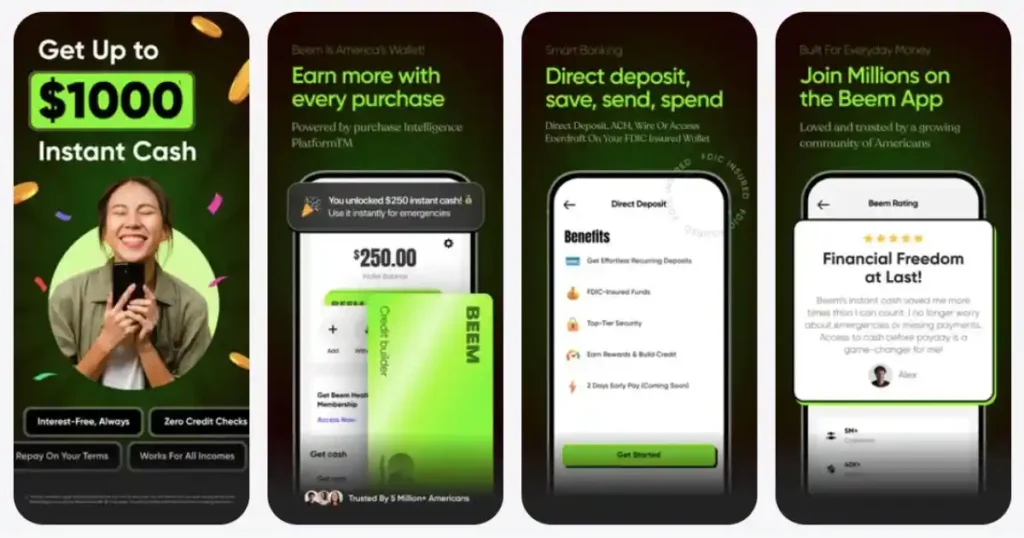
Beem is a financial app built to help you stay on top of exactly this kind of moving financial picture, where a return is pending, a refund has not landed yet, and a payment is still due somewhere in between. Beem’s AI Wallet tracks your BNPL commitments and refund status, sending alerts about upcoming payments even while a return is actively being processed. This closes the exact gap that causes so many missed payments, since you no longer have to rely on memory or a separate BNPL app to know when money is due.
For the moments when a payment lands before a refund actually arrives, and your account feels tighter than expected as a result, Beem’s Everdraft feature offers up to one thousand dollars instantly, with no interest and no credit check. This bridges the short-term cash flow gap that a delayed BNPL refund can create, without pushing you toward a high-cost borrowing option just to cover a payment you know is temporary. For anyone juggling multiple BNPL plans alongside pending returns, Beem is worth exploring directly at trybeem.com to keep the whole picture organized in one place.
FAQs: BNPL and Returns
Do BNPL payments stop automatically when I return an item?
No. Most BNPL providers require the merchant to confirm the return first, and payments often continue until that confirmation triggers an update to your repayment plan.
How long does it take to get a BNPL refund?
Refunds typically take seven to fourteen days or longer, depending on how quickly the merchant and BNPL provider coordinate on confirming the return.
What happens if I miss a payment while waiting for my return to process?
You could face a late fee, particularly if you assumed payments were paused without actually confirming that with your provider. Staying on top of due dates protects you here.
Do all BNPL platforms handle returns the same way?
No. Each platform has its own process, and only some, like Klarna, let you actively pause payments the moment a return begins.
How can Beem help me manage BNPL refunds?
Beem’s AI Wallet tracks your BNPL commitments and refund status, sending alerts about upcoming payments so you never get caught off guard by a charge that lands before your refund does.
Final Thoughts
BNPL genuinely makes shopping more flexible, but that flexibility comes with a bit of added responsibility once a return enters the picture. Understanding your specific provider’s return policy, keeping documentation, and monitoring your account closely are the habits that separate a smooth return from a frustrating one. With a bit of planning, and a tool like Beem tracking the details in the background, you can return items responsibly without turning a simple refund into an unexpected financial headache.