
Key Summary
More than half of Americans report living paycheck to paycheck, a reality that has less to do with irresponsibility and more to do with stagnant wages, rising costs, and a financial system that was not built with hourly workers, gig workers, or single-income households in mind.
For a long time, the only tools available to bridge a short-term gap were expensive ones, payday loans, overdraft fees, and credit cards with high interest rates that made a temporary problem worse over time.
Cash advance and credit builder apps have changed that equation, giving people a way to handle a timing gap and build toward more stability at the same time, without the compounding cost that used to come standard with short-term borrowing.
This article looks at why paycheck-to-paycheck living is so common, what makes cash advance and credit builder apps genuinely different from older financial products, and how using them together can move someone from constantly reacting to financial surprises toward actually building a stronger financial foundation.
Why So Many Americans Live Paycheck to Paycheck
Living paycheck to paycheck is not a personal failing, it is often a structural reality shaped by a few consistent factors. Wages in many industries have not kept pace with the cost of housing, healthcare, and everyday goods. Income can also be inconsistent, particularly for gig workers, hourly employees, and anyone whose schedule or tips fluctuate week to week. On top of that, timing mismatches between when bills are due and when paychecks land create a recurring gap that has nothing to do with how much someone earns overall, and everything to do with when that money actually arrives.
These factors combine to create a situation where even someone with a stable job and reasonable income can find themselves short a few days before payday, not because they are bad with money, but because the system they are operating in was not designed around their actual pay cycle. This is exactly the gap that cash advance and credit builder apps were built to address.
What Makes Cash Advance Apps Different From Older Short-Term Borrowing
The financial products that used to fill this gap, payday loans and credit card cash advances, were expensive by design. Payday loans typically charge a flat fee that translates into a triple-digit annual percentage rate once annualized, and if a borrower cannot repay on time, rolling the loan over adds another fee on top of the original balance. Credit card cash advances often come with a higher interest rate than regular purchases, plus a separate advance fee, and interest begins accruing immediately with no grace period.
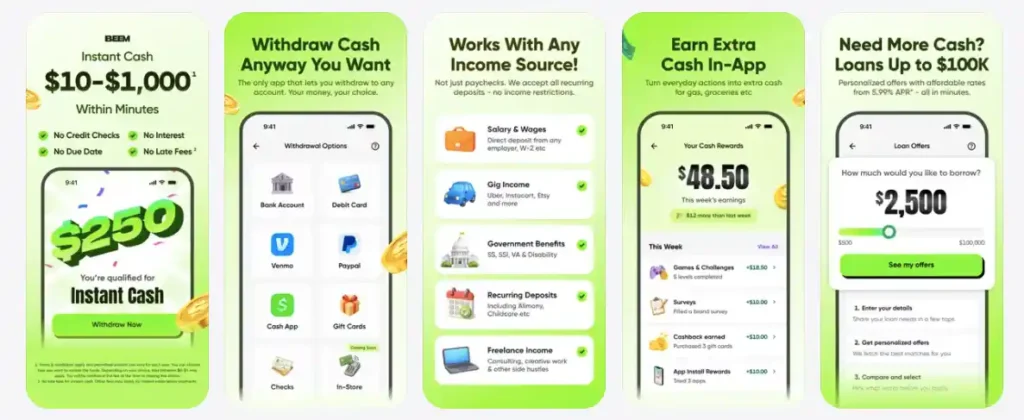
Modern instant cash advance apps work differently. Many, including Beem’s Everdraft feature, charge no interest and do not require a hard credit check, which means accessing funds before payday does not put a person’s credit score at risk or trigger a compounding cost if they cannot repay within a few days. Eligible Everdraft users can access up to 1,000 dollars, with funds often reaching an account within minutes once approved, which removes both the financial cost and the anxious waiting period that used to come with older short-term borrowing options.
This distinction matters enormously for someone living paycheck to paycheck. A single 35 dollar overdraft fee or a payday loan rollover can push someone further behind rather than closer to stability. A no-interest cash advance, by contrast, is designed to bridge a gap without adding a new financial burden on top of it.
What Makes Credit Builder Apps Different From Traditional Credit Building
Building credit has traditionally required already having access to credit, a chicken-and-egg problem that leaves people with thin or no credit history stuck without a clear path forward. Traditional credit cards often require an established credit history to qualify for reasonable terms, and secured credit cards, while helpful, typically require a lump sum deposit that many paycheck-to-paycheck households simply do not have available.
Credit builder tools built into cash advance apps take a different approach. Beem’s Credit Builder Card, for example, is designed to let people build credit history through spending they are already doing, including everyday purchases and ATM withdrawals through the free Beem Companion Card. This removes the upfront capital barrier that keeps a lot of people locked out of traditional credit-building products, and it ties credit building directly to spending habits someone already has, rather than requiring them to change their behavior or come up with money they do not have just to start building a credit history.
How Cash Advance and Credit Builder Features Work Together
Used separately, a cash advance solves an immediate problem and a credit builder tool solves a longer-term one. Used together, within the same app, they create something more useful than either on its own.
Bridging Today’s Gap Without Creating Tomorrow’s Problem
A no-interest cash advance covers the immediate shortfall without adding a new debt burden, which means the credit-building progress someone is working on does not get derailed by an emergency expense. This matters because a lot of people who fall behind on credit-building efforts do so not because they stopped trying, but because an unexpected cost forced them into a higher-cost borrowing option that undid their progress.
Building a Track Record That Unlocks More Access Over Time
Many cash advance apps, including Beem, are designed so that advance limits can grow over time based on responsible account activity, rather than staying fixed regardless of how someone uses the app. This creates a feedback loop where consistent, responsible use is rewarded with more flexibility, similar in spirit to how credit building works, but on a much shorter timeline that people can actually feel the benefit of.
Reducing Reliance on Advances as Financial Stability Improves
The ultimate goal of pairing these tools is not to rely on a cash advance indefinitely, but to use it as a bridge while credit building and budgeting tools work in the background to reduce how often that bridge is needed in the first place. As credit improves and a small savings buffer builds up, the frequency of needing an advance at all tends to decrease, which is the actual marker of increased financial stability.
Real Barriers These Apps Help Remove
A few specific barriers make it especially hard for paycheck-to-paycheck households to get ahead using traditional financial products, and this is where app-based tools have made the most tangible difference.
The Credit Check Barrier
Traditional loans and many credit products require a credit check that can either deny access outright or offer terms so unfavorable that they are not worth using. Cash advance apps that skip the hard credit check entirely remove this barrier, evaluating eligibility based on income and account activity instead of a credit score that may not reflect someone’s actual ability to repay a small short-term amount.
The Upfront Capital Barrier
Secured credit cards and some savings-based credit products require money upfront that a paycheck-to-paycheck household often does not have. Credit builder tools tied to everyday spending remove this requirement, letting people start building credit with money they are already spending rather than money they need to set aside first.
The Speed Barrier
Traditional loans can take days to process and fund, which does not help someone who needs to cover a bill due tomorrow. Instant cash advance apps that can deliver funds within minutes solve a timing problem that a traditional application process simply cannot address, regardless of how favorable the terms might eventually be.
The Fee Transparency Barrier
Overdraft fees and payday loan rollover charges are notorious for catching people off guard, turning a manageable shortfall into a larger problem. Apps that show fees clearly before a transaction is confirmed, or that charge no fees at all for standard use, remove the unpredictability that makes traditional short-term borrowing so risky for people with little financial cushion.
What This Looks Like in Practice
Consider a common scenario. Someone working an hourly job has a consistent income, but their pay date lands two days after rent is due most months. In the past, this timing mismatch might have meant either a late fee from their landlord or a payday loan that, if not repaid immediately, could snowball into a much larger cost. With an app that combines a no-interest cash advance and a credit builder card, that same person can cover rent on time using Everdraft, continue building credit through their regular spending on the Beem Card, and, over time, see their advance limit grow as their account activity shows consistent, responsible use.
None of this changes their underlying income. What it changes is the cost of navigating a timing gap that has nothing to do with how hard they work or how well they manage money, and everything to do with a mismatch between when bills are due and when paychecks land. That is the actual, practical difference these tools make for someone living paycheck to paycheck.
Building Toward Long-Term Stability, Not Just Short-Term Relief
The most effective use of cash advance and credit builder apps treats them as part of a broader strategy, not a permanent solution on their own. Pairing an advance feature with budgeting tools that show spending patterns clearly helps identify where a recurring gap is actually coming from, whether that is a specific bill, a subscription that has crept up over time, or simply a mismatched pay schedule that could be addressed directly with an employer or landlord.
Over time, the goal is for the credit built through everyday spending to open up access to lower-cost financial products, better loan terms, and more financial flexibility overall. A cash advance is meant to be a bridge, not a destination, and the apps that serve paycheck-to-paycheck households best are the ones that are honest about that distinction, offering real short-term help while actively working to reduce how often that help is needed.
Why This Matters Beyond Individual Transactions
It is easy to think about a single cash advance or a single credit-building purchase in isolation, but the cumulative effect over months and years is what actually matters. Someone who avoids a handful of overdraft fees and payday loan rollovers over the course of a year keeps meaningfully more of their own income. Someone who builds a solid credit history over that same period opens up access to lower interest rates on future borrowing, better rental applications, and in some cases, employment opportunities that involve a credit check.
These are not abstract benefits. They represent a real shift in financial trajectory for someone who started out reacting to timing gaps and ended up with more stability, better credit, and fewer forced high-cost borrowing decisions along the way. That shift is the actual empowerment these apps are built to support, not a marketing phrase, but a measurable change in how much a paycheck-to-paycheck household keeps and builds over time.
Check out Beem for on-point financial insights and recommendations to spend, save, plan and protect your money like an expert. Download the Beem app today!
FAQs
How do cash advance apps help people living paycheck to paycheck?
Cash advance apps help by covering short-term timing gaps between bills and paychecks without the high cost of a payday loan or overdraft fee. Apps like Beem’s Everdraft charge no interest and require no hard credit check, so covering a gap does not create a new financial burden or affect a person’s credit score.
Can credit builder apps really help without a big upfront deposit?
Yes. Credit builder tools tied to everyday spending, like Beem’s Credit Builder Card, let users build credit history through purchases and ATM withdrawals they are already making, removing the large upfront deposit typically required by secured credit cards.
Do cash advance apps check your credit score?
Most reputable cash advance apps, including Beem’s Everdraft, do not run a hard credit check to determine eligibility, relying instead on income and account activity, so requesting an advance generally does not affect your credit score.
How much can you get from a cash advance app?
Amounts vary by app and individual eligibility. Beem’s Everdraft offers eligible users up to 1,000 dollars, with the option to unlock additional funds through Beem Boost based on responsible account activity over time.
Are cash advance apps a long-term solution for financial stability?
Cash advance apps work best as a short-term bridge rather than a permanent solution. Pairing them with credit building tools and budgeting features helps address the root causes of recurring shortfalls, which reduces reliance on advances over time.
What is the biggest difference between cash advance apps and payday loans?
The biggest difference is cost. Payday loans typically charge fees that translate into triple-digit annualized interest rates, plus additional fees if the loan is rolled over. Cash advance apps like Beem’s Everdraft charge no interest at all, making them a significantly lower-cost way to cover a short-term gap.