
Key Summary
Building good credit rarely feels like a single decision. It feels more like brushing your teeth or making your bed, a small routine you barely think about that quietly protects something important in the background. This guide reframes credit building as a lifestyle rather than a project, walking through the small daily habits that shape your score, why patience matters more than panic, and how a tool like Beem’s credit-builder card fits naturally into that everyday rhythm.
Why Credit Improvement Feels Like a Slow Burn
Credit scores rarely change overnight, and that is often a good thing. Sudden jumps or drops can happen, but lasting improvement almost always comes from slow, steady behavior that builds trust over time, the same way a healthy body comes from daily habits rather than one intense workout. Scoring models are built to reward exactly this kind of consistency, which is why progress often feels subtle at first before it becomes satisfying.
Small daily actions touch the specific parts of your credit profile that scoring models actually measure. They shape how reliably you pay on time, how much of your available credit you use, how predictable your financial behavior looks, and how much risk you appear to carry. None of these shifts feels dramatic in the moment, but stacked together over weeks and months, they quietly move your credit in the right direction, much like small daily choices around food or movement eventually reshape how you feel physically.
A Quick Primer on What Daily Habits Actually Influence
Credit scores are built to evaluate behavior over time rather than reward a one-time fix. One good payment does not cancel out several missed ones, and one large repayment does not erase months of high balances. Scoring systems look for patterns that suggest reliability, not occasional corrections made under pressure, which is exactly why panic-driven moves, like closing an account suddenly or applying for new credit on impulse, tend to backfire.
Most credit scores are shaped by five broad areas: payment history, credit utilization, length of credit history, new credit activity, and credit mix. Daily habits do not affect all five equally, but they touch several at once. Checking your balance regularly helps manage utilization. A consistent payment routine protects payment history. Avoiding unnecessary credit applications protects both new credit activity and account age. This overlap is part of why small daily routines end up being so effective, one habit quietly supports multiple parts of your credit profile at the same time.
Some habits show results faster than others. Utilization can improve within weeks if balances are managed carefully, while payment history and account age take months to reflect real change. This delay can feel frustrating, especially when you are doing everything right and the number on your screen barely moves. The key is remembering that these habits are cumulative. You are not fixing your score for next week. You are building a financial lifestyle that becomes steadily more trustworthy over time.
Read: What Credit Score Is Needed for PayPal Credit in 2026?
Habit One: A Sixty-Second Balance Check Every Morning
Balances rarely spike from one large purchase. More often, they grow through small, repeated charges that slip under the radar, pending transactions, a forgotten subscription, a tip added after a meal, or everyday convenience spending that adds up without anyone noticing in the moment. Without regular visibility, these charges create an unpleasant surprise at statement time, when the balance feels higher than expected and repayment suddenly feels more stressful than it needed to be.
A daily balance check does not require a spreadsheet or a deep dive into your finances. It simply means glancing at four things each morning with your coffee: your current balance, your available credit, the next payment due date, and any transaction you do not recognize. This quick scan replaces assumption with actual numbers and stops small issues from turning into bigger ones down the line.
The simplest version of this habit boils down to two numbers worth watching: your balance and your credit limit. When a balance starts creeping toward thirty or forty percent of that limit, utilization pressure builds. Catching this early gives you the chance to slow spending or make a small payment before it ever shows up as a problem on your credit report. This same habit also helps you spot a wrong charge or a forgotten subscription while it is still easy to fix, rather than discovering it weeks later as a dispute or a late payment.
Habit Two: Treat Payment Dates Like a Daily Calendar Item
Payment history carries more weight in a credit score than almost anything else, because it reflects reliability over time. Even a single late payment can lower your score for months and signal risk to lenders deciding whether to trust you with future credit. Unlike utilization, which can recover fairly quickly once a balance drops, late payments linger and continue to influence decisions well after the balance itself has been paid off.
What makes this particularly frustrating is that many late payments have nothing to do with genuine financial trouble. They happen because a date got forgotten, autopay did not run as expected, or a balance was misunderstood. The damage often feels disproportionate to the mistake, which is exactly why prevention matters so much more than repair.
A short daily glance at what is due keeps payment dates visible in your mind rather than buried inside a calendar app you rarely open. You are simply confirming what is coming up, what is already scheduled, and whether anything needs manual attention. This takes seconds, but it dramatically reduces the odds of a surprise. Autopay helps here, but it is not foolproof, since payments can fail due to insufficient funds, an expired card, or a changed bank account, and the credit system does not care about the reason once a payment is missed.
Treating autopay as a tool to monitor, rather than a system to fully trust, closes this gap. And even during a tight month, making at least the minimum payment protects your history and buys time to make better decisions without compounding the problem further.
Habit Three: Small Mid-Cycle Payments to Keep Utilization Calm
Even paying your full balance every month does not guarantee low utilization shows up on your report, since balances get reported on the statement date, not the payment date. If spending peaks right before that statement closes, your credit report can reflect a higher balance than you actually expect, which can feel discouraging even though nothing was truly done wrong.
Making a small payment partway through the billing cycle helps keep the balance lower at the moment it gets reported. These payments do not need to be large or frequent to make a difference. Even a modest reduction smooths out utilization and reduces the kind of month-to-month score swings that otherwise feel confusing. This approach works especially well during a month with higher spending, travel, or an irregular expense that pushes the balance up temporarily.
A simple version of this is what might be called a mid-week sweep, where one small payment resets the balance trajectory before it grows too large. Rather than watching the balance climb steadily all month, this habit gently guides it back down partway through. That said, this is not something to obsess over. If utilization is already low and stable, a single full monthly payment is often enough, and the goal here is calm consistency rather than constant fiddling.
Habit Four: A Daily Spending Pause to Prevent Credit Stress
Most credit stress does not come from a genuine emergency. It starts with an impulse purchase made while tired, stressed, bored, or emotionally drained. These small purchases raise balances quietly and create pressure later when the payment actually comes due, and the stress rarely comes from the purchase itself so much as the realization afterward that the balance grew faster than expected.
A spending pause creates a bit of space between impulse and action. This might mean waiting ten minutes before checking out, sleeping on a non-essential purchase overnight, or simply setting a daily spending limit for yourself. The goal is not to eliminate spending or enjoyment. It is to restore a moment of intention rather than letting a purchase happen on autopilot.
Removing saved payment cards, disabling one-click checkout, or deleting a shopping app from your phone adds just enough friction to slow down an impulsive decision. That small pause is often enough to prevent a purchase you did not truly want in the first place. Rather than aiming for no spending at all, which tends to backfire, planning specific spending in advance allows for genuine enjoyment without guilt, keeping credit usage intentional instead of emotional.
Habit Five: Stop Making Random Credit Moves
Applying for credit too often or closing an account on impulse sends a signal of instability to scoring models. Hard inquiries, a reduced average account age, and shrinking available credit all work against your score, even though these actions often feel productive in the moment, as if you are doing something proactive about your credit. In reality, they introduce noise into a profile that scoring systems are actively trying to read for consistency.
A useful daily habit here is asking one simple question before any credit decision: will this genuinely help me six months from now. This reframes the decision away from urgency and toward something closer to a long-term view. If the answer feels unclear or emotionally driven, waiting is almost always the better choice.
A related rule worth adopting is never applying for new credit on the same day you feel rushed, stressed, or pressured by a limited-time promotion, since emotional decisions tend to prioritize short-term relief over long-term impact. Giving yourself even one full day before applying creates real clarity and tends to reduce regret. Older accounts, meanwhile, support both credit age and available credit, two things that genuinely strengthen your profile, so closing one should be a deliberate decision based on a clear reason, not frustration in the moment.
Read: How to Get a Bad Credit Loan from OppLoans
A Simple Daily Routine You Can Actually Keep Up
The core of all five habits fits into a routine short enough to survive a busy week. Each morning, check your balance, confirm your next due date, and take one small action if something needs attention, whether that is making a payment, canceling a forgotten subscription, or setting a reminder. This takes about three minutes and prevents most credit mistakes before they ever have a chance to happen.
Once a week, it helps to add a slightly longer check-in, reviewing utilization trends, subscription charges, and whether autopay is actually running the way it should. This weekly add-on keeps the whole system working smoothly without demanding constant attention every single day.
What to Actually Expect as Time Passes
Within the first thirty days, you will likely notice fewer surprises, fewer missed payments, and a clearer sense of your own spending patterns. Credit-related stress tends to ease simply because uncertainty drops. Somewhere between three and six months in, utilization becomes more stable, sudden score dips grow less frequent, and repayment behavior strengthens enough that many people begin to see genuine, measurable movement in their score. By the six to twelve month mark, a calmer, more trustworthy credit profile has usually developed, and lenders start to see predictable behavior rather than short-term risk signals.
A Few Mistakes That Quietly Cancel Out These Habits
Checking your score obsessively without adjusting behavior tends to lead to frustration rather than progress, since credit scores follow habits, not the other way around. Relying on credit repeatedly to patch a recurring cash flow gap raises utilization and increases the risk of a late payment, often masking a deeper structural issue that actually needs solving. And closing an account out of frustration reduces available credit and shortens account history, frequently lowering a score in a way that feels unexpected given the intention behind the decision.
What Beem Is and Where It Fits
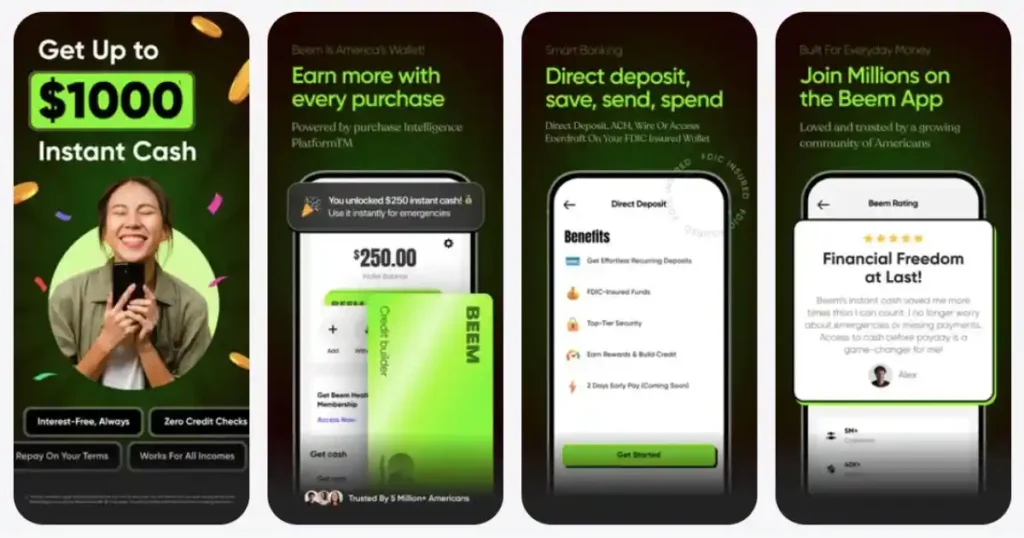
Beem is a financial app built to support exactly this kind of everyday approach to credit, rather than expecting a single dramatic fix. The Beem Card helps users build credit through everyday spending, reporting responsible activity so that ordinary purchases, handled with a bit of daily attention, gradually strengthen a credit profile instead of sitting separate from it. Picture someone using their Beem Card for regular groceries and gas, paying it off consistently through the small habits described above. Over several months, that ordinary routine becomes a quiet, steady contributor to a stronger score.
Beem’s budgeting tools also support the daily balance check and payment awareness habits directly, giving users a clear view of spending and upcoming bills in one place rather than requiring several apps or a manual tracking system. For the occasional tight week that might otherwise tempt someone into carrying a higher balance, Beem’s Everdraft feature offers up to one thousand dollars instantly, with no interest and no credit check, which can help avoid the kind of utilization spike that undoes months of careful daily habit-building. For anyone ready to treat credit improvement as a lifestyle rather than a one-time fix, Beem is worth exploring directly.
Frequently Asked Questions
Do daily habits really improve a credit score?
Yes. Credit scores respond to consistent behavior over time, and daily habits reduce errors, smooth utilization, and protect payment history, which gradually improves scores.
What habit impacts credit scores the fastest?
Utilization management often shows results first, especially when balances stay lower during the specific period a lender reports to the credit bureaus.
How long does it take to see credit score improvements?
Small changes may appear within weeks, but meaningful, lasting stability usually takes several months of consistent daily behavior.
Is it bad to check your credit score every day?
No, checking your score does not hurt it. That said, focusing on habits and decisions tends to be far more effective than watching daily fluctuations closely.
What should I do if my score drops even when I pay on time?
Short-term drops often come from a change in utilization or simple reporting timing. Staying consistent and avoiding a reactive change usually allows the pattern to stabilize on its own.
Final Thoughts
Credit improvement is usually quiet, slow, and steady, built through ordinary daily actions rather than one dramatic decision. These five habits, checking your balance, staying on top of payment dates, making small mid-cycle payments, pausing before impulse spending, and avoiding random credit moves, reduce mistakes, lower stress, and steadily build trust over time. Start with one habit, make it automatic, and then layer on the next. Over time, credit stops feeling like a monthly worry and starts feeling like a stable, background part of your everyday life, especially with a tool like the Beem Card supporting that consistency along the way.