

Key Summary
Chime has grown into one of the most recognizable names in mobile banking, but its structure confuses a lot of people. It is not a bank, it does not hold a banking charter, and yet millions of people use it for direct deposit, spending, and savings every day.
If you are asking is Chime legit, the short answer is yes, it is a legitimate financial technology company that partners with FDIC insured banks to offer its services. But legitimacy is only part of the picture, and there are specific things worth understanding about how Chime is structured, its regulatory history, and its complaint record before deciding whether it is the right fit for you.
This article breaks down what Chime actually is, how its FDIC insurance works, what its complaint and regulatory record looks like, and how to evaluate it alongside other options, including what to consider if you are looking at Chime specifically for its overdraft or cash advance style features.
What Is Chime, Exactly?
Chime Financial, Inc. is a financial technology company, commonly called a fintech, not a chartered bank. This distinction matters because it explains a lot of the confusion people have about Chime’s legitimacy. Chime does not hold its own banking license. Instead, it partners with The Bancorp Bank and Stride Bank, both FDIC member banks, to actually hold and process deposits.
In practice, this means when you open a Chime account, your checking and savings funds are held at one of these partner banks, not at Chime itself. Chime provides the app, the interface, and the customer experience, while the underlying banking infrastructure and deposit insurance come from its bank partners. This structure is common among fintech companies and is not unique to Chime, but it is an important distinction to understand.
Is Chime FDIC Insured?
This is one of the most searched questions about Chime, and it comes up in complaint threads too, so it is worth answering directly. Chime itself is not FDIC insured because it is not a bank. However, funds held in a Chime checking or savings account are FDIC insured through its partner banks, The Bancorp Bank and Stride Bank, up to the standard insurance limits.
Some of the confusion and frustration visible in online reviews stems from this exact distinction. A number of complaints describe Chime as “not FDIC insured” outright, which is not accurate. The deposits are insured, just through Chime’s partner banks rather than through Chime directly. This is a structural detail worth understanding clearly before you open an account, even though it does not change the practical outcome of your funds being protected.
What Chime Offers
Chime’s core products include a checking account with a debit card, a savings account, and a secured credit builder card. There are no monthly fees and no overdraft fees on the checking account, and Chime offers a free overdraft coverage feature, commonly known as SpotMe, for eligible members who meet qualifying direct deposit requirements. The savings account offers an annual percentage yield that has varied over time, and round up savings lets users automatically save spare change from debit card purchases.
Cash deposits can be made at partner retail locations including Walmart, Walgreens, and CVS, though fees may apply depending on which retailer you use. Chime has also built a strong reputation for its mobile experience, winning recognition from major review sites for its overall checking account and online banking experience.
Chime’s Regulatory and Complaint History
Understanding whether Chime is legitimate also means looking honestly at its regulatory record, not just its marketing or app store ratings.
CFPB Enforcement Action
In 2024, the Consumer Financial Protection Bureau took enforcement action against Chime after customers complained about accounts being closed without their funds being refunded in a timely manner. Chime attributed much of the delay to a configuration error. As part of the resolution, Chime paid a total of 4.55 million dollars in compensation and penalties. This is a matter of public regulatory record, not a rumor or complaint site allegation, and it is worth knowing about if you are evaluating Chime’s reliability.
CFPB Complaint Volume
Beyond that specific enforcement action, review organizations like NerdWallet have noted that Chime generates a disproportionately high volume of complaints on the CFPB database relative to the asset size of its partner banks. NerdWallet specifically lowered its overall rating of Chime by half a star because of this pattern. This does not necessarily mean Chime is untrustworthy, since a large customer base naturally generates more raw complaints, but the disproportionate volume relative to its partner banks’ size is a data point worth weighing.
Consumer Reviews
Independent review platforms show a mixed picture. Some users report a smooth, straightforward experience with fast direct deposit and an easy-to-use app. Others describe significant frustration around fraud dispute denials, delayed check deposits, and difficulty reaching a live person for support during account issues.
As with most large financial apps, negative experiences tend to be overrepresented in public reviews, since dissatisfied customers are generally more motivated to leave a review than satisfied ones, but the volume and specificity of fraud-related complaints is worth being aware of before relying on Chime as your primary account, especially for larger balances.
Weighing the Full Picture
Taken together, Chime is a legitimate company backed by real FDIC insured banking partners, and it has earned genuine recognition from reputable review organizations for its mobile banking experience. At the same time, it has a documented regulatory enforcement action from 2024 tied to account closure and refund delays, along with a complaint volume that independent reviewers consider disproportionately high relative to its partner banks.
Neither of these facts alone answers whether Chime is right for you. A large, well known fintech having both real strengths and a real regulatory history is common in this industry, and the more useful question is not just is Chime legit, but whether its specific structure, fee model, and support experience fit what you personally need.
What to Look For When Evaluating Any Fintech Banking App
Whether you are considering Chime or any other app-based banking option, a consistent evaluation approach helps you separate genuine risk from normal growing pains.
Confirm Where Deposit Insurance Actually Comes From
Any legitimate fintech offering banking features should clearly disclose which FDIC member bank actually holds your deposits. If a company is vague about this or cannot name its banking partner, that is a serious red flag, unlike Chime, which discloses its partner banks clearly.
Check for Regulatory Action, Not Just Star Ratings
A high app store rating does not tell you about a company’s regulatory history. Checking the CFPB complaint database and searching for enforcement actions gives a more complete picture of how a company has handled disputes and errors in the past.
Read Complaints for Patterns, Not Just Volume
A high number of complaints does not automatically mean a company is untrustworthy, especially for a large user base. Look for patterns in what people are actually complaining about. Repeated, specific complaints about fraud dispute handling or account closures are more meaningful than a large raw number alone.
Understand the Fee Structure for Edge Cases
Free checking with no monthly fees sounds straightforward, but it is worth checking what happens in edge cases, like cash deposits at retail locations, since these can carry fees depending on where you deposit.
Consider What Happens If Something Goes Wrong
Because fintech apps often route customer support through the app rather than in-person branches, it is worth understanding how disputes and fraud claims are actually handled before you need to rely on that process during a real problem.
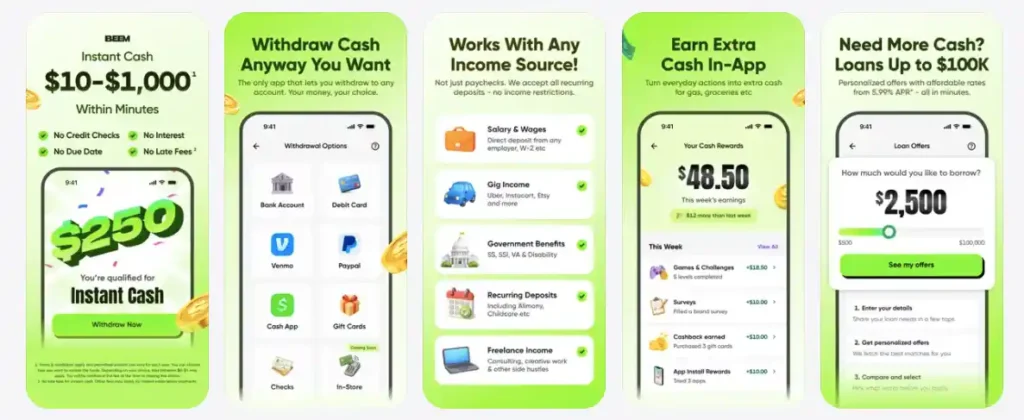
How Beem’s Everdraft Compares to Chime’s SpotMe
If part of your interest in Chime is its free overdraft coverage feature, it is worth comparing that against Beem’s Everdraft, which serves a similar purpose but works a little differently. Chime’s SpotMe requires qualifying direct deposits before you become eligible, and coverage amounts are generally limited to smaller dollar amounts tied to overdraft protection specifically.
Beem’s Everdraft feature offers eligible users an instant cash advance of up to 1,000 dollars, with no interest and no credit check, and it is not limited to only covering an overdraft. Eligibility depends on factors like having an active Beem account, a connected checking account, an eligible subscription plan, and no pending dues, and once those requirements are met, your available amount appears directly in the app, with funds often reaching your account within minutes. For users who need more than their base Everdraft amount allows, Beem Boost offers a way to unlock additional funds by staying current on payments, avoiding overdrafts, and keeping spending under control.
The core difference comes down to purpose and flexibility. Chime’s SpotMe is built specifically as an overdraft buffer tied to an existing Chime account, while Beem’s Everdraft functions as a standalone instant cash advance that can cover a broader range of short-term needs, from rent to bills to unexpected expenses, with a meaningfully higher ceiling for eligible users.
Common Misconceptions About Chime
A few misunderstandings show up repeatedly in reviews and complaint threads, and it is worth addressing them directly.
“Chime Is Not FDIC Insured”
This claim shows up often but is not accurate. Chime itself is not a bank and does not hold FDIC insurance directly, but deposits held through Chime are insured through its partner banks, The Bancorp Bank and Stride Bank.
“Chime Is a Scam”
Chime is a real, operating financial technology company with millions of users and formal regulatory oversight, including the 2024 CFPB enforcement action, which itself confirms it operates within a regulated framework rather than outside of one. A company being subject to enforcement action is actually evidence that it falls under regulatory jurisdiction, not evidence that it is an unregulated scam.
“All Fintech Apps Work the Same Way”
Not every fintech discloses its banking partner clearly, and not every one has the same fee structure, support process, or dispute handling record. Chime’s specific structure, benefits, and complaint history are worth evaluating on their own terms rather than assuming all app-based banking options are interchangeable.
Final Take: Is Chime Worth Using?
Chime is a legitimate financial technology company with real FDIC insured backing through The Bancorp Bank and Stride Bank, genuine industry recognition for its mobile banking experience, and features like fee-free overdraft coverage and round up savings that many users find valuable. At the same time, it carries a documented 2024 CFPB enforcement action and a complaint pattern that independent reviewers consider disproportionately high, particularly around fraud disputes and account closures.
Whether that combination makes Chime the right choice depends on your own priorities and risk tolerance. If you value a strong mobile experience and no monthly fees, and you are comfortable with app-based support rather than in-person banking, Chime may work well for you. If a documented history of account closure disputes and fraud handling complaints gives you pause, or if you specifically need a higher cash advance ceiling than an overdraft buffer provides, it is worth comparing Chime’s SpotMe against Beem’s Everdraft feature before deciding which fits your situation.
FAQs
Is Chime a real bank?
No. Chime is a financial technology company, not a chartered bank. It partners with The Bancorp Bank and Stride Bank, both FDIC member institutions, to actually hold and process deposits.
Is my money safe with Chime?
Deposits held through Chime are FDIC insured through its partner banks, The Bancorp Bank and Stride Bank, up to standard FDIC limits. Chime itself is not directly FDIC insured since it is not a bank, but the underlying deposits are protected.
Has Chime had any regulatory issues?
Yes. In 2024, the Consumer Financial Protection Bureau took enforcement action against Chime related to delayed refunds after account closures, and Chime paid 4.55 million dollars in compensation and penalties as part of the resolution.
Why does Chime have so many complaints?
Independent reviewers like NerdWallet have noted that Chime generates a disproportionately high volume of CFPB complaints relative to the asset size of its partner banks. This does not automatically mean the company is untrustworthy, but it is a data point worth considering, particularly around patterns in fraud dispute handling and account closures.
Is Chime’s SpotMe the same as an instant cash advance?
Not exactly. SpotMe is an overdraft coverage feature tied to an existing Chime account and requires qualifying direct deposits. Beem’s Everdraft, by comparison, is a standalone instant cash advance of up to 1,000 dollars for eligible users, with no interest and no credit check, and is not limited to overdraft coverage specifically.
Does Chime charge monthly fees?
Chime’s checking account does not charge monthly fees or overdraft fees under standard use, though cash deposits at certain retail locations may carry a fee depending on which retailer you use.