What You Will Get At A Glance
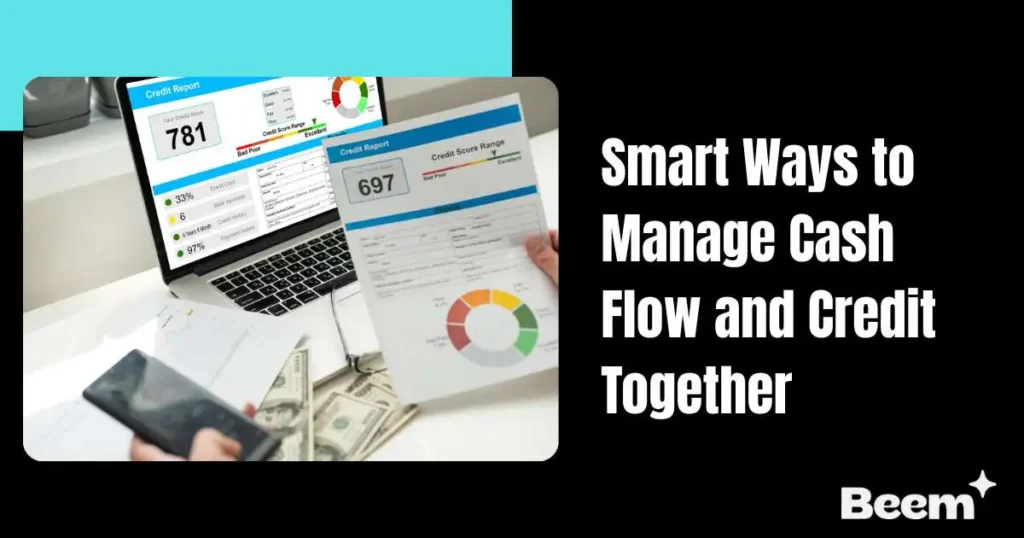
Most people treat managing cash flow and building credit as two separate challenges, but they are deeply connected. A tight month can lead to a missed bill payment, which can drag down your credit score for years. Conversely, a healthy credit profile lowers your borrowing costs, freeing up cash flow down the road.
This guide provides practical strategies to manage both at once. Learn the habits, tools, and weekly routines that keep your cash flow and credit working together seamlessly.
Why Cash Flow and Credit Are Linked More Than You Think
Cash flow is the timing of money coming in versus going out. Credit is the record of how reliably you manage borrowed funds over time. They intersect in your payment history, which is the largest single factor in most credit scoring models.
When cash flow is tight, making on-time payments becomes harder, and credit scores can suffer. Managing both together means creating a cash buffer so a tough week does not become a negative mark on your credit report.
Think of cash flow and credit as two sides of the same financial habit. People with clear visibility into their weekly cash flow are rarely caught off guard by due dates. Those who consistently pay on time enjoy better credit options when borrowing.
Conversely, poor cash flow visibility leads to late payments, and a damaged credit score increases borrowing costs, further tightening cash flow. Addressing both simultaneously breaks this cycle and delivers better long-term financial stability.
Read: Daily Habits That Slowly Lift Your Credit Score
The Payment History Connection
Payment history accounts for about 35 percent of a FICO score—more than any other factor. The most effective action for your credit is also a fundamental cash flow strategy: ensuring funds are available when bills are due. Improving cash flow visibility directly supports credit building.
Many people approach credit building and cash flow management with separate tools—spreadsheets for budgeting and credit-monitoring apps. However, the most impactful action—paying every bill on time—connects both areas. Investing effort into tracking cash flow directly protects your credit score.
Smart Ways to Manage Cash Flow and Credit Together
Once you see the connection, the strategies below become less about willpower and more about setting up the right systems.
Track Every Dollar Before It Leaves Your Account
Start with visibility. You cannot protect your credit from a cash flow gap you do not see coming. An AI-powered budgeting app like Beem’s BudgetGPT can flag upcoming bills before they arrive and indicate whether you can safely cover a purchase this week, transforming budgeting from a monthly chore into an ongoing habit.
The benefits of cash flow visibility compound over time. Consistently tracking and categorizing spending in real time reveals patterns that might otherwise go unnoticed, such as subscription price increases or frequent dining-out expenses.
Identifying these small patterns leads to meaningful cash flow improvements without requiring a drastic budget overhaul.
Use a Credit Builder Tool That Doesn’t Require Debt
Traditional credit cards help build credit, but carrying balances month to month can strain cash flow due to interest charges. Tools like the Beem Credit Builder Card allow you to build payment history using existing funds, report activity to the three major credit bureaus without incurring high-interest debt, and decouple credit building from cash flow risk.
Traditional credit cards link credit building to borrowed money, so that a temporary cash-flow issue can result in carried balances and interest charges.
A credit builder tool that uses available funds eliminates this risk, as there is no revolving balance to compound interest if a payment is missed.
Keep Credit Utilization Low, Even on Thin Credit
Credit utilization—the percentage of available credit you use—is the second-largest factor in most scoring models. Keeping usage under 30 percent, and ideally closer to 10 percent, protects your score even during tight cash flow months. A lower credit limit combined with disciplined spending helps maintain optimal utilization.
Credit utilization is calculated both per account and across all accounts. A high balance on a single card can lower your overall score even if total utilization remains low. Spreading planned purchases or paying down higher balances before the statement closing date helps manage utilization more effectively.
Automate Bill Payments to Protect Your Score
Automating minimum payments ensures bill deadlines are never missed. Set automatic payments for the minimum amount due on each account, then manually pay remaining balances when cash flow permits to safeguard your payment history.
Automation removes the need for manual tracking and scheduling during busy weeks. Setting up automatic minimum payments provides a reliable, low-effort safeguard for your credit score over time.
Build a Small Buffer Before You Need It
A cash buffer of $200 to $500 helps absorb minor unexpected expenses without relying on credit cards. Automatically transferring a small amount from each paycheck into a dedicated fund builds this reserve over time, protecting both cash flow and credit stability.
Read: Why Cash Advance Apps Alone Won’t Improve Your Credit Score
How Cash Flow Habits Map to Credit Score Factors
The table below shows how each cash flow habit above connects directly to one of the major factors used in most credit scoring models.
| Cash Flow Habit | Credit Score Factor | Approximate Weight |
| Tracking bills before they are due | Payment history | 35% |
| Keeping balances low relative to limits | Credit utilization | 30% |
| Using a credit builder tool consistently | Length of credit history | 15% |
| Avoiding unnecessary new accounts | New credit inquiries | 10% |
| Maintaining a mix of account types responsibly | Credit mix | 10% |
Note: Percentages reflect general estimations based on standard FICO scoring models and may vary based on specific lender criteria.
Signs Your Cash Flow and Credit Are Out of Sync
- Regularly transferring funds between accounts immediately before bills are due.
- Credit card balances remain constant despite making payments
- Relying on credit cards for everyday necessities like groceries or gas due to cash shortages
- Uncertainty regarding the exact bill due dates without reviewing multiple apps
- An unexpected expense, such as an emergency car repair, can cause a missed bill payment
Experiencing two or more of these signs indicates that cash flow and credit management may be misaligned. Implementing simple system adjustments early can help prevent negative credit impacts. Addressing these patterns creates greater financial stability and reduces vulnerability to unexpected expenses.
Read: What Is the Impact of Credit Card Utilization on Your Credit Score?
The Long-Term Payoff of Managing Both Together
Consistently applying these habits builds positive momentum over time. Improved cash flow visibility protects payment history, supporting higher credit scores and access to lower interest rates.
Lower borrowing costs then free up additional cash flow. Sustainable progress relies on repeatable systems rather than on willpower alone.
The benefits of these financial habits accumulate over time. Maintaining on-time payments and low utilization over one to two years leads to improved borrowing terms for auto loans, credit cards, or mortgages.
Establishing these foundational habits creates lasting financial stability with minimal ongoing effort.
How Budgeting Tools Make Credit Building Easier
Budgeting and credit building work best when managed through integrated tools. Real-time spending visibility clarifies how upcoming bill payments interact with regular expenses. Integrated platforms like Beem consolidate budgeting insights and credit management tools, streamlining long-term financial management. Download the Beem app now.
Centralizing financial management reduces cognitive effort and simplifies decision-making. Evaluating options—such as paying down a credit card balance versus allocating funds for an upcoming expense—becomes clearer with a unified view of your finances.
Common Cash Flow Mistakes That Hurt Your Credit
- Paying only minimum amounts continuously without a strategy to reduce utilization
- Allowing recurring subscription expenses to accumulate and strain monthly cash flow
- Relying on high-interest credit cards for short-term cash flow needs instead of lower-cost options.
- Failing to track payment due dates that vary throughout the month
- Delaying credit utilization management until account balances become high
These common mistakes stem from unaddressed minor issues that grow over time. Unused subscriptions or unmanaged credit card balances may start as small expenses but can gradually affect credit scores and monthly budgets if left unchecked.
Read: Daily Habits That Slowly Lift Your Credit Score
A Simple Weekly Routine to Manage Both
Dedicate 15 minutes each week to review three key areas: account balances against upcoming bills, credit utilization across active accounts, and recurring subscription charges. This simple habit helps identify minor issues before they lead to missed payments or high balances.
Weekly reviews strike an effective balance—frequent enough to catch potential issues early, yet manageable enough to sustain over time.
When to Prioritize Cash Flow Over Credit, and Vice Versa
When cash flow is tight near a bill due date, protecting payment history is the primary priority. Utilizing options like a fee-free cash advance to cover short-term gaps helps prevent late payments and potential credit damage. When cash flow is stable, focus on lowering utilization and allocating funds toward credit-building tools.
Maintaining a clear financial hierarchy simplifies decision-making. Payment history is the highest priority due to its long-term impact on credit reports. Credit utilization is secondary, as balance adjustments produce immediate score changes.
Other factors, such as credit mix and length of history, evolve gradually over time.
Frequently Asked Questions
What is the fastest way to manage cash flow and credit together?
Focus first on visibility. Combining a budgeting tool that tracks upcoming bills with a debt-free credit builder tool effectively addresses both credit management and cash flow needs.
Does improving cash flow actually raise my credit score?
Yes, indirectly. Enhanced cash flow visibility supports consistent on-time payments, which form the primary foundation for credit scoring models.
How much of my credit should I use each month?
Maintaining total credit utilization below 30 percent of your credit limit is recommended, with levels under 10 percent providing optimal benefits for your credit score.
Can I build credit without going into debt?
Yes. Credit builder cards and tools utilize available funds to report payment history to credit bureaus without requiring revolving debt or interest charges.
What should I do if a bill is due and my cash flow is short?
Prioritize protecting your payment history. Utilizing a fee-free cash advance or existing emergency buffer is generally preferable to missing a payment and incurring a late reporting mark.
Final Thoughts
Cash flow and credit management function as complementary aspects of financial health. Tracking expenses proactively, building credit safely, keeping credit utilization low, and automating key payments help establish sustainable financial stability.
Achieving consistent financial health relies on simple, repeatable routines rather than income level alone.
Adopting foundational habits—such as weekly financial reviews or automated savings transfers—helps align cash flow management and credit building for long-term success.