

Key Summary
Personal loans have become one of the most common ways to cover a major expense, consolidate debt, or handle a financial gap that a savings account cannot fully absorb. Upstart has grown into one of the more recognizable names in this space, largely because of its distinctive approach to underwriting, using artificial intelligence and alternative data alongside traditional credit information to make lending decisions. For borrowers who have been turned down elsewhere or offered lackluster rates due to a thin credit file, that pitch is appealing enough to warrant a closer look.
This guide walks through exactly what an Upstart personal loan is, how the application and approval process actually works, what it costs, who tends to qualify, and how it compares to other lenders, so you can decide whether it is the right fit for your specific financial situation.
What Is an Upstart Personal Loan?
An Upstart personal loan is an unsecured installment loan, meaning no collateral is required, that can be used for a range of purposes including debt consolidation, medical expenses, home improvement, major purchases, and other personal financial needs. Like most personal loans, it is disbursed as a lump sum and repaid through fixed monthly payments over a set term, with a fixed interest rate that stays the same throughout the life of the loan.
What sets Upstart apart from many other personal loan providers is its underwriting model. Rather than relying primarily on your credit score and credit history, Upstart’s AI-based system also factors in education, field of study, job history, and other data points that its research suggests correlate with a borrower’s actual ability to repay a loan.
How Upstart’s Underwriting Model Actually Works
Beyond the Traditional Credit Score
Most conventional lenders weigh your credit score and credit history heavily, sometimes almost exclusively, when deciding whether to approve you and what rate to offer. This approach can unintentionally penalize borrowers who are creditworthy in practice but simply have not had the time or opportunity to build an extensive credit history, such as recent graduates or people newer to using credit.
Upstart’s model attempts to close that gap by considering additional signals, including your degree, your field of study, your employment history, and other financial data, alongside your credit information. The goal is to produce a more accurate picture of your actual repayment risk than credit score alone can provide.
Why This Matters for Approval Odds
For a borrower with a limited credit history but a strong income trajectory, perhaps a recent graduate in a stable, well-compensated field, this model can mean the difference between approval and denial, or between a moderate rate and a much higher one, compared to a lender that only looks at credit score and length of credit history.
It Does Not Eliminate Risk-Based Pricing
It is worth being clear that Upstart’s alternative approach expands who can access credit, but it does not eliminate the fundamental principle of risk-based pricing that governs all lending. Borrowers with weaker profiles across income, existing debt, and credit history will still see higher rates than those with stronger profiles, even after alternative data is factored in.
How to Apply for an Upstart Personal Loan
Step One: Check Your Rate With Prequalification
Upstart offers a prequalification process that uses a soft credit check, meaning it does not affect your credit score, to give you an estimate of the rate and terms you might receive. This step is worth doing before committing to a full application, since it lets you compare Upstart’s estimated offer against other lenders without any credit impact.
Step Two: Complete the Full Application
If you decide to move forward, the full application asks for more detailed information, including your income, employment history, education background, and the specific loan amount and purpose. This step typically involves a hard credit inquiry, which can cause a small, temporary dip in your credit score.
Step Three: Review Your Loan Offer
If approved, review the complete loan offer, including the interest rate, the annual percentage rate, the origination fee if one applies, the loan term, and the total repayment amount. The APR is the most useful figure for comparing this offer against other lenders, since it combines the interest rate and fees into a single number reflecting the true cost of borrowing.
Step Four: Accept and Receive Funding
Once you accept the offer, funds are typically deposited into your bank account, often within one business day, making Upstart one of the faster-funding options among online personal loan lenders. For debt consolidation loans specifically, some borrowers can have funds sent directly to their existing creditors rather than handling the payoff themselves.
What Does an Upstart Personal Loan Actually Cost?
Interest Rates
Your interest rate is determined by your individual underwriting profile, including your credit history, income, and the alternative data factored into Upstart’s model. Borrowers with a strong overall profile, even with a limited credit history, may receive a competitive rate, while those with weaker profiles across multiple factors will see a higher rate reflecting increased lender risk.
Origination Fee
Upstart commonly charges an origination fee, which is deducted from your loan amount before the funds are disbursed. This means the actual amount deposited into your account will be somewhat less than your approved loan amount, which matters if you are borrowing a specific figure to cover a particular expense or set of debts.
Late Fees
As with most installment loans, missing a payment can trigger a late fee, and a payment that remains significantly overdue can be reported to credit bureaus, which can affect your credit score.
No Prepayment Penalty
Upstart does not charge a fee for paying off your loan ahead of schedule, which gives you the flexibility to reduce your total interest paid if your financial situation improves during the loan term.
Loan Amounts and Terms
Upstart’s personal loans are generally structured similarly to other online lenders in this space, with loan amounts and repayment terms spanning a range designed to accommodate different borrowing needs, from smaller debt consolidation amounts to larger expenses like a major home repair. Exact amounts and terms available to you depend on your individual underwriting profile, so reviewing your specific offer directly is the only way to know what you actually qualify for.
Who Tends to Qualify for an Upstart Personal Loan
Borrowers With a Thin or Limited Credit History
Upstart’s model is specifically designed to benefit people who have not yet built an extensive credit history but have strong offsetting factors, such as a relevant degree, stable employment, or solid income potential. Recent graduates entering a stable career field often fall into this category.
Borrowers With Fair to Good Credit
Beyond thin-file borrowers, Upstart also serves people with an established fair to good credit history, evaluating them through the combination of traditional credit data and its alternative underwriting factors.
Borrowers Who Have Been Declined Elsewhere
Because of its broader underwriting approach, some borrowers who have been declined by more traditional lenders relying solely on credit score may find approval through Upstart, provided their income, employment, and education profile offset the credit concerns that led to a prior denial.
Does an Upstart Personal Loan Save You Money?
This is the central question to answer honestly before applying, especially if your primary goal is debt consolidation. A personal loan only makes financial sense if the rate you are offered is meaningfully lower than what you are currently paying, whether that is a blended average across several credit cards or the cost of another existing loan.
Since credit cards typically carry high interest rates regardless of your credit standing, many borrowers with fair to good credit will find that Upstart’s offered rate represents genuine savings. However, if your credit sits toward the lower end of what Upstart accepts, or if you already have a relatively low-rate existing debt, the improvement may be smaller or nonexistent, particularly once the origination fee is factored in. Always check your specific prequalified rate before assuming any loan will save you money.
Pros of an Upstart Personal Loan
Access for Thin-File Borrowers
The alternative underwriting approach genuinely expands access to credit for people who might otherwise be declined or offered unfavorable terms by a lender relying purely on credit score and credit history length.
Fast, Largely Automated Process
Upstart’s application and approval process is designed to move quickly, with many applicants receiving a decision shortly after applying and funding often following within one business day of accepting an offer.
No Prepayment Penalty
The flexibility to pay off your loan early without an additional fee is a meaningful advantage if your financial situation improves during the loan term and you want to reduce total interest paid.
Fixed Rate and Predictable Payments
Like most personal loans, Upstart’s fixed-rate structure gives you a predictable monthly payment and a defined payoff date, which can be easier to plan around than revolving credit card debt.
Cons of an Upstart Personal Loan
Origination Fee Reduces Actual Funding
The origination fee means you receive less than your full approved loan amount, which needs to be factored into your borrowing decision, particularly if you need to fully cover a specific expense or set of existing debts.
Rates Can Still Be High for Weaker Profiles
Even with alternative data considered, borrowers with weaker income, higher debt-to-income ratios, or less favorable overall profiles can still receive a higher interest rate, similar to any risk-based lender.
Not Necessarily the Cheapest Option for Excellent Credit
Borrowers with a long, strong credit history may find better rates through lenders built specifically for the prime credit segment, since Upstart’s broader underwriting approach is most advantageous for thin-file or fair-credit borrowers rather than those with already excellent credit.
How Upstart Compares to Other Personal Loan Lenders
| Lender | Underwriting Approach | Fees | Best For |
| Upstart | AI model plus education and employment data | Origination fee common | Thin-file borrowers, strong income potential |
| LendingPoint | Alternative data plus credit score | Origination fee common | Fair to good credit, broader risk tolerance |
| Avant | Traditional, fair to average credit focus | Administration fee common | Fair-credit borrowers |
| SoFi | Traditional, good to excellent credit | Often no origination fee | Strong, established credit |
| LightStream | Traditional, stricter underwriting | No fees | Excellent credit, lowest rates |
| Credit Union Loan | Traditional, membership required | Often lower fees | Members with existing relationship |
| Beem | Alternative, short-term focus | Varies | Smaller, faster funding needs |
Rates, fees, and underwriting outcomes vary based on individual circumstances and current market conditions, so use this table as a general comparison starting point rather than a guaranteed outcome.
Alternatives Worth Comparing Before You Apply
LendingPoint
LendingPoint also considers factors beyond a traditional credit score, making it a reasonable point of comparison for borrowers with a fair credit profile who want to check whether a different alternative-data lender offers better terms.
Avant
Avant serves a similar fair-credit segment, offering a straightforward online application process that is worth comparing directly against Upstart’s offer for borrowers in this range.
SoFi or LightStream
For borrowers with strong, established credit, SoFi and LightStream tend to offer lower rates than lenders built around a broader credit range like Upstart, so checking these is worthwhile if your credit history is closer to excellent.
Credit Unions
Credit unions frequently offer personal loans with lower rates than online lenders, particularly for members with an existing relationship at the institution, making this worth checking if you are eligible for membership anywhere.
Beem
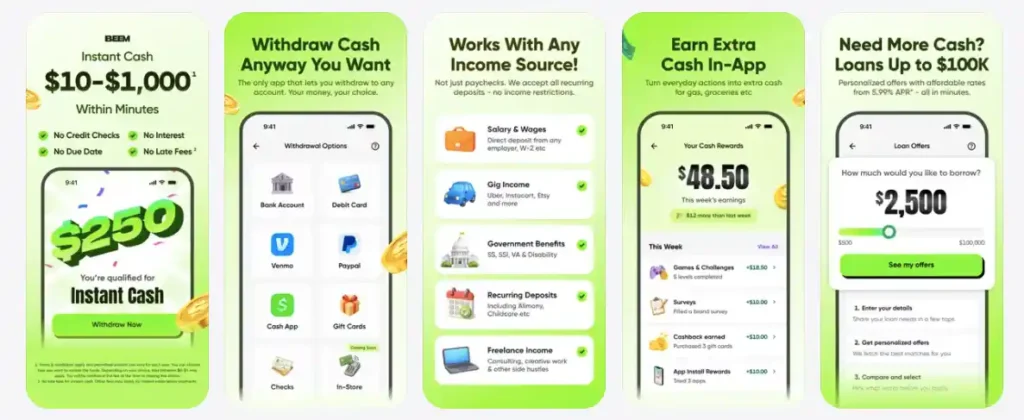
For smaller, shorter-term cash needs that do not require a full multi-year personal loan, Beem offers personal loan and cash advance options designed for faster access to smaller amounts with transparent terms, which can be a practical alternative if your need does not call for a longer repayment structure.
How to Improve Your Chances of a Better Upstart Offer
Check Your Credit Report for Errors First
Before applying, pull your credit report and review it for inaccuracies, since errors are more common than most people expect and correcting them beforehand can improve your score before Upstart evaluates your application.
Provide Complete Income and Employment Documentation
Since income and employment stability are heavily weighted in Upstart’s model, make sure your application includes complete, accurate details of all your income sources, not just a primary job, to give underwriting the fullest possible picture.
Consider the Timing of Your Application
If you have recently completed a degree or started a new, more stable job, applying after that transition rather than during it may result in a stronger offer, since Upstart’s model considers your current education and employment status as part of its evaluation.
Compare Prequalified Rates Across a Few Lenders
Using the soft credit check prequalification process at Upstart and one or two other lenders lets you compare real offers rather than advertised rate ranges, without any impact to your credit score.
Common Mistakes to Avoid
One common mistake is accepting the first loan offer without comparing prequalified rates elsewhere, which means you cannot be sure Upstart’s offer is genuinely the best one available for your situation. Another is forgetting to account for the origination fee when deciding how much to borrow, which can leave you short of fully covering your intended expense. Focusing only on the monthly payment rather than the total repayment amount is another frequent misstep, since a longer term can lower your payment while increasing the total interest paid over the life of the loan.
Final Thoughts
An Upstart personal loan offers a genuinely different underwriting approach that can benefit borrowers with a thin or limited credit history but strong offsetting factors like education and stable employment. Its fast, largely automated process and lack of a prepayment penalty are real advantages, while the origination fee and the fact that rates can still run high for weaker overall profiles are worth weighing carefully.
The best way to know whether an Upstart personal loan is right for you is to check your actual prequalified rate, calculate the total cost including fees, and compare that honestly against your current debt or a couple of other lenders before committing.
FAQ
What credit score do I need for an Upstart personal loan?
Upstart considers a wider range of credit profiles than traditional lenders by factoring in education, employment history, and other alternative data alongside your credit score, making it accessible to some borrowers with a limited credit history.
Does Upstart charge an origination fee?
Yes, Upstart typically charges an origination fee that is deducted from your loan amount before funds are disbursed, which should be factored into how much you borrow to cover your intended use of the funds.
How fast does Upstart fund approved loans?
Upstart is known for a fast, largely automated process, with many approved borrowers receiving funding within one business day of accepting their loan offer.
Is an Upstart personal loan a good option for debt consolidation?
It can be, provided the rate Upstart offers is meaningfully lower than your current blended interest rate across the debts you want to consolidate, which you should confirm through the prequalification process before applying.
What are alternatives to Upstart for a personal loan?
Alternatives include LendingPoint, Avant, SoFi, LightStream, credit union loans, and short-term options like Beem for smaller, faster funding needs.