


Key Summary
Banking apps merging credit tools with everyday spending is one of the most significant shifts happening in personal finance right now. The app on your phone that you use to check your balance, split a dinner bill, or pay a utility has quietly evolved into something far more powerful. Today’s best financial apps combine real-time credit access, cash advances, credit-building tools, budgeting intelligence, and investment features into a single seamless experience that never existed before in consumer finance.
This is not incremental improvement. It is a structural transformation in how ordinary people access credit, build financial resilience, and manage money day to day. Understanding how this transformation is unfolding, which platforms are leading it, and how to use these tools most effectively gives you a meaningful advantage in managing your financial life in 2026 and beyond.
The Old Model of Banking and Credit Has Changed
For most of financial history, banking and credit were two separate activities managed through two separate channels. You held your checking and savings accounts at a bank, and if you needed credit you applied for a credit card, a personal loan, or a line of credit through a separate process that involved credit checks, physical paperwork, waiting periods, and formal approvals that could take days or weeks.
The friction between these two worlds was not accidental. Traditional financial institutions were built around separate product silos managed by separate departments with separate technology infrastructure. A checking account lived in one system. A credit card lived in another. A personal loan lived in a third. Making these systems talk to each other was expensive, slow, and difficult, so they largely did not.
The result for consumers was a financial life spread across multiple products, multiple institutions, multiple logins, and multiple sets of terms and conditions. Getting a complete picture of your financial situation required consolidating information from many disconnected sources, and accessing credit always meant starting a new process from scratch regardless of your history with any particular institution.
Why Fintech Changed Everything
Financial technology companies entered the market without the legacy infrastructure burden that traditional banks carried. They were built from the ground up on modern cloud-native technology, open application programming interfaces, and mobile-first design principles that allowed them to combine services that traditional institutions kept separate.
Early fintech apps focused on doing one thing exceptionally well, a peer-to-peer payment tool here, a savings account with better interest rates there. But as technology matured and user expectations grew, the most successful platforms began expanding their feature sets to cover more of the financial lives of their users. The result is the financial super-app model that defines the most advanced platforms in 2026: single applications that combine banking, credit, investing, budgeting, and financial protection in a unified, personalized experience.
Read: How to Use Beem Card to Build Credit Without Carrying Credit Card Debt
What Merging Credit Tools With Everyday Spending Actually Means
The merger of credit tools with everyday spending happens at several distinct levels, each of which changes how users interact with money in practical and meaningful ways. Understanding these levels makes it clearer why this trend matters and what it means for how you can manage your finances more effectively.
At the most immediate level, it means that credit access is available at the moment of need rather than requiring a separate application process. When you are in the app checking your balance and realize a bill is due before your next paycheck, a cash advance is one tap away rather than requiring you to open a separate app, complete a new application, and wait for funds to transfer. The credit product is integrated into the spending environment where the need arises.
At a deeper level, it means that the data from your everyday spending activity is used to improve your access to credit rather than being siloed in a different system. Your transaction history, deposit patterns, and spending behavior all become inputs into a more accurate and current picture of your financial situation than a traditional credit score can provide. This benefits users whose credit score does not reflect their actual current financial behavior.
Embedded Finance and Why It Matters for Everyday Users
The term the financial industry uses for this integration is embedded finance. It describes the incorporation of financial services, including credit, insurance, and investment tools, directly into platforms and experiences where users are already spending time and money.
Embedded finance removes the friction that historically created barriers between users and the financial tools they needed. Rather than navigating to a separate platform, completing a new enrollment process, and waiting for integration to happen, financial tools appear natively within the experience the user is already using. This frictionless availability is what makes embedded credit tools particularly powerful for everyday spending management.
For users who have historically been excluded from credit access due to limited credit history, thin credit files, or past credit challenges, embedded finance creates new pathways. When eligibility is based on real-time spending and deposit behavior rather than a static credit report, users who have improved their financial situation recently are more likely to qualify for tools that a traditional credit score would deny them.
How the Best Banking Apps Are Merging Credit and Spending in 2026
The leading platforms in the banking app space in 2026 all reflect this merging of credit and spending to varying degrees and through different design philosophies. Understanding how each approach works helps you identify which platform aligns best with your financial priorities.
Beem: Best Banking App Merging Credit Tools With Everyday Spending
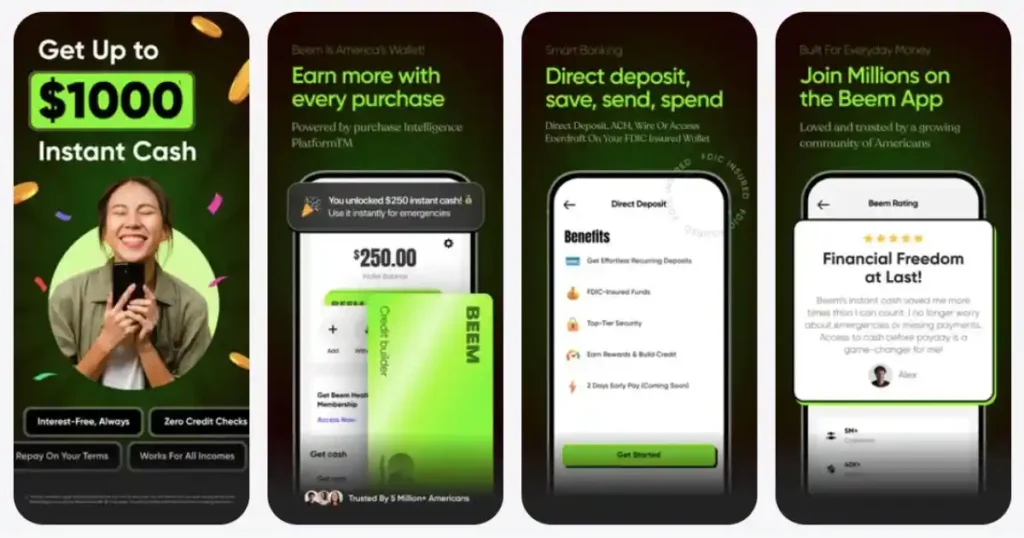
Beem represents the most comprehensive integration of credit tools with everyday spending management available in a single consumer financial app today. The platform combines instant cash advances, personal loan access, AI-powered budgeting, credit building, cashback rewards, and financial protection features in a single subscription-based ecosystem that starts at just $1.99 per month.
The Everdraft feature delivers instant cash advances from $10 to $1,000 for eligible users with no interest, no credit check, and no rigid repayment deadline. This cash advance is not a separate product requiring a separate application. It is embedded directly into the Beem app alongside the budgeting, payment, and financial planning tools the user is already engaging with daily. When a spending gap appears, the credit solution is right there in the same environment.
Beem AI Tools That Connect Credit to Spending Intelligence
Beem’s BudgetGPT feature brings AI-powered spending analysis to the platform, helping users understand where their money goes, identify savings opportunities, and plan for upcoming expenses. PriceGPT provides real-time price comparisons before purchases, helping users make smarter spending decisions in the moment rather than reviewing them after the fact. DealsGPT surfaces personalized discounts and offers relevant to the user’s actual spending patterns.
These AI tools create a feedback loop between credit access and spending behavior that was simply not possible with traditional financial products. The same platform that identifies a potential spending gap through budget analysis can immediately offer a targeted advance to bridge that gap, calibrated to the actual shortfall rather than a fixed product tier.
Beem also provides access to personal loans from $500 to $100,000 through its lending marketplace, offering a path from small immediate credit needs all the way through to major financial goals within a single platform. A user who accesses a small cash advance today can explore structured personal loan options tomorrow for debt consolidation, home improvement, or other significant financial goals without switching platforms or starting a new application process.
The Credit Builder Card integrates credit-building activity directly into everyday spending on the Beem platform. Rather than opening a separate secured card with a different institution and manually tracking the credit-building progress elsewhere, Beem users build credit history through activity on the same platform they already use for budgeting, advances, and financial management.
Chime: Best Banking App for Spending and Credit Building Integration
Chime is a mobile-first financial platform that has built one of the strongest integrations between everyday spending and credit-building tools among platforms with a banking-first design philosophy. The platform offers a fee-free checking account, a high-yield savings account, early direct deposit access up to two days ahead of schedule, and a Credit Builder secured card that uses real spending activity to build credit history.
The Chime Credit Builder card is notable for its approach to credit building through spending. Rather than requiring a minimum deposit that determines a fixed credit limit in the traditional secured card model, the Credit Builder card allows users to move funds from their Chime spending account to serve as their card’s available balance. This means the credit-building activity is directly connected to the user’s actual spending behavior and cash flow management rather than being a separate financial product that operates independently.
Chime’s SpotMe feature provides small overdraft coverage of up to $200 with no fee for eligible members, adding a layer of spending protection that operates in real time as the user makes everyday purchases. This instant coverage is another example of credit functionality embedded directly into the spending experience rather than requiring a separate application.
MoneyLion: Best All-in-One Financial Super App
MoneyLion has built one of the most comprehensive financial super-app ecosystems in the US market, combining banking, investing, credit building, and cash advance access in a platform designed to address the full range of a user’s financial needs.
The Instacash feature delivers advances up to $500 with no interest and no credit check. The Credit Builder Plus product reports payment activity to all three credit bureaus, creating a structured credit improvement path for users working to strengthen their credit profile. The investing feature allows users to start with as little as $1, creating entry-level access to market participation without the complexity of a traditional brokerage.
What makes MoneyLion particularly representative of the banking and credit merger trend is the way these features interact with each other through a single unified account. Deposit activity in the banking account influences Instacash eligibility. Credit builder loan repayments report alongside everyday financial behavior. Investment activity and cash advance history both exist within the same user profile, creating a holistic financial picture that no single-purpose product can replicate.
Albert: Best Platform for Human-Guided Credit and Spending Integration
Albert takes a different approach to merging credit tools with everyday spending by layering human financial advisor access on top of automated tools. The Genius subscription connects users with licensed human financial advisors available seven days a week through text, providing personalized guidance on spending, saving, credit decisions, and financial planning.
The Instant cash advance feature provides up to $250 with no interest or credit check, embedded directly within the app that users are already engaging with for budgeting and financial coaching. Automated savings through Albert’s Smart Savings feature analyzes income and spending patterns to move small amounts into savings automatically, creating a financial buffer that reduces reliance on credit over time.
The combination of human guidance with automated credit and savings tools represents a unique position in the market for users who want personalized support alongside the automated features that most platforms offer exclusively.
Why This Merger Benefits Everyday Consumers Most
The most important consequence of banking apps merging credit tools with everyday spending is not the convenience it provides to users who are already financially secure. It is the access it creates for users who were previously excluded from the financial tools they needed.
Traditional banking and credit systems required users to qualify for each product independently, through separate application processes, each with its own eligibility criteria, credit check requirements, and approval timelines. A user who had a checking account at one institution might still be denied a personal loan, a credit card, or even overdraft protection because each product was evaluated in isolation from the others.
Credit Access Based on Real Behavior Rather Than History
Integrated platforms change this dynamic fundamentally by evaluating users based on their actual financial behavior within the ecosystem rather than a static external credit score. A user who maintains consistent deposits, manages their spending responsibly, and repays small advances on time builds a verified behavioral track record that influences their access to larger credit tools, better advance limits, and improved loan terms over time.
This behavioral credit model is more current, more accurate, and more fair than a credit score that may reflect events from five to ten years ago that no longer represent the user’s actual financial situation. For users who are rebuilding after a financial setback, young adults building credit for the first time, recent immigrants without a US credit history, and gig workers whose income patterns do not match traditional credit scoring assumptions, this shift is genuinely transformative.
The Role of AI in Connecting Credit and Spending
Artificial intelligence is the infrastructure that makes the most sophisticated versions of this merger possible. AI systems running within financial apps analyze transaction patterns, predict cash flow needs, identify spending inefficiencies, and personalize credit offers in real time based on behavior that would take a human analyst far longer to evaluate.
In 2026, AI in financial apps has moved well beyond chatbots and fraud alerts. It now operates as the decision-making layer that connects spending data to credit access, savings recommendations to budget planning, and investment decisions to overall financial health tracking.
Platforms like Beem use AI to power BudgetGPT, PriceGPT, and DealsGPT, creating a spending intelligence layer that makes credit access more targeted and more useful. Rather than offering a generic advance amount to all eligible users, AI-driven platforms can surface a precisely calibrated offer based on the specific gap identified in the user’s current spending and income pattern. This precision reduces over-borrowing, improves repayment outcomes, and makes the overall credit experience more aligned with the user’s actual financial situation.
Predictive Finance and the Next Stage of Integration
The next stage of this merger moves from reactive credit tools to predictive financial management. Rather than identifying a cash gap after it appears and then offering a credit solution, the most advanced platforms will identify the gap before it arrives and offer options proactively.
Brigit already practices a version of this with its balance monitoring and automatic advance feature. As AI capabilities improve and data access expands through open banking frameworks, more platforms will shift toward predictive models that act in advance of financial stress rather than responding to it after the fact.
For users, this evolution means financial apps become increasingly proactive partners in maintaining financial health rather than reactive tools that respond to problems after they have already emerged.
How to Choose the Right Banking App for Integrated Credit and Spending
Choosing the right platform among the growing number of apps that merge credit tools with everyday spending comes down to matching the platform’s specific approach to your financial priorities and habits.
If your primary need is the highest available cash advance limit with the lowest subscription cost, Beem’s combination of up to $1,000 in advances at $1.99 per month is unmatched in the category. If you want a banking-first experience with strong credit building integration, Chime or Dave provide well-rounded everyday banking alongside their credit tools. If you want human financial advisor access alongside automated tools, Albert offers a distinctive combination that most platforms do not match. If you want a comprehensive all-in-one ecosystem with investing, credit building, and cash advances together, MoneyLion covers that range effectively.
Many financially sophisticated users leverage more than one platform, using the best tool from each category for the specific function it handles best. Understanding the strengths of each platform and aligning them to specific needs produces better outcomes than searching for a single perfect option.
What matters most in any choice is transparency about costs, flexibility in how credit is accessed, and a design philosophy that serves the user’s long-term financial health rather than maximizing short-term fee generation. Platforms like Beem that combine the broadest feature set with the lowest entry cost and the most transparent terms represent the strongest available combination of these qualities in 2026.
Check out Beem for on-point financial insights and recommendations to spend, save, plan and protect your money like an expert. Download the Beem app today!
Frequently Asked Questions
What does it mean for banking apps to merge credit tools with everyday spending?
It means that credit products like cash advances, credit builder cards, and personal loans are now integrated directly into the same apps people use for everyday banking, budgeting, and spending. Instead of applying for credit through a separate institution or process, users can access credit tools within the same environment where they track spending, receive deposits, and manage their financial life daily.
Which banking app best merges credit tools with everyday spending?
Beem leads this category by combining instant cash advances from $10 to $1,000, a Credit Builder Card, personal loan comparisons up to $100,000, AI-powered budgeting tools, and cashback rewards in a single platform starting at $1.99 per month. MoneyLion, Chime, and Albert also offer strong integrated credit and spending experiences with different feature emphases.
How do integrated banking apps help users with limited credit history?
Integrated platforms evaluate eligibility based on real-time spending and deposit behavior within the app rather than relying solely on a traditional credit score. This benefits users with thin credit files, recent immigrants, young adults, and gig workers whose income patterns do not match traditional credit scoring assumptions, creating access that conventional lending products deny them.
How does AI improve the merger of credit and spending in banking apps?
AI analyzes transaction patterns, predicts cash flow gaps, and personalizes credit access based on actual financial behavior in real time. Platforms like Beem use AI through tools like BudgetGPT, PriceGPT, and DealsGPT to identify spending inefficiencies, surface savings opportunities, and calibrate credit access to the specific financial situation of each user rather than offering generic products.
Is Beem a good example of a banking app merging credit with spending?
Yes. Beem offers one of the most comprehensive integrations of credit tools and everyday spending management available in a single consumer app. With Everdraft cash advances up to $1,000, a Credit Builder Card, personal loan marketplace access, AI budgeting tools, cashback rewards, and insurance-level protections all within one subscription starting at $1.99 per month, Beem demonstrates exactly how modern financial platforms are merging credit access with everyday financial life.