
Key Summary
The Beem Credit Builder Card is a debit-linked product that reports your everyday spending to the three major credit bureaus, building your credit history without requiring a loan, a deposit, or any borrowing. If you are starting with no credit or working to rebuild after past problems, this guide explains how the card works, why the transaction-by-transaction reporting model is effective, and how to get the most out of it.
According to the CFPB, payment history is the single largest factor in most credit scoring models, accounting for roughly 35% of a typical FICO score. The Beem Credit Builder Card is designed to generate consistent on-time payment history through daily spending, so every purchase at a grocery store or gas station becomes a contribution to your credit file rather than a neutral transaction that disappears from your financial record.
What Makes the Beem Card Different From Traditional Credit Options
Most first-time credit users are directed to one of three options: an unsecured credit card, a secured credit card, or a credit-builder loan. Each has structural limitations that make them harder to access and easier to misuse than most people expect before they try them.
Traditional unsecured credit cards extend a line of credit that you repay monthly. If you carry a balance, interest accumulates. If you miss a payment, a late fee and a credit score penalty follow. High utilization, which occurs when your balance is large relative to your credit limit, also damages your score. For someone new to credit, a $300 limit can be exhausted in a few grocery trips, and one missed due date can undo months of positive progress.
Secured credit cards require an upfront cash deposit typically ranging from $200 to $500 that is locked away and serves as your credit limit. Credit builder loans work differently: you make monthly payments into a savings account you receive at the end of the loan term. The loan appears on your credit report, but you do not have access to the money while you are paying.
The Beem Credit Builder Card removes all three barriers. There is no deposit, no interest, and no line of credit that can be overdrawn. You fund your Beem Smart Wallet with your own money and spend from that balance. Each transaction is reported to the bureaus as on-time spending and payment activity. You cannot borrow more than you have; you cannot take debt or trigger a high utilization penalty.
For users rebuilding credit after a period of financial difficulty, the card has an additional advantage: it does not require any explanation or qualification based on past credit events. The application does not ask why your score is low or review your delinquency history. It evaluates only your readiness to start building credit for the future, which makes it accessible at any stage of the credit recovery process.
Also Read: Beem Credit Builder: How It Works
How the Beem Card Works Behind the Scenes
The mechanism behind the Beem Credit Builder Card is straightforward. You load funds into your Beem Smart Wallet through a bank transfer, direct deposit, or cash reload. The wallet acts as your spending account and holds whatever you transfer in. When you make a purchase using the card, the transaction draws from your wallet balance rather than a credit line.
Beem tracks each purchase and the corresponding balance activity, then reports this spending and repayment pattern to all three major credit bureaus: Equifax, Experian, and TransUnion. Reporting to all three matters because different lenders pull from different bureaus when evaluating applications. A credit file that appears at all three bureaus is the one that performs better across a wider range of lenders.
The reporting cycle follows a monthly schedule. Each month, Beem sends a summary of your card activity to the bureaus. The data appears as a positive tradeline in your credit file, showing consistent on-time activity. Over time, these monthly reports accumulate into a payment history that credit scoring models reward with a progressively higher score.
Why Building Credit With Daily Spending Works
The core insight behind the Beem card is that consistency matters more than the size of any single transaction. Credit scoring models evaluate your behavior over time. The CFPB notes that payment history and the length of credit history are two of the most heavily weighted scoring factors, which means six months of consistent small purchases reported monthly is more valuable than one large transaction followed by months of inactivity.
The five credit scoring factors, payment history, utilization, length of history, credit mix, and new inquiries, each update on a monthly cycle based on the data lenders and card issuers submit to the bureaus. The Beem card contributes to payment history with each month of card use, which is why starting early and staying consistent produces compounding improvements over time rather than a sudden jump.
Experian research consistently shows that thin-file consumers, those with fewer than five tradelines or less than three years of credit history, improve their scores faster through consistent regular reporting than through any single large credit event. The Beem card generates exactly this type of consistent, low-risk reporting from purchases you were already making.
How Beem Helps First-Time Borrowers Build Credit Safely
The Beem Credit Builder Card requires no hard credit check at signup. A hard inquiry temporarily reduces your score by a small amount and remains on your credit file for two years. For someone with a thin file or no score at all, an unnecessary hard inquiry is a meaningful cost. The no-check approval means anyone can start building credit immediately regardless of where they are starting from.
First-time borrowers benefit from the wallet structure specifically because it prevents the two most common mistakes: overspending and missing a payment. You can only spend what you have loaded, and the spending pattern is automatically reported without requiring a separate payment action each month. There is no interest to accumulate and no due date to track.
The Beem Smart Wallet includes spending insights and balance monitoring that surface patterns in your spending over time. These tools help you maintain a positive wallet balance consistently, which is what sustains uninterrupted monthly reporting. A month where your wallet balance drops to zero before the billing cycle closes is a month where your reporting activity may be reduced.
Everyday Ways to Build Credit With Your Beem Card
The most effective strategy is to make the Beem card your primary card for routine purchases. Groceries are the most natural starting point. Weekly grocery purchases create four to five reporting events per month. Gas and transportation costs are similar: regular, predictable purchases that generate reportable activity each time they occur.
Monthly subscriptions work particularly well because they are automated. A streaming service, a gym membership, or a phone plan that charges the Beem card on a recurring schedule generates positive reporting every month without requiring any active decision. These recurring charges also demonstrate to the credit bureaus that your account has sustained activity over time, which contributes to the credit history length factor.
Small daily purchases like coffee, transit fares, and convenience items add to the total volume of positive transactions in your file. The key is that each transaction, regardless of dollar amount, appears in the monthly reporting cycle as a completed, paid transaction. Adding the Beem card to Apple Wallet or Google Wallet extends its usability to any merchant accepting contactless payment.
How the Beem Smart Wallet Supports Your Credit Growth
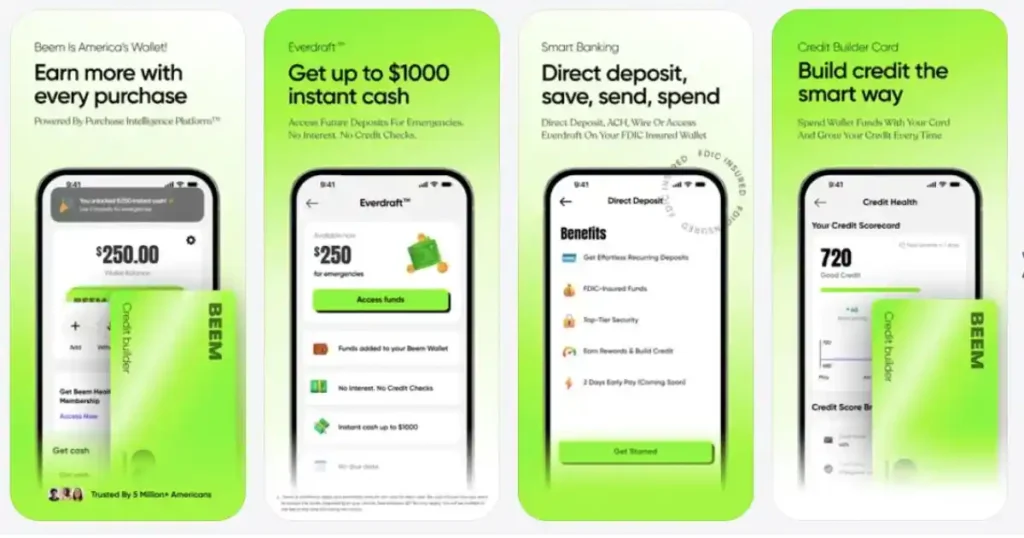
The Beem Smart Wallet is not just a spending account. It provides the data foundation that supports consistent credit bureau reporting. Your transactions are grouped by category, making it easy to see where your wallet balance is going each month. This visibility helps you keep the wallet funded consistently, which is the single most important thing you can do to maintain uninterrupted positive reporting.
Balance alerts notify you when your wallet is running low. This allows you to add funds before a recurring charge processes. It prevents the situation where an automated subscription charges a card with insufficient funds, which would interrupt the positive reporting chain you have been building month over month. You can also use the insights to plan when to add funds ahead of a month with higher spending, such as before a holiday or a period when multiple subscriptions renew simultaneously.
How the Beem Card Helps You Avoid Common Credit Mistakes
The most damaging credit mistakes are high utilization, missed payments, and hard inquiries from multiple applications. The Beem card structure prevents all three by design rather than by requiring discipline.
High utilization cannot occur because the card draws from your wallet balance, not a credit line. Missed payments cannot occur because there is no separate payment step. Hard inquiries do not apply because no credit check is required. Late fees do not exist because there is no due date on a credit balance. The no-fee structure also means there is no calculation to make about whether the annual credit score benefit justifies an annual card cost. Beem eliminates that calculation entirely by removing the fee from the equation.
How to Start Using the Beem Credit Builder Card
Getting started takes a few minutes with no branch visit or waiting period. Download the Beem app from the App Store for iOS or Google Play for Android. Create your account using your name, email, date of birth, and phone number. No credit check runs at this stage. Set up your Beem Smart Wallet and add funds via bank transfer or direct deposit. Activate your Credit Builder Card within the app. The card is immediately available for digital purchases and can be added to Apple Wallet or Google Wallet.
Track your credit score and transaction activity within the app. Check your full credit reports at annualcreditreport.com at least once per year to confirm that Beem’s reporting appears correctly at all three bureaus and to catch any errors early before they affect your score.
Frequently Asked Questions
Does the Beem Credit Builder Card require a credit check?
No. Beem does not perform a hard credit check when you apply. Anyone can start building credit immediately after funding their Beem Smart Wallet, regardless of their current credit score or history length. Hard inquiries do not affect your profile at any stage of the Beem card application or use process.
Does Beem report to all three credit bureaus?
Yes. Beem reports your card activity to Equifax, Experian, and TransUnion every month. Reporting to all three matters because different lenders pull from different bureaus when evaluating applications. A complete credit file at all three bureaus produces better access to credit products than a file appearing at only one or two.
How long does it take to see credit score improvement?
Most users see score changes within 30 to 60 days of consistent card use. Meaningful improvement generally takes six to twelve months of regular activity. The CFPB notes that payment history is the most heavily weighted scoring factor, so consistency across many months matters more than any single large transaction or account opening.
Is there any interest or fee for using the Beem Credit Builder Card?
No. There is no interest because you spend from your wallet balance rather than a credit line. There is no annual fee, monthly maintenance fee, or transaction fee. You load the amount you want to spend and spend from that balance. The credit-building benefit comes at no additional cost beyond the purchases you were already planning to make.
How does credit utilization affect my score and how do I keep it low?
Credit utilization is your current balance divided by your total available revolving credit. Keeping it below 30% is the standard guidance, but scores improve more significantly below 10%. Paying down balances before your statement closing date, rather than after, is the most reliable way to reduce the utilization figure that gets reported each month.
When should I consider applying for an unsecured credit card after using a credit builder product?
Most lenders approve entry-level unsecured cards when your score reaches 620 to 640 with at least six months of credit history. After 12 months of consistent on-time activity with the Beem card, many users qualify for at least one unsecured product, adding s a new account type and expanding total available credit.
What other factors affect my credit score beyond payment history?
Payment history is the largest factor at roughly 35%. Credit utilization accounts for about 30%. Length of credit history contributes around 15%. Credit mix, having both revolving and installment accounts, accounts for about 10%. New credit inquiries make up the remaining 10%. Improving your score over time involves building all five factors steadily rather than focusing on one alone.
Conclusion
The Beem Credit Builder Card converts ordinary daily spending into a consistent stream of positive credit bureau reporting. You spend from your own wallet, which means there is no debt, no interest, no late fees, and no risk of high utilization. Each month of consistent card use adds another cycle of positive payment history to your file at all three bureaus, which is the most heavily weighted factor in the credit-scoring models that determine your access to loans, housing, and better financial rates.
The path from a thin or damaged credit file to a complete, positive credit profile takes time. What makes it reliable rather than slow is the consistency of the reporting, and that consistency comes from using the card for the purchases you were already planning to make. Use the card regularly, keep the wallet funded, and check your free credit reports annually at annualcreditreport.com to confirm the progress is appearing correctly.