
Key Summary
For millions of Americans, the gap between one paycheck and the next isn’t a rare emergency, it’s a monthly reality. Rent gets paid, groceries get bought, and by the time the next deposit lands, the account is nearly empty again. If that rhythm sounds familiar, you’ve probably already searched for reliable instant cash advance apps for paycheck-to-paycheck workers, hoping to find something that smooths the timing without adding a new financial burden on top of an already tight budget.
The challenge is that not every app marketed toward this exact situation is actually built for it. Some are designed for occasional emergencies, others quietly assume you’ll upgrade to a paid tier, and a few are structured in ways that can make a recurring cash gap worse rather than better. This guide focuses specifically on what paycheck-to-paycheck workers need from a cash advance app, walks through seven providers built to handle that reality responsibly, and explains how to use them in a way that actually stabilizes your month instead of just delaying the same problem.
What “Paycheck-to-Paycheck” Actually Requires From an App
Before comparing providers, it’s worth naming what makes this situation different from a one time emergency, since the right tool depends on the pattern, not just the amount needed.
Predictable, Recurring Timing Gaps
Unlike a sudden emergency, a paycheck-to-paycheck gap tends to follow a pattern, often tightest in the days right before a payday, especially with biweekly or semi-monthly pay schedules that don’t line up cleanly with monthly bills like rent.
Low Tolerance for Added Fees
When there’s little slack in the budget already, even a small recurring fee can matter. A five dollar monthly subscription might seem minor, but repeated every month it adds up to a real cost against an already stretched income.
Need for Fast, Simple Access
Workers managing tight timing usually need funds to land quickly and without a complicated approval process, since the whole point is bridging a gap that’s already happening, not one that might happen someday.
Value in Tools That Address the Root Pattern
Because the gap tends to repeat, an app that only offers an advance, without any insight into why the pattern keeps happening, only treats the symptom. Budgeting features or spending insights matter more here than in a true one off emergency.
What Makes an App Genuinely Reliable for This Situation
“Reliable” means something specific when you’re relying on an app regularly rather than occasionally.
Consistent Approval, Not Just First-Time Approval
Some apps make it easy to get a first advance but become inconsistent about approving repeat requests. A genuinely reliable app maintains predictable eligibility as long as your income pattern stays steady.
Limits That Grow With Responsible Use
Since paycheck-to-paycheck workers often need the same kind of support month after month, apps that gradually increase your available limit based on repayment history offer more long term value than ones with a fixed, capped amount.
Clear Fee Structure Every Time
Reliability also means the fee or tip structure doesn’t shift unpredictably between advances, so you can budget around the cost the same way you’d budget around any other recurring expense.
Support Beyond the Advance Itself
The most useful apps for this specific group tend to combine advances with budgeting tools, spending alerts, or bill support, since the underlying goal isn’t just surviving this month but gradually building a bit more breathing room.
Reliable Instant Cash Advance Apps for Paycheck-to-Paycheck Workers
1. Beem
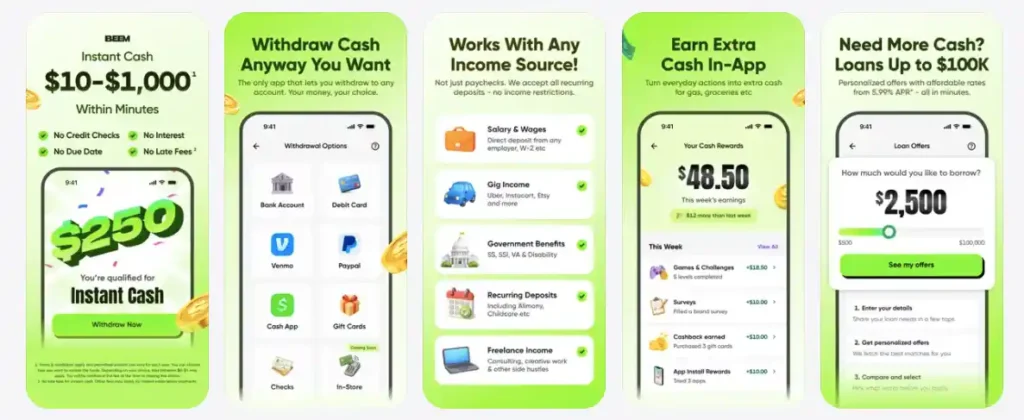
Beem is built around the reality that many users need more than a single advance, they need an ongoing system for managing tight cash flow. Alongside its instant cash advance feature, Beem includes budgeting tools that surface spending patterns, credit building support, and bill negotiation assistance that can lower recurring costs directly. For someone whose gap repeats every pay cycle, that combination matters more than a standalone advance, since it works on both the immediate shortfall and the underlying budget squeezing it in the first place.
2. Earnin
Earnin’s model, drawing against wages already earned based on hours worked, fits naturally with a recurring paycheck-to-paycheck pattern, since it’s tied directly to income you’ve already generated rather than a separate borrowing decision each time. Its tip based structure means there’s no fixed subscription cost sitting on top of an already tight budget, and repeat use doesn’t require reapplying from scratch each pay period.
3. Brigit
Brigit’s overdraft prediction feature is particularly well suited to a recurring cash gap pattern, since it learns your typical balance rhythm and proactively offers an advance before a predicted low point hits, rather than waiting for you to notice and request one manually.
4. Chime
For workers who already do their everyday banking through Chime, its overdraft style advance features tied to direct deposit can integrate cleanly into an existing routine, since there’s no separate app or account relationship to manage on top of banking you’re already doing.
5. MoneyLion
MoneyLion’s combination of instant advances and broader financial tools, including investment and credit builder features, appeals to paycheck-to-paycheck workers who want a single app that can eventually support goals beyond just closing the immediate gap, even while that gap is still the primary concern month to month.
6. Klover
Klover’s model, which lets users offset some advance costs through in app engagement rather than paying a flat fee every time, can be a meaningful difference for someone counting every dollar, since it offers a path to reduce or avoid fees without requiring perfect repayment timing to unlock better terms.
Exact fees, advance limits, and features change over time and often depend on your individual account history, so confirm current terms directly within each app before relying on it as a regular tool.
How to Use These Apps Without Making the Pattern Worse
Because the paycheck-to-paycheck cycle tends to repeat, how you use an advance matters more here than in a one time emergency situation.
Match the Advance to the Actual Gap Size
Request only what’s needed to bridge the specific timing gap, rather than a larger round number, since anything beyond the actual shortfall just shifts more of next paycheck toward repayment.
Time Requests Around Your Specific Pay Schedule
If your gap consistently appears a day or two before payday, requesting the advance right as that pattern starts, rather than earlier, minimizes how long the advance sits against your account before your income arrives to offset it.
Avoid Letting the Advance Amount Creep Upward
It’s easy for the requested amount to slowly increase over several months as the same gap repeats. Periodically check whether the amount you’re borrowing has grown, since that trend usually signals the underlying budget gap is widening too.
Use Any Included Budgeting Features Actively
If the app tracks spending or flags upcoming bills, actually reviewing that information, rather than only using the advance feature, is what turns the app into a tool for closing the gap over time instead of just managing around it indefinitely.
Watch for Multiple Advances Stacking Up
If you find yourself using more than one app to cover the same monthly gap, that’s a sign the shortfall is larger than any single advance is designed to comfortably handle, and it’s worth reassessing the budget directly rather than adding a third app.
Building a Bit of Breathing Room Over Time
While an advance solves this pay period’s gap, a few habits can gradually shrink how often you need one.
Identify the Specific Recurring Trigger
Look at whether the gap tends to come from a specific bill timing mismatch, like rent due before a paycheck lands, rather than general overspending. Naming the specific cause makes it easier to address directly, sometimes even by asking a landlord or utility company to shift a due date.
Set Aside Even a Small Buffer When Possible
Directing a small amount, even ten or twenty dollars, from an extra shift or a tax refund toward a buffer account can gradually reduce reliance on an advance for the smallest, most predictable gaps.
Use Bill Negotiation Features Where Available
Some apps, including Beem, offer support for negotiating recurring bills like phone or internet service, which can free up a bit of monthly room without requiring a change in income.
Revisit Your Budget Every Few Months
A paycheck-to-paycheck pattern can shift as expenses or income change. Periodically reviewing your budget, rather than assuming the same gap will always exist, helps you notice if the underlying situation has actually improved even while the advance habit continues out of routine.
Who Faces This Pattern Most Consistently
While paycheck-to-paycheck timing gaps can affect almost anyone, certain situations make the pattern especially persistent.
Hourly and Shift-Based Workers
Variable weekly hours can mean income fluctuates even when the pay schedule itself stays fixed, creating a gap that shows up some months more than others depending on the hours actually worked.
Single Parents and Solo Providers
Managing a full household on one income leaves little natural buffer, so even routine timing mismatches between bills and paydays can create a recurring squeeze that a well managed advance helps smooth.
Gig Economy Power Users
Income that arrives in irregular bursts from multiple platforms or clients doesn’t always align with fixed monthly bills, making a recurring, predictable gap more likely than for workers with steady biweekly paychecks.
Immigrants and Underbanked or Cash-First Users
Without an established credit history or a traditional overdraft line as a backup, workers newer to the U.S. financial system or operating primarily in cash sometimes have fewer built in buffers, making a reliable, low cost advance option more directly useful.
Pre-Retirees and Fixed-Income Seniors
Fixed monthly income that doesn’t always line up cleanly with bill due dates can create the same kind of recurring, predictable gap that hourly workers experience, even without variable earnings driving it.
Warning Signs the Cycle Is Getting Worse, Not Better
Even reliable apps can mask a growing problem if the underlying pattern isn’t addressed. Watch for these signals.
- The amount you request each pay period has been gradually increasing
- You’re relying on more than one advance app to cover the same recurring gap
- Express or instant fees have become automatic, regardless of actual urgency
- The gap now appears earlier in the pay cycle than it used to
- You feel unable to skip an advance even during a month with fewer expenses than usual
None of these signs mean an app itself is a problem, but together they suggest the budget behind the gap needs direct attention, since no advance app is designed to close a structural income and expense mismatch on its own.
Frequently Asked Questions
Can I use a cash advance app every single pay period?
Many apps do allow repeat use every pay period, and several are specifically built for this kind of recurring pattern. That said, if the amount you need keeps growing over time, it’s worth treating that as a signal to review your budget directly rather than only continuing to rely on advances.
Which app is best for someone with irregular weekly hours?
Earnin’s structure, tied directly to hours worked rather than a fixed schedule, tends to fit variable hourly income particularly well, since your available advance adjusts naturally alongside the hours you’ve actually logged.
Do these apps charge less if I use them regularly?
It depends on the provider. Some, like Klover, offer ways to reduce fees through consistent in app engagement, while others maintain the same fee or tip structure regardless of usage frequency, so it’s worth comparing costs across a few months of regular use rather than a single advance.
Will relying on these apps every month hurt my credit score?
Most standard cash advance apps don’t report activity to credit bureaus at all, so regular use typically doesn’t directly affect your score either way. A smaller number of providers do report repayment activity, which can help build credit if payments stay consistent and on time.
How do I know if I need budgeting help instead of just another advance?
If the same gap shows up every single pay period regardless of how carefully you spend, and the amount you need keeps climbing, that pattern usually points to a structural mismatch between income and expenses that a budgeting review, rather than another advance, is better suited to address.
Is it better to use one app consistently or rotate between several?
Sticking with one reliable app generally works better for a recurring paycheck-to-paycheck pattern, since your advance limit typically grows with a consistent repayment history, and rotating between multiple apps can reset that progress and add complexity to tracking repayment dates.
Final Thoughts
For paycheck-to-paycheck workers, the right cash advance app isn’t just about getting money fast once, it’s about having a tool that holds up reliably month after month without quietly adding cost or complexity to an already tight budget. Apps like Beem are built with that reality in mind, combining dependable advance access with budgeting insight and bill support that work on the pattern itself, not just this pay period’s version of it. Used consistently and matched carefully to the actual size of your gap, these seven apps can turn a recurring source of stress into a manageable, predictable part of your financial routine, while you work toward needing them less over time.