

Key Summary
If you have ever stood in a checkout line doing mental math, you already know the real problem. Money stress is not only about how much you make — it is also about timing, surprise charges, and the fear that one mistake will trigger a fee, which is why many people start asking, Is Chime Legit?, before trying new financial tools.
Chime is one of the best-known banking apps in the U.S., so it is normal to ask if it is legitimate, what it costs, and how safe it is. This guide breaks down Chime’s fees, key features, and safety basics in plain English. Then it covers who Chime is for, the pros and cons, and what to look at next, including Beem.
Is Chime Legit?

Chime is a financial technology company, not a bank, and it provides banking services through partner banks.
That distinction matters because it explains where your money is actually held. Chime states your deposits are FDIC-insured up to applicable limits through its partner banks, The Bancorp Bank, N.A., or Stride Bank, N.A. (Members FDIC). Chime also states that Chime itself is not FDIC-insured.
This is the practical meaning of “legit” for most people: it is a real platform offering checking-style products, and deposit insurance is provided through FDIC-insured partner banks rather than through Chime itself.
Quick Facts Before You Switch
Most people do not need a long finance lecture. They need the plain facts that protect their paycheck.
Chime says your deposits are FDIC-insured up to applicable limits through its partner banks. Chime says SpotMe is a fee-free overdraft feature for eligible members, with a stated max coverage of $200. Chime also says there are no fees for declined transactions or for using SpotMe.
Chime Fees: What It Really Costs
People start with fees because fees are where apps can feel “too good to be true.” Many Americans are willing to pay for convenience, but they hate surprise fees.
Chime promotes a no-monthly-fee approach, which is a big reason people look at it. If you are used to monthly maintenance fees or minimum balance rules, that difference can feel like relief.
The bigger fee conversation is overdrafts. Chime positions SpotMe as fee-free overdraft coverage for eligible members. Chime says if you do not have enough funds and you are not covered by SpotMe (or you hit the limit), the card will be declined, and there is no fee for the decline.
It is also smart to remember that “no fees from the app” does not always mean “no fees anywhere.” Some fees can be charged by third parties in certain situations, such as an out-of-network ATM operator. This is true across many banking apps, not just Chime.
Chime Features: What You Actually Get
Chime is built around everyday banking basics through a mobile app. For most users, the features that matter most are the ones tied to timing and cash flow.
The headline feature is SpotMe. Chime describes SpotMe as a free service for eligible members that can allow overdrafts up to $200. Chime says the SpotMe limit may start at $20 and increase up to $200 based on factors such as account activity, account history, and other risk factors.
Chime also says SpotMe eligibility is tied to being a Chime+ member and activating the Chime debit card or Chime Card. That detail is important because people often assume overdraft features apply automatically, but they do not.
If you have ever been short right before payday, you already understand why a feature like this feels helpful. It can create a small buffer when the calendar is not in your favor. Still, the safest way to use any overdraft-style feature is to treat it like a temporary bridge, not like extra income.
SpotMe: What It Covers (And What It Doesn’t)
This is where people get tripped up, so it is worth slowing down.
Chime says SpotMe can be used for debit card transactions, credit card transactions, cash-back transactions, and ATM withdrawals. Chime also says SpotMe does not cover Pay Anyone transfers, direct debits (like automatic bill payments from your checking account), transfers to savings, transfers to apps like Venmo and Cash App, and Chime Checkbook transactions.
This matters because many people need help with bill timing, not only card purchases. If your stress point is ACH bill payments that draft automatically, you should carefully review the coverage limits before depending on SpotMe as your main safety net.
Also Read: Using BudgetGPT to Build a 30 Day Plan Around Each Paycheck Cycle
Is Chime safe? Safety and Security in Plain English
“Safe” can mean different things. Some people worry about bank failure. Others worry about fraud. Others worry about their own habits and whether an app makes it too easy to spend.
On the bank-failure side, Chime states deposits are FDIC-insured up to applicable limits through its partner banks. Chime also explains that deposit insurance covers the failure of an insured bank. Chime notes that certain conditions must be met for pass-through deposit insurance coverage to apply.
That last sentence is not meant to scare you. It is just a reminder that FDIC insurance is a specific legal protection, not a blanket promise that nothing bad can happen.
On the everyday safety side, the best protection is still basic habits: strong passwords, not sharing verification codes, and actually reviewing transactions. A banking app can help you notice issues faster, but it cannot replace common sense.
Pros and Cons of Chime
Chime Has Clear Strengths
A no-monthly-fee approach is attractive to people who are tired of maintenance fees. Mobile-first design is also convenient if you prefer handling money through your phone.
SpotMe can also be meaningful for people who deal with timing gaps between bills and payday, because Chime positions it as fee-free overdraft coverage for eligible members.
Now The Trade-Offs
SpotMe has eligibility rules and coverage limits, and it does not cover every type of transaction. Also, if you use SpotMe, Chime says repayment happens automatically when the next deposit is made, since deposits are applied to the negative balance or owed amount. That means next payday can feel smaller if you leaned on SpotMe heavily.
Who Chime Is For (and Who It Is Not)
Chime often fits people who want a simple, mobile-first checking setup and avoid monthly fees. It can also fit people who want an overdraft-style buffer for card spending and ATM withdrawals, as long as they understand limits and eligibility.
Chime may not be the best fit if your biggest problem is budgeting and habit change, because a bank account alone does not automatically become a money system. It also may not be ideal if you need full-service in-person banking support or specialized services that some traditional banks offer.
Alternatives to Chime: What To Compare
This is the part most people skip, and it is why they keep switching apps without feeling better.
When comparing alternatives to Chime, focus on a few key categories. First, compare fee clarity. Not only “no monthly fee,” but also what happens when you miss a bill, hit a low balance, or need cash fast. Second, compare timing support. Does the app help you plan around bill due dates, not just show you transactions after the fact? Third, compare behavior support. Does it help you spot leaks like zombie subscriptions and spending drift? Fourth, compare flexibility. If your income is irregular, you need a system that bends without breaking.
What Beem Is and Where It Fits?

Beem is a U.S. money app for everyday people who want less stress and more control. You can learn more at https://trybeem.com.
In this “Chime legit” conversation, Beem fits as an alternative for people who want more than fee-friendly checking. Many people do not only need a place to store money. They need a system that prevents drift, detects leaks, and addresses timing mismatches.
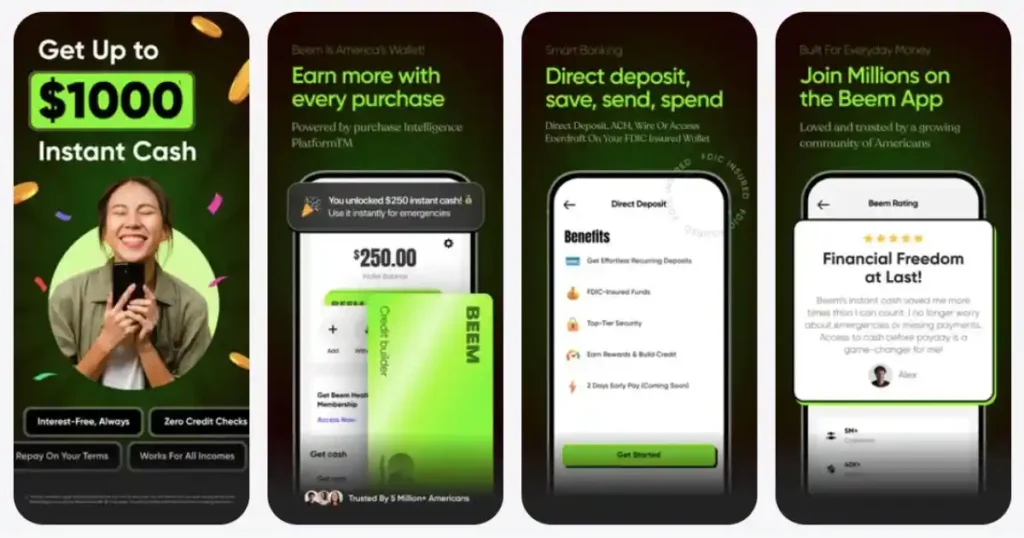
Beem’s approach is built around reducing mental load with tools and guardrails. For example, the Beem style framework emphasizes solving “timing mismatch” stress with Everdraft™ as a safety net, reducing “leaks” with a Subscription Monitor (the zombie hunter), reducing overpaying with DealsGPT, and providing budgeting support to stop living in spreadsheets. The goal is not to make you perfect. It is to help you stop the bleeding and feel steady.
Also Read: How to Use Beem’s AI Wallet to Split Paychecks Into Bills, Savings, and Spending
Why Choose Beem Over Chime
While Chime focuses on being a simple, fee-friendly checking account with SpotMe as the main safety feature, Beem is designed as a broader money management system that tackles the problems Chime does not fully solve.
The first major difference is coverage for real-life bills. Chime’s SpotMe does not cover direct debits, such as automatic bill payments, transfers to savings, or payments to apps like Venmo and Cash App. For many households, the biggest stress is not card purchases. It is rent, utilities, childcare, and insurance payments that hit through ACH. Beem’s Everdraft™ is built to help bridge those gaps, not just card swipes.
The second difference is behavior support. Chime gives you a place to hold money and a small overdraft buffer, but it does not help you spot what is draining your account month after month. Beem includes a Subscription Monitor to find those zombie charges that quietly nibble at your paycheck, such as old streaming services, forgotten memberships, and auto-renewed trials. Finding and killing just two or three of those can feel like a small raise.
The third difference is reducing mental load. Most people fail at money, not because they are lazy, but because they are exhausted. Chime asks you to track and plan on your own. Beem uses guardrails and budgeting support to reduce the constant tracking. Instead of living inside a spreadsheet or doing mental math at every checkout, Beem helps you see what is safe to spend and what is not. That shift from effort to automation matters when you have kids, a job, and a life outside of money management.
The fourth difference is deal-finding and cost reduction. Chime does not help you spend smarter. Beem includes tools like DealsGPT and PriceGPT to help you avoid overpaying. Small savings on groceries, gas, and everyday purchases add up faster than most people think, and those savings can go straight into your buffer or your goals.
Finally, Beem is designed around the reality that most financial stress is not caused by one big mistake. It is caused by drift, leaks, and slowly accumulating timing mismatches. Chime is a solid choice if your only problem is monthly fees and you need a basic overdraft feature for card purchases. But if your real problem is staying ahead of bills, catching money leaks, and reducing the mental weight of constant money decisions.
Final Take: Is Chime Legit and Should You Use It?
Chime is legit in the practical sense that it provides banking services through partner banks, and states deposits are FDIC-insured through those banks up to applicable limits. If your top goal is to avoid monthly fees and enjoy a simple mobile banking experience, Chime may be a good fit.
If your top stress is overdrafts right before payday, SpotMe may help if you qualify and if the transactions you need are covered. If your real problem is bigger than where you bank, it can be worth looking at alternatives built around daily money management and cash-flow guardrails, which is where Beem can fit.
FAQs About Is Chime Legit
Is Chime a bank?
Chime says it is a financial technology company, not a bank, and it provides banking services through partner banks.
Are Chime accounts FDIC insured?
Chime states deposits are FDIC-insured up to applicable limits through The Bancorp Bank, N.A., or Stride Bank, N.A., Members FDIC.
Does Chime charge overdraft fees?
Chime says SpotMe is fee-free to use and that declined transactions incur no fee.
What is SpotMe, and what does it cover?
Chime describes SpotMe as a free overdraft service for eligible members and says it can cover up to $200, with specific coverage rules for certain transaction types.
Will SpotMe cover rent or automatic bills?
Chime says SpotMe does not cover direct debits such as automatic bill payments from your Checking Account.
What should I compare when looking at alternatives?
Compare fee clarity, timing support, behavior support, and flexibility so the app matches your real money stress.