
Key Summary
Learn all about BNPL vs leasing. They both let you access something now and pay over time, but they work very differently in terms of ownership, total cost, credit impact, and what happens if you want to exit the arrangement early. Choosing the wrong one for your situation can cost you significantly more than the retail price of the item.
According to the CFPB, BNPL usage has grown dramatically in recent years, with consumers using these products for everything from clothing and electronics to groceries and medical bills. Leasing has been around far longer, particularly for vehicles and high-value appliances, but has expanded into consumer electronics and furniture through platforms like FlexShopper and Acima. Understanding what separates these two options is more useful than picking a winner, because the right choice depends entirely on the item, the amount, and your financial situation.
What Is Buy Now, Pay Later (BNPL)?
BNPL is a short-term financing option that lets you take possession of a product immediately and pay for it in equal installments over a few weeks or months. The most common structure is four payments spread across six weeks, with no interest charged as long as payments are made on time.
BNPL is typically offered at checkout, both online and in physical stores. You see an option to split the cost at the point of purchase, complete a brief approval process, and either click confirm or tap the option on a payment terminal. The approval is fast, often instant, and most providers use a soft credit check that does not impact your score.
Major providers in this space include Klarna, Afterpay, and Affirm. Each operates slightly differently. Klarna and Afterpay are strongest on the four-installment, zero-interest model. Affirm also offers longer-term monthly plans that carry interest, ranging from 0% to 36% APR depending on the merchant and the borrower’s profile.
Short-Term Instalment Plans
The pay-in-four model is the most widely used BNPL structure. You pay 25% at checkout, then three more equal payments every two weeks. If you pay on time across all four installments, the total cost is exactly the retail price of the item with nothing added. The zero-interest feature is the main reason BNPL has grown so quickly as an alternative to credit cards.
No Interest if Paid on Time
The no-interest condition is strict. Miss a payment, and late fees apply immediately. For Klarna, that is typically $7 per late payment. For Afterpay, up to $8 per installment. The fee structure varies by provider and by state, so checking the terms before confirming a plan matters.
Ownership Is Immediate
When you purchase through BNPL, you own the item from day one. You are paying off a purchase, not renting access to it. This distinction matters significantly when you compare BNPL to leasing.
What Is Leasing and How Does It Work?
Leasing means paying for access to an item over a defined period without owning it. At the end of the lease term, you typically return the item, buy it at a residual value, or renew the agreement. You do not own the item during the lease period and have no equity in it, regardless of how many payments you make.
Consumer product leasing is most common for vehicles, where you pay monthly for a set number of years and return the car at the end. In the retail space, lease-to-own programs from platforms like FlexShopper, Acima, and Progressive Leasing apply the same model to furniture, appliances, and electronics. These programs are often marketed to consumers who cannot afford the upfront cost and do not qualify for traditional credit.
Leasing typically involves a credit check, an application, and sometimes an initial payment or security deposit. The approval process is slower and more formal than BNPL. Monthly payments are lower than the retail price divided by the lease months, which makes leasing feel affordable, but the total cost over the full lease term often significantly exceeds the retail price.
Monthly Payments to Use, Not Own
Every lease payment you make covers the cost of using the item for that month. None of it builds equity unless you exercise a purchase option at the end. A $600 refrigerator leased over 18 months at $50 per month costs $900 total. If you exercise the buyout option at end of lease for an additional $50, the total cost becomes $950 for a $600 item.
Long-Term Commitments with Exit Penalties
Most consumer leases run between 12 and 24 months. Early termination typically requires paying a lump sum covering the remaining balance, often with a penalty. If you decide after three months that you no longer want or need the item, you cannot simply return it and stop paying without a financial consequence.
BNPL vs Leasing: Side-by-Side Comparison
| Feature | BNPL | Leasing |
| Ownership | Immediate on-purchase | No ownership during lease |
| Typical term | 6 weeks (pay-in-4) or up to 12 months | 12 to 24 months |
| Interest | 0% if paid on time | Often highly effective APR (30% to 200%+) |
| Credit check | Soft check or none | Hard check typical |
| Early exit | No penalty in most cases | Early termination fees apply |
| Total cost | Retail price (if on time) | Often 1.5x to 2x retail price |
| Best for | Small- to mid-sized purchases you plan to keep | Large items you are unsure about owning |
| Late fees | $7 to $15 per missed payment | Late fees plus potential default |
Ownership: BNPL vs Leasing
Ownership is the single biggest practical difference between these two products, and it affects every other comparison.
With BNPL, you own the item immediately. If you return it within the merchant’s return window, the BNPL provider adjusts your payment plan and refunds what you have already paid. You are a buyer making installment payments, not a renter.
BNPL = Immediate Ownership
Because you own the item from day one, the item’s value works in your favor. If something goes wrong with the product and you need to return it, you work through the merchant’s standard return process. If you want to sell the item before paying off the BNPL plan, you can do that too, though you still owe the remaining installments.
Leasing = Use Without Owning
With a lease, you use the item but never own it unless you exercise a buyout at the end. This structure makes leasing rational for high-value items you are genuinely uncertain about keeping, like a car you want to drive for two years before deciding whether to buy. It makes less sense for everyday consumer goods, where you almost certainly want to keep the item long-term.
Cost and Interest Comparison
The cost difference between BNPL and leasing is dramatic when you look at total amounts paid rather than the monthly payment size.
BNPL is zero-cost financing for the pay-in-four model if payments are made on time. The total you pay equals the retail price of the item. Affirm’s longer-term plans carry interest, but that rate is disclosed at checkout before you confirm. You know the total cost before you agree.
BNPL Often Has No Interest
The key condition is on-time payment. If you miss a payment, late fees apply and some providers can send the account to collections if it remains unpaid long enough. Managing your payment dates in a calendar or using a budget app to track due dates prevents most of these issues.
Leasing May Involve Higher Total Costs
Lease-to-own programs for consumer goods often carry effective APRs that are significantly higher than credit cards. A $1,000 sofa leased over 18 months at $75 per month costs $1,350 in total payments. If you exercise a $50 buyout, the total becomes $1,400 for a $1,000 item, an effective cost of 40% above retail.
For vehicle leases, the economics are different because you return the car at the end, which accounts for the remaining residual value. But for consumer goods where you intend to keep the item, the lease-to-own structure consistently produces a higher total cost than buying outright or using interest-free BNPL.
Credit Impact and Approval Process
BNPL: Soft or No Credit Checks
Most BNPL providers perform a soft credit inquiry at approval, which does not affect your credit score. Starting in 2025, several providers began reporting payment history to the credit bureaus. This means consistent on-time payments can help build your credit profile, while missed payments can now create a negative mark.
Leasing May Require a Hard Credit Pull
Many lease agreements require a hard credit inquiry at application, which causes a small temporary dip in your credit score. Defaulting on a lease can result in a collection account on your credit report, which stays there for up to seven years. The credit impact of a lease default is more severe than a missed BNPL payment.
Flexibility and Early Repayment
BNPL Offers Short-Term Flexibility
Paying off a BNPL plan early has no penalty. If you receive your next paycheck and want to clear the remaining balance in one payment, you can do that with no additional fee. This flexibility makes BNPL easier to manage when your income varies month to month.
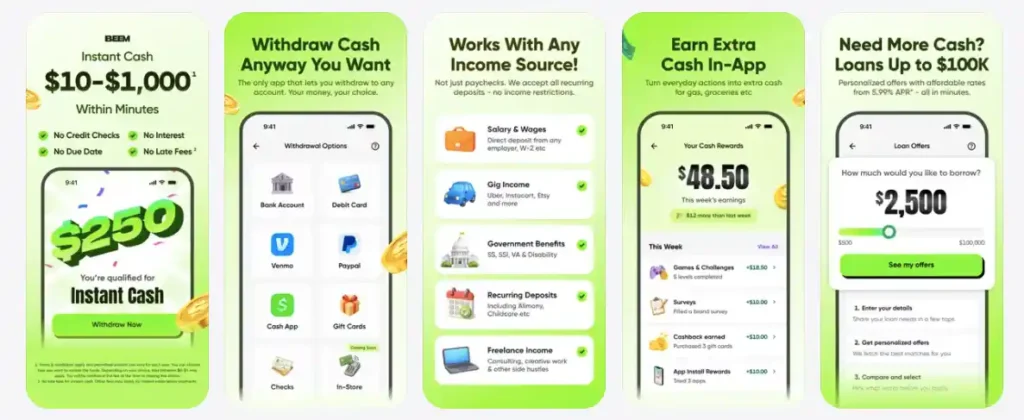
If you need a small amount to cover an unexpected expense and want to avoid entering a BNPL plan altogether, a cash advance through Beem’s Everdraft feature gives you access to up to $1,000 with no fees and no credit check, repaid from your next paycheck automatically. This is a useful option when the purchase amount is under $1,000, and you want to avoid splitting the cost across installments entirely.
Leasing Often Locks You In
Early termination fees on lease agreements vary by provider but are typically structured to recover a large portion of the remaining payments. Walking away from a 24-month furniture lease after 6 months often costs more than simply paying out the remainder. This inflexibility makes leasing a poor choice for any item you are not certain you will need for the full lease duration.
Use Cases: BNPL vs Leasing at a Glance
Choosing between BNPL and leasing comes down to three things: how long you need the item, whether you want to own it, and what the total cost looks like over the full payment period. The table below maps each option to the situations where it genuinely makes sense.
| Situation | BNPL | Leasing |
| Buying something under $1,000 you plan to keep | ✓ Best fit | ✗ Not suited |
| All payments fit comfortably within current income | ✓ Best fit | ✗ Depends on term length |
| Avoiding credit card interest on a necessary purchase | ✓ Best fit | ✗ Often costs more than a card |
| Retailer offers interest-free split at checkout | ✓ Best fit | ✗ Not applicable |
| Preserving cash flow for a few weeks | ✓ Best fit | ✗ Locks you in longer |
| Buying a car and returning it at the end of the term | ✗ Not applicable | ✓ Best fit |
| Needing an expensive item temporarily | ✗ Less flexible | ✓ Reasonable if the term matches the need |
| Business expenses that can be deducted | ✗ Rarely deductible | ✓ Often deductible |
| High-value item you are unsure about keeping | ✗ Return process varies | ✓ Return at the end of the term |
| Furniture, appliances, electronics, you intend to keep | ✓ Lower total cost | ✗ Typically 1.5x to 2x retail |
BNPL is not the right fit for large purchases where the installment schedule stretches beyond your comfortable repayment window or for items you are unsure about keeping, since a return mid-plan creates an adjustment process that varies by provider and merchant.
For most consumer goods like furniture, appliances, and electronics that you intend to keep permanently, leasing is almost always more expensive than buying outright, using BNPL, or using a personal loan at a reasonable APR.
Potential Pitfalls to Avoid in Both
Both products carry risks that are easy to overlook when you are focused on getting immediate access to something you need or want.
Overspending with BNPL
The low barrier to BNPL approval and the perception of “small payments” makes it easy to accumulate multiple active plans simultaneously. Each plan adds a fixed obligation to your future paychecks. Three simultaneous BNPL plans can create $150 to $300 in automatic deductions from a single paycheck, creating a cash flow problem that leads to missed payments.
Long-Term Cost Traps with Leasing
The monthly payment on a lease looks affordable compared to the retail price. The total payment over the full term often does not. Always calculate the total cost of a lease, including any buyout at the end, before agreeing to the terms. Compare that total to the retail price or to the total cost of a BNPL or personal loan alternative before deciding.
Missed Payments in Both Cases
Both products charge late fees and can report delinquencies to the credit bureaus. BNPL late fees are typically $7 to $15 per occurrence. Lease defaults can result in the item being repossessed and a collection account on your credit file. Setting up automatic payments or calendar reminders for due dates prevents most of these consequences.
Frequently Asked Questions
Is leasing more expensive than BNPL in the long run?
Yes, almost always for consumer goods. BNPL costs exactly the retail price if paid on time. Lease-to-own programs for furniture, appliances, and electronics typically cost 1.5 to 2 times the retail price when you add up all payments plus any buyout fee. For vehicles, the comparison is different because you return the car at the end.
Can I build credit with BNPL or leasing?
As of 2025, several BNPL providers report payment history to the credit bureaus, so consistent on-time payments can now help your credit score. Lease payments may or may not be reported depending on the provider. Defaults on either product can create negative marks that stay on your credit file for up to seven years.
What happens if I return an item I bought through BNPL?
The merchant processes the return and notifies the BNPL provider. Remaining payments are canceled, and any installments already paid are refunded, typically within 3 to 10 business days. The timeline depends on how quickly the merchant processes the return. Keep all return documentation until the BNPL plan shows a zero balance.
Can I pay off a BNPL plan early without a penalty?
Yes. All major BNPL providers allow early payoff at no additional cost. If you want to clear the remaining balance before the next scheduled payment, log in to the app, find the active plan, and pay the remaining amount. There is no prepayment fee on any of the major providers.
What is the difference between BNPL and a personal loan?
BNPL is tied to a specific purchase at checkout with short repayment terms, typically 6 weeks to 12 months, and no interest on the pay-in-four model. A personal loan gives you a lump sum for any use, with a longer repayment term and a fixed APR. Personal loans are better suited for larger amounts or when you want a single consolidated payment.
How does leasing affect my debt-to-income ratio?
Lease payments count as monthly obligations in most lender calculations, which increases your debt-to-income ratio. If you are planning to apply for a mortgage or auto loan, active leases can affect how much you qualify to borrow. BNPL obligations are increasingly included in credit assessments as providers report to bureaus.
What should I do if I cannot make a BNPL payment on time?
Contact the provider before the payment date. Most allow at least one free payment extension or date shift per plan. Do not simply miss the payment without communication, as late fees apply immediately, and some providers pause your access to plans after a missed payment without prior notice.
BNPL or Lease: Which One Actually Works for You
BNPL and leasing serve different needs, and the choice between them is almost always clear once you know the total cost, the ownership outcome, and your realistic ability to make payments over the full term.
For most consumer purchases under $1,000 that you intend to keep, BNPL is the lower-cost option by a wide margin, provided you pay on time. For vehicles or high-value items where you genuinely want to test ownership before committing, a lease makes sense. For most consumer goods leased through retail programs, the total cost rarely justifies the structure compared to buying outright or using interest-free BNPL.
If you need a small cash amount to bridge a gap rather than entering any financing arrangement, Beem’s Everdraft feature gives you access to up to $1,000 with no fees and no credit check, repaid automatically from your next paycheck. Download Beem and access the Everdraft feature today.