

What You Will Get At Glance
Choosing a banking app is no longer just about checking your balance or transferring money. Today’s mobile banking experience is designed to help you manage cash flow, build credit, access budgeting insights, avoid unnecessary fees, and reach long-term financial goals. How to Choose a Banking App is an important consideration, as the right app can strengthen your financial habits, while the wrong one can hinder your progress.
This guide walks you through everything you need to know about choosing a banking app that truly supports your goals. Whether you want to build credit, save consistently, avoid overdraft fees, track spending, or access cash advances when needed, understanding the features that matter will help you make an informed decision.
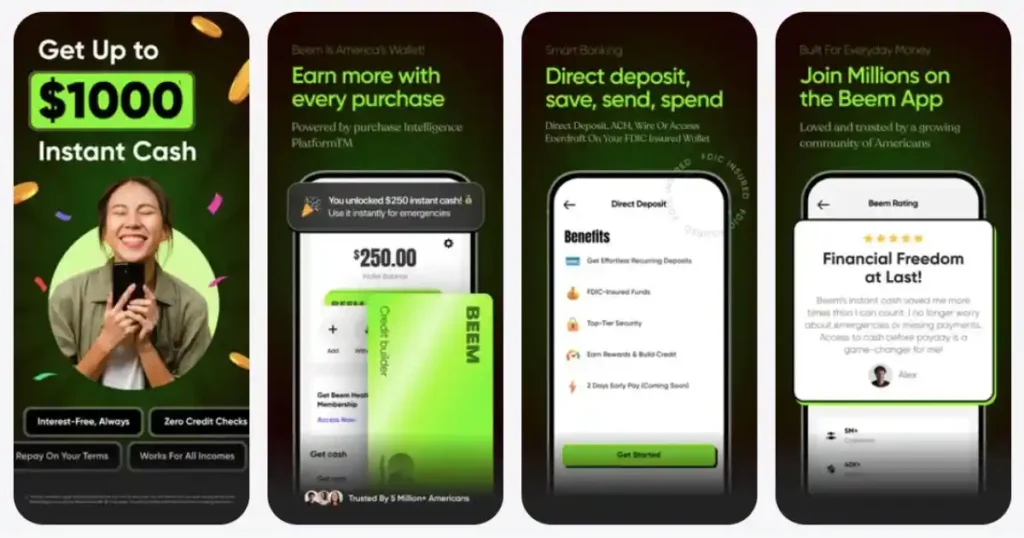
Beem is an AI-powered banking app that combines instant cash access with credit-building tools. It helps users manage everyday expenses, avoid payday loans, and responsibly build their credit in one place.
Why Your Banking App Choice Matters
Your banking app acts as your daily financial hub. It is often the first place you check when payday hits, when a bill is due, or when you want to understand where your money is going.
The right platform can:
- Prevent money leaks.
- Support better spending habits.
- Offer safer cash-flow tools.
- Improve your credit scores.
- Help you plan long-term financial moves.
A banking app is not just a digital wallet. It is a financial planning tool. When chosen wisely, it can replace multiple apps and centralize your entire money management experience.
Also Read: Why AI Banking Apps Are Replacing Payday Loans
Key Factors to Consider When Choosing a Banking App
Below are the key elements to consider when selecting a banking app. These factors help ensure the app matches your financial priorities, lifestyle, and long-term goals.
1. Understand Your Financial Goals First
Before comparing apps, define your goals. Knowing what you want to improve will make the decision much simpler.
Common financial goals include:
- Building or improving your credit
- Reducing overdrafts
- Saving consistently
- Accessing cash during emergencies
- Managing spending
- Avoiding fees
- Creating better budgeting habits
- Tracking subscriptions and bills
For example, if your primary goal is to build credit, look for apps with credit-builder cards or small credit-builder loans. If your goal is to avoid overdrafts, consider an app that offers no-fee cash advances and predictive balance alerts.
Knowing your priorities narrows your choices and prevents overwhelm.
2. Evaluate Cash-Flow Features
Cash-flow management is one of the most important functions of a modern banking app. Look for tools that help you avoid financial stress during tight weeks.
Essential cash-flow features include:
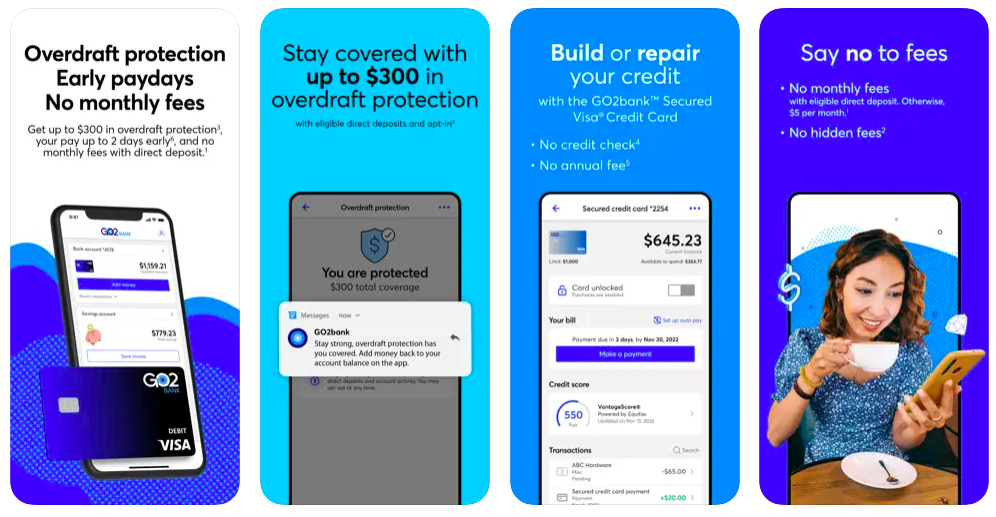
Cash advances with low fees: Many apps now offer small, short-term advances without interest or hidden charges.
Early paycheck access: Some platforms allow access to your paycheck up to two days early.
Smart balance predictions: AI-powered banking apps can estimate upcoming expenses and give warnings before your balance drops.
Automatic categorization of spending: This helps you understand where your money is going and prevent overspending.
An app that supports daily cash flow reduces the need for payday loans and helps you avoid costly overdrafts.
3. Check for Credit-Building Tools
If your goal is long-term financial stability, credit-building features are essential. A solid credit score opens doors to cheaper loans, better rental opportunities, and financial security.
Look for these credit-focused features:
- A credit-builder card
- Monthly credit-building payments
- Reports to all major credit bureaus
- Spending alerts to prevent missed payments
- Tools to track your credit score progress
Traditional debit accounts do nothing for your credit. A banking app that includes credit-building tools adds lasting value beyond everyday transactions.
4. Analyze Safety and Security Protections
Security is a non-negotiable factor, especially when your financial life is stored on your phone.
Strong security features include:
- Encryption
- Two-factor authentication
- Biometric login
- Fraud monitoring
- Card lock options
- Notifications for every transaction
A trustworthy app should clearly explain how they protects user data. If the security policy feels vague or confusing, that is a red flag.
5. Evaluate Fees and Hidden Costs
Banks and fintech apps can differ widely in their fee structures. Some apps offer essential services for free. Others include fees that are often overlooked.
Common fees to watch:
- Monthly maintenance fees.
- Overdraft fees.
- ATM withdrawal fees.
- Cash advance fees.
- Foreign transaction fees.
- Replacement card charges.
Your goal should be to pick an app with transparent pricing and minimal charges. Many modern apps eliminate most traditional fees, giving users more control over their money.
6. Look for Budgeting and Tracking Features
A banking app becomes much more useful when it helps you take control of your spending. Budgeting features save time and provide visibility into your financial habits.
Useful budgeting tools include:
- Automatic spending categories.
- Monthly spending reports.
- Bill tracking and reminders.
- Subscription monitoring.
- Custom budgets based on goals.
- AI spending insights.
These tools help you track patterns, spot unnecessary expenses, and make adjustments before problems grow.
7. Review App Speed, Design, and Ease of Use
If your banking app is slow, confusing, or buggy, it will frustrate you rather than help you.
A good banking app should:
- Load quickly.
- Have clear navigation.
- Offer smooth mobile check deposit.
- Provide easy access to customer support.
- Allow simple card management.
- Display spending insights cleanly.
User-friendly design reduces stress, especially during financial emergencies.
8. Research Customer Service Quality
When something goes wrong, fast support matters. Whether it is a card issue, a deposit error, or a technical problem, reliable customer service can make a huge difference.
Look for:
- Multiple support options.
- Quick response times.
- Clear in-app help sections.
- Live chat or 24/7 options.
- Transparent support policies.
Good customer support demonstrates that the company is committed to enhancing the user experience.
9. Explore Additional Banking Tools That Add Value
Some apps go beyond the basics and offer features that boost long-term financial health.
Valuable extras include:
- High-yield savings accounts.
- Tax preparation help.
- Bill negotiation services.
- Rewards or cashback.
- Smart goal-based saving.
- Spending challenges.
- Subscription canceling tools.
Apps with multiple features can replace several financial tools, offering a more complete money-management system.
Signs a Banking App Is Not a Good Fit
Even if an app appears modern or has strong marketing, it may not align with your financial goals. Recognizing the red flags early saves you from frustration and protects your money. If you notice any of the issues below, it may be a sign to choose a better option.
Complicated or Confusing Fees
A banking app should be transparent about its fees. If you encounter vague fee descriptions, unexpected charges, or fine print that requires careful review to understand, consider it a warning sign. Clear pricing is crucial when you are trying to maintain a stable budget or improve your financial habits.
Limited or Slow Customer Service
When your money is involved, you need quick support. If an app makes it difficult to reach real help or only offers slow email responses, it can create unnecessary stress during urgent situations. A lack of reliable support often indicates a poor overall user experience.
Poor App Design or Slow Performance
A banking app should be smooth and easy to navigate. Slow loading times, confusing layouts, or frequent crashes make daily financial tasks harder than they need to be. These issues also suggest a weak technical infrastructure, which affects long-term reliability and stability.
No Clear Security Information
Security should never be a mystery. If the app does not clearly explain how it protects your data or lacks basic safeguards, such as two-factor authentication, it puts you at risk. Strong security details demonstrate that the platform prioritizes user protection.
Lack of Budgeting or Tracking Tools
A modern banking app should help you understand your finances, not just store money. If the app does not offer expense categorization, spending insights, or bill tracking, it limits your ability to manage your budget effectively. Missing these tools often means you will need additional apps to fill the gaps.
Limited Options for Saving or Borrowing
The best banking apps support both short-term and long-term needs. If an app does not offer savings features, emergency cash access, or smart tools to help you plan ahead, it may not be versatile enough to meet your financial goals.
No Credit-Building Support
If improving your credit score is a priority, avoid apps that offer no credit-building features. Without options like credit-builder cards or reporting to major credit bureaus, the app cannot help you build long-term financial strength.
Overall Lack of Transparency
If the app feels confusing, offers incomplete information, or leaves you unsure about how certain features work, take it as a sign to move on. A banking partner should feel trustworthy, clear, and easy to understand.
Choosing an app with transparency and strong features ensures you get the right support for your daily finances and long-term goals.
Also Read: Beem Credit Builder: How It Helps First-Time Borrowers
How to Test a Banking App Before Fully Switching
Switching banking apps does not have to be an all-or-nothing decision. A gradual testing process helps you understand whether an app truly supports your financial goals without risking your entire setup. By taking a few simple steps, you can evaluate features, reliability, and overall comfort before making a full commitment.
Step 1: Download the App and Explore Its Features
Start by installing the app and taking the time to review each key section. Explore the dashboard, settings, transaction views, budgeting tools, security options, and customer support channels. Pay attention to how easy it is to navigate and whether the interface feels intuitive. This first impression often reveals whether the app was designed with users in mind.
Step 2: Set Up a Small Direct Deposit
Instead of moving your full paycheck, redirect a small portion of your income. This allows you to safely test how the app handles deposits, notifications, and cash flow timelines. It also gives you a good sense of how fast money arrives and whether the app reliably updates your balance.
Step 3: Try a Few Tools
Test the features that matter most to your financial routine. Use budgeting categories to track expenses, explore savings goals, activate credit-builder options, or try a small cash advance if the app offers one. These tools give you a clear picture of how well the app supports your day-to-day financial habits.
Step 4: Monitor Performance for a Month
Allow the app sufficient time to showcase its strengths and weaknesses. Over a full month, track whether it loads quickly, sends useful reminders, provides accurate insights, and stays stable when you need it most. Notice whether it genuinely makes managing money easier or if you still rely on other apps for basic tasks.
A Smart Approach Before Fully Switching
By testing features step by step, you reduce risk and gain confidence. This method helps you avoid surprises and gives you a clearer understanding of whether the new app is worth making your primary banking tool. If it consistently meets your needs, switching becomes a smooth and stress-free experience.
Benefits of Choosing the Right Banking App
Choosing the right banking app has a significantly greater impact than most people realize. The right platform does more than hold your money. It supports your goals, simplifies your daily routines, and gives you tools to grow financially. When you choose an app that aligns with your needs, you unlock a range of long-term benefits.
Better Financial Clarity
A robust banking app provides a clear view of where your money is going. Spending categories, real-time alerts, and visual insights help you understand your habits and make confident decisions. This level of clarity makes budgeting easier and prevents money from slipping through the cracks.
Improved Credit Health
Apps that offer credit-builder tools, on-time payment reminders, or credit reporting can help you steadily improve your credit score. As credit improves, it becomes easier to qualify for better financial opportunities, such as lower interest rates, rental approvals, and future loans.
More Control Over Spending
With tracking tools, alerts, and personalized insights, a good app helps you stay in control. You can identify areas where overspending happens and make quick adjustments. This awareness can reduce impulse purchases and keep your budget on track.
Fewer Surprise Fees
Transparent apps prioritize clear communication. They warn you before you overdraft, show fee details upfront, and avoid hidden charges. This helps you avoid expensive mistakes and gives you more confidence in your financial decisions.
Easier Savings
Saving becomes simpler when the app includes automated savings, round-up tools, or goal-based features. Even small transfers add up over time. A well-designed app makes saving feel natural rather than stressful.
More Stability Between Paychecks
Some banking apps offer early pay, cash advances, or budgeting reminders that help you stay stable throughout the month. This reduces pressure during tight weeks and gives you a reliable system to manage unexpected expenses.
Less Reliance on High-Cost Loans
When you have access to affordable cash advances, insights that prevent overdrafts, and credit-building tools, you no longer need payday loans or other high-cost borrowing options. This helps protect your financial health and prevents debt cycles.
A Simpler, More Organized Financial Life
The right banking app brings everything together in one place. Instead of juggling separate tools for budgeting, saving, and tracking, you get an all-in-one system that supports your goals. Life becomes easier, less chaotic, and more financially secure.
A reliable banking app becomes more than a digital wallet. It becomes a long-term financial partner that grows with you and helps you achieve real stability.
Conclusion: How to Choose a Banking App
Choosing a banking app that aligns with your financial goals is one of the smartest decisions you can make. Instead of juggling multiple tools or relying on outdated banking systems, you can access a complete financial platform from your phone.
The Beem app offers a Credit Builder Card that reports your spending and repayment habits to major credit bureaus — helping you build credit with every transaction
When comparing apps, focus on features that support your long-term goals. Prioritize cash-flow tools, credit-building support, budgeting features, ease of use, security, and low fees. With the right app, managing your money becomes simpler, more predictable, and far more empowering.