
Key Summary
Cash advance apps have become one of the most popular ways to handle short-term financial emergencies. Millions of Americans now use these apps to cover unexpected expenses like utility bills, groceries, transportation costs, medical emergencies, and rent shortages between paychecks.
The appeal is easy to understand.
Most cash advance apps offer faster approvals than traditional loans, simpler applications, and easier qualification requirements. Many apps also avoid hard credit checks, making them attractive for borrowers with limited credit history or temporary financial difficulties.
But as the industry continues growing, so does the number of risky, misleading, and potentially fraudulent apps targeting desperate borrowers.
Some apps hide fees behind confusing terms. Others promise instant approvals but aggressively collect personal data, charge excessive transfer fees, or operate without proper transparency. In more serious cases, fake apps may attempt to steal banking information, identity details, or account access from users seeking emergency cash.
For borrowers already dealing with financial stress, spotting legitimate cash advance apps has become more important than ever.
The good news is that safe and trustworthy options do exist. The key is knowing how legitimate apps operate, which warning signs to avoid, and how to compare financial products carefully before linking your bank account or accepting an advance.
This guide explains how to identify legitimate cash advance apps, avoid common scams, understand hidden risks, and borrow more safely in 2026.
Why Cash Advance App Scams Are Increasing
Financial stress creates urgency.
When people face emergency expenses, they often prioritize speed over caution. Scammers understand this and intentionally target borrowers who need immediate cash access.
Unlike traditional bank loans, many cash advance apps require only minimal applications. Users can often download an app, connect a bank account, and request funds within minutes.
That convenience has created opportunities for both legitimate fintech companies and bad actors.
Some risky apps use misleading advertising to appear trustworthy. Others imitate real financial brands or exaggerate approval promises to attract users quickly.
In many cases, borrowers may not realize problems exist until after:
- Unexpected fees appear
- Unauthorized withdrawals occur
- Customer support disappears
- Bank accounts experience issues
- Sensitive personal information gets exposed
Because financial apps handle extremely sensitive information, including banking credentials and direct deposit data, choosing trustworthy platforms matters far beyond simple borrowing.
What Makes a Cash Advance App Legitimate?
Legitimate cash advance apps usually share several important characteristics.
They are transparent about fees, explain repayment terms clearly, protect user data responsibly, and avoid deceptive marketing tactics.
A trustworthy app should help users understand exactly:
- How much they can borrow
- When repayment happens
- What fees apply
- How instant transfers work
- Whether subscriptions are required
- What happens if repayment fails
Legitimate apps also prioritize security and customer communication.
They provide accessible support channels, detailed privacy policies, and clear explanations about how financial data is used.
Most importantly, legitimate apps do not rely on confusion to make money.
If an app feels intentionally vague, overly aggressive, or difficult to understand, that is usually a warning sign worth taking seriously.
Red Flags That May Signal a Scam or Unsafe App
Not every risky cash advance app is technically illegal, but many still operate in ways that can seriously harm users financially. Some platforms rely on misleading advertising, hidden fees, poor security practices, or aggressive repayment systems that create additional financial stress instead of helping borrowers.
Understanding the most common warning signs can help users avoid unsafe apps before linking bank accounts or accepting advances.
Below are some of the biggest red flags borrowers should watch for when evaluating any cash advance app.
Unrealistic Approval Promises
One of the clearest warning signs is when an app makes exaggerated approval claims that sound too good to be true.
Borrowers should be cautious of apps advertising phrases like:
- “Guaranteed approval”
- “Instant approval for everyone”
- “No matter your financial situation”
- “Unlimited borrowing”
- “No restrictions ever”
- “Get cash instantly with zero requirements”
Legitimate financial platforms still evaluate some level of repayment ability, even if they do not perform traditional hard credit checks.
Most trustworthy apps review factors such as:
- Bank account activity
- Direct deposits
- Income patterns
- Spending behavior
- Repayment history
- Account balance trends
Apps promising approval regardless of financial behavior may prioritize aggressive customer acquisition over responsible lending practices.
In many cases, these exaggerated promises are designed to attract financially stressed users who may feel desperate for immediate money. Responsible financial companies usually avoid unrealistic marketing language because they understand that not every borrower will qualify.
If an app appears to promise unlimited access to money without reviewing any financial information, borrowers should proceed very carefully.

Hidden Fees or Confusing Pricing
Hidden fees are one of the most common problems in questionable cash advance apps.
Some platforms advertise “free” or “interest-free” cash advances while quietly charging additional costs that are not obvious upfront.
These charges may include:
- Monthly subscription fees
- Instant transfer fees
- Late payment penalties
- Mandatory tipping systems
- Express funding charges
- Membership upgrade costs
- Reactivation fees
- Processing fees
Individually, these fees may appear small. However, repeated borrowing can cause costs to accumulate quickly over time.
For example, a borrower may think they are receiving a free $100 advance, only to later discover:
- A monthly membership fee
- A fast funding fee
- An optional tip prompt that feels mandatory
Combined together, the actual cost of borrowing may become much higher than expected.
Legitimate apps explain pricing clearly before users accept advances. Users should always be able to understand:
- Total repayment amounts
- Exact transfer fees
- Whether subscriptions are optional
- When charges apply
- How repayment works
If pricing feels intentionally confusing, hidden, or difficult to locate, that is a major warning sign.
Transparent financial companies want users to understand costs fully before borrowing.
No Clear Company Information
Trustworthy financial apps are usually transparent about who operates the business and how users can contact them.
Legitimate companies typically provide clear details such as:
- Company ownership
- Business headquarters
- Customer support information
- Terms of service
- Privacy policies
- Licensing information
- Help center resources
When an app has a vague website, missing company background, or limited contact details, borrowers should become cautious immediately.
Some unsafe apps intentionally hide business identities to make accountability more difficult if problems occur later.
Users should also pay attention to the professionalism of the website and app experience.
Warning signs may include:
- Broken links
- Missing policy pages
- Poor grammar throughout the website
- Generic business descriptions
- No visible customer support channels
- No explanation of how the app works
Financial apps handle extremely sensitive information, so borrowers should always know exactly which company is accessing their financial data.
Read: How Instant Cash Advance Apps Support Financial Stability
Aggressive Permission Requests
Cash advance apps often require some account permissions for identity verification and financial analysis. However, some risky apps request far more access than necessary.
Borrowers should be cautious if an app asks for excessive access to:
- Contacts
- Text messages
- Photos
- Call logs
- Location data
- Social media accounts
- Device storage
Some predatory apps use invasive permissions to pressure borrowers, collect personal data, or monitor user behavior unnecessarily.
For example, certain questionable apps have reportedly used contact access to harass borrowers or create repayment pressure by contacting friends and family members.
Legitimate financial apps usually limit permissions to information directly related to:
- Bank verification
- Identity verification
- Fraud prevention
- Account security
Users should always review permission requests carefully before approving access.
If an app requests unrelated personal information without clear justification, that may signal privacy or security concerns.
Poor Customer Support
Reliable customer service is one of the strongest indicators of a legitimate financial platform.
Money-related issues often require immediate attention. If repayment problems, transfer delays, account errors, or unauthorized charges occur, users need responsive support systems that actually work.
Legitimate financial apps usually invest heavily in customer support because fast problem resolution builds trust and protects users financially.
Warning signs may include apps lacking:
- Live support
- Email responses
- Clear help documentation
- Functional contact systems
- FAQ resources
- Resolution timelines
Some risky apps become extremely difficult to contact once users encounter problems.
For example, borrowers may experience:
- Delayed responses for days
- Generic automated replies
- No live support options
- Ignored refund requests
- Missing repayment assistance
This can become especially dangerous if automatic withdrawals fail or incorrect charges appear on linked bank accounts.
Before using a financial app, borrowers should review support quality carefully and verify that help resources are accessible.
Strong customer service is often a sign that the company expects long-term customer relationships rather than short-term transactions.
Pressure Tactics
Scam-style apps often rely heavily on emotional pressure and urgency to push users into fast decisions.
These apps may use aggressive messaging such as:
- “Limited-time approvals”
- “Claim cash immediately”
- “Offer expires soon”
- “Act now before losing eligibility”
- “Emergency approval ending today”
- “Guaranteed funds if you apply now”
This type of marketing is designed to create panic and reduce careful decision-making.
Financially stressed borrowers may feel pressured to accept terms quickly without reviewing fees, repayment schedules, or privacy risks properly.
Legitimate financial companies usually focus more on clarity and transparency than emotional pressure.
Responsible apps encourage users to:
- Review borrowing terms carefully
- Understand repayment obligations
- Compare options thoughtfully
- Read policies before accepting funds
A trustworthy financial app should make users feel informed, not rushed or manipulated.
If an app creates excessive urgency or pressure around borrowing decisions, borrowers should pause and research more carefully before proceeding.
Why Transparency Matters So Much
Transparency is one of the strongest indicators of legitimacy.
Borrowers should always understand:
- Total repayment amount
- Repayment timing
- Optional versus mandatory fees
- Membership costs
- Consequences of missed payments
Unfortunately, some apps intentionally blur these details to make borrowing appear cheaper than it actually is.
For example, an app may advertise “zero interest” while charging:
- Monthly subscriptions
- Fast funding fees
- Optional tips that feel mandatory
- Extra transfer charges
Individually, these costs may seem small. Combined over time, they can become expensive.
Legitimate apps explain all fees clearly before users accept money.
If understanding the true cost feels difficult, that often signals a problem.
The Importance of Data Security
Cash advance apps access highly sensitive financial information.
Depending on the app, users may share:
- Bank account credentials
- Direct deposit history
- Income details
- Spending patterns
- Identity verification documents
- Debit card information
Poor security practices can expose users to identity theft, fraud, or unauthorized account activity.
Legitimate financial apps typically use:
- Encryption technology
- Secure login systems
- Multi-factor authentication
- Trusted verification providers
- Transparent privacy protections
Before connecting financial accounts, users should review how apps handle data storage and security.
Why Reviews Alone Are Not Enough
Many borrowers rely heavily on app store reviews, but reviews can sometimes be misleading.
Some risky apps artificially inflate ratings through fake reviews or promotional campaigns.
Instead of focusing only on star ratings, look deeper into review patterns.
Watch for repeated complaints involving:
- Unauthorized charges
- Missing customer support
- Repayment issues
- Account lockouts
- Unexpected fees
- Data concerns
Consistent negative patterns matter more than overall ratings alone.
Balanced reviews with detailed user experiences are usually more reliable than generic praise.
How Legitimate Apps Usually Make Money
Understanding how apps earn revenue can help users evaluate legitimacy.
Most legitimate cash advance apps generate income through combinations of:
- Optional subscriptions
- Instant transfer fees
- Banking partnerships
- Interchange fees
- Premium financial tools
These business models are not inherently bad. Problems arise when apps hide costs or create confusion around pricing structures.
Trustworthy apps explain their revenue model openly instead of disguising fees behind misleading language.
The Difference Between Helpful and Predatory Borrowing
Legitimate cash advance apps should help users manage short-term emergencies responsibly.
Predatory platforms often encourage repeated borrowing cycles that become difficult to escape.
Helpful apps usually focus on:
- Smaller emergency advances
- Clear repayment schedules
- Budgeting tools
- Financial wellness support
- Flexible qualification systems
Predatory apps often rely on:
- Frequent borrowing dependency
- High cumulative fees
- Aggressive repayment practices
- Confusing pricing
- Emotional pressure tactics
The best financial apps support stability rather than ongoing dependence.
How Beem Approaches Financial Wellness Differently
Beem stands out because it focuses on broader financial wellness instead of treating users only as borrowers.
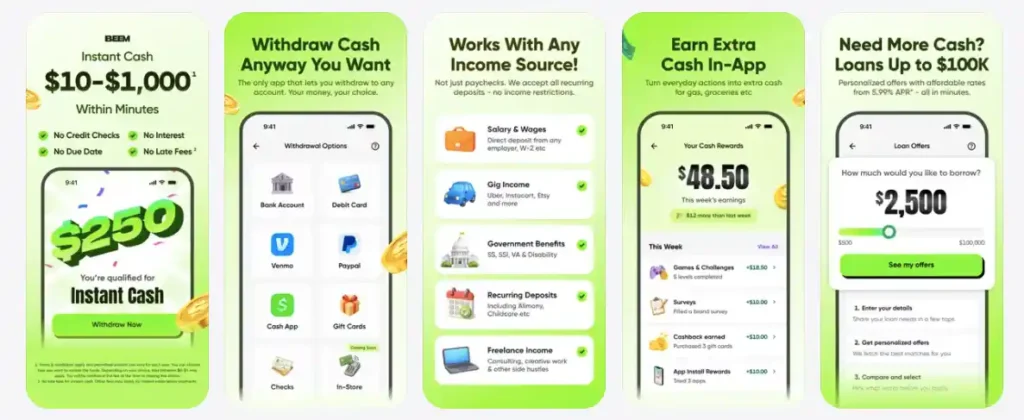
In addition to emergency cash access, Beem provides budgeting tools, financial tracking, insurance comparison features, and AI-powered money management support.
This matters because financial emergencies rarely exist in isolation.
Most users facing cash shortages are also trying to:
- Reduce expenses
- Improve budgeting
- Manage debt
- Build healthier spending habits
- Stretch paychecks further
By combining cash access with financial wellness tools, Beem helps users think beyond immediate borrowing alone.
This more balanced approach is often a strong sign of a legitimate financial platform. Apps focused on long-term financial improvement generally create healthier user experiences than platforms focused only on maximizing borrowing frequency.
Why Borrowers Should Understand Repayment Timing
One of the most overlooked risks in cash advance apps is repayment timing.
Many apps automatically withdraw repayment on the next payday or deposit date.
If borrowers do not plan carefully, this can create new financial shortages immediately after repayment occurs.
Before accepting advances, users should always understand:
- Exact repayment dates
- Automatic withdrawal rules
- Failed payment policies
- Overdraft risks
- Rescheduling options
Legitimate apps explain repayment systems clearly before money is deposited.
Unexpected repayment surprises often create the cycle of repeated borrowing many users struggle to escape.
How To Research a Cash Advance App Properly
Before downloading or linking any financial app, borrowers should spend time researching carefully.
Since cash advance apps access sensitive financial information like bank accounts, direct deposits, and spending history, choosing the wrong platform can create serious financial and privacy risks.
A few extra minutes of research can help users avoid hidden fees, poor customer experiences, or unsafe platforms.
Review the Company Website
A legitimate financial company should have a professional and transparent website that clearly explains its services, policies, and business information.
When reviewing a website, borrowers should look for:
- Detailed service explanations
- Clear fee disclosures
- Terms and conditions
- Privacy policies
- Customer support options
- Company background information
Legitimate companies usually make this information easy to locate because transparency helps build user trust.
Poorly designed websites, vague service descriptions, or missing company details can sometimes signal higher risk.
Users should also verify whether the company provides clear contact information, including support email addresses or help center resources.
Read Privacy Policies Carefully
Many borrowers skip privacy policies completely, but this is one of the most important parts of researching any financial app.
Cash advance apps often collect highly sensitive information, including:
- Bank account data
- Income history
- Transaction activity
- Personal identification details
- Spending habits
- Device information
A trustworthy app should clearly explain:
- What data is collected
- How the data is used
- Whether information is shared with third parties
- How user information is protected
If a privacy policy feels overly vague or difficult to understand, borrowers should proceed cautiously.
Users should also be careful with apps requesting unnecessary permissions unrelated to financial verification.
Compare Fee Structures
One of the most common mistakes borrowers make is focusing only on “no interest” advertising without reviewing the full cost structure.
Some apps advertise interest-free advances while still charging:
- Monthly subscriptions
- Instant funding fees
- Express transfer charges
- Optional tips
- Membership upgrades
Even smaller fees can become expensive over time if users borrow frequently.
Before using any app, borrowers should calculate the total cost of accessing funds, including recurring charges and transfer fees.
Comparing multiple apps side by side can help users identify which platforms provide the best overall value instead of simply the fastest funding.
Search for Independent Complaints
App store ratings alone do not always tell the full story.
Some apps may have high ratings while still generating consistent complaints about hidden fees, repayment problems, or poor customer support.
Borrowers should search independently for customer feedback across multiple sources and look for repeated complaint patterns.
Common warning signs may include:
- Unauthorized charges
- Unexpected withdrawals
- Account lockouts
- Missing customer service responses
- Repayment disputes
- Difficulty canceling subscriptions
Occasional complaints are normal for most financial companies. However, repeated patterns involving serious financial issues deserve careful attention.
Detailed user experiences are often more valuable than generic five-star reviews.
Test Customer Support Before Borrowing
Reliable customer support becomes extremely important when dealing with financial services.
If repayment issues, transfer delays, or account problems occur, users need fast access to support channels that actually respond.
Before borrowing, users should evaluate:
- Response speed
- Availability of live chat or email support
- Help center quality
- FAQ resources
- Customer communication clarity
Some borrowers even contact customer support with simple questions before using the app to test responsiveness directly.
Apps with slow, unhelpful, or nonexistent support can create major problems during financial emergencies.
Strong customer service is often one of the clearest signs of a legitimate and trustworthy financial platform.
Taking a little extra time to research cash advance apps carefully can help borrowers avoid unnecessary fees, protect personal information, and choose safer financial tools that support healthier long-term money management.
Why Emergency Borrowing Should Stay Temporary
Even legitimate cash advance apps work best as short-term financial tools.
Repeated borrowing often signals deeper budgeting or income challenges that require broader solutions.
Borrowers should avoid depending on advances regularly for:
- Rent
- Utilities
- Groceries
- Monthly debt payments
- Recurring bills
Using advances occasionally for genuine emergencies is generally safer than relying on them continuously.
Long-term financial stability usually requires a combination of:
- Better budgeting
- Emergency savings
- Income growth
- Debt reduction
- Expense management
Cash advances can provide temporary relief, but they should not replace sustainable financial planning.
Why These Mistakes Become Financially Dangerous
Many borrowing mistakes start small but gradually create larger financial pressure over time.
For example:
- Small recurring fees slowly reduce available income
- Frequent advances create ongoing repayment cycles
- Multiple apps increase financial complexity
- Missed repayment details trigger unexpected charges
- Nonessential borrowing weakens monthly budgets
When combined together, these habits can create continuous financial instability even if each individual advance appears manageable on its own.
The goal of emergency borrowing should always be short-term financial relief, not long-term dependency.
How Borrowers Can Avoid These Mistakes
Avoiding common borrowing mistakes usually starts with slower, more intentional financial decisions.
Before accepting any advance, users should ask themselves:
- Do I truly need this money right now?
- Can I repay this comfortably on time?
- Have I reviewed all fees carefully?
- Am I borrowing for a genuine emergency?
- Will this repayment create another shortage later?
Borrowers should also:
- Use budgeting tools regularly
- Track recurring expenses carefully
- Avoid unnecessary subscriptions
- Limit repeated borrowing
- Build emergency savings gradually
Even small financial improvements over time can reduce the need for emergency borrowing significantly.
Building Healthier Borrowing Habits
Cash advance apps can be helpful when used responsibly, but healthier financial habits remain the most important long-term solution.
Building stronger financial stability often involves:
- Creating realistic budgets
- Tracking spending consistently
- Reducing unnecessary expenses
- Increasing savings slowly
- Improving income stability
- Borrowing only when necessary
Apps that combine emergency cash access with budgeting and financial wellness tools, such as Beem, may help users manage financial challenges more responsibly over time.
The safest borrowing approach is always one that supports long-term financial improvement instead of repeated dependency on short-term advances.
Avoiding these common mistakes can significantly reduce financial stress and help borrowers make smarter, more sustainable money decisions in the future.
How Financial Technology Is Changing Borrowing
The rise of fintech platforms has transformed how emergency borrowing works.
Traditional banks once controlled most short-term lending access. Today, alternative financial apps use real-time banking analysis, income tracking, and flexible qualification systems to expand access.
This innovation has created more opportunities for:
- Gig workers
- Freelancers
- Younger borrowers
- Thin-credit consumers
- Users with nontraditional income
At the same time, rapid industry growth has also created more opportunities for risky or poorly regulated platforms.
As borrowing technology evolves, financial literacy becomes even more important for consumers navigating increasingly complex financial products.
Final Thoughts
Cash advance apps can provide valuable emergency support when used responsibly, but choosing the right platform matters tremendously.
Legitimate apps prioritize transparency, security, clear communication, and responsible borrowing practices. Risky or predatory apps often rely on hidden fees, confusing pricing, poor customer support, and aggressive marketing tactics.
Before linking bank accounts or accepting advances, borrowers should carefully review fee structures, repayment terms, privacy protections, and company credibility.
Apps like Beem demonstrate a healthier approach by combining emergency cash access with budgeting tools, financial tracking, and broader financial wellness support.
The best cash advance app is not simply the fastest one. It is the one that helps users solve short-term financial problems without creating bigger long-term risks.
People Also Ask
How do you know if a cash advance app is legitimate?
Legitimate cash advance apps usually provide clear fee disclosures, transparent repayment terms, strong customer support, and secure data protection practices.
Are cash advance apps safe to use?
Many established cash advance apps are safe when used responsibly. However, users should carefully review fees, privacy policies, and customer reviews before linking financial accounts.
What are red flags in cash advance apps?
Common warning signs include hidden fees, unrealistic approval promises, poor customer support, aggressive marketing tactics, and unclear company information.
Do legitimate cash advance apps check credit?
Many legitimate cash advance apps avoid hard credit checks and instead review bank activity, direct deposits, and spending patterns.
Are cash advance apps better than payday loans?
In many cases, yes. Cash advance apps usually have lower fees and more flexible repayment structures compared to traditional payday loans.