
Key Summary
When a car breaks down, a medical bill arrives, or a utility payment comes due before your next paycheck, the problem is timing, not irresponsibility. A cash advance for unexpected expenses gives you access to money now so you can handle the situation without taking on high-interest debt or missing a critical payment. This guide explains how these tools work, when to use them, and what to watch out for.
According to the Federal Reserve, roughly 37% of American adults would struggle to cover a $400 emergency expense from savings alone. That number has remained stubbornly consistent across economic cycles, meaning the gap between when emergencies happen and when income arrives is a structural reality for millions of households, not an edge case. Cash advances address this gap directly.
The Financial Instability Challenge
Financial unpredictability is not a personal failure. It is a widespread structural problem driven by the mismatch between when bills are due and when income arrives. Over 60% of US workers report living paycheck to paycheck according to the CFPB, meaning there is little cushion to absorb a $200 to $500 emergency expense without disrupting the rest of the month.
The problem is often timing rather than total income. A worker who earns $3,500 per month and receives a $400 car repair bill three days before payday is not financially irresponsible. They are experiencing a liquidity gap. That gap can trigger a cascade: late fees, overdraft charges, service interruptions, and the stress that comes with all of them simultaneously.
Inflation has made this more common. The cost of food, housing, transportation, and utilities has increased, compressing monthly budgets and leaving less margin for unexpected costs. Workers whose incomes have not kept pace with price increases are especially exposed to liquidity gaps when something goes wrong.
Why Traditional Solutions Do Not Work Fast Enough
Speed matters during a financial emergency. The problem with most traditional financial solutions is that they are built for planned borrowing, not urgent needs. Understanding their limitations helps clarify why cash advance apps have become a practical alternative for many working adults.
Credit cards can cover an emergency, but they carry average interest rates above 20% APR and trigger immediate interest on cash advances with no grace period. If the balance is not paid off that month, the cost of a $400 emergency grows quickly. For someone already stretched thin, adding credit card interest to a tight budget creates a second problem rather than solving the first.
Payday loans charge $15 to $30 per $100 borrowed, producing APRs above 300% on a two-week loan. Repayment is required in a lump sum on a fixed date. If the borrower cannot cover the full amount on that date, rolling the loan over adds another fee cycle. The structure of the payday loan model makes it difficult to exit without a full repayment in the first cycle.
Bank personal loans require days to approve and fund, require credit checks, and are not designed for same-day liquidity needs. Borrowing from family or friends may be available to some, but it introduces social and emotional pressure that outlasts the emergency itself.
What Is an Instant Cash Advance and How It Works
An instant cash advance is a short-term advance against income you have already earned or income expected from a verified source. It is not a loan in the traditional sense. There is no interest, no formal credit inquiry, and no structured multi-month repayment plan. The advance is deposited into your bank account, typically within minutes, and repays automatically from your next qualifying deposit.
The process works in four steps. You connect your bank account to the app, which reads your deposit history and income patterns. You request an advance within your eligible limit, which is determined by your income and account history rather than your credit score. The app deposits the funds to your account immediately or within one to three business days depending on whether you choose express delivery. Repayment happens automatically when your next paycheck or qualifying deposit arrives.
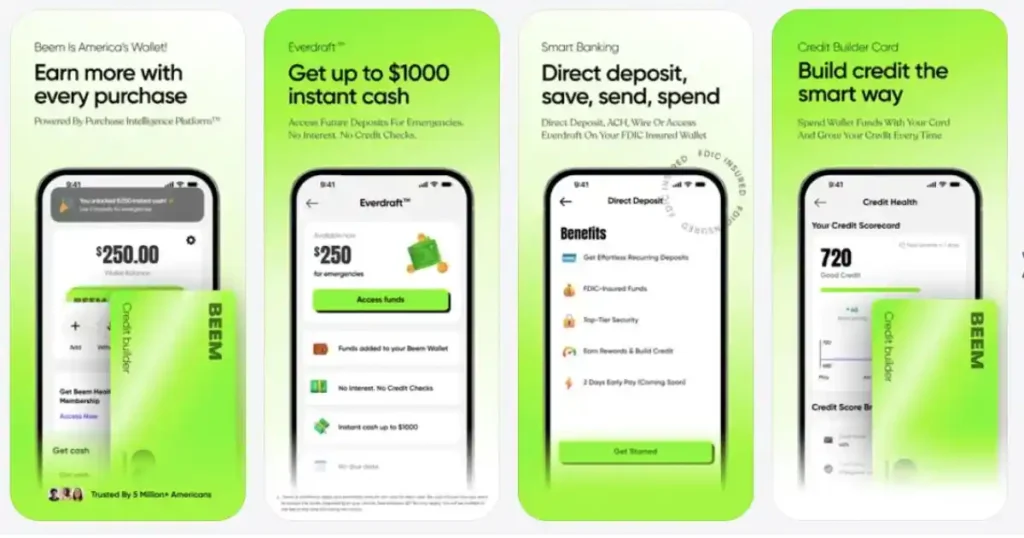
Apps like EarnIn advance wages you have already earned, up to $150 per day and $750 per pay period, based on verified hours worked and direct deposit. Dave provides advances up to $500 through its ExtraCash feature with a $1 monthly membership and no mandatory fees beyond that. Beem‘s Everdraft feature provides up to $1,000 with no fees and instant delivery after approval, using bank account history rather than credit score for eligibility.
Also Read: Best Instant Cash Advance Apps in 2026
How Instant Cash Advances Reduce Financial Stress
The most immediate benefit of a cash advance is practical: a bill gets paid, a service stays connected, a car gets repaired. The secondary benefit is the reduction in stress that comes from having a defined path to covering the expense rather than an open-ended problem with no clear solution.
When you know that a utility bill due in two days can be covered today without a credit check or a multi-day approval process, the decision space changes. You can handle the emergency rather than manage around it. That reduction in cognitive load during a stressful event has real value beyond the financial mechanics.
Avoiding late fees and service interruption fees also adds up. A $30 overdraft fee on a $150 grocery purchase is a 20% effective cost. A $35 reconnection fee for a utility is avoidable if the bill is covered on time. The advance can cost nothing while preventing charges that would otherwise be certain. The net financial outcome is often positive even when the advance itself carries a small fee.
5 Common Situations Where a Cash Advance Helps
Unexpected expenses follow recognizable patterns. The situations below account for the majority of cash advance requests and illustrate when this tool fits the problem well.
Car repairs are a frequent trigger. Transportation is essential for most workers, and a repair that prevents you from getting to work creates a compounding problem: the bill exists and the income stops. A same-day cash advance covers the repair, keeps transportation operational, and prevents a bigger income disruption.
Medical bills and copayments often arrive with tight deadlines. A prescription that cannot wait, a copay due before treatment, or an urgent care bill all benefit from immediate cash access. Delaying medical care due to a cash flow gap can produce worse health and financial outcomes.
Rent shortfalls before payday are one of the most stressful liquidity gaps. A late rent payment can mean a late fee, a warning notice, and potential damage to your rental history. Covering a shortfall with a cash advance and repaying from the next paycheck preserves housing stability.
Utility bills that arrive at inconvenient times in the billing cycle create the same timing problem. A disconnection followed by a reconnection fee costs more than covering the original bill would have. An advance prevents the fee cascade.
Family emergencies and unexpected travel require fast decisions. Whether it is transportation to reach a sick relative or handling a last-minute obligation, an advance eliminates the financial barrier to acting immediately.
The Difference Between a Cash Advance and a Payday Loan
The products look similar from a distance but are structurally different in ways that matter for the borrower’s financial outcome. Cash advance apps are not payday lenders, and the distinctions explain why consumer advocates treat them differently.
Payday loans charge $15 to $30 per $100 borrowed. On a $400 payday loan for two weeks, that is $60 to $120 in fees, producing effective APRs of 300% to 600%. If the borrower cannot repay in full on the due date, rollovers add another fee cycle. The CFPB has documented that a significant majority of payday loans are rolled over or reborrowed within 30 days.
Cash advance apps charge no interest. Most charge no mandatory fees at all. Repayment is automatic from the next qualifying deposit, which means it happens when income is available rather than on an externally imposed date that may not align with the borrower’s cash flow. This structural alignment between repayment and income arrival is the key practical difference.
Building Financial Confidence Beyond the Emergency
Cash advance apps work best when paired with tools that help prevent the next emergency rather than just covering the current one. Budgeting tools that show spending patterns, balance alerts that signal a shortfall before it becomes an overdraft, and savings features that build a small buffer over time all reduce the frequency with which a cash advance is needed.
An emergency fund of $250 to $500 covers most common single-expense emergencies. Building this over three to six months by setting aside $10 to $20 per paycheck creates a buffer that prevents most of the situations that would otherwise require a cash advance. The advance is most useful as a bridge while that buffer is being built, or when a larger-than-expected expense exceeds the buffer.
Frequently Asked Questions
How soon can I get a cash advance for an unexpected expense?
Most cash advance apps deliver funds within minutes for an optional express fee, or one to three business days for free. Beem’s Everdraft delivers instantly after approval at no charge. EarnIn’s Lightning Speed option delivers within minutes for a small fee.
Can I get a cash advance with bad credit or no credit history?
Yes. Cash advance apps base eligibility on bank account activity and income deposit history rather than credit score. A low credit score, thin file, or no credit history does not affect your eligibility on EarnIn, Dave, or Beem. No hard credit check is performed by any of these platforms when you request an advance.
Will using a cash advance app hurt my credit score?
No. Cash advance apps do not perform hard credit inquiries, so requesting or receiving an advance does not affect your credit score. Repayment is automatic from your next deposit. Most apps do not report to credit bureaus in either direction. Some offer optional credit-building features that are disclosed upfront if they involve any reporting.
How much can I get from a cash advance app for an emergency?
It depends on the app and your account history. EarnIn advances up to $750 per pay period based on verified earnings. Beem’s Everdraft reaches up to $1,000 with no advance fee. Most apps start new users at lower limits that increase over time with consistent deposit and repayment history.
How do I start building an emergency fund after using a cash advance?
Start small and automate it. Setting up an automatic transfer of $10 to $25 per paycheck into a separate savings account removes the decision from each cycle. Most people who build emergency funds do so by making the contribution automatic rather than discretionary. Three to six months of consistent transfers produces the $250 to $500 buffer that covers most single-expense emergencies.
What is the best way to reduce overdraft fees going forward?
Connect a cash advance app with automatic overdraft protection, like Brigit’s predictive deposit or Chime’s SpotMe, so a small advance triggers before your balance reaches zero. Review your billing cycle and paycheck timing to identify which days in the month create the most risk, and adjust payment due dates with your providers where possible.
Should I look into a credit builder product after stabilizing my finances?
Yes, if you want to improve your credit profile over time. Credit builder loans and secured credit cards report on-time payments to all three bureaus, building positive payment history over six to twelve months. Several cash advance apps also offer credit builder features that generate bureau reporting from regular card use without requiring a separate credit account.
Conclusion
A cash advance for an unexpected expense works best when the problem is timing and the solution is a defined bridge to the next paycheck. The expense is real, the income to cover it exists, and the gap between them is temporary. That is precisely the situation these tools are built for.
The key decision points before using an advance are straightforward: confirm the expense is essential, confirm your next deposit will cover the repayment without creating a new shortfall, and choose an app with no mandatory fees and automatic repayment. Beem’s Everdraft and EarnIn all meet those criteria with different advance limits and cost structures. The right one depends on how much you need and when.
After the emergency is handled, the follow-up steps matter as much as the immediate fix. Building a small savings buffer, reviewing what expenses can be reduced, and setting up automatic overdraft protection all reduce the likelihood that the same timing gap recurs. The advance solves today’s problem. The habits you build afterward determine whether it stays a one-time bridge or becomes a recurring dependency.