Key Summary
About 6 million American households have no bank account. Another 18 million are “underbanked”—they have accounts but avoid using them. That’s roughly one in five households operating outside traditional banking. How Gift Card Withdrawals Help becomes especially important for people who need flexible access to funds without relying on traditional banking systems.
For these families, a simple question becomes complicated: How do you receive money? A friend wants to pay you back, an employer needs to pay you for work, and your family wants to help with expenses—how do they send it if you don’t have a bank account to receive deposits?
This is where gift cards become more than just convenient alternatives. They become essential financial tools that provide access to the economy when banking isn’t an option.
Why Millions of People Don’t Have Bank Accounts
About 4.5% of U.S. households are completely unbanked—no checking account, no savings account, no relationship with a bank at all. Another 14% are “underbanked,” meaning they might have an account somewhere but rely primarily on alternative financial services such as check-cashing stores, money orders, prepaid cards, and payday loans.
The Real Cost of Banking
Banking costs money. Monthly maintenance fees of $5-15 don’t sound like much, but if you’re living paycheck to paycheck, that’s groceries. Minimum balance requirements of $500-1,500 are impossible barriers when you’re barely making rent. One overdraft fee of $35 can spiral—you overdraft by $5 buying groceries, the bank charges $35, now you’re $40 in the hole instead of $5. Another transaction goes through, another $35 fee, and suddenly you’re $75 in the red, and the bank closes your account.
How One Mistake Follows You for Years
That closure follows you. Banks report account closures to ChexSystems, a reporting agency similar to credit bureaus. Once you’re in ChexSystems, most banks won’t let you open a new account for five years. One bad month can lock you out of banking for half a decade.
The Barriers Beyond Money
Transportation is a barrier in areas without nearby bank branches. Trust is another issue—some communities have historical distrust of banks, some people watched their families lose everything in 2008, and some had accounts frozen or seized due to errors. Documentation requirements exclude immigrants and people without traditional ID since many banks require two forms of ID, proof of address, and Social Security numbers.
Also Read: Why Gift Cards Are Popular for Emergency Spending
How Gift Cards Provide Financial Access
Here’s what makes gift cards powerful for unbanked people: you don’t need a bank account to receive them. That’s it. That’s the entire advantage, and it’s massive.
The Simplicity of Receiving Money
Someone wants to send you $200. Normally, they’d need your bank account details—routing number and account number—and initiate a transfer, which takes 1-3 days. But you don’t have a bank account. With gift cards, they just need your email address or phone number. They sent a $200 Walmart gift card. It arrives in your inbox instantly. You open the email, save the code, and now you have $200 worth of purchasing power at Walmart. No bank required, no credit check, no minimum balance, no monthly fees, no documentation, no waiting.
Immediate Purchasing Power
You can buy groceries today. The card works online for delivery or in-store at the register. It’s a value you can use immediately for things you actually need. For people locked out of traditional banking, this matters enormously—it means family can help them, employers can pay them, friends can pay them back, and they can participate in the economy despite banking barriers.
Receiving Money as Gift Cards Without Banks
From Employers and Gig Work
Some employers offer paycard options that work similarly to gift cards. Gig economy platforms increasingly offer gift card payouts—task-completion apps pay in Amazon cards or other retailer gift cards. You complete work, and instead of a paycheck deposited to a bank account you don’t have, you get payment as a gift card you can actually use.
From Friends and Family
Platforms like Beem allow people to send money that the recipient can receive as gift cards to stores they choose—no bank account required on the receiving end. Your sister wants to help with groceries. She sends you $150 through Beem. You choose to receive it as a Walmart card. She didn’t need your bank details, you didn’t need a bank account, and the help arrived ready to use immediately.
From Rewards and Cashback Programs
Survey apps, shopping rewards, and cashback programs all offer gift card payouts that don’t require bank deposits. For someone without a bank account, these aren’t just nice extras—they’re income streams and support systems that actually work with their financial reality.
Also Read: Can Gift Cards Replace Cash for Short-Term Needs?
Building a Life on Gift Cards
Covering Essential Expenses
Walmart and Target cards become your grocery budget. Amazon cards cover household items, toiletries, and cleaning supplies. Gas cards keep your car running so you can get to work. Pharmacy cards (CVS, Walgreens) cover medications. These aren’t luxuries—they’re the basics of survival, and gift cards can provide access to all of them without touching a bank account.
Budget Allocation Through Different Cards
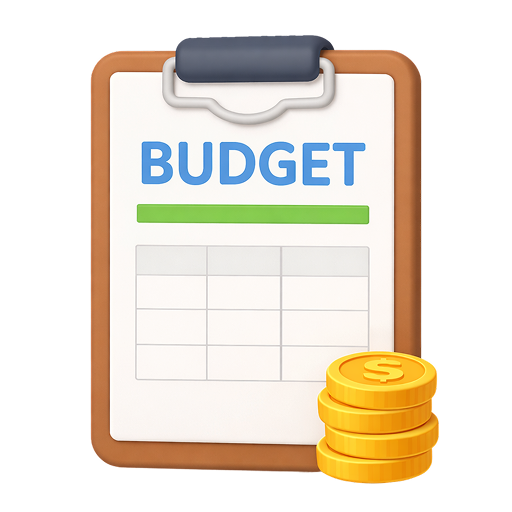
Instead of having categories in a bank account or budgeting app, you have physical separation through different store cards. Your $400 monthly grocery budget is a Walmart gift card for $400. Your $150 gas budget is a Shell card for $150. Your $100 household items budget is a $100 Amazon card. When the grocery card is empty, you’re done buying groceries that month—the physical limitation creates budgeting discipline automatically.
Managing Multiple Cards Strategically
This requires organization—you need to track balances, screenshot codes and save them, keep a list in your phone notes or a simple spreadsheet, and check balances before shopping. It’s more work than just swiping a debit card, but for someone without a bank account, it’s workable.
What Gift Cards Can and Cannot Do
What Gift Cards Cover Well
Gift cards work brilliantly for retail purchases—groceries, gas, medications, household items, clothing, and basic necessities. If you can buy it at Walmart, Amazon, Target, a pharmacy, or a gas station, you can cover it with gift cards. For day-to-day survival, this covers most needs.
What Gift Cards Cannot Cover
Gift cards fail completely at direct bill payment. Your landlord doesn’t accept Target gift cards for rent. The electric company doesn’t take Amazon cards. Your car insurance won’t let you pay with Starbucks credits. This is the massive gap—bills require traditional payment methods.
The Workaround: Freeing Up Cash
Use gift cards for everything you can buy at retail stores. This frees up whatever cash you do have for rent and bills. If you make $1,500/month in cash from work and receive $400 in gift cards from family, you can use those gift cards for all groceries and household items. The $400 in cash you would have spent on groceries can now go to rent. You’re not paying rent with gift cards, but the gift cards are making it possible to pay rent. This workaround requires some cash income—gift cards alone cannot cover a full life, but they significantly extend what’s possible with limited cash.
The Dignity Factor Nobody Talks About
Why Financial Access Matters
Financial access is about dignity. When you can’t receive money because you don’t have a bank account, you’re excluded. Family wants to help but can’t figure out how to get money to you. Employers can’t pay you easily. You’re outside the system. Gift cards bring you back in—you can receive help, be paid for work, and participate in the economy.
Reducing Shame and Stigma
You can do this without explaining to everyone why you don’t have a bank account, without the shame that our society attaches to being unbanked, and without justifying your financial situation. You get an email with a gift card, you shop, and it’s done. It looks like everyone else’s transaction from the outside. There’s privacy in that, and there’s respect.
Empowerment Through Participation
Gift cards aren’t charity or handouts—they’re a payment method that works for people regardless of their banking status. That equality matters. People avoid asking family for help specifically because explaining their banking situation feels humiliating. Gift cards remove that barrier. Help can arrive without the whole backstory.
The Challenges We Can’t Ignore
The Cash Problem Remains: You still need some cash access for small businesses that only take cash, for paying someone for informal work, for certain fees, and for money orders for bills. Gift cards can’t cover everything. Most unbanked people develop hybrid systems—some cash, some prepaid cards, some gift cards. It’s patchwork but functional.
No Path to Credit or Wealth Building: You can’t easily build credit or savings. Gift cards don’t report to credit bureaus, don’t help you qualify for loans, and can’t be accumulated into savings accounts that earn interest. There’s no path to a mortgage or car loan. Gift cards keep you outside the traditional financial system—they provide access to consumption but not wealth building.
Gift Cards Are Workarounds, Not Solutions: The real problem is that 20% of American households can’t access or choose not to use traditional banking. That’s a systemic failure. Banks should be accessible to everyone, banking requirements should be reasonable, fees should be affordable, and documentation barriers should be lower. Policy changes are needed. Gift cards help people survive the current broken system, but we shouldn’t confuse surviving with thriving or accept that workarounds are enough. People deserve better than patchwork solutions—they deserve real financial access.
Making It Work Practically
Security First: Screenshot every card code immediately, email codes to yourself, and store them in a password-protected document on your phone. Never share codes publicly or with anyone you don’t absolutely trust. Check balances regularly to catch fraud quickly.
Organize Meticulously: Label cards by purpose (groceries, gas, household), track balances in one place, and set reminders for any expiration dates. Use cards in the order you received them and maintain a regular inventory of what’s available.
Maximize Every Dollar: Use every card to the max—don’t leave $3 balances floating around. Shop sales, use coupons on top of gift card payments, buy store brands, compare prices, and plan purchases instead of impulse buying.
Build Buffers When Possible: During good months, stockpile non-perishable items, keep unused gift cards as a form of savings, buy extra gas cards for future needs, and create whatever cushion you can.
Conclusion
Gift cards provide purchasing power for groceries, gas, medications, and household essentials, enabling participation in the economy despite banking barriers. They’re not perfect—they can’t pay rent directly, build credit, or accumulate savings. They don’t solve the systemic problems that keep millions locked out of banking.
But they work right now, today, for real people in real situations. They provide dignity, privacy, and access—the ability to receive help, earn income, and buy necessities without explaining your entire financial backstory to everyone involved. For someone who’s been told they can’t have a bank account, who’s been excluded from the traditional financial system, gift cards say: you can. Here’s your grocery money, here’s your gas money, here’s a value you can use right now.
That matters. Not as an endpoint or permanent solution, but as a bridge that makes life possible while we work toward better systemic solutions. Everyone deserves financial access. Until the system works for everyone, tools like gift cards make participation possible for those the system has left behind.
FAQs About How Gift Card Withdrawals Help
Can you receive money without a bank account?
Yes, absolutely. Gift cards are one of the easiest ways to receive money without banking—someone sends you a digital gift card code via email or text, and you can use it immediately at retailers. Other options include prepaid cards, money orders, cash pickup services (like Western Union), and government benefit cards.
What can you buy with gift cards if you don’t have a bank?
Gift cards cover most essential daily needs: groceries (Walmart, Target, Amazon Fresh), gas (Shell, BP, universal gas cards), medications (CVS, Walgreens), household items and toiletries, clothing, and phone cards. What you cannot buy: rent payments, most utility bills, money orders, and services from professionals who don’t accept gift cards.
How do unbanked people pay rent and bills?
Most unbanked people use a hybrid approach with some cash income or convert gift cards to cash when necessary (at a loss). For rent, they pay with money orders purchased at grocery stores, post offices, or check-cashing stores. For utilities, they can pay in person at company offices, by money order, or with prepaid cards that work for online bill pay.
Are gift cards safer than carrying cash if you don’t have a bank account?
In some ways, yes. Digital gift cards can’t be physically stolen from your wallet, and if you screenshot and back up the codes, you can recover them. However, gift cards have their own risks: digital codes can be stolen by hackers or scammers, lost if devices fail without backups, and there’s no FDIC insurance protection.
Can you survive financially without a bank account using only gift cards?
Partially, but not completely. Gift cards can cover most daily expenses: food, gas, household items, medications, clothing, and many necessities available at major retailers (about 70-80% of typical spending). However, you cannot pay rent, most utilities, or many bills directly with retail gift cards—you’ll need cash or money orders for these. Most unbanked people use a combination: gift cards for retail purchases, cash/money orders for bills. It’s survivable but requires more planning and organization than traditional banking.