
Key Summary
Beem counts gig platform earnings as valid income for cash advances by evaluating bank account deposit activity rather than requiring payroll from a traditional employer. When DoorDash, Uber, Lyft, Instacart, Fiverr, Upwork, or any other gig platform deposits earnings into a bank account linked to Beem, those deposits contribute to the financial behavior profile that determines Everdraft eligibility. Gig workers with consistent platform deposit patterns can qualify for up to $1,000 in instant, interest-free advances without a credit check, an employer verification step, or a W-2 income requirement.
Here is a scenario that plays out thousands of times every day across the United States. A DoorDash driver opens a cash advance app, enters their income information, reaches the employer verification screen, and hits a wall. The app wants a payroll deposit from a recognized employer. DoorDash is not an employer in the way the app’s system recognizes. The driver’s income is real, consistent, and deposited into their bank account weekly, but the app’s eligibility model was built for a workforce that no longer describes most of the people who need what the app is offering.
They close the app. They try another one. Same wall, different language. This is not an edge case. It is the standard experience for a substantial portion of the American workforce in 2026, and it reflects a fundamental mismatch between how cash advance apps were designed and how a growing share of the economy actually generates income. Beem was built to close that mismatch.
The Income Recognition Problem in 2026
The gig economy is not a niche. By 2026, tens of millions of Americans earn income through platform-based work, whether as a primary livelihood or a meaningful supplement to other income. DoorDash, Uber, Lyft, Instacart, Shipt, TaskRabbit, Fiverr, Upwork, Amazon Flex, and dozens of smaller platforms collectively represent an enormous segment of working America.
What these workers do not have is a W-2. And that absence, which reflects a contractor classification decision made by platforms rather than any characteristic of the worker’s financial reliability, is the criterion most cash advance apps use to determine eligibility. The result is systematic exclusion of a financially legitimate population from a product designed to serve financially legitimate needs.
The exclusion is not malicious. It is a legacy of how income verification was designed when payroll systems were the only reliable mechanism for confirming that money arrived at regular intervals. In 2026, that assumption is outdated. Bank account data provides a direct, real-time view of income activity that is more accurate, more current, and more complete than any payroll verification system. Beem uses it accordingly.
Why Traditional Cash Advance Apps Reject Gig Income
Understanding the specific mechanics of why traditional cash advance apps exclude gig workers helps clarify what Beem does differently and why that difference is structurally significant rather than cosmetic.
The Payroll Direct Deposit Requirement
Most traditional cash advance apps require users to receive a qualifying direct deposit from an employer payroll system. The technical definition of a qualifying direct deposit in these apps’ systems typically refers to ACH transfers coded specifically as payroll, originating from a recognized employer payroll processor such as ADP, Gusto, Paychex, or a corporate payroll department.
Gig platform deposits do not meet this technical definition. When DoorDash deposits a weekly earnings transfer to a driver’s bank account, the ACH transfer is coded as a business payment from DoorDash, not as payroll from a recognized employer. The cash advance app’s system does not recognize it as a qualifying direct deposit, regardless of how regular, consistent, or substantial those deposits are.
The driver’s income is real. The deposit is real. The frequency and consistency of the deposits are real. None of that overrides the payroll code requirement because the app’s eligibility system was not designed to evaluate anything other than payroll-coded deposits.
The Employer Verification System
Some cash advance apps use third-party employment verification services that connect to employer HR systems to confirm employment status and income. Gig platforms do not appear in these systems because gig workers are not employees of the platforms. Asking a gig worker to verify their income through an employment verification service is like asking a business owner to verify their income through a payroll system they do not use. The tool does not match the income structure.
The Credit History Substitute
When income verification fails, some apps fall back on credit history as a secondary eligibility signal. This creates a compound disadvantage for gig workers, who may have limited credit history precisely because the financial products that build credit have historically been less accessible to non-traditional income earners. A gig worker who has been earning $45,000 per year on DoorDash for three years may have a thin credit file not because of financial irresponsibility but because the credit system itself has not had many entry points designed for their income type.
How Beem’s Behavior-Based Eligibility Model Works
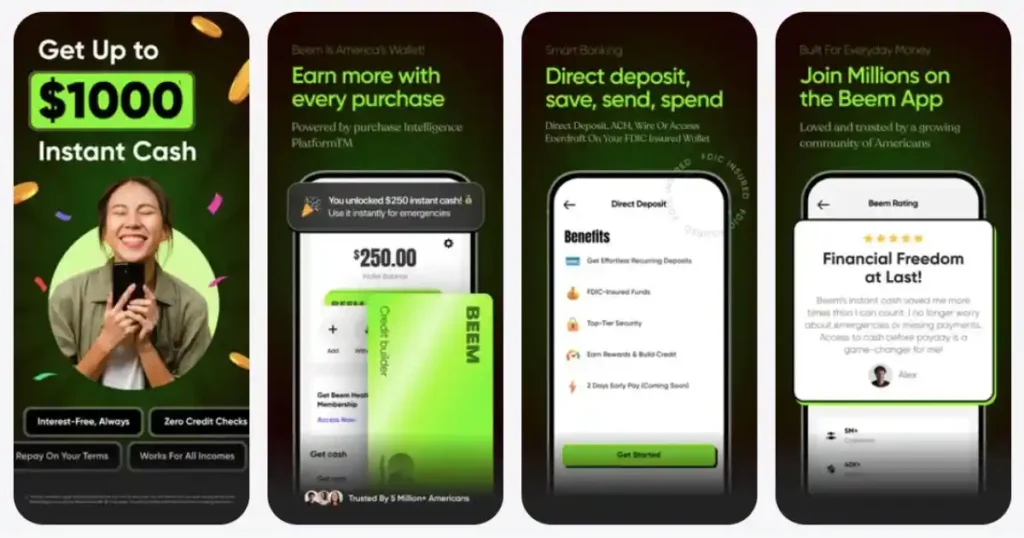
Beem’s approach to income recognition is not a workaround or a special exception for gig workers. It is the foundational design of the Everdraft eligibility system, built around the principle that financial behavior is a more accurate and more equitable indicator of advance eligibility than employment category.
When a gig worker links their bank account to Beem, the eligibility assessment evaluates several dimensions simultaneously:
Deposit frequency: How often do deposits arrive? A worker who receives DoorDash weekly deposits and occasional Fiverr project payments demonstrates a consistent pattern of incoming funds that Beem’s system recognizes as active income activity.
Deposit amounts and patterns: The amounts of individual deposits and how they trend over time paint a picture of income stability. A gig worker whose weekly DoorDash deposits have been consistently in the $400 to $600 range for six months demonstrates reliable earnings that Beem can evaluate meaningfully.
Account balance behavior: How the account balance moves between deposits, specifically whether it maintains a positive trajectory and avoids chronic overdrafts, provides a behavioral signal that reflects how the account holder manages money overall.
Overall account health: The combination of deposit activity, balance behavior, spending patterns, and account tenure creates a holistic financial behavior profile. This profile is evaluated as a whole rather than as a checklist, which means a gig worker with strong overall account health can qualify even if any single component is less than ideal.
The irony of payroll-based eligibility models is that they verify a characteristic of income delivery rather than income itself. A salaried employee with chronic overdrafts and a history of bounced checks qualifies for most cash advance apps because their income arrives via payroll ACH. A gig worker with consistently positive balances, no overdrafts, and a two-year history of regular platform deposits does not, because their income arrives via business payment ACH. Beem’s model evaluates the financial behavior that actually predicts repayment reliability rather than the delivery mechanism.
Which Gig Platforms Does Beem Recognize?
Beem’s eligibility model is platform-agnostic. Any platform that deposits earnings consistently into a linked bank account contributes to the behavioral profile Beem evaluates.
Rideshare and delivery platforms: Uber, Lyft, DoorDash, Uber Eats, Grubhub, and Instacart all pay out on weekly or daily schedules via direct bank transfers. Drivers who enable daily Fast Pay options create a more frequent deposit signal than those who wait for weekly automatic transfers, which strengthens their eligibility profile.
Marketplace and service platforms: Fiverr, Upwork, and TaskRabbit pay freelancers on varying schedules after project completion. Workers who transfer earnings to their bank account immediately upon release, rather than accumulating a platform balance before transferring, create a more frequent and visible deposit pattern.
Logistics platforms: Amazon Flex and Shipt pay workers on weekly or biweekly schedules. The regularity of these payments, often more predictable than rideshare earnings because shifts are scheduled in advance, creates a strong deposit frequency signal.
Multi-platform workers: Many gig workers drive for Uber while delivering for DoorDash and completing Fiverr projects on days off. For multi-platform workers, combined deposit activity from multiple sources creates a richer and often stronger eligibility signal than any single platform would produce alone.
The Five Most Common Gig Worker Cash Flow Gaps Beem Addresses
The weekly payout window: Every gig platform has a payout cycle. For workers whose regular expenses land in the days before the next payout arrives, an Everdraft advance bridges that specific window at zero cost.
The slow week income drop: Platform demand is weather-sensitive, algorithm-driven, and seasonally variable. A week of bad weather or a platform incentive change can cut weekly earnings by 30 to 50 percent. When a slow week’s earnings fall short of regular expenses, Everdraft bridges the shortfall and repays from the following week’s deposit when earnings recover.
The platform payment hold: Gig platforms occasionally place holds on payments for account review or dispute resolution. During a hold, the worker’s earnings are confirmed but inaccessible. Beem Everdraft bridges holds that resolve within the next one to two deposit cycles.
The vehicle repair before a shift: For rideshare and delivery drivers, a vehicle breakdown stops both the car and the income. An Everdraft advance covers the repair, the vehicle returns to the road, earnings resume, and the advance repays from the next platform deposit.
The seasonal slowdown transition: Gig platform demand follows seasonal patterns. Food delivery peaks in winter and dips in summer. For workers entering a slow season, Everdraft provides a bridge for one to two pay cycles while spending adjusts to lower average weekly earnings.

What Gig Workers Should Do to Maximize Beem Eligibility
Transfer platform earnings to your bank account frequently
Platform earnings sitting in a DoorDash or Uber internal wallet are invisible to Beem’s assessment because they have not yet landed in the linked bank account. Enabling daily payout options rather than waiting for weekly automatic transfers creates a stronger deposit frequency signal.
Consolidate multi-platform earnings into one primary account
Gig workers who receive deposits from multiple platforms into multiple bank accounts split their income signal across accounts that each appear less active than the combined picture would suggest. Consolidating all platform deposits into a single primary account linked to Beem creates the most complete eligibility profile.
Maintain a healthy balance between deposits
An account that consistently drops to near zero between platform payouts signals that current income is barely covering expenses. Maintaining even a modest positive balance throughout the week produces a healthier behavioral signal for eligibility purposes.
Repay advances on time to build Beem Boost standing
Every on-time repayment from a platform deposit contributes to Beem Boost standing, which progressively increases available advance limits as responsible behavior accumulates. A gig worker who starts with a $300 limit and repays consistently over several months may qualify for $600 or more without any additional application.
The Bottom Line: Gig Income Is Income. Beem Treats It That Way.
The conversation about whether gig platform earnings count as real income was settled by the economy long before financial products caught up. DoorDash deposits are real. Uber transfers are real. Fiverr project payments are real. The households that depend on them are real, and the financial gaps those households experience are just as real as those experienced by any salaried employee waiting on a biweekly paycheck.
Beem’s behavior-based eligibility model recognizes what the economy has already decided: the way income arrives matters less than whether it arrives consistently and in amounts sufficient to support responsible repayment. No employer verification. No payroll requirement. No credit check. No fees. No interest. Up to $1,000, available in minutes, repaid from the next platform deposit. That is what it looks like when a financial product is built for the workforce as it actually exists.
Frequently Asked Questions
Does Beem accept DoorDash, Uber, and Lyft earnings as qualifying income?
Yes. Beem Everdraft evaluates bank account deposit activity rather than requiring payroll from a traditional employer. Regular platform deposits that land consistently in a linked bank account contribute to the eligibility assessment.
Why do most cash advance apps reject gig income while Beem accepts it?
Most apps require ACH transfers coded specifically as payroll. Gig platform deposits are coded as business payments, so they do not qualify under those systems. Beem evaluates deposit frequency, amounts, patterns, and overall account health instead.
Can a multi-platform gig worker qualify for a higher advance limit?
Yes, potentially. Combined deposit activity from multiple platforms often creates a stronger eligibility profile than any single platform would produce alone. The Beem Boost program further grows available limits over time as responsible repayment behavior accumulates.
What happens if a platform deposit is delayed during repayment?
Everdraft repayment is tied to the next qualifying income deposit rather than a fixed calendar date. If a deposit is delayed by a processing day or a banking holiday, repayment adjusts to the next qualifying deposit with no penalty, late fee, or additional charge.