
Key Summary
For undocumented workers in the United States, financial emergencies are not just stressful; they are often harder to manage because the usual support systems are either limited or completely out of reach. When something urgent comes up, whether it is a medical expense, rent shortfall, or an unexpected family need, the question is not just where to find money, but where to find it safely and realistically.
The challenge is not a lack of income. Many undocumented workers earn consistently through cash jobs, gig work, or small businesses. The issue is access. Most traditional financial systems depend on documentation, credit history, or formal employment records, all of which may not fully apply in these situations.
This is where alternative financial tools, community networks, and newer platforms like Beem begin to play an important role. They do not solve every challenge, but they create pathways that are more aligned with how money actually moves for undocumented workers.
Understanding the Core Challenge: Access Without Formal Recognition
The U.S. financial system is built around verification. To access loans, credit, or even certain financial services, you are typically required to provide identification, proof of income, and a credit history that demonstrates reliability over time.
For undocumented workers, this creates a structural limitation. Even if you are earning regularly and managing your finances responsibly, you may not be able to present your financial profile in a way that traditional systems recognize.
This disconnect is what makes emergencies particularly difficult. It is not about financial irresponsibility, but about being excluded from systems that are designed to respond to those exact situations.
Why Traditional Emergency Options Often Fall Short
When facing urgent financial needs, most people turn to familiar options such as banks, credit cards, or personal loans. For undocumented workers, these options are often unavailable or impractical.
Banks require formal identification and credit history. Credit cards depend on established credit profiles. Personal loans typically involve detailed verification processes that may not align with informal or cash-based income.
In some cases, individuals turn to high-interest lenders or informal borrowing arrangements. While these may provide immediate relief, they often come with long-term consequences that can create additional financial strain.
The result is a cycle where urgent needs are met at a cost that makes future stability harder to achieve.
The Reality for Undocumented Workers
Documentation Pathways That Can Unlock More Options
For undocumented workers, access often depends on whether there is any form of verifiable identity within the system. While the term “undocumented” suggests complete exclusion, many individuals do have partial documentation such as an ITIN, municipal ID, or other locally accepted forms of identification.
An ITIN, in particular, can significantly expand your options. It allows you to open bank accounts, file taxes, and in some cases, access fintech platforms like Beem. This does not immediately solve every financial limitation, but it creates an entry point into systems that would otherwise remain closed.
Understanding and obtaining the right documentation, where possible, can shift your financial position from completely informal to partially recognized, which makes a meaningful difference during emergencies.
Building a Basic Financial Footprint Without Traditional Credit
Even without access to credit cards or formal loans, it is possible to build a basic financial footprint in the U.S. system. This starts with maintaining an active bank account and ensuring consistent activity over time.
Regular deposits, even if they are small, and responsible usage patterns help establish a form of financial behavior that some platforms can evaluate. While this does not replace a credit score, it creates a track record that fintech tools increasingly rely on.
Over time, this footprint can improve your ability to access services that depend on real-time financial data rather than long-term credit history.
The Importance of Liquidity Over Income in Emergencies
A common assumption is that financial stability depends primarily on how much you earn. In reality, during emergencies, liquidity matters more than total income.
Liquidity refers to how quickly you can access money when you need it. For undocumented workers, this is often the biggest challenge. Income may be steady, but if it is tied up in future payments or delayed earnings, it does not help in the moment.
This is why tools that provide immediate access, whether through community support or platforms like Everdraft™, are so valuable. They address the timing gap rather than the income gap.
Short-Term vs Long-Term Solutions: Knowing the Difference
Not all financial solutions serve the same purpose, and understanding this distinction can help you make better decisions under pressure.
Short-term solutions, such as cash advances or community borrowing, are designed to handle immediate needs. They provide quick access but are not meant to support ongoing financial stability.
Long-term solutions, such as building savings, improving income consistency, or accessing structured financial tools, take time but create lasting security.
The most effective approach is to use short-term solutions strategically while working toward long-term stability. Confusing the two can lead to dependency or repeated financial stress.
How to Avoid High-Risk Borrowing Traps
When options are limited, high-interest borrowing can seem like the only available path. Payday lenders, informal agreements with unclear terms, or predatory services often target individuals who need immediate cash without strict documentation.
While these options may solve an urgent problem, they often create a larger one over time. High fees, unclear repayment structures, and aggressive collection practices can lead to cycles that are difficult to break.
Recognizing these risks early and prioritizing safer alternatives, even if they require more effort, can protect your financial stability in the long run.
Combining Multiple Strategies for Better Outcomes
In many cases, relying on a single source of emergency cash is not enough. The most practical approach is often a combination of strategies.
For example, you might use community support for immediate needs, explore nonprofit assistance for essential expenses, and rely on a platform like Beem for structured short-term access if you are eligible.
This layered approach reduces dependency on any one option and creates a more balanced way to manage financial stress. It also allows you to adapt based on what is available at any given time.
Planning Ahead Even When Resources Are Limited
Planning for emergencies can feel unrealistic when finances are already tight, but even small steps can make a difference. Setting aside a small amount regularly, identifying trusted sources of support, and understanding your available options in advance can reduce pressure during unexpected situations.
Preparation does not eliminate emergencies, but it changes how you respond to them. Instead of reacting under stress, you are able to act with a clearer sense of direction.
Read: 15 Best Cash Advance Apps in 2026
Where Beem Fits Into This Landscape
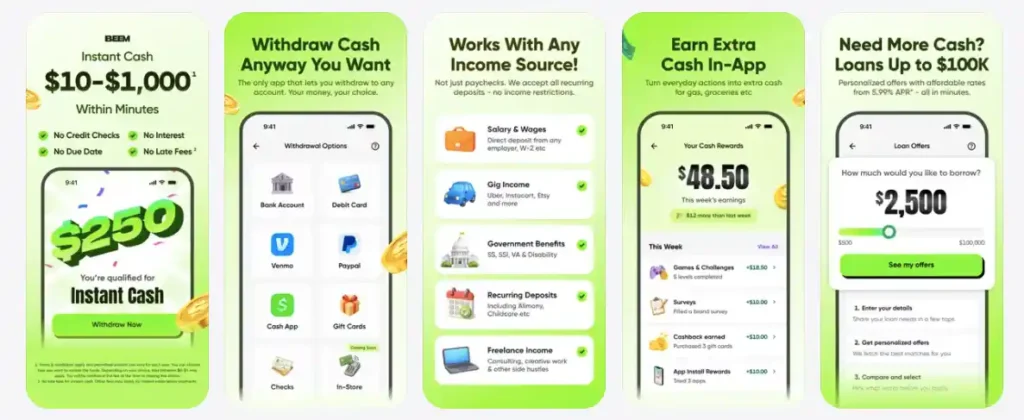
Beem is designed to operate within the regulatory framework of the U.S., which means identity verification is still required. However, it approaches financial access differently once that step is completed.
Through Everdraft™, Beem offers access to emergency funds without relying on traditional credit scores or rigid employment requirements. For users who are able to verify their identity, often through an ITIN, this creates a more flexible option compared to conventional systems.
The key advantage lies in how eligibility is determined. Instead of focusing heavily on past financial history, the platform looks at current financial behavior. This makes it more adaptable to users with irregular income or non-traditional earning patterns.
While it is not universally accessible to every undocumented worker, it provides a viable option for those who have some form of verifiable identity within the system.
Community-Based Financial Support Systems
One of the most reliable sources of emergency support for undocumented workers continues to be community networks. These systems often operate outside formal financial structures but play a crucial role in providing immediate assistance.
Family, friends, and local community groups frequently act as informal safety nets. In many cases, rotating savings groups or community lending circles allow members to contribute regularly and access funds when needed.
These systems are built on trust rather than documentation. While they may not offer large amounts of money, they provide a level of accessibility and flexibility that formal institutions cannot match.
However, they also depend heavily on relationships and may not always be available in larger emergencies.
Nonprofit and Local Assistance Programs
Another important avenue is nonprofit organizations and local assistance programs. Many community-based organizations offer emergency grants, rental assistance, or financial aid specifically for underserved populations, including undocumented workers.
These programs are often designed to address immediate needs without requiring extensive documentation. They may provide support for housing, food, healthcare, or other essential expenses.
The challenge here is awareness and availability. Programs can be limited in scope and may vary significantly by location. Applying often requires time and effort, which can be difficult during urgent situations.
Cash Advance Apps and Their Limitations
Cash advance apps have become more popular as alternatives to traditional lending. However, their accessibility for undocumented workers depends largely on identity verification requirements.
Most apps require an SSN or ITIN, along with a bank account and consistent financial activity. For those who meet these criteria, they can provide short-term support without relying on credit scores.
However, for individuals without any form of verifiable identification, these apps remain out of reach. This highlights an important limitation: while fintech solutions are more flexible, they are still bound by regulatory requirements.
Informal Income Strategies During Emergencies
In many cases, undocumented workers rely on their ability to generate additional income quickly during emergencies. This may involve taking on extra shifts, short-term gigs, or temporary work opportunities within their network.
While this approach can be effective, it is not always immediate. Emergencies often require funds upfront, while income takes time to earn. This timing gap is where the need for accessible financial support becomes most critical.
Balancing immediate needs with longer-term income generation is a common challenge, and it often requires combining multiple strategies rather than relying on a single solution.

Comparing Emergency Cash Options
| Option | Accessibility | Speed | Risk Level | Best Use Case |
| Beem (Everdraft™) | Medium (with ITIN) | High | Low | Short-term gaps |
| Community Support | High | Medium | Low | Small to moderate needs |
| Nonprofit Aid | Medium | Low to Medium | Low | Essential expenses |
| Cash Advance Apps | Medium | High | Medium | Timing gaps |
| High-Interest Loans | High | High | High | Last resort only |
Choosing the Right Option Based on Your Situation
There is no single solution that works for every situation. The best approach depends on what is available to you and how urgent your need is.
If you have an ITIN and a bank account, platforms like Beem can provide relatively quick and structured support. If not, community networks and nonprofit programs may be more accessible.
In many cases, the most effective strategy is a combination of options. For example, using community support for immediate needs while exploring longer-term solutions through financial platforms or assistance programs.
The key is to prioritize safety and sustainability. Avoiding high-cost borrowing options whenever possible helps protect your financial stability over time.
Conclusion
Accessing emergency cash as an undocumented worker in the U.S. is not straightforward, but it is not impossible. The path often involves navigating a mix of formal and informal systems, each with its own advantages and limitations.
Beem offers a more flexible alternative for those who can meet identity verification requirements, while community networks and nonprofit programs continue to play a critical role for those who cannot.
The most important thing is to approach these options with clarity. Understanding what each path offers, and where its limits lie, allows you to make decisions that address immediate needs without creating additional challenges in the future.
In a system that does not always provide equal access, having multiple pathways is what makes financial resilience possible.
FAQs
1. Can undocumented workers legally use apps like Beem to access emergency cash?
Undocumented workers can use platforms like Beem if they are able to complete identity verification, typically through an ITIN and a valid bank account. The platform operates within U.S. regulations, so verification is required. If those requirements are met, access becomes possible even without traditional credit history.
2. What is the fastest way to get emergency cash without formal documentation?
Community networks are often the fastest option because they rely on trust rather than verification. Friends, family, or local groups can provide immediate support. However, the amount may be limited, and availability depends on your network.
3. Are cash advance apps safe for undocumented workers?
They can be safe if used responsibly and if the platform is legitimate. It is important to understand fees, repayment terms, and eligibility requirements before using any app. Avoiding platforms with unclear terms or high hidden costs is essential.
4. What should I do if I do not qualify for any financial apps?
If formal apps are not accessible, focus on community support, nonprofit programs, and income-based solutions such as taking on additional short-term work. Combining these approaches can help manage immediate needs while you work toward improving access.
5. Is it possible to improve financial access over time without legal status?
Yes, to some extent. Building a financial footprint through an ITIN, maintaining a bank account, and demonstrating consistent financial behavior can gradually expand your options. While limitations remain, access can improve over time with the right steps.