Key Summary
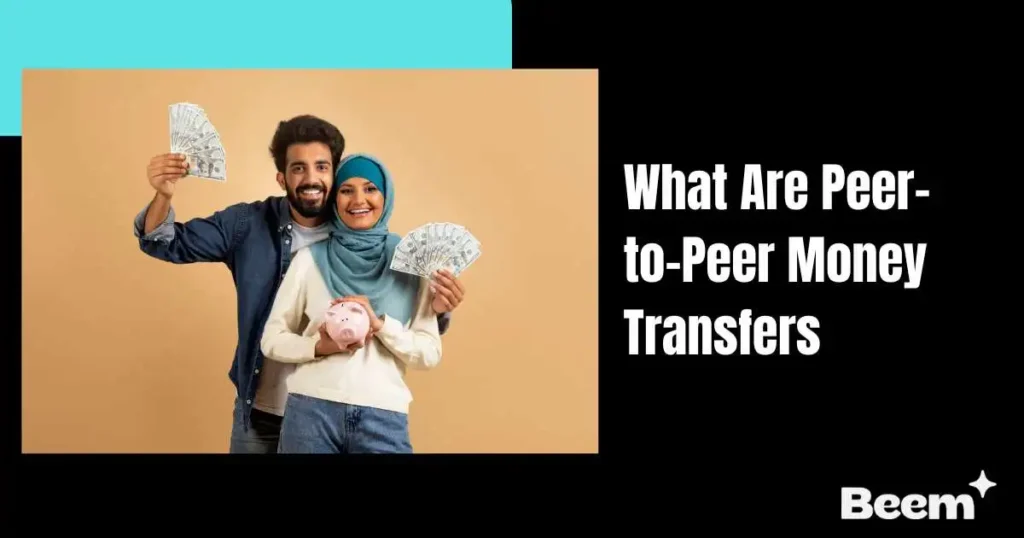
P2P (or “Peer to Peer”) payments are how you send money from one person to another through a website or mobile application. What Are Peer-to-Peer Money Transfers? They make transferring money quick, simple, and convenient for everyday transactions. Traditional banks often require extensive information about the account holder and take longer to complete transactions; in contrast, peer-to-peer payment systems allow users to send money to friends and family simply by entering basic contact information, such as a phone number or email address.
These platforms provide a secure way to transfer funds between individuals. Rather than going through a bank branch or a paper-based process, these transactions will be completed electronically, making them quicker and more convenient.
The primary difference between P2P transactions and traditional bank transactions is that P2P transactions are easier to use, complete much more quickly, and can be accessed from anywhere. For example, bank transactions can take several days to complete, whereas P2P apps usually transfer money almost immediately, within minutes or seconds.
How P2P Money Transfers Work
The idea behind P2P money transfers is that they connect a payment method, use contact information to target recipients, and electronically transfer money, allowing people to conduct fast, safe transactions with each other without involving conventional banking systems.
Linking a Payment Method
Users need to provide a funding source to start using the P2P payment service. This may be a bank account, debit card, or an existing balance in a wallet within the app. This connection will allow you to transfer money without having to re-enter the same information multiple times.
Finding the Recipient
After opening the account, the sender recognizes the recipient based solely on contact information. The majority of P2P sites will enable searching by phone number, email address, or username. There are even apps integrated with the contact list, enabling one to quickly locate and select the target recipient.
Sending and Receiving Funds
When the sender has chosen his/her recipient, he/she adds the amount he/she wants and verify the transaction. The system accepts the payment and informs the receiver immediately or within a short time. The money can be sent directly to recipients’ balances or claimed by recipients, depending on the application used. They can then transfer the money to their bank account or spend it in the app.
Common Uses of Peer-to-Peer Transfers
P2P transfers are often used for petty payments such as bill splitting, sending cash to relatives and friends, and even paying personal service providers, as an easy-to-use, fast, and convenient alternative to cash or bank deposits.
Splitting Shared Expenses
The division of costs between friends or roommates is also one of the most common applications of P2P payments. Whether it is rent, groceries, utility bills, or going out, users can split expenses and transfer their share in seconds without dealing with cash or complicated calculations.
Sending Money to Family and Friends
Personal payments include sending money to family or friends to support them or give them gifts during special occasions, and these are P2P transfers used to carry out these transactions. This is particularly beneficial for informal, fast transactions that do not require a formal banking process.
Paying for Personal Services
In many cases, P2P apps are used to pay small amounts to babysitters, tutors, freelancers, or other local assistants. It eliminates cash and pays money immediately and safely.
Why P2P Transfers Have Become So Popular
P2P transfers have gained popularity for their speed, ease of use, and convenience, enabling users to send money within seconds with few or no unnecessary contacts and minimal or no fees for simple daily transactions.
Speed and Convenience
Speed is the greatest benefit of P2P transfers. The numerous platforms provide instant or near-instant transactions, enabling users to transfer money at any time and from any location. Such convenience is particularly useful in emergencies when one needs funds quickly.
Simplicity of Contact-Based Transfers
Users can transfer money to account numbers or email addresses, including phone numbers, making it easy to identify without having to enter lengthy bank details. This minimizes the likelihood of mistakes and makes it user-friendly even for non-tech-savvy users.
Low or No Fees for Standard Transfers
P2P platforms are mostly free for standard transfers, making them affordable for day-to-day use. Some services are more expensive but faster or allow payment by credit card, and the final cost is usually lower than that of conventional approaches.
Types of P2P Money Transfer Methods
P2P money transfer systems differ depending on the source of funds, which may be bank-linked transfers, debit card payments, or wallet-to-wallet transfers, with different speeds, fees, and levels of convenience.
Bank-Linked P2P Transfers
These payments can be directly linked to a user’s bank account. The money is removed from the account and should be transferred to the recipient’s account. It is a sensible technique that is usually free but more time-consuming.
Debit Card-Based Transfers
A debit card is more advantageous because transactions are processed faster by card networks. This is usually used for immediate transfers, though it may incur a small charge.
Wallet-to-Wallet Transfers
Certain platforms keep a balance in the digital wallet. Customers can transfer money from their own app balance to another user’s wallet. This approach is often the most seamless and speedy on the same platform.
How Long P2P Transfers Usually Take
The P2P transfer time varies depending on the method used. Instant options can take minutes, while standard transfers can take 1 to 3 business days.
Instant Transfers
Most P2P services offer instant transfers, which move funds within a few seconds or minutes. These are best suited for urgent payments, such as emergencies or unplanned payments. Nevertheless, instant transfers can incur a low fee on the platform.
Standard Transfers
Normal transfers typically require 1 to 3 business days. This schedule is based on the bank’s performance and approach. Standard transfers are not always urgent, and are usually free and appropriate in non-urgent payments.
Fees and Limits in P2P Transfers
P2P transfers are usually free, standard, although instant services may be charged. Platforms also have restrictions on the amounts users can send or receive.
Free Standard Transfers
The majority of platforms offer free standard transfers, particularly when a linked bank account is used. This makes P2P services cost-effective for ordinary transactions.
Instant Transfer Fees
Users require instant access to money, and can use the instant transfer options, but usually at a small fee. Such charges vary by platform and the amount transferred.
Transfer Limits
The P2P sites usually have restrictions on the amount of money that can be transferred or received. These limits can be set daily, weekly, or monthly and are often determined by the degree of account verification. Knowledge of these limits helps users plan their transactions effectively.
Also Read: What Are Digital vs Physical Gift Card Withdrawals?
Security Features in P2P Money Transfers
To safeguard users’ information, P2P platforms implement robust security measures, such as encryption, identity checks, and real-time notifications, to ensure safe and reliable financial transactions.
Encryption and Data Protection
P2P sites use robust encryption to secure users’ data and funds. This makes transactions safe and confidential.
Identity Verification
In most apps, users must authenticate using OTPs, PINs, or biometrics. This will minimize the threat of unauthorized access.
Live Notifications and Surveillance
All transactions provide instant notifications to users, enabling them to see what has been done in real time. Also, fraud detection systems are used to identify and prevent suspicious activity across platforms.
How Platforms Like Beem Support P2P Transfers
P2P platforms such as Beem make transferring money to people simple by offering faster, contactless, safe payments and integrated financial tools on a single platform to manage money.
Fast, Simple Money Transfers
Mobile applications such as Beem enable easy money transfers via phone numbers or contacts. It is designed to be fast and easy to use, making it smooth.
Secure and Transparent Transactions
Beem focuses on security and provides real-time notifications and a transaction history. Users can track their payments and have complete control over their finances.
All-in-One Financial Platform
In addition to P2P transfers, Beem offers financial instruments within a single application. Customers have access to balances, budgets, and other financial activities they can control.
When to Use P2P Money Transfers
P2P transfers are best used for daily payments, communal costs, and emergency finances, as they allow sending money easily and instantly without using a bank.
Everyday Personal Payments
P2P transfers are designed for small, regular transactions, such as splitting bills or sending pocket money. They are very convenient and thus a favorite for daily use.
Urgent or Time-Sensitive Needs
P2P apps are a good way to transfer funds in an emergency or when a person needs money on hand. This will ensure that funds are available to recipients when they are needed most.
Also Read: What Does It Mean to Send Money Online?
Things to Watch Out for With P2P Transfers
P2P transfers are just convenient, but one should be careful about sending money to the wrong person, falling prey to fraud, and should always ensure that the recipient’s details match before confirming the transaction.
Sending Money to the Wrong Person
Sending money to the wrong recipient is one of the most frequent mistakes. Since most transactions are instant, it is always worth checking before confirming the payment.
Scams and Fraud Risks
Users are to be wary of dubious payment requests or questionable messages. Never send money to individuals you do not trust, and whenever you respond to requests, verify their legitimacy to reduce the risk of falling prey to fraud.
Conclusion
Peer-to-peer money transfers have changed how individuals make daily payments. As they enable people to deal with one another directly through digital platforms, they eliminate the time and complexity of traditional banking practices.
P2P services are unlike any others, offering instant transfers, low fees, and contact-based payments. These sites would offer a quick, seamless option for people with limited finances or immediate needs. Due to the rise of digital payments, P2P transfers are becoming a critical part of contemporary financial life.
FAQs About What Are Peer-to-Peer Money Transfers
What does P2P mean in money transfers?
P2P stands for peer-to-peer and refers to the transfer of money between individuals without intermediaries, such as traditional banks, via a digital platform.
Are P2P money transfers instant?
The transfers of many P2P are instant or close to instant, but the normal transfers can take one to three business days, based on the platform and mode of payment.
Do P2P apps charge fees?
The transfers of many P2P are instant or close to instant, but the normal transfers can take one to three business days, based on the platform and mode of payment.
Do P2P apps charge fees?
Regular transfers are usually free, particularly when using a bank account. Nevertheless, there may be fees for instant transfers or credit card payments.
Is it safe to use P2P money transfer apps?
Yup, encryption, authentication, and fraud-detection systems are implemented on most well-known P2P platforms. Users are not to leave the recipient details unchecked to ensure safe transactions.
Do both people need the same P2P app?
In most cases, a sender and a recipient must have accounts on the same platform to ensure a seamless transfer.