
Key Summary
You earn real money. You work hard for it. But it arrives in cash, not as a direct deposit from a corporate payroll system, and every financial product you have ever tried to access has acted like that makes your income less legitimate than someone else’s.
It does not. And Beem is built on that premise.
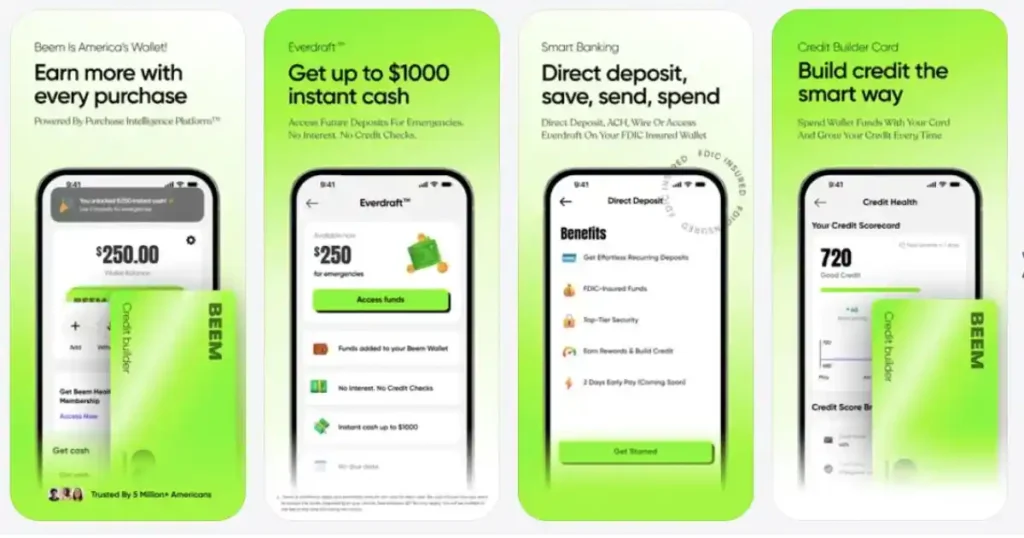
The question this article answers is specific and practical: if your income comes from tips, cash jobs, gig work paid in cash, informal employment, or any other non-traditional income channel, can Beem verify that income and approve you for an Everdraft™ cash advance?
The answer is yes, with conditions that are entirely within your control. This article explains what those conditions are, why they exist, how to meet them given your specific income situation, and what to do when your income is particularly complex or irregular. No vague reassurances. No fine print buried at the bottom. Every part of the answer, upfront.
Why This Question Matters More Than It Seems
An estimated 15 to 20 percent of American workers earn some or all of their income through channels that do not automatically appear in standard banking records. Tipped hospitality workers. Day laborers. Domestic workers. Independent contractors paid in cash. Freelancers whose clients pay by check rather than digital transfer.
For this population, standard income verification systems are not just inconvenient. They are exclusionary. A worker who earns $40,000 per year in cash tips but cannot prove that income to a lender is treated by the financial system as though they earn nothing. That exclusion keeps cash-income workers locked out of the tools that could most help them build financial stability. Beem’s approach was designed with this population explicitly in mind.
How Beem’s Income Verification Actually Works
AI-Driven, Not Rule-Based
Most financial products use rule-based income verification. The system checks whether your deposits match a specific pattern, such as two biweekly direct deposits from the same employer above a minimum threshold. If your deposits do not match that pattern, you fail verification regardless of your actual income level.
Beem’s income verification is AI-driven. Instead of comparing your deposits against a fixed template, it builds a probabilistic model of your income based on the full pattern of your account activity. It evaluates deposit frequency, timing, amounts, the relationship between deposits and subsequent spending, and the overall trajectory of your account balance over time.
What the AI Is Looking For
The system can identify income in patterns that rule-based verification would miss entirely. Irregular deposits of variable amounts made on a consistent schedule. Multiple small deposits per week that collectively indicate strong earnings. Deposits that correlate with spending behavior typical of working adults managing real financial obligations.
This means the quality of the income signal in your account matters more than the source of the income. A tipped worker who deposits cash tips every Monday and Thursday in amounts ranging from $120 to $300 presents a different kind of income signal than a salaried employee, but still a readable one, provided the pattern is sufficiently consistent and the deposit history is sufficiently deep. The practical implication is straightforward: Beem can accept cash and tip income, but only if that income is making its way into a connected bank account in a pattern the AI can read.

The Four Income Types This Article Addresses
Cash and tip income is not a single uniform category. It encompasses several distinct income situations that interact with Beem’s verification systems in slightly different ways. Here is how each type works.
Tipped Hospitality Workers
Servers, bartenders, hotel staff, valets, and similar workers earn a meaningful portion of their income in cash tips, either directly from customers or through tip pooling. For this group, the path to Everdraft eligibility runs entirely through the deposit habit.
A tipped worker who deposits cash tips consistently, whether daily, every shift, or twice a week, creates a deposit pattern Beem’s AI can model as income. The single most effective action is to begin depositing tips immediately and on a fixed schedule into the connected bank account. Some tipped workers also receive a small hourly paycheck from their employer. If this arrives as a direct deposit to the connected account, it contributes to the income signal even if it represents only a fraction of total earnings. The combination of a regular payroll deposit and consistent tip deposits creates a particularly strong signal.
Cash-Paid Day Laborers and Construction Workers
Day laborers, construction workers, landscapers, and moving crews are frequently paid in cash at the end of each job or workday. Their work may be full-time in hours but entirely informal in documentation. The challenge is that income arrives irregularly because work availability is irregular. A strong week produces several cash payments. A slow week produces few.
The path to verification is the same in principle as for tipped workers: deposit cash income consistently into the connected account. But day laborers benefit specifically from making their deposit timing as consistent as possible even when work availability is not. Depositing every Friday regardless of how much was earned that week creates timing regularity that helps the AI model understand the pattern even when amounts vary widely. Variable income with consistent deposit behavior is verifiable. Variable income with inconsistent deposit behavior is much harder to interpret.
Read: Loans for Freelancers and Gig Workers: Challenges and Real Options
Domestic Workers and In-Home Service Providers
House cleaners, nannies, babysitters, and elder care providers are frequently paid in cash or check by individual household employers. Their income may be consistent in hours and rate but entirely informal in structure. This group often has one significant advantage: ongoing client relationships that produce consistent weekly or biweekly income from the same sources.
A house cleaner who cleans four homes per week, receives $80 to $120 per home in cash, and deposits earnings every Friday has a highly readable income pattern. The deposit timing is consistent. The amount falls within a predictable range. The frequency is weekly. Beem’s AI can model this as stable, adequate income for advance eligibility. The key is prompt deposit after each payment rather than letting cash accumulate before banking it.
Informal Freelancers and Independent Service Providers
This category covers hair stylists who collect cash directly from clients, tutors paid by families, musicians paid at gigs, personal trainers, handymen, and others providing services outside any formal employment structure. Income for this group may arrive in many small, irregular payments throughout the week rather than in predictable daily or shift-based amounts.
A practical approach for informal freelancers is a fixed weekly deposit ritual. At the end of each week, count the week’s cash earnings and deposit the total as a single transaction. This creates one consistent weekly deposit rather than many small irregular ones, which can be easier for the income verification system to model accurately. The goal is pattern, not perfection.
The Deposit Habit: The Non-Negotiable Foundation
Across every income type covered above, one principle is non-negotiable: cash income must be deposited into a bank account to be visible to Beem’s verification system.
This is not a policy choice that Beem can waive for sympathetic circumstances. It is a technical reality of how financial verification works. Beem’s AI analyzes account data. Account data only contains transactions that moved through the account. Cash that never enters the banking system simply does not exist in the data.
Building a deposit habit is therefore the foundational action for every cash-income worker seeking Everdraft™ eligibility. Here is what that habit needs to look like.
Frequency: Deposit at minimum once per week. More frequent deposits, such as every two to three days, create a richer data pattern that is easier to model. Less frequent deposits, such as once per month, create a data-sparse pattern that is harder to assess confidently.
Consistency of timing: Deposit on fixed days of the week rather than whenever you get to the bank. A deposit that arrives every Monday is more predictable and therefore more readable than a deposit that arrives on a different day each week.
Completeness: Deposit your actual tip and cash income, not just a portion. Depositing $50 per week when you earn $500 creates a misleading signal that understates your actual income and produces a lower advance limit than your real earnings justify.
Persistence: Allow two to three months of consistent deposits to accumulate before expecting a strong eligibility assessment. The AI model improves with more data. Patience during the data accumulation period produces better outcomes than impatience.
What Happens if Your Income Is Genuinely Irregular
Some cash-income workers face genuine income irregularity that goes beyond seasonal variation. Day laborers in markets with erratic demand. Gig workers navigating platform algorithm changes. Independent contractors whose client base fluctuates significantly.
For these workers, Beem’s AI model is less able to produce a confident eligibility assessment, not because the income is insufficient, but because the pattern is too variable to model with confidence. The result may be an ineligibility determination or a low advance limit that does not reflect the worker’s better earning periods.
Two strategies help in this situation.
The first is period selection. If your income has strong periods and slow periods, initiating the Beem verification process during or after a strong period, when your deposit history reflects your higher earning capacity, produces a better initial assessment than initiating during a slow period.
The second is supplementation. If you have any formal income source in addition to cash income, such as a small payroll deposit from a part-time formal employment relationship, a government benefit payment, or any other regular electronic deposit, connecting the account that receives this formal income alongside your cash tip deposits strengthens the overall income signal significantly. A combination of formal and informal income deposits creates a more robust and readable pattern than either alone.
Connecting the Right Account: The Second Most Important Decision
After the deposit habit, the second most important decision is which bank account to connect to Beem. Connect the account where the most complete picture of your income lives. Not your oldest account. Not the account with the highest balance. The account where your income, all of it, is most consistently visible through deposits.
For workers who maintain both checking and savings accounts, the checking account is almost always the right choice, since income is more likely to deposit there and spending activity confirms the income pattern the AI is evaluating. Workers using neobanks like Chime, Current, or Varo for primary banking will find these accounts fully compatible with Beem. Neobank apps often make consistent mobile deposits easy to execute from anywhere, including after a late-night shift or a cash job that ends at an inconvenient time for traditional banking hours.
Read: Can You Send Beem Everdraft Money to Cash App in 2026? Here Is How
Conclusion
Cash income is real income. Tip income is real income. The financial system’s historical failure to recognize it as such is a systemic problem, not a reflection of its legitimacy. Beem’s AI-driven income verification is one of the few financial product architectures genuinely capable of recognizing cash and tip income for what it is, provided that income is being deposited into a connected bank account in a pattern the system can read.
The conditions for acceptance are not arbitrary. They are technical requirements that follow directly from how AI income modeling works, and they are entirely within the control of the worker who wants to meet them. Start the deposit habit today, maintain it consistently, and within two to three months Beem’s verification system will have exactly what it needs to give your cash income the recognition it has always deserved.
Frequently Asked Questions
Does Beem accept cash tip income for Everdraft eligibility?
Yes, provided tip income is deposited into the connected bank account on a consistent schedule. Cash tips deposited regularly, ideally multiple times per week, create a readable income signal the verification system can assess. Inconsistent or infrequent deposits reduce the clarity of the signal and may result in a lower advance limit.
Can day laborers and cash-paid construction workers use Beem?
Yes. Day laborers can qualify by depositing cash earnings consistently into the connected account on a fixed weekly schedule, such as every Friday, even when work availability and income amounts vary. Two to three months of consistent deposits typically produces a meaningful eligibility assessment.
What if I get paid in both cash and direct deposit?
A combination of cash deposits and direct deposit income creates a particularly strong income signal. Connect the account that receives both income types to give the AI the most complete view of your total earnings. Workers with both income types often qualify for higher advance limits than the direct deposit amount alone would support.
How much of my cash income should I deposit to maximize my Everdraft limit?
Deposit as much of your actual cash income as possible. The income model Beem builds is based on the deposits it can see. Depositing only a portion of actual earnings produces an assessment calibrated to that portion, not your full earning capacity. Full, consistent deposits produce the most accurate and favorable eligibility outcome.
How long does it take for Beem to verify cash job income?
Workers who deposit consistently multiple times per week may see a meaningful assessment in six to eight weeks. Workers who deposit once per week typically need two to three months of deposit history. Workers with particularly variable or infrequent deposits may need a longer history before the AI can produce a confident income model.