Key Summary
Your credit score plays a bigger role in your financial life than you think. Your credit score decides whether the bank approves your loan request, the interest rate they offer you, and the financial products they offer you. Among the many factors that decide your credit score, one of the most important and least understood factors is credit card utilization. Understanding the impact of credit card utilization on your credit score can help you make smarter financial decisions and maintain a healthier credit profile.
Credit utilization refers to the percentage of the total available credit that you’re using. For example, let’s assume that the total available credit across all cards is $10,000, and you’re using $4,000. Your utilization is 40%. This one factor can greatly impact your credit score, even if you’re making payments every month.
Lenders read utilization as a behavioral signal. High utilization suggests that a borrower leans heavily on credit to cover expenses, which raises perceived lending risk. Low utilization tells a different story: the borrower has access to credit but does not depend on it. Understanding how utilization works, how lenders interpret it, and how to manage it gives you direct control over one of the most actionable parts of your credit profile.
What Credit Card Utilization Means
Credit card utilization is the ratio of outstanding balances to total available credit. This is then expressed as a percentage. This is the figure that credit scoring systems use to determine the amount of reliance you have on borrowed funds.
The formula is as follows:
Current Balance / Total Credit Limit * 100
If you have a total credit limit of $15,000 and an outstanding balance of $4,500, your credit utilization is 30%.
Scoring models track utilization in two ways. Individual card utilization measures the balance on a single card against that card’s limit. Overall utilization looks at balances across all cards combined. Both matter.
Here is a practical example. Say you carry two credit cards:
Card A has a $6,000 limit and a $3,000 balance, resulting in an individual utilization of 50%. Card B has a $6,000 limit with a $600 balance, putting individual utilization at 10%. Your overall utilization is 30%, but Card A is flagging as high risk on its own.
Credit bureaus track both figures because individual card behavior can signal financial stress even when the overall number looks acceptable. Keeping balances low across every card, not just in aggregate, gives you the strongest credit profile.
Why Credit Utilization Matters for Your Credit Score
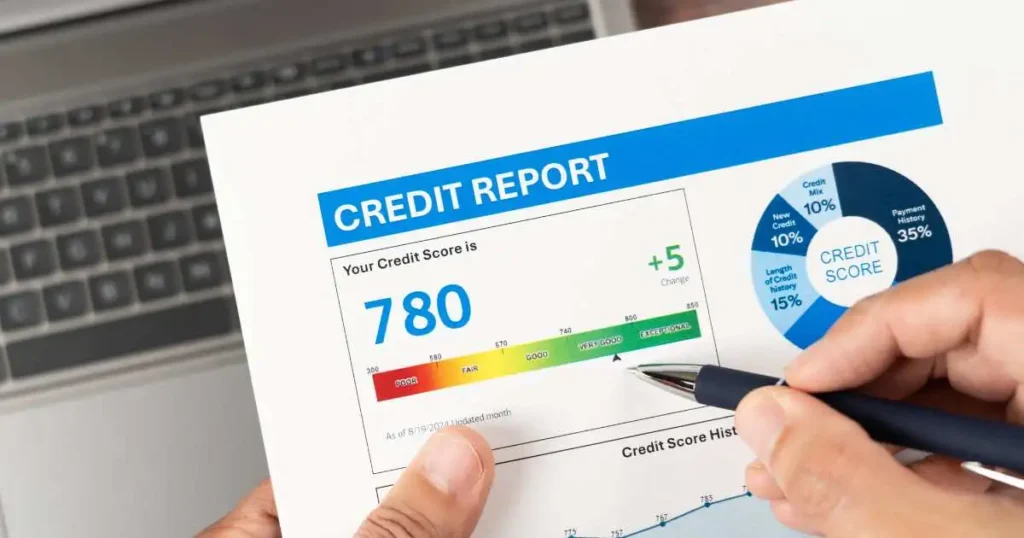
Credit utilization is the second most influential factor in most credit scoring models, sitting just behind payment history. FICO data confirms that utilization accounts for 30% of your total credit score. That means a cardholder with a perfect payment history can still carry a mediocre score simply because their balances run too high.
Lenders see this as a sign of financial stress. When you have been making consistent payments of 60% or 70% of your credit limit, it may be a sign that you are using credit cards to pay regular expenses, not emergencies. This increases the risk of default, and lenders are precisely factoring this in when they raise interest rates.
One interesting aspect of credit scores that often surprises people is that you do not have to be delinquent on a credit account for it to negatively affect your credit score. Credit card companies report credit information to credit reporting agencies at the close of each billing cycle before you make a payment. Therefore, when you charge $3,500 on your credit card one month and make your payment on time, the credit reporting agency will have already recorded a balance of $3,500 on their records, even though you made your payment on time. This will lower your credit score.
Recommended Credit Utilization Levels
Financial experts recommend keeping credit utilization below 30% of your total available credit. At that level, you demonstrate responsible usage without appearing dependent on borrowed money. For a cardholder with a total credit limit of $10,000, this means that balances must be below $3,000 at any given time.
Being below 30% is a good baseline, but not the maximum. People with excellent credit ratings, above 750, often aim to keep it below 10%. This is a strong indicator to lenders that you have a lot of credit available but do not need to use it. Credit scoring models generally interpret utilization ranges like this:
A score below 10% reflects excellent credit management. Between 10% and 30% reflects healthy and responsible usage. Between 30% and 50% introduces a moderate risk that begins to affect scores. Above 50% signals a higher perceived financial risk to lenders.
Individual card utilization follows the same logic. A cardholder with a 20% overall utilization rate, but one card maxed out at 95%, can still take a scoring hit because of that single card. Spreading balances across cards or paying down the highest-utilization cards first addresses both measures simultaneously.
Also Read: What Are the Most Popular Credit Cards for Students in 2026?
How High Utilization Can Hurt Your Credit Score
High credit utilization damages your score through several overlapping mechanisms, and the effects compound quickly when balances climb.
The most direct impact is scoring model penalization. Once utilization crosses 30%, most models begin reducing the score incrementally. Crossing 50% accelerates that reduction. A borrower carrying $8,000 on a $10,000 credit limit at 80% utilization can see score drops of 50 to 100 points compared to where they would be at 10% utilization, even with identical payment history.
High utilization also affects loan approval outcomes. Lenders reviewing a credit application see not just the score but the utilization detail behind it. A borrower applying for a car loan with 70% credit card utilization may receive approval at a significantly higher interest rate or be denied outright because the lender interprets the balance level as a sign of financial strain.
Maxed-out cards create an additional problem. A card at or near its limit signals to scoring models that the borrower has exhausted the account’s available resources. Even one maxed card on a profile with otherwise low utilization can meaningfully suppress the score.
The good news is that utilization responds faster to corrective action than almost any other credit factor. Pay down a balance today, and the improvement shows up as soon as the issuer reports the new balance, which typically happens within 30 to 45 days. Unlike late payments, which stay on your report for 7 years, high-utilization damage reverses the moment balances drop.
Strategies to Keep Credit Utilization Low
Keeping utilization low does not require dramatic financial changes. Consistent small habits produce most of the results.
Pay balances more than once a month
Making a mid-cycle payment before the statement closing date reduces the balance your issuer reports to the bureaus. A cardholder who spends $2,000 in a billing cycle and pays $1,500 before the statement closes reports a $500 balance instead of $2,000, substantially reducing utilization on paper.
Request higher credit limits
If your spending stays constant but your credit limit increases, your utilization ratio drops automatically. A $2,000 balance on a $5,000 limit is 40% utilization. The same $2,000 balance on an $8,000 limit drops to 25%. Most issuers allow limit increase requests online or by phone, and a hard inquiry is not always required for existing cardholders.
Spread purchases across multiple cards
Concentrating all spending on one card raises that card’s utilization, even if overall utilization stays manageable. Distributing spending keeps every card’s ratio lower.
Pay before the statement closing date, not just the due date
Most people know to pay by the due date to avoid interest charges. Fewer people know that paying before the statement closes reduces the balance that is actually reported. Those are two different dates and two different financial outcomes.
Keep an eye on your credit reports
You can check your credit reports once a month for free at AnnualCreditReport.com and gain insight into what the credit bureaus are seeing. Mistakes in reported balances or credit limits can cause your utilization ratio to be higher than it really is, hurting your score even if you have not overdrawn your accounts.
Where Beem Fits
Unexpected expenses push credit card balances higher faster than almost anything else. A $1,200 car repair, a medical bill, or a sudden travel expense lands on a credit card because no other option exists at the moment. The balance spikes, utilization climbs, and the credit score takes a hit at precisely the wrong time.
Beem provides flexible access to short-term funds that help you handle those moments without routing everything through a credit card. Rather than adding a large balance to a credit card and seeing your utilization rates rise accordingly, you simply pay the expense through Beem while maintaining your current credit card balances.
You are maintaining good habits with your credit cards, and if a single expense goes awry, your financial safety net will ensure that your balance management has not been for naught.
Also Read: How Does a 0% Intro APR Credit Card Work?
When to Monitor Your Credit Utilization
Checking your utilization at strategic moments gives you the clearest picture and the most opportunity to act before it matters most.
Before approving a loan or a new credit card, lenders pull your credit at the time of application. Reviewing and reducing utilization in the 60 to 90 days before you apply can meaningfully improve both approval odds and the rate you receive.
After making a large purchase, a single card’s utilization can move into a range that affects your score. Checking your balance immediately after lets you decide whether to make an early payment before the statement closes.
During monthly financial reviews, building a monthly habit of reviewing all card balances against their limits takes five minutes and catches creeping utilization before it becomes a problem.
After any credit limit change, a limit increase automatically lowers your utilization. A limit decrease raises it. Either change is worth reviewing immediately to understand how your ratio shifted.
Final Verdict on Impact of Credit Card Utilization on Your Credit Score
Credit card utilization is perhaps the most actionable aspect of your credit score. While payment history takes months of good behavior to recover from a single missed payment, credit utilization can improve in your favor in just a single billing cycle by simply paying down balances.
The 30% rule is not a rule to be exceeded; it is a rule to be started with. Those who consistently keep their credit utilization ratio below 10% on all credit cards demonstrate financial prudence and unlock better loan deals, lower interest rates, and more credit availability.
The habits that support low utilization are not complicated. Pay balances early and often. The request limit increases when your account history supports it. Spread spending across cards. Check your reports regularly. Each of these actions is simple on its own. When combined and maintained consistently, they produce a credit profile that reflects financial discipline, which lenders value most.
FAQs About How Credit Card Utilization Impacts Your Credit Score
What is credit card utilization?
Credit card utilization measures the percentage of your available credit you are currently using. Divide your total credit card balances by your total credit limits and multiply by 100. Lenders use this ratio to gauge how heavily you rely on borrowed money. Lower utilization signals stronger financial management and typically supports a higher credit score.
What utilization percentage is best for credit scores?
Most experts recommend staying below 30%, but borrowers with excellent credit scores usually keep utilization under 10%. That lower range indicates to lenders that you have significant credit access and rarely rely on it. Maintaining a consistently low ratio over time carries more weight than hitting a good number once.
Does high utilization hurt your credit score even if you pay on time?
Yes. Payment history and utilization are separate scoring factors. You can pay every statement in full and on time while still carrying high balances as of the reporting date, which raises your utilization and lowers your score. Managing balances before the statement closes addresses this gap.