
Key Summary
When money gets tight, the decision that matters most is not whether you can access funds. It is how those funds will affect your financial life after the crisis passes. Many households facing temporary shortfalls are presented with two broad paths: short-term cash solutions designed to bridge a timing gap, or long-term debt instruments that stretch repayment over months or years.
At first glance, long-term debt can appear more manageable because payments are smaller and spread out. Short-term cash solutions may feel more intense because repayment happens sooner. However, the better option depends entirely on the nature of the problem you are solving.
The core question is not convenience. It is alignment. Are you addressing a temporary liquidity gap, or are you solving a structural income imbalance? The right tool matches the right problem. Using the wrong tool can often create more damage than the original crisis itself.
Understanding the Nature of the Financial Gap
Before choosing between short-term cash and long-term debt, it is critical to define what kind of gap exists. Most financial emergencies are not permanent collapses. They are timing disruptions.
A car repair, a medical bill, a rent shortfall before payday, or a temporary reduction in hours are examples of short-term compression. Income still exists. The issue is access within the correct window. In these cases, the objective is to restore liquidity quickly and return to normal.
Long-term debt, by contrast, is more appropriate when the gap reflects an ongoing structural issue. If monthly expenses consistently exceed income, stretching repayment over time may temporarily relieve pressure but does not solve the imbalance. It may, in fact, deepen it by adding interest costs.
The first decision, therefore, is diagnostic. Is the crisis temporary or structural? The answer determines everything that follows.
What Short-Term Cash Solutions Are Designed to Do
Short-term cash solutions exist to close immediate timing gaps without extending financial strain beyond the crisis window. They are tools of stabilization, not expansion.
These solutions typically focus on speed, clarity, and containment. The goal is to resolve an urgent obligation before it triggers penalties, service interruptions, or compounding stress.
Core Characteristics of Short-Term Cash
- Immediate access
Short-term solutions are built around speed. When rent is due or utilities face shutoff, waiting days for underwriting review is not practical. Fast access prevents escalation before it begins. - Defined repayment expectations
Short-term liquidity is meant to be temporary. The repayment window aligns closely with the next income cycle or predictable cash inflow. This containment prevents the obligation from becoming a long-term fixture. - Minimal compounding costs
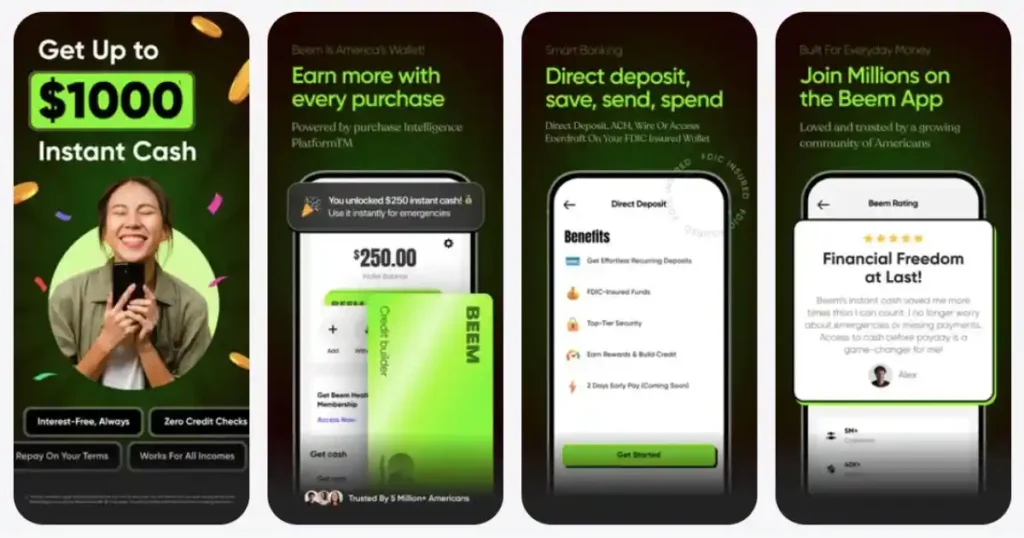
Structured solutions designed for emergencies focus on transparency. For example, Beem’s Everdraft™ provides up to $1,000 in instant cash with no interest and no credit checks, functioning as a short-term bridge rather than a revolving debt product.
The strength of short-term cash lies in its ability to interrupt escalation. It restores balance quickly and exits the system just as quickly when used properly.
Read: Reprise Debt Consolidation Loan: How to Consolidate Debt with Reprise
What Long-Term Debt Is Designed to Do
Long-term debt serves a different purpose. It spreads repayment across extended periods, reducing immediate payment intensity but increasing total cost over time.
This model works well for durable investments such as homes, vehicles, or education, where the asset delivers long-term value and income potential. It can also provide structured relief when a large expense cannot realistically be repaid in one or two cycles.
Structural Features of Long-Term Debt
- Lower immediate payment burden
Spreading repayment across months or years reduces short-term cash strain. This can feel manageable during high-pressure moments. - Interest accumulation
Most long-term debt carries interest. Even modest rates increase the total repayment significantly. What begins as a shortfall becomes a more expensive obligation over time. - Extended financial footprint
Debt lingers. Monthly obligations continue long after the original crisis is forgotten. This can reduce future flexibility and increase vulnerability to subsequent shocks.
Long-term debt is not inherently negative. It becomes problematic when used to solve short-term timing issues that could have been resolved without extending the repayment horizon.
The Hidden Cost of Solving the Wrong Problem
One of the most common mistakes during financial crises is using long-term borrowing to fix short-term compression. This mismatch creates avoidable damage.
If a $600 shortfall is resolved with a multi-year high-interest loan, the total repayment may double or triple over time. The household stabilizes today but sacrifices future flexibility. Interest replaces relief.
Conversely, attempting to resolve a structural income deficit with short-term cash creates repeated cycles. The problem reappears next month and the following month. This pattern leads to dependency rather than resolution.
The cost of a solution is not only monetary. It includes stress, reduced optionality, and long-term stability. Alignment between the problem and the tool minimizes all three.
Emotional Decision-Making vs Strategic Alignment
Financial pressure narrows thinking. Urgency makes the fastest or easiest option appear correct. Under stress, many individuals prioritize immediate relief over long-term consequences.
This is where discipline matters. A few minutes of evaluation can prevent months or years of unnecessary repayment.
Questions That Clarify the Choice
- Is this expense tied to a one-time event, or does it reflect an ongoing imbalance?
- Can repayment occur comfortably within the next income cycle?
- Will this solution add interest that compounds beyond the crisis window?
- Does this option preserve or reduce flexibility over the next six months?
Answering these questions honestly transforms reactive borrowing into strategic problem-solving.
When Short-Term Cash Is Often the Better Option
Short-term liquidity tends to outperform long-term debt when the crisis is clearly temporary and repayment capacity exists soon.
Common examples include:
- Rent due just before payday
- Emergency car repairs required to continue working
- Medical copays or urgent procedures
- Temporary income gaps caused by shift reductions
- Utility shutoff notices with immediate deadlines
In these scenarios, extending the obligation over years introduces unnecessary cost. A contained solution resolves the disruption cleanly.
Structured short-term access like Everdraft™ can provide immediate relief without compounding interest or credit checks, which reduces secondary risk during already stressful periods.
When Long-Term Debt May Be More Appropriate
There are situations where long-term repayment is rational and responsible.
If the expense is large relative to income and cannot realistically be repaid within one or two cycles, spreading payments may protect stability. Examples include major medical procedures without insurance coverage or necessary large-scale home repairs.
Long-term debt can also be appropriate when the borrowed funds generate value or income over time. Education loans and business investments fall into this category when evaluated carefully.
The difference lies in proportionality and sustainability. Long-term debt should support capacity, not merely delay discomfort.
Comparing Impact: Short-Term vs Long-Term
Below is a structured comparison highlighting how each option affects stability.
| Factor | Short-Term Cash Solution | Long-Term Debt |
| Speed of Access | Immediate or near-immediate | May require underwriting |
| Interest Accumulation | Often minimal or none (depending on structure) | Typically ongoing interest |
| Financial Footprint | Temporary | Extended over months or years |
| Emotional Impact | Quick relief, faster resolution | Relief today, lingering obligation |
| Flexibility After Crisis | Restored quickly | Reduced due to ongoing payments |
| Best For | Timing gaps | Structural or large-scale needs |
The safer choice depends not on preference, but on precision. Matching duration to duration preserves balance.
How Repayment Speed Shapes Financial Recovery
One factor that often goes overlooked when comparing short-term cash solutions to long-term debt is how repayment speed influences recovery momentum. The faster a financial disruption is resolved, the sooner emotional and financial stability return. Short-term solutions, when aligned correctly with income timing, allow households to reset quickly rather than carry the reminder of crisis month after month.
When repayment lingers, even at manageable amounts, it quietly consumes capacity. Monthly obligations reduce flexibility for savings, investing, or absorbing the next unexpected event. The crisis may technically be over, but its shadow remains in the form of recurring payments. Over time, this reduces resilience because future disruptions stack on top of unresolved past obligations.
Rapid repayment compresses the impact window. Once the short-term obligation is cleared, the household regains full control over its income flow. This restoration of capacity is not only mathematical; it is psychological. Momentum returns faster when obligations disappear rather than persist.
Comparing Short-Term Cash vs Long-Term Debt
Choosing between short-term liquidity and long-term borrowing becomes easier when key differences are viewed side by side. The table below highlights how each option typically behaves across critical crisis factors.
| Factor | Short-Term Cash Solution | Long-Term Debt Product |
| Repayment Duration | Designed to be repaid quickly | Structured over months or years |
| Interest Impact | Often structured to avoid compounding interest | Typically accrues interest over time |
| Approval Process | Faster access, minimal friction | May require underwriting and credit checks |
| Credit Report Impact | May not affect long-term credit profile | Usually appears on credit report |
| Flexibility After Repayment | Capacity restored quickly | Ongoing monthly obligation reduces flexibility |
| Best Use Case | Temporary timing gaps | Structural or longer-term income issues |
Insight
The safest solution is rarely defined by speed alone or by the lowest monthly payment. It is defined by alignment. When the duration of the solution matches the duration of the disruption, financial recovery tends to be cleaner and more controlled.
Cash Flow Forecasting as a Decision Tool
Choosing between short-term cash and long-term debt becomes clearer when cash flow forecasting is involved. A simple projection over the next sixty to ninety days often reveals whether repayment is realistic within a compressed window.
If expected income comfortably covers both regular obligations and short-term repayment, a bridge solution may be appropriate. If projected cash flow remains strained even after the emergency passes, a longer repayment horizon may be more sustainable.
Forecasting removes emotion from the equation. It turns urgency into analysis. Instead of asking “What stops the pain fastest?” the question becomes “What resolves this without constraining the next quarter?”
Cash flow visibility also prevents overcorrection. Sometimes the crisis feels larger than it is. A short, disciplined review may show that the gap is manageable without extending repayment for months or years.
Behavioral Implications Over Time
The tool chosen during crisis often shapes future financial behavior. Individuals who rely repeatedly on long-term debt to solve temporary problems may normalize extended repayment cycles. Over time, debt becomes embedded in baseline living costs.
Conversely, those who treat short-term liquidity as a bridge rather than a lifestyle tool often maintain stronger boundaries. The expectation becomes containment and exit rather than rollover and extension.
Behavioral patterns matter because financial life is cumulative. Decisions repeat. Habits solidify. The safer long-term position is one where temporary disruptions remain temporary and do not evolve into ongoing obligations.
Strategic use of structured short-term liquidity reinforces this containment mindset. It supports the idea that crises are windows, not permanent states.

Cost of Inaction vs Cost of Misalignment
Sometimes the comparison is framed incorrectly. It is not only short-term versus long-term. It is also action versus delay. Waiting too long to address a liquidity gap can increase total cost significantly through late fees, penalty interest, and service interruptions.
However, acting without alignment also carries cost. Choosing a multi-year obligation for a two-week problem introduces unnecessary financial weight.
The objective is a proportional response. Resolve quickly, but resolve correctly. The cheapest option is rarely the one with the lowest monthly payment. It is the one that contains the disruption within the smallest possible time frame.
In many short-term emergencies, structured, interest-free instant access such as Everdraft™ offers a contained path that avoids compounding long-term cost. In other cases, extended repayment may be justified. The critical factor is whether the solution matches the duration of the problem.
Final Perspective: Duration Determines Safety
There is no universal answer to whether short-term cash solutions or long-term debt are better. Safety is determined by alignment between the duration of the disruption and the duration of the obligation created to solve it.
Short-term disruptions require short-term bridges. Structural imbalances require structural adjustment. When the repayment timeline mirrors the crisis timeline, recovery is clean and controlled.
Financial crises test judgment under pressure. The calmer the evaluation, the safer the outcome. Matching tools to problems preserves stability, protects future flexibility, and prevents temporary stress from becoming permanent strain.
Download the Beem app to access emergency cash quickly when you need it most.
Get fast support with a simple, secure, and stress-free experience.
Frequently Asked Questions
1. Is short-term cash always better than long-term debt during a crisis?
Not always. Short-term cash solutions work best when the financial disruption is temporary and repayment can happen quickly. Long-term debt may be more appropriate when the crisis reflects a structural income issue that cannot be resolved within a short window. The key is matching the repayment timeline to the actual duration of the problem.
2. How do I know if a liquidity gap is short-term or structural?
A short-term gap is typically caused by timing mismatches, such as a bill due before the next paycheck or a one-time emergency expense. A structural issue involves ongoing income shortfalls that extend beyond one or two pay cycles. Reviewing expected income and expenses over the next 60–90 days usually clarifies which category applies.
3. Can long-term debt cause more problems later?
It can, especially if repayment stretches beyond the crisis itself. Monthly installment payments reduce future flexibility and may increase total cost due to interest. If used for a short-term timing issue, long-term debt can quietly prolong financial strain.
4. What makes a short-term cash solution safer?
Safety depends on structure and transparency. Solutions without compounding interest, hidden fees, or long approval delays reduce escalation risk. When repayment is clear and manageable within a short window, the financial footprint remains contained.
5. Does using short-term liquidity hurt credit?
It depends on the product. Traditional loans often appear on credit reports and affect utilization and debt-to-income ratios. Some structured short-term cash solutions are designed to avoid credit checks and long-term reporting, which can help preserve borrowing capacity for future needs.