
Key Summary
When money becomes tight, the greatest threat is not always the shortage itself. It is the decisions made under pressure. Financial stress narrows thinking, accelerates urgency, and often pushes people toward solutions that feel relieving in the moment but create deeper strain later. Panic decisions rarely solve the root issue. They simply move the pressure forward in time.
Avoiding panic is not about pretending everything is fine. It is about creating structure during instability. When cash is limited, clarity matters more than optimism. A calm response does not eliminate urgency, but it prevents escalation that is caused by reaction rather than strategy.
Understanding how panic forms, how it influences decisions, and how to slow it down allows financial pressure to remain contained. Tight money does not have to become long-term damage.
Why Financial Pressure Distorts Decision-Making
Financial pressure affects the brain differently than ordinary stress. Scarcity creates a cognitive narrowing effect. Attention collapses around the most immediate threat, while secondary consequences become blurred. This is why people often choose the fastest solution available instead of the most sustainable one.
Under pressure, the desire for relief becomes stronger than the desire for optimization. High-interest borrowing feels tolerable if it eliminates anxiety instantly. Long-term contracts are signed quickly because they promise stability, even if they introduce rigidity later. The mind prioritizes emotional calm over financial efficiency.
Recognizing this distortion is the first step toward correcting it. Tight money demands discipline, but it also demands awareness. When urgency is acknowledged rather than obeyed, better decisions follow.
The Hidden Cost of Fast Relief
Not all fast solutions are harmful. However, many carry hidden costs that reveal themselves after the immediate stress fades. These costs often appear in the form of:
- Compounding interest
- Late fees layered onto balances
- Automatic renewals triggered during distraction
- Long-term commitments entered without review
The common thread is timing. Quick relief rarely provides room for evaluation. The solution may resolve today’s discomfort while quietly creating next month’s strain.
This does not mean delay is always the answer. It means speed must be paired with clarity. A decision made in five minutes should still be understood five months later. When pressure is high, transparency matters more than convenience.
Slowing the Moment Before Acting
Avoiding panic does not require extended reflection. Often, a short pause is enough to change the trajectory of a decision. Even fifteen minutes of structured review can interrupt impulsive action.
Start by identifying the actual size of the gap. Write down the obligation, the due date, and the exact amount required. Then list available resources: current balance, incoming income, and potential short-term options. When numbers are written clearly, the threat often becomes more defined and less abstract.
Defined problems are easier to solve than vague fears. Panic thrives in ambiguity. Clarity reduces emotional intensity and improves strategic thinking.
Prioritizing Impact, Not Emotion
When cash is limited, emotional urgency can distort prioritization. The loudest bill is not always the most dangerous one. A creditor making repeated calls may feel more threatening than a silent but high-impact obligation such as housing or transportation.
Prioritization should follow structural stability, not emotional discomfort. Housing, utilities, transportation for income, and essential insurance usually come first. Secondary obligations can often be negotiated or deferred temporarily.
Structured prioritization prevents scattered payments that fail to stabilize anything. When one high-impact obligation is fully secured, pressure decreases. Partial payments across multiple accounts rarely produce the same protective effect.

Avoiding Long-Term Damage for Short-Term Relief
One of the most common panic decisions involves converting short-term liquidity problems into long-term debt without a clear repayment path. High-interest borrowing, long installment agreements, or asset liquidation may solve today’s gap while creating months of additional pressure.
Before committing to any financial agreement, three questions should be answered clearly:
- What is the total cost over time, not just today’s payment?
- What is the exact timeline for repayment?
- What happens if income does not recover as quickly as expected?
These questions shift the focus from emotional relief to structural sustainability. A short-term solution should not become a long-term liability unless absolutely necessary.
Creating a Micro-Plan for the Next 30 Days
When money is tight, thinking about the entire year feels overwhelming. Panic often emerges from trying to solve everything at once. A micro-plan narrows the focus to the next thirty days.
Identify essential obligations due within that window. Map income arrival dates. Determine where timing gaps appear. Address those gaps directly rather than catastrophizing future uncertainty.
Thirty-day containment prevents emotional spiraling. Once stability is restored for the immediate cycle, longer-term adjustments can follow. Stability compounds when it is built in manageable increments.
The Role of Structured Emergency Liquidity
Sometimes, despite careful prioritization and planning, the timing gap remains. In these moments, structured and transparent access to emergency liquidity can prevent escalation without compounding strain.
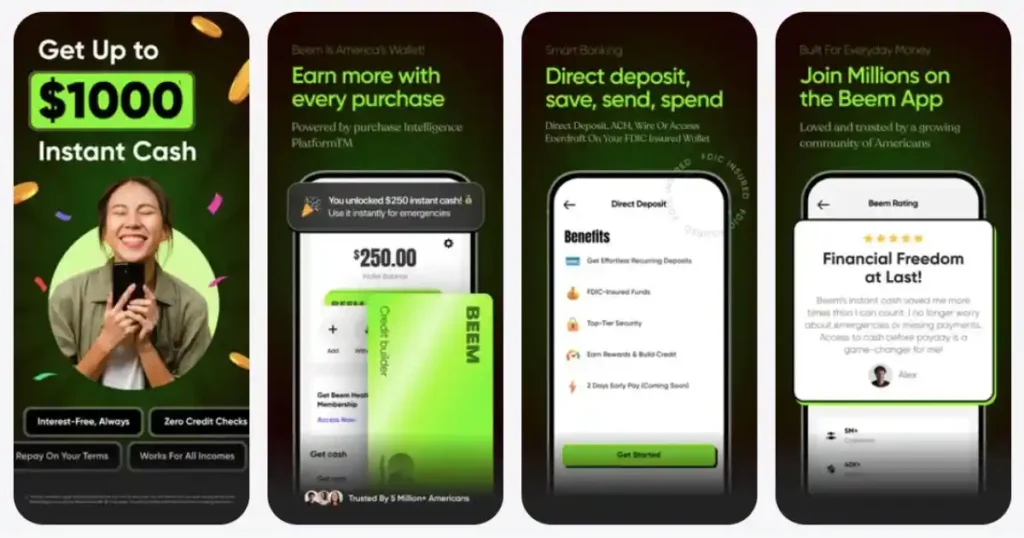
Solutions such as Beem’s Everdraft™ are designed specifically for short-term gaps, offering instant access to up to $1,000 without interest and without credit checks. The purpose is stabilization, not prolonged borrowing. When used responsibly, immediate liquidity closes the timing window before penalties attach or stress-driven decisions multiply costs.
The key distinction lies in structure. Emergency tools that avoid compounding interest and hidden escalation protect the user from turning temporary compression into extended financial damage. Liquidity should serve as a bridge, not a trap.
Panic vs. Structured Response During Financial Stress
Financial pressure does not automatically lead to damage. The outcome often depends on whether decisions are reactive or structured. The comparison below highlights how different responses influence long-term stability.
| Situation | Panic Response | Structured Response | Long-Term Outcome Difference |
| Bill Due Before Paycheck | Accept first high-interest loan offer | Quantify gap and explore low-cost liquidity bridge | Lower total cost and preserved credit health |
| Multiple Overdue Notices | Make small partial payments everywhere | Fully stabilize highest-impact obligation first | Prevents major penalties and housing risk |
| Unexpected Expense | Ignore until next paycheck | Address immediately to avoid compounding fees | Reduces total financial burden |
| Emotional Stress | Decide quickly to eliminate anxiety | Pause, review numbers, compare options | Improves clarity and reduces regret |
| Short-Term Cash Gap | Convert to long-term revolving debt | Use structured short-term liquidity tool | Contains crisis within short window |
Emotional Control Is a Financial Skill
Financial discipline is often framed as budgeting or saving. Yet emotional regulation during stress is equally critical. Panic decisions usually occur when anxiety outruns structure.
Practicing delayed response, structured prioritization, and transparent review transforms crisis moments into controlled interventions. Money pressure does not disappear instantly, but the response becomes measured rather than reactive.
Emotional control protects credit, income, and relationships. It preserves long-term options. In tight moments, the calm decision is often the most cost-effective one.
Building Anti-Panic Systems Before the Next Shortage
Avoiding panic in one crisis is valuable. Preventing it in the next is transformative. Systems reduce emotional intensity because they eliminate uncertainty about what to do.
These systems may include:
- Maintaining clear visibility of recurring obligations
- Creating small liquidity buffers over time
- Knowing which expenses are non-negotiable
- Understanding available emergency tools in advance
Preparation reduces improvisation. Improvisation increases emotional volatility. When the response plan already exists, execution becomes mechanical rather than reactive.
Warning Signals That You’re Slipping Into Reactive Mode
When money feels tight, the shift from strategic thinking to reactive behavior can happen quietly. Recognizing early warning signals helps interrupt that shift before it produces financial damage. Panic rarely announces itself directly. It shows up in behavior.
- You are avoiding looking at your full account balance
Avoidance is a common stress response. When you stop reviewing balances clearly, you increase uncertainty and reduce your ability to make informed decisions. Visibility may feel uncomfortable in the moment, but clarity lowers anxiety over time and prevents surprises. - You are prioritizing whoever contacts you most aggressively
Urgent phone calls, emails, or text reminders can create emotional pressure. However, frequency of contact does not equal importance. Structural obligations such as housing and utilities typically carry greater long-term consequences than loud collection attempts. - You are focusing on immediate emotional relief instead of total cost
If the primary thought is “I just need this to go away,” that is a signal to pause. Sustainable solutions require understanding long-term implications. Relief that ignores structure often produces future strain. - You are making commitments without calculating repayment timelines
Any financial agreement made during tight periods should include a clear repayment path. If repayment depends on optimistic assumptions rather than confirmed income timing, the risk of escalation increases.
Financial Triage: Stabilizing the Situation Methodically
During a cash shortage, thinking in terms of triage can be helpful. Medical triage prioritizes the most critical interventions first. Financial triage applies the same principle to obligations.
- Stabilize core infrastructure first
Housing, utilities, transportation tied to income, and essential insurance protect daily functioning. These obligations preserve stability and should be addressed before discretionary accounts or lower-impact balances. - Pause discretionary leakage immediately
Temporary suspension of non-essential spending, including subscriptions or convenience purchases, increases liquidity quickly. Even small reductions create breathing room during tight windows. - Communicate early with flexible creditors
Proactive outreach before missed payments often opens negotiation pathways. Extensions, adjusted due dates, or structured plans are more accessible before accounts become delinquent. - Isolate the exact funding gap
Precision matters. Calculate the precise amount required to stabilize essential obligations rather than estimating broadly. Defined gaps are easier to bridge responsibly.
Understanding Short-Term vs. Structural Financial Stress
Not all cash shortages are the same. Differentiating between temporary timing compression and structural imbalance prevents misapplied solutions.
Short-Term Timing Gaps
Timing gaps occur when income is predictable but misaligned with obligations. A repair expense before payday or a bill clustering earlier than expected creates compression. These situations typically require temporary liquidity support rather than fundamental lifestyle changes.
Structured short-term tools, small buffers, or income timing adjustments are appropriate responses. The goal is containment, not overhaul.
Structural Income-Expense Imbalance
Structural stress appears when recurring expenses consistently exceed income. In this case, liquidity tools may relieve immediate pressure but do not solve the underlying imbalance. Expense reduction, income adjustments, or longer-term restructuring are required.
Rebuilding Stability After the Pressure Window Closes
Avoiding panic during a crisis is only the first step. Once immediate pressure is resolved, reinforcing stability prevents recurrence.
Conduct a Post-Crisis Review
After the situation stabilizes, review what triggered the shortage. Was it timing, unexpected expense clustering, or insufficient visibility? Reflection converts experience into prevention. The goal is not self-criticism, but pattern recognition.
Strengthen Visibility Systems
Clear tracking of due dates, recurring expenses, and income cycles reduces future uncertainty. Visibility lowers emotional intensity during the next disruption because the numbers are already familiar.
Gradually Build Liquidity Buffers
Even small incremental savings contribute to resilience. Building buffers does not happen overnight, but incremental consistency reduces dependence on reactive decisions over time.
Conclusion: Calm Preserves More Than Cash
When money is tight, panic feels justified. Deadlines are real. Consequences are tangible. However, panic decisions often create more damage than the shortage itself.
Avoiding panic is not about denial. It is about structure. Clear prioritization, short-term planning, and transparent liquidity options contain disruption before it multiplies. Fast decisions are not inherently wrong, but they must be informed, not emotional.
Cash shortages test discipline, but they also reveal resilience. The goal is not to eliminate stress entirely. It is to prevent urgency from rewriting long-term stability. Calm, structured action costs less than reactive relief almost every time.
Download the Beem app to access emergency cash quickly when you need it most.
Get fast support with a simple, secure, and stress-free experience.
Frequently Asked Questions: Avoid Panic
1. Why do people make worse financial decisions when money is tight?
When money is tight, stress levels rise and cognitive bandwidth narrows. This scarcity effect causes the brain to focus on immediate relief rather than long-term consequences. As a result, people may accept unfavorable terms, overlook fees, or make rushed commitments just to eliminate short-term anxiety. Recognizing this psychological pattern helps interrupt reactive decision-making before it causes deeper financial strain.
2. How can I tell if I’m about to make a panic decision?
A panic decision usually feels urgent, emotionally charged, and relief-focused rather than outcome-focused. If you are prioritizing speed over understanding total cost, or if you feel pressure to “just fix it now” without reviewing terms, that is a warning sign. Taking even a brief structured pause to review numbers and consequences often changes the direction of the decision.
3. Is using emergency cash access better than using a credit card during a crisis?
It depends on structure and cost. High-interest credit cards can resolve immediate gaps, but often accumulate interest quickly if not repaid immediately. Structured emergency liquidity tools designed for short-term stabilization, particularly those without interest or hidden fees, can prevent escalation without creating long-term compounding pressure. The key is matching the tool to the timing gap without expanding the financial footprint of the crisis.
4. What should I prioritize first when cash is limited?
Prioritization should focus on preserving stability. Housing, utilities, transportation tied to income, and essential insurance typically come first because they protect core functioning. Secondary obligations may be negotiable or delayed temporarily. Stabilizing high-impact expenses before addressing lower-impact ones prevents cascading consequences.
5. How can I prevent panic decisions in the future?
Prevention comes from preparation. Maintaining visibility into due dates, understanding recurring expenses, building even modest liquidity buffers, and knowing available emergency options in advance reduce emotional intensity when pressure arises. Systems reduce improvisation, and reduced improvisation lowers the likelihood of reactive decisions that create long-term damage.