
Key Summary
When cash becomes limited, financial clarity becomes more important than financial optimism. During stable periods, most households operate on autopilot. Bills are paid on schedule, subscriptions renew automatically, and discretionary spending blends into routine. However, when liquidity tightens, every outgoing dollar requires intention. What once felt manageable now demands structured evaluation.
Limited cash does not automatically signal financial collapse. In many cases, it reflects temporary compression caused by timing mismatches, unexpected expenses, or short-term income disruption. The danger lies not in the shortage itself, but in misallocation during the shortage. Poor prioritization can turn a contained situation into cascading penalties, credit damage, and prolonged instability.
Effective prioritization is a protective skill. It shields core infrastructure, preserves earning capacity, and prevents compounding costs. The objective during limited-cash periods is not to maintain lifestyle continuity. It is to preserve structural stability. With discipline and clarity, most short-term shortages can be managed without long-term damage.
1. Separate Essential Infrastructure From Discretionary Spending
The first step in prioritizing expenses is drawing a firm boundary between essential infrastructure and discretionary enhancements. This separation removes ambiguity and accelerates decision-making. Without it, emotional attachment to certain expenses can distort judgment during tight financial periods.
Essential infrastructure includes housing, utilities, food, transportation tied to employment, and basic insurance. These expenses protect safety, health, and income continuity. If interrupted, the consequences are severe and often escalate quickly. A missed rent payment may trigger late fees or eviction proceedings. A lapsed utility payment can result in service shutoff and reconnection charges. These are not inconveniences. They are destabilizers.
Discretionary spending includes entertainment subscriptions, dining out, premium app upgrades, shopping beyond necessity, and lifestyle enhancements. While these expenses improve quality of life, they do not protect survival or income. During cash compression, discretionary spending must pause without negotiation. Removing these items from the decision stack simplifies prioritization and directs limited funds toward structural protection.
Clarity in categorization reduces hesitation. When infrastructure is secured first, recovery remains possible. When discretionary spending competes with essential obligations, escalation becomes likely.
2. Evaluate Each Expense Based on Consequence
Once essential and discretionary expenses are separated, the next step is consequence analysis. Every bill should be evaluated not by habit, but by downstream impact. Some obligations carry immediate penalties. Others tolerate brief delay without significant harm.
Begin by asking a simple but powerful question: What happens if this is not paid this week? If the answer involves eviction, service interruption, loss of income, or credit damage, the expense rises to the top. If the answer involves inconvenience or temporary discomfort, it can likely wait.
This approach shifts decision-making from emotion to structure. For example, missing a rent payment carries high consequence. Missing a streaming subscription renewal carries low consequence. Missing a car repair that prevents commuting carries high consequence. Delaying a discretionary purchase carries minimal impact.
Prioritization is not about preference. It is about protecting against compounding consequences. The higher the penalty or disruption risk, the higher the priority.
3. Protect Income-Generating Systems First
When cash is limited, preserving income becomes the central stabilizing objective. Any expense directly tied to earning capacity must receive elevated priority. Income continuity shortens the crisis window and accelerates recovery.
Transportation and Work Infrastructure
Transportation often underpins employment. Whether commuting to a physical job site or maintaining a vehicle used for gig work, mobility protects income. Delaying a necessary repair may save money temporarily but risks larger income loss if work becomes inaccessible.
Similarly, internet service for remote workers functions as essential infrastructure. Interruptions can compromise performance or reliability. Prioritizing these systems ensures income flow remains uninterrupted.
Protecting work infrastructure is not optional during limited cash periods. It is foundational. Income generation is the engine that resolves shortages.
Childcare and Employment Support
For many households, childcare expenses directly enable employment. When childcare lapses, income generation suffers. Although childcare costs may feel burdensome during tight periods, their absence may result in far greater financial disruption.
Viewing these expenses through an income-protection lens clarifies their priority. Funds allocated to preserving earning capacity are investments in recovery speed.
When income remains stable, short-term shortages remain short-term. When income is disrupted, instability spreads.
4. Focus on High-Penalty and High-Escalation Bills
Some obligations escalate quickly when unpaid. These are not merely inconvenient. They compound cost and damage rapidly. Identifying and stabilizing high-penalty bills reduces total financial loss.
Credit card minimum payments, while small relative to balances, prevent late fees and credit reporting consequences. Utility bills, if unpaid, may incur reconnection charges that exceed the original amount due. Insurance lapses can result in reinstatement fees or coverage gaps that expose households to greater risk.
By prioritizing bills that escalate automatically, you prevent multiplication of the original shortage. A $500 gap can become a $700 or $900 problem within weeks if penalties accumulate.
Preventing escalation is often more cost-effective than paying down balances. Stabilization precedes optimization.

5. Communicate Early to Expand Options
Limited cash should not result in silent withdrawal. Many service providers offer temporary accommodations when contacted before deadlines pass. Early communication preserves options that disappear once penalties attach.
Landlords, lenders, utility providers, and insurers may provide short grace periods or partial payment arrangements. While not guaranteed, proactive outreach often yields flexibility.
Silence narrows pathways. Communication expands them. Even modest extensions can realign income timing and prevent escalation. When cash is limited, time becomes a valuable currency.
Where Structured Short-Term Liquidity Fits In
There are situations where, even after internal adjustments and prioritization, a shortfall remains. When that shortfall affects essential infrastructure or income continuity, structured short-term liquidity becomes part of the prioritization strategy.
Before exploring this tool, it is important to understand its role. Liquidity in this context is not about lifestyle preservation. It is about protecting high-impact obligations that cannot wait.
Why Timing Gaps Require Immediate Solutions
Most limited-cash scenarios are timing-based rather than structural insolvency. Income may be scheduled but not yet deposited. Bills, however, operate on fixed calendars. When these timelines misalign, liquidity closes the gap.
Using high-interest revolving credit to close a short-term timing gap can introduce long-term strain. Compounding interest and minimum payment compression extend instability beyond the original window.
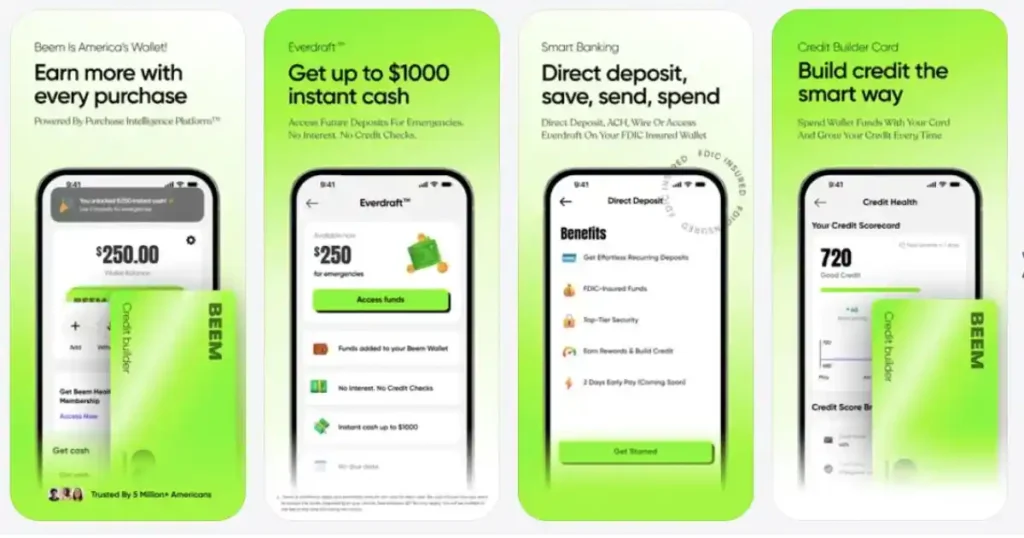
Structured instant liquidity, such as Beem’s Everdraft™, offers access to up to $1,000 without interest and without credit checks. Designed for emergencies, it provides immediate stabilization without layering compounding debt onto the next pay cycle. When used responsibly, it protects infrastructure without expanding long-term liability.
The objective is containment. Structured liquidity allows high-priority expenses to be secured while income realigns.
Build a Tiered Prioritization Framework
A tiered structure removes ambiguity during limited-cash periods. Assigning expenses to defined tiers simplifies allocation decisions.
Tier One: Critical Infrastructure
Housing, utilities, groceries, transportation tied to employment, insurance, and medical needs.
Tier Two: Income and Credit Protection
Minimum debt payments, childcare, internet for work, and obligations that prevent credit damage.
Tier Three: Flexible or Discretionary
Subscriptions, entertainment, non-essential purchases, premium services, and upgrades.
Funds should not flow to lower tiers until higher tiers are fully stabilized. If Tier One remains incomplete, Tier Three must remain paused. This structure ensures that limited resources protect the most important systems first.
Expense Prioritization Framework During Cash Shortages
When cash is limited, clarity improves decision-making. The following table outlines how different categories of expenses should be evaluated, along with their risk level and recommended action. This framework emphasizes consequence management rather than emotional preference.
| Expense Category | Escalation Risk if Unpaid | Impact on Stability | Recommended Action During Shortage |
| Rent / Mortgage | Very High | Housing security, credit | Pay first or communicate immediately |
| Utilities (Electric, Water, Gas) | High | Daily functioning | Prioritize to avoid shutoff fees |
| Groceries | High | Health and survival | Maintain essential food coverage |
| Transportation for Work | High | Income continuity | Fund repairs or fuel if required |
| Minimum Debt Payments | Moderate | Credit protection | Pay after Tier One is secured |
| Insurance Premiums | Moderate to High | Risk exposure | Maintain coverage if possible |
| Subscriptions & Entertainment | Low | Lifestyle convenience | Pause or cancel temporarily |
| Dining Out / Non-Essential Retail | Low | Discretionary | Eliminate during compression |
Key Insight
The purpose of this framework is to prevent escalation. Expenses tied directly to shelter, income, and essential functioning must be stabilized first because their disruption multiplies damage quickly. Lower-tier expenses can pause without long-term harm, which creates immediate flexibility. Prioritization during limited-cash periods is less about strict budgeting and more about protecting the systems that allow recovery to happen quickly and cleanly.
Common Mistakes That Undermine Prioritization
Even well-intentioned households can misallocate funds under pressure. Financial stress narrows focus, and urgency often overrides strategic thinking. Recognizing predictable mistakes improves stability because it allows decisions to be corrected before damage compounds. Prioritization works best when it is deliberate rather than reactive.
- Spreading limited cash across multiple bills instead of fully stabilizing one high-impact obligation
When cash is tight, it feels emotionally responsible to pay “a little bit everywhere.” However, partial payments often fail to prevent escalation. A half-paid rent check does not eliminate eviction risk, and a partial utility payment may not prevent shutoff. Fully stabilizing the most critical obligation first usually protects more long-term value than scattering funds thinly across several accounts. - Continuing discretionary spending due to habit rather than necessity
Subscription renewals, convenience spending, and small lifestyle purchases often continue automatically during a shortage because they feel minor. In reality, habitual expenses quietly reduce available liquidity. Temporarily suspending non-essential spending is not about deprivation. It is about redirecting resources toward obligations that preserve housing, income, and essential functioning. - Ignoring small penalties that compound over time
Late fees and interest charges often appear insignificant in isolation. However, repeated penalties stack quickly and increase the total amount required to stabilize the situation. What begins as a $30 fee can grow into hundreds of dollars through cascading charges and credit impacts. Addressing obligations early prevents these incremental costs from multiplying. - Using long-term high-interest borrowing for short-term timing gaps without repayment clarity
Solving a temporary liquidity issue with revolving debt can transform a brief disruption into extended repayment pressure. Without a clear plan to eliminate the balance quickly, interest accumulation creates a second financial problem layered on top of the first. Short-term gaps require short-term solutions that minimize future strain.
Expense Impact Comparison
The table below illustrates how different expense categories behave when missed.
| Expense Category | Immediate Risk | Escalation Speed | Long-Term Impact |
| Rent/Mortgage | Eviction risk | High | Housing instability |
| Utilities | Service interruption | High | Added fees and inconvenience |
| Car Repair | Lost income | Moderate to High | Employment disruption |
| Credit Card Minimum | Late fee, credit impact | Moderate | Credit score reduction |
| Subscriptions | Temporary loss of access | Low | Minimal long-term effect |
| Dining/Entertainment | None | None | None |
This comparison reinforces that not all bills carry equal weight. Prioritization should follow impact, not routine.
Maintaining Emotional Discipline During Compression
Financial compression intensifies emotional response. Stress narrows thinking and encourages reactive decisions. Maintaining emotional discipline requires visible structure.
Write expenses down. Rank them objectively. Avoid making prioritization decisions mentally under pressure. Physical lists reduce cognitive overload and prevent impulsive allocation.
Limited cash periods are temporary for most households. The manner in which they are managed determines recovery speed. Structured prioritization transforms scarcity into controlled stabilization.
Conclusion: Prioritization Preserves Stability
When cash is limited, stability depends on deliberate allocation. Essential infrastructure must be secured first. Income-generating systems must remain operational. High-penalty obligations must be contained before they compound.
Discretionary spending can pause. Lifestyle enhancements can wait. Protecting structural foundations ensures that short-term compression does not evolve into long-term strain.
Prioritization is not about austerity. It is about defense. With clarity, discipline, and structured liquidity when necessary, limited cash can be managed without escalation. The faster the most critical expenses are stabilized, the sooner recovery begins.
Download the Beem app to access emergency cash quickly when you need it most.
Get fast support with a simple, secure, and stress-free experience.
Frequently Asked Questions: Prioritize Expenses
1. What should be the very first expense I prioritize when cash is limited?
Housing and basic utilities should almost always be the first priority because they protect stability at the most fundamental level. Losing housing or essential services creates consequences that are expensive and disruptive to reverse. Once shelter, power, water, and food are secured, you can evaluate secondary obligations with a clearer mind. Protecting core infrastructure prevents a temporary shortage from becoming a structural crisis.
2. Should I pay minimum credit card payments before other bills?
Minimum payments typically fall into a secondary tier unless missing them would immediately damage credit or trigger significant penalties. While maintaining credit health is important, it should not come at the expense of rent, food, or income-preserving costs like transportation. The goal is to avoid compounding fees while still protecting foundational expenses. Once Tier One obligations are secured, minimum debt payments help prevent long-term financial damage.
3. Is it ever okay to pause subscriptions during a cash shortage?
Yes, pausing or canceling discretionary subscriptions is often one of the fastest ways to free up cash without causing structural harm. Most digital services can be restarted later without penalty, making them flexible expense categories. The key is to act decisively rather than letting automatic renewals continue by default. Temporarily removing non-essential spending creates breathing room that can protect higher-priority obligations.
4. How do I decide whether to borrow or use structured short-term liquidity?
The decision should be based on cost, timing, and long-term impact. High-interest revolving credit can solve an immediate problem but may create extended repayment pressure through compounding interest. Structured short-term liquidity solutions designed for emergencies can bridge timing gaps without escalating future costs when used responsibly. The safest option is the one that closes the gap quickly while minimizing long-term financial strain.
5. What if my limited cash cannot fully cover all Tier One expenses?
When available funds are insufficient, prioritization must shift toward the expense with the highest escalation risk. Communicating early with landlords, utility providers, or lenders may unlock temporary flexibility. Combining partial payments, structured liquidity, and proactive outreach often prevents cascading penalties. The objective is containment, not perfection, during short-term financial compression.