

Key Summary
For a long time, the relationship between bank accounts and financial access in the U.S. has been defined by one dominant signal: direct deposit. If your bank account shows a steady payroll inflow, most financial apps immediately recognize you as eligible. If it does not, your access becomes uncertain, delayed, or completely restricted.
That framework has shaped expectations. It has made many users believe that a bank account is only “valid” for financial tools if it is tied to a paycheck. But that assumption no longer reflects how money actually moves in 2026.
Today, a large number of users operate with income that is real, active, and consistent, but not tied to payroll. Freelancers receive payments from multiple clients. Gig workers earn daily through platforms. Small business owners move money across channels. Families manage shared finances where income and usage are not always tied to one individual.
In all these cases, the bank account is active. It reflects real financial behavior. It simply does not show direct deposit. The question, then, is not whether a bank account has direct deposit. It is whether the system can interpret what the account actually represents.
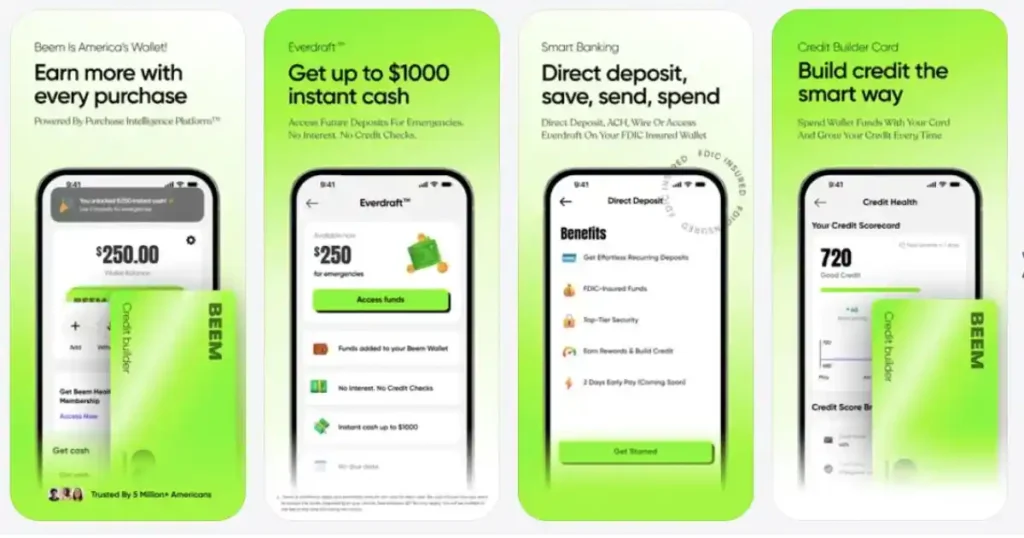
This is where Beem changes the model. Through Everdraft™, it evaluates your bank account as a dynamic financial system rather than a static verification tool, allowing access without making direct deposit a strict requirement.
Why Direct Deposit Became Central to Financial Access
The Need for Predictability in Risk Models
Every financial platform that offers cash advances operates on some form of risk assessment. The system needs to understand when funds will return and how reliable that timeline is.
Direct deposit simplifies this process. It creates a clear, recurring signal that tells the system when income is expected. This predictability allows platforms to align advances with incoming funds and minimize uncertainty.
From a design perspective, this is efficient. It reduces complexity and makes decisions easier to automate.
The Hidden Limitation of a Single-Signal System
However, relying heavily on direct deposit creates a narrow lens. It assumes that financial stability must appear in one specific format.
If your income is consistent but distributed across multiple deposits, the system may struggle to interpret it. If your earnings arrive at irregular intervals, the pattern may not be immediately recognizable. If your financial role is not tied to personal income, the system may not detect your activity at all. The limitation is not the bank account. It is the way the system reads it.
Rethinking the Role of a Bank Account
From Verification Tool to Behavioral Record
In traditional models, a bank account is primarily used to confirm a condition. The system checks for direct deposit, verifies its presence, and makes a decision based on that single factor.
In Beem’s model, the bank account serves a much broader purpose. It becomes a record of financial behavior. It shows how money enters, how it is used, and how it flows over time. This transforms the account from a checkpoint into a data source.
Why This Shift Matters
When a bank account is treated as a behavioral record, it allows the system to evaluate multiple signals instead of relying on one. It can recognize patterns that are not immediately obvious but become clear over time.
This creates a more accurate representation of financial stability, especially for users whose income does not follow a traditional structure.

How Account Consistency Builds Eligibility Over Time
One of the most important aspects of qualifying without direct deposit is understanding that eligibility is not a one-time event. It develops over time as your account demonstrates consistent behavior. When deposits, spending, and balances follow a recognizable rhythm across weeks and months, the system gains confidence in how your finances operate.
This means that even if your profile is not immediately strong, it can improve steadily. Regular activity, repeated patterns, and stable usage create a financial history that becomes more reliable with time. Instead of focusing on instant qualification, it is more effective to think in terms of building a track record that reflects continuity and control.
Why Gaps in Activity Can Weaken Your Profile
While irregular income is acceptable, long periods of inactivity can create challenges. When there are extended gaps with little or no account activity, the system has less data to work with. This makes it harder to interpret whether your financial behavior is stable or simply incomplete.
Maintaining some level of ongoing activity helps avoid this issue. Even smaller transactions or deposits can keep your financial profile active and visible. The goal is not constant movement, but consistent presence over time.
The Impact of Deposit Sources on Evaluation
When your income comes from multiple sources, the origin of each deposit matters less than its consistency and visibility. Whether funds come from freelance work, gig platforms, or transfers, what the system is evaluating is the pattern they collectively create.
However, clarity in these deposits can still help. If your account reflects recurring inflows, even from different sources, it becomes easier to establish a stable pattern. Over time, these varied deposits begin to form a cohesive financial narrative that supports eligibility.
Managing Balance Stability for Better Outcomes
Beyond deposits and transactions, your account balance plays a subtle but important role. Large and frequent swings in balance can make financial behavior appear unpredictable, even if income is consistent.
Maintaining a relatively stable balance, where inflows and outflows are managed thoughtfully, reinforces the idea of control. It shows that your account is not just active, but also managed with intention. This stability adds another layer of confidence to your financial profile.
How Financial Discipline Replaces Structural Requirements
In traditional systems, structure replaces discipline. A steady paycheck automatically signals reliability, regardless of how funds are managed afterward.
In a behavior-based system like Beem, discipline becomes the primary signal. Consistent usage, controlled spending, and thoughtful financial decisions collectively demonstrate reliability.
This shift is significant because it places control back in your hands. Your eligibility is shaped by how you manage your finances, not just how your income is structured.
Building a Sustainable Financial Pattern Without Payroll
The absence of direct deposit does not mean the absence of structure. It simply means that structure must be created through behavior rather than imposed through payroll.
By maintaining consistent deposits, keeping your account active, managing spending carefully, and avoiding long gaps in activity, you can build a sustainable financial pattern that supports access.
Over time, this pattern becomes just as recognizable and reliable as a traditional paycheck, allowing systems like Beem to evaluate your profile with confidence.
Does Beem Require Direct Deposit in Your Bank Account?
The Direct Answer, With Context
No, Beem does not require your bank account to have direct deposit in order to use Everdraft™.
However, removing this requirement does not mean removing evaluation. The system still needs to determine whether your financial activity demonstrates enough consistency and continuity to support access.
What the System Looks for Instead
Instead of direct deposit, Beem evaluates a combination of factors that collectively indicate stability:
- Regular inflows, even if they come from multiple sources
- Continuous account activity over time
- A balance between deposits and spending
- Patterns that show ongoing financial engagement
These signals work together to replace the role that direct deposit plays in traditional systems.
Read: How Instant Cash Advance Apps Empower Low-Income Workers
How Beem Interprets Bank Account Activity
Beem does not evaluate your account based on isolated transactions. It looks at how those transactions connect to form a larger pattern.
Pattern Recognition Over Individual Events
A single deposit does not define your profile. A series of deposits over time does. The system looks for repetition, continuity, and interaction between inflows and outflows.
For example, multiple smaller deposits across a month can form a stronger signal than one large deposit, because they show ongoing activity.
Continuity as a Measure of Stability
Continuity is one of the most important indicators. If your account shows consistent movement over time, it reflects an active financial system.
This continuity can exist even when timing and amounts vary. The key is that the activity does not stop or become erratic.
Spending Behavior as a Complementary Signal
How you use your funds also matters. Balanced spending, controlled withdrawals, and stable account management reinforce the idea that your finances are being handled responsibly. These behavioral signals add depth to the evaluation process.
What Kind of Bank Account Works Best Without Direct Deposit
An Account That Reflects Your Real Financial Life
The most effective account is one that captures your actual financial activity. If your income is spread across different sources, those sources should be visible within the account.
Fragmented or off-record income reduces the system’s ability to interpret your behavior accurately.
Consistent Usage Over Time
Accounts that show regular deposits, ongoing transactions, and continuous engagement provide more data for evaluation.
Long periods of inactivity, on the other hand, create gaps that make it harder to establish patterns.
Stability Without Perfection
The system does not expect perfect uniformity. It expects recognizable patterns. Variations in timing and amount are acceptable as long as there is overall consistency.
Who Benefits Most From This Approach
Freelancers and Multi-Source Earners
Users with diversified income streams can still demonstrate stability through aggregated patterns.
Gig Workers With Variable Earnings
Frequent deposits, even if irregular, can create a consistent rhythm that reflects ongoing activity.
New Users Without Payroll History
Individuals who have not yet established direct deposit can still build eligibility through visible financial behavior.
Non-Traditional Financial Roles
Stay-at-home parents or individuals managing shared finances can demonstrate stability through account activity rather than personal income labels.
Comparing Beem With Direct Deposit-Based Apps
| Factor | Traditional Apps | Beem (Everdraft™) |
| Direct Deposit Requirement | Mandatory | Not required |
| Bank Account Role | Verification checkpoint | Behavioral data source |
| Income Recognition | Payroll-based | Multi-source |
| Evaluation Method | Single signal | Multi-signal pattern |
| Flexibility | Low | High |
| Accessibility | Limited | Broad |
When Direct Deposit Still Strengthens Your Profile
It is important to understand that direct deposit still provides value. It creates a clear and predictable pattern that is easy for the system to interpret.
Within Beem’s framework, this can strengthen your profile by adding clarity. However, it is not the only way to demonstrate stability. It is one signal among many, not the defining factor.
A More Realistic Definition of Financial Stability
Traditional systems define stability through uniformity. They expect income to arrive in the same way, at the same time, from the same source.
Beem defines stability through continuity. It looks for ongoing financial activity that reflects a functioning system, even if the structure varies. This definition aligns more closely with how people actually manage money today.
Conclusion
Beem does not require a bank account with direct deposit to use Everdraft™. Instead, it evaluates your financial behavior as a whole, using your bank account as a comprehensive source of insight.
Through this approach, Beem provides access based on how you manage your finances over time, not just how your income is categorized. In 2026, where income is increasingly flexible and multi-sourced, this model reflects a more accurate and inclusive understanding of financial stability.
FAQs
1. Can I realistically qualify for Everdraft™ without direct deposit in my bank account?
Yes, you can. Beem does not require direct deposit as a mandatory condition. Instead, it evaluates your financial behavior over time. If your account shows consistent inflows, active usage, and stable patterns, you can still qualify even without payroll-linked income.
2. What type of activity strengthens my eligibility the most?
Regular deposits, even from multiple sources, are one of the strongest indicators. Consistent account usage, balanced spending, and avoiding long gaps in activity also contribute significantly. The goal is to create a clear and continuous financial pattern.
3. Will I receive lower access without direct deposit?
In some cases, initial access may be more conservative because the system has less predictable data. However, as your financial activity becomes more consistent and visible, your eligibility and access can improve over time.
4. Can I use Beem if my income is irregular or comes from different sources?
Yes, Beem is specifically designed to recognize multi-source and irregular income. As long as your inflows are visible in your bank account, they can contribute to your eligibility.
5. Is it still beneficial to set up direct deposit if I have the option?
If it is convenient, direct deposit can strengthen your financial profile by providing a clear and predictable pattern. However, it is not required, and Beem is designed to function effectively without it.