

Key Summary
When people consider applying for any financial product in the United States, one concern almost always surfaces immediately. Will this affect my credit score? That concern is not misplaced. For years, access to money has been closely tied to credit checks, and each application has carried the potential to leave a mark on your financial record.
Because of this, users have become cautious. They hesitate before applying, not just because of approval uncertainty, but because of the possible consequences on their credit profile. Even a small drop in score or multiple inquiries over time can influence future borrowing opportunities.
This is exactly why the question matters so much in the context of Beem and its Everdraft™ feature. The short answer is that Beem does not perform a hard credit check when you apply. However, understanding what that really means, and how the system works without it, requires a deeper look at both traditional credit models and the alternative approach Beem uses.
What It Means When a Platform “Pulls Your Credit”
The Mechanics of a Hard Credit Inquiry
A hard credit inquiry occurs when a lender accesses your full credit report to evaluate your financial history. This report includes detailed information such as your existing debts, repayment history, credit utilization, length of credit history, and recent applications.
When a hard inquiry is made, it is recorded on your credit file. While a single inquiry may only cause a small, temporary decrease in your score, multiple inquiries within a short period can signal higher risk to lenders and have a more noticeable impact.
This is why users are often cautious about applying for multiple financial products. Each application becomes a decision not just about access, but about potential long-term implications.
Why Traditional Systems Rely on Credit Pulls
Lenders use hard credit checks because they provide a standardized way to evaluate risk. By analyzing past borrowing behavior, they attempt to predict how likely you are to repay future obligations.
This model works particularly well for long-term lending, where decisions need to account for years of repayment behavior. However, it is less effective for short-term financial tools that depend more on current cash flow than on historical borrowing patterns.
Does Beem Perform a Hard Credit Check?
The Clear and Direct Answer
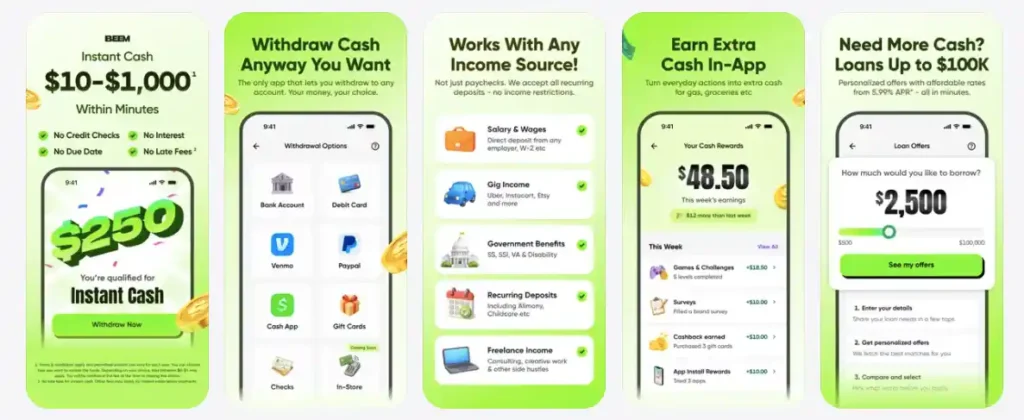
No, Beem does not perform a hard credit check when you apply for Everdraft™. This means that your credit report is not accessed in a way that leaves a visible inquiry, and your credit score is not impacted by the application.
This distinction is important because it removes a layer of risk that users typically associate with financial applications. You can explore access to funds without worrying about how the process will affect your credit standing.

Why This Difference Matters in Practice
For many users, avoiding a hard inquiry changes how they approach financial tools. It allows them to make decisions based on need and utility rather than concern about long-term credit impact.
This is especially valuable for users who are:
- Building their credit and want to avoid unnecessary inquiries
- Recovering from past financial challenges
- Managing multiple financial priorities simultaneously
- Simply cautious about maintaining a clean credit profile
By removing the credit check, Beem lowers the psychological and practical barriers to access.
If There Is No Credit Check, What Replaces It?
The absence of a credit check does not mean the absence of evaluation. Instead, it signals a shift in how evaluation is conducted.
Beem replaces credit-based assessment with a behavior-based model that focuses on real-time financial activity rather than historical credit data.
Moving From Static History to Dynamic Behavior
Traditional credit systems rely on static data points that change slowly over time. Credit scores are updated periodically and reflect past behavior.
Beem’s model, on the other hand, is dynamic. It evaluates ongoing financial activity, capturing how money flows through your account in real time. This creates a more current and responsive profile.
Building a Financial Profile Without Credit Data
Instead of pulling your credit report, Beem analyzes your bank account activity. It looks at patterns in deposits, spending, and account usage to build a comprehensive picture of your financial behavior.
This profile is not a fixed number like a credit score. It is a continuously evolving representation of how you manage money.
What Beem Evaluates Instead of Your Credit Score
Consistency of Deposits Across Time
One of the most important indicators is whether money enters your account regularly. This does not require a single employer or a fixed schedule.
Income from multiple sources, including freelance work, gig platforms, or transfers, can still form a consistent pattern. The key factor is continuity, not uniformity.
Depth and Frequency of Account Activity
An active account provides a richer dataset for evaluation. Frequent transactions, bill payments, and everyday financial interactions show that your account is not just functional, but actively managed.
This depth of activity allows the system to understand how you engage with your finances on a daily basis.
Balance Stability and Cash Flow Alignment
Your account balance reflects how well your inflows and outflows are aligned. Large, erratic fluctuations may indicate instability, while a more controlled balance suggests thoughtful financial management.
Beem evaluates this balance over time to determine whether your financial system is sustainable.
Spending Patterns and Behavioral Discipline
Spending behavior is a critical component of evaluation. Consistent, predictable spending patterns indicate discipline and control.
This is important because it shows not just how you earn money, but how you manage it once it is in your account.
Continuity of Financial Behavior Over Time
Short-term activity can be misleading. A few days or weeks of strong deposits do not necessarily indicate long-term stability.
Beem looks for patterns that persist over longer periods. This continuity provides a more reliable signal of financial health.
Read: How to Use Gift Cards Without Overspending
How the Application Process Works Without a Credit Pull
Step 1: Creating Your Account
You begin by signing up with Beem and completing identity verification. This establishes your presence within the system.
Step 2: Linking Your Bank Account
Your bank account becomes the primary source of financial data. Linking it allows Beem to analyze your financial activity securely.
Step 3: Behavioral Analysis and Pattern Recognition
The system evaluates your deposits, spending, and account activity over time. It identifies patterns that indicate stability and continuity.
Step 4: Building Your Financial Profile
Based on this analysis, a behavioral profile is created. This profile reflects your financial habits rather than your credit history.
Step 5: Determining Eligibility for Everdraft™
If your profile demonstrates sufficient consistency and stability, you become eligible for Everdraft™. The amount you can access is determined by the strength of your financial patterns.
Why Beem Does Not Need a Credit Pull
Real-Time Data Is More Relevant for Short-Term Decisions
For short-term financial tools like cash advances, current behavior is often more relevant than historical credit data. Real-time account activity provides a clearer picture of immediate financial stability.
Behavior-Based Models Reduce Dependence on External Data
By analyzing financial behavior directly, Beem reduces the need to rely on external credit reports. This creates a more self-contained evaluation system.
Expanding Access to a Wider Range of Users
Removing the credit check requirement allows more users to access financial tools. This includes those with limited credit history, those recovering from past challenges, and those who prefer not to engage with credit systems.
When Credit Checks Still Have Value
It is important to recognize that credit checks are not obsolete. They continue to play a critical role in long-term lending decisions where risk must be evaluated over extended periods.
For products such as mortgages, auto loans, and large personal loans, historical credit data provides valuable insights. However, for short-term tools that focus on immediate cash flow, behavior-based evaluation offers a more relevant alternative.
Check this Out: https://trybeem.com/credit-builder-card
How Removing Credit Pulls Changes User Behavior
When credit checks are removed from the process, it does more than just simplify access. It fundamentally changes how users interact with financial tools. In traditional systems, people often hesitate before applying because each application carries a potential impact on their credit score. This creates friction, where decisions are influenced by caution rather than actual need.
By eliminating hard credit inquiries, Beem allows users to approach financial access more confidently. They can explore eligibility without second-guessing the consequences. Over time, this leads to more informed decision-making, where users engage with financial tools based on utility and timing rather than fear of credit impact. This shift encourages a more practical and less restrictive relationship with financial services.
The Advantage of Continuous Evaluation Over One-Time Checks
Traditional credit-based systems rely heavily on one-time evaluations. A credit check provides a snapshot of your financial history at a specific moment, and decisions are often made based on that static view. While this approach is efficient, it does not account for changes that may occur immediately after the evaluation.
Behavior-based systems introduce the concept of continuous evaluation. Instead of relying on a single checkpoint, they observe financial activity over time. This allows the system to adapt as your financial situation evolves. If your income improves, if your spending becomes more stable, or if your account activity becomes more consistent, your profile can reflect those changes.
This dynamic approach creates a more responsive system, where eligibility is not locked to a single moment but evolves alongside your financial behavior.
Why Reduced Dependency on Credit Data Increases Financial Inclusion
Credit-based systems inherently exclude users who have limited interaction with credit products. This includes individuals who are new to the financial system, those who have chosen not to use credit, and those whose past experiences have negatively impacted their scores.
By reducing dependency on credit data, platforms like Beem expand access to a broader range of users. They allow individuals to demonstrate financial reliability through everyday behavior rather than historical borrowing records.
This creates a more inclusive environment where access is determined by what users are doing now, not by what they may or may not have done in the past. It aligns financial systems more closely with real-world diversity in income and financial management styles.
The Long-Term Implications of Moving Away From Credit Pulls
The shift away from credit pulls represents more than a feature-level change. It signals a broader transformation in how financial systems may operate in the future. As more platforms adopt behavior-based evaluation, the reliance on traditional credit scores may gradually decrease, particularly for short-term financial products.
This does not mean that credit systems will disappear, but their role may become more specialized. Long-term lending will likely continue to depend on historical data, while short-term access increasingly relies on real-time behavior.
For users, this creates a more balanced ecosystem. It provides multiple pathways to financial access, allowing individuals to build eligibility through both history and behavior. Over time, this dual approach has the potential to make financial systems more adaptable, more inclusive, and more reflective of how people actually manage money.
A More Transparent and User-Controlled Model
One of the most significant advantages of Beem’s approach is transparency. Instead of relying on a score that may feel opaque or difficult to influence, it evaluates visible financial behavior.
This creates a clearer relationship between what you do and what you can access. Users have more control over their eligibility because it is tied to actions they can manage directly.
Conclusion
Beem does not pull your credit when you apply for Everdraft™, which means your credit score remains unaffected throughout the process.
Instead, it evaluates your financial behavior in real time, focusing on deposits, spending patterns, and account activity to determine eligibility.
In 2026, this approach reflects a broader shift in financial systems. It moves away from relying solely on historical credit data and toward recognizing how people actually manage money today. This creates a more flexible, inclusive, and accurate pathway to accessing short-term funds.
FAQs
1. Will applying for Everdraft™ leave any mark on my credit report?
No, applying for Everdraft™ will not leave any mark on your credit report because Beem does not perform a hard credit inquiry. This means there is no record of your application visible to other lenders, and your credit score remains unchanged. You can explore and apply without worrying about any long-term impact on your credit profile.
2. Does Beem use any form of credit data at all during evaluation?
Beem primarily relies on your bank account activity and financial behavior rather than traditional credit data. The focus is on how you manage money in real time, including your deposits, spending, and account usage. This approach allows the platform to evaluate eligibility without depending on your credit history.
3. Can I still qualify for Beem if my credit score is very low?
Yes, you can qualify even with a low credit score because Beem does not use your credit score as a determining factor. Instead, it evaluates your current financial activity. If your account shows consistent deposits, active usage, and stable spending patterns, you may still be eligible regardless of your credit history.
4. What if I have never built a credit profile?
You can still qualify without any credit history. Beem’s model is designed to include users who have not participated in traditional credit systems. By focusing on real-time financial behavior, it provides a way to demonstrate reliability without needing a prior borrowing record.
5. Why is Beem able to approve users without checking their credit?
Beem uses a behavior-based evaluation model that analyzes your financial activity directly. By focusing on real-time data such as deposits, spending, and account patterns, it can assess stability without relying on credit reports. This reduces the need for credit checks and allows for a more flexible and inclusive approach to financial access.