
Key Summary
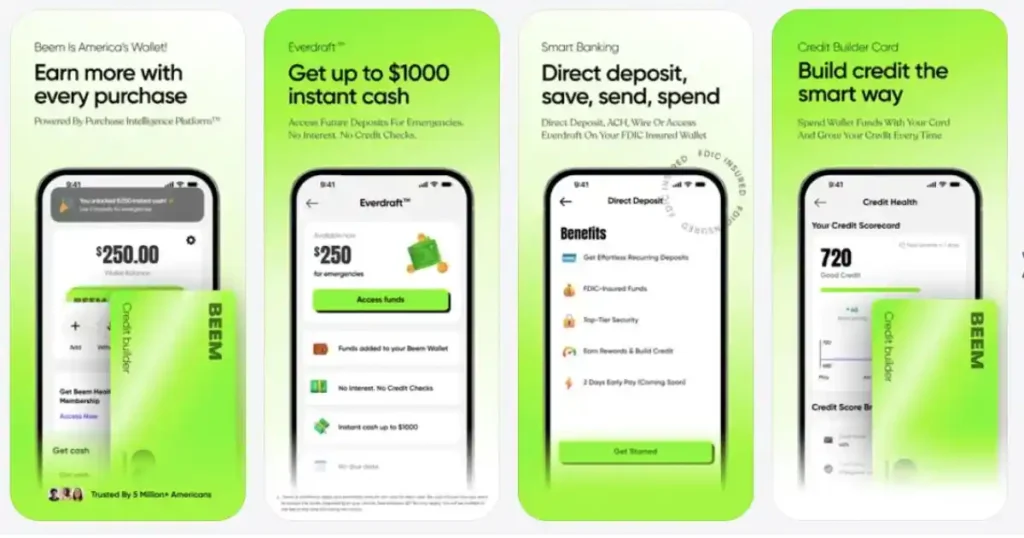
Yes. Beem accepts DoorDash, Uber, Lyft, Instacart, and other gig platform earnings as qualifying financial activity for Everdraft cash advance eligibility. Beem does not require a traditional employer direct deposit or a W-2 income source. Instead, it evaluates the deposit pattern in your linked bank account. When gig platform earnings land consistently in that account, they count. Eligible gig workers can access up to $1,000 instantly with no interest, no credit check, and no hidden fees.
That answer represents something most gig workers in the United States have not been able to find from a cash advance app. The standard experience for a DoorDash driver or Uber partner who opens a cash advance app and tries to qualify is rejection, not because their income is insufficient, but because the app’s eligibility system was never built to recognize how their income arrives. The payroll ACH code is not there. The employer name is not in the verification system. The result is a wall that has nothing to do with financial capability and everything to do with product design that never accounted for the gig economy.
Beem’s answer is different at the design level, not just the marketing level. This blog explains exactly why, how the eligibility model works for gig workers, and what DoorDash and Uber drivers can do to present the strongest possible financial profile when connecting their account to Beem.
Why Most Cash Advance Apps Reject DoorDash and Uber Income
Before explaining how Beem works differently, it is worth being specific about why the rejection happens in the first place. Gig workers who have encountered it deserve a real explanation rather than vague reassurance that Beem is somehow different.
The Payroll ACH Coding Problem
Every direct deposit in the U.S. banking system carries a code indicating the type of transfer. Payroll deposits from employers are coded specifically as payroll ACH transactions, originating from recognized processors like ADP, Gusto, or Paychex. Cash advance apps use this payroll code as the eligibility filter.
When DoorDash transfers a driver’s weekly earnings to their bank account, the ACH transfer is coded as a business payment from DoorDash Technology Inc., not as payroll from an employer. The cash advance app’s filter does not recognize it as a qualifying direct deposit because the payroll ACH code is absent. The driver’s income is entirely real. The deposit is entirely real. None of that overrides the payroll code filter because the filter was designed to recognize payroll, not income broadly.
The Employer Verification Dead End
Some cash advance apps use third-party employment verification services that connect directly to employer HR systems. When a user claims to work for DoorDash or Uber, the verification service queries those companies’ HR systems for employment records. Because DoorDash and Uber classify their drivers as independent contractors rather than employees, no employment record exists. The verification returns negative, and the user is rejected.
This is not a reflection of the driver’s financial reliability. It is a reflection of the contractor classification structure that gig platforms use, combined with a verification methodology designed for traditional employment. The tool and the income type are simply incompatible.
The Credit File Gap
When income verification fails, some apps turn to credit history as a fallback eligibility signal. This creates a secondary barrier for gig workers who may have a thin credit file, not because of past financial problems, but because credit products have historically been less accessible to people whose income does not fit standard verification models. A DoorDash driver who has earned $50,000 per year for two years and managed finances responsibly may still have a thin credit file because the system that tracks creditworthiness was not built around their income type. The result is double exclusion: rejected on income verification, then rejected on credit history, for reasons unrelated to actual repayment reliability.
Read: Cash Advance Apps That Do Not Require Employment Verification in 2026
How Beem’s Eligibility Model Works for Gig Workers
Beem’s approach is built on a different premise. Rather than verifying employment and treating income as a secondary inference, Beem evaluates financial behavior directly from the bank account where income lands. This is a more direct measurement of the activity that actually predicts repayment reliability, and it is the design choice that makes gig platform earnings visible and meaningful to the eligibility assessment.
What Beem Evaluates in Your Linked Bank Account
When a gig worker connects their bank account to Beem, the platform reviews several dimensions of account activity simultaneously using read-only, bank-level encrypted access.
Deposit frequency and regularity: How often do deposits arrive, and how consistent is the timing? A DoorDash driver who receives weekly earnings transfers every Thursday for six consecutive months demonstrates a regularity that Beem’s system can evaluate as a meaningful income signal.
Deposit amounts and trajectory: The amounts of individual platform deposits and how they trend over time provide context for income stability. Deposits that are consistent in amount, or that show a gradual upward trend, reflect a more stable income picture than highly erratic amounts with no discernible pattern.
Balance behavior between deposits: How the account balance moves in the days between platform payouts is one of the most revealing behavioral signals Beem evaluates. An account that maintains a positive balance throughout the week and avoids overdrafts demonstrates a financial management pattern that supports confidence in repayment reliability.
Overall account health: The combination of the above factors, evaluated over the available account history, creates a holistic financial behavior profile. This profile is inherently more informative than a binary payroll code check or a credit score query.
Why This Model Works Better Than Payroll Verification
The payroll verification model produces a single binary output: payroll deposit present or absent. It says nothing about the consistency of that payroll, the balance behavior around it, or whether the worker is likely to repay an advance from it.
Beem’s behavior-based model produces a multi-dimensional picture of financial health that is more predictive of repayment reliability and more equitable in recognizing different income types. A DoorDash driver with six months of consistent weekly deposits, positive balance management, and no overdraft history presents a financial behavior profile that supports advance eligibility as reliably as many salaried employees, even without a single payroll-coded ACH transfer.
Which Gig Platforms Does This Apply To?
The behavior-based eligibility model is platform-agnostic, meaning the assessment applies equally to deposits from any gig platform. The platforms most commonly used by Beem’s gig worker users include the following, though this list reflects the scope of the eligibility model rather than a curated selection.
Rideshare and delivery platforms
Uber, Lyft, DoorDash, Uber Eats, Grubhub, Instacart, Shipt, Amazon Flex, and similar platforms pay drivers and shoppers through weekly or daily direct bank transfers. These transfers create deposit patterns that are visible and evaluable in the linked bank account.
Service and freelance marketplaces
Fiverr, Upwork, TaskRabbit, Rover, and similar platforms pay workers upon project completion or client approval. The deposit timing is less predictable than weekly rideshare settlements but no less real as a financial behavior signal for workers who complete projects consistently.
Gig logistics platforms
Roadie, GoShare, Dolly, and similar platforms that connect drivers with moving and delivery jobs pay per job or per route. Workers who complete jobs consistently and transfer earnings regularly create deposit patterns that contribute to the eligibility profile.
Multi-platform workers
Many gig workers operate across two or three platforms simultaneously to smooth income variability. The combined deposit activity from multiple platforms often creates a stronger eligibility profile than any single platform would produce alone because the aggregate deposit frequency is higher and the income base is more diversified.
What DoorDash and Uber Drivers Can Do to Strengthen Their Beem Eligibility
Understanding how the eligibility model works creates specific, practical actions that gig workers can take to present the strongest possible financial behavior profile to Beem’s assessment system.
Transfer Platform Earnings Frequently
Platform earnings sitting in a DoorDash or Uber app wallet are invisible to Beem’s assessment. Only deposits that have actually landed in the linked bank account are visible. Enabling daily Fast Pay on DoorDash or Instant Pay on Uber ensures that platform earnings create a deposit signal as soon as they are available. Daily transfers create a more frequent deposit pattern than weekly transfers of the same total amount, and frequency is a positive eligibility signal.
Consolidate All Deposits Into One Primary Account
Gig workers who split platform earnings across multiple bank accounts reduce the deposit signal visible in any single account. Consolidating all platform deposits into the single primary account linked to Beem creates the most complete and strongest possible deposit pattern for eligibility assessment.
Maintain a Positive Balance Between Payouts
Account balance behavior between deposits is a meaningful component of the eligibility assessment. Spending down to zero between platform payouts creates a less favorable signal than maintaining even a modest positive balance. Building a small buffer between payouts, even $50 to $100, improves the balance behavior component of the profile meaningfully.
Build Beem Boost Standing Over Time
Every on-time repayment from a DoorDash or Uber deposit contributes positively to Beem Boost standing and increases the available advance limit over time. For gig workers who begin with a conservative initial limit, consistent responsible use is the direct path to higher advance access without any additional application or credit review.
The Bottom Line: Your DoorDash and Uber Earnings Are Income. Beem Knows That.
The distinction between traditional cash advance app eligibility and Beem’s behavior-based model is not a minor technical difference. It is the difference between a financial product that sees gig workers as they actually are and one that sees them through a framework designed for a workforce structure that no longer describes most people who need short-term financial support.
DoorDash deposits are income. Uber transfers are income. The households that depend on them are real, and the financial gaps between platform payouts are real. The need for a fast, free, judgment-free bridge to the next deposit is exactly as legitimate for a gig worker as it is for a salaried employee waiting on their biweekly paycheck.
No employer verification. No payroll requirement. No credit check. No interest. No fees. Up to $1,000, available in minutes, repaid from your next platform deposit. That is Beem Everdraft for gig workers, exactly as it should be.
Frequently Asked Questions
Does Beem accept DoorDash weekly deposits as proof of income?
Yes. Beem evaluates bank account deposit activity rather than requiring payroll from a traditional employer. DoorDash weekly earnings transfers that land consistently in your linked bank account contribute to the deposit pattern Beem’s eligibility system evaluates.
Can Uber and Lyft drivers qualify without a traditional paycheck?
Yes. Beem’s behavior-based eligibility model recognizes Uber and Lyft earnings deposits as qualifying financial activity. Drivers who receive consistent weekly platform settlements and maintain positive account balance behavior qualify based on demonstrated financial behavior, not employment classification.
What if I earn from both DoorDash and Uber?
Multi-platform workers whose combined deposits create a higher aggregate deposit frequency often present a stronger eligibility profile than single-platform workers. Consolidating all platform deposits into a single linked bank account ensures the combined activity is fully visible to Beem’s assessment.
What is the maximum cash advance a DoorDash or Uber driver can get?
Eligible Beem users can access up to $1,000 through Everdraft. The specific amount available depends on account deposit history, account health, and financial behavior within the Beem platform. Drivers who begin with a lower initial limit can grow their available advance through Beem Boost by repaying on time and maintaining healthy account behavior over time.