

Key Summary
For decades, access to short-term credit in the United States has been tied to one central mechanism: the credit check. Whether you applied for a credit card, a personal loan, or even certain financial apps, your credit history determined your eligibility. A strong score opened doors. A limited or thin file closed them.
That model worked when credit history was seen as the most reliable indicator of financial behavior. In 2026, it is increasingly clear that credit scores tell only part of the story.
Millions of users today manage their finances actively without relying heavily on credit. Some are new to the country and have not yet built a credit profile. Others avoid traditional credit products altogether. Many operate within cash flow systems driven by income, expenses, and real-time decision-making rather than long-term borrowing histories.
The question, then, is not whether these users are financially responsible. It is whether financial systems can recognize responsibility without relying on credit reports.
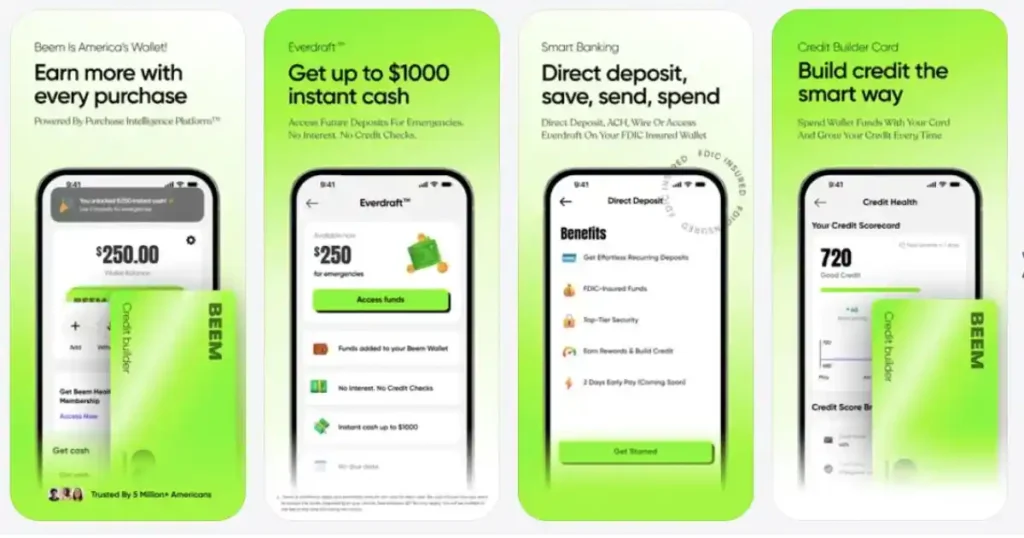
This is where Beem introduces a different approach. Through Everdraft™, it enables cash advance approvals without a hard credit check by evaluating real-time financial behavior instead of historical credit data.
Why Hard Credit Checks Became Standard
Credit History as a Proxy for Risk
Traditional lending systems rely on credit reports because they provide a structured record of past borrowing behavior. Lenders use this data to estimate the likelihood of repayment based on historical patterns.
A hard credit check allows lenders to:
- Review borrowing history
- Assess repayment consistency
- Identify outstanding obligations
- Calculate risk based on standardized metrics
This approach creates a uniform framework that can be applied across millions of users.
The Limitation of Historical Data
While credit history provides useful insights, it is inherently backward-looking. It reflects how you have managed credit in the past, not necessarily how you are managing money today.
For users with limited or no credit history, this creates a gap. Financial responsibility may exist, but it is not captured in the system. As a result, access becomes restricted even when current financial behavior is stable.
How Beem Replaces the Credit Check Model
Beem shifts the focus from historical credit data to real-time financial activity.
Instead of asking, “How have you borrowed in the past?”, it asks:
- How does money flow through your account today?
- How consistently do deposits occur?
- How stable are your spending patterns?
- Does your financial activity show continuity over time?
This approach allows Beem to evaluate risk based on current behavior rather than past credit usage.
What “No Hard Credit Check” Actually Means
No Impact on Your Credit Score
A hard credit check typically leaves a mark on your credit report and can temporarily affect your score. Beem does not perform this type of check, which means your credit score remains unaffected.
Evaluation Still Happens, But Differently
Not using a hard credit check does not mean there is no evaluation. It means the evaluation is based on alternative data.
Beem analyzes your bank account activity, looking for patterns that indicate stability and responsible financial management. This creates a different kind of profile, one that reflects how you handle money in real time.
The Core Signals Beem Uses Instead of Credit Scores
Consistency of Financial Inflows
Regular deposits, even from multiple sources, indicate ongoing financial activity. The system looks for continuity rather than uniformity.
Account Activity Over Time
Active accounts provide more data for evaluation. Frequent transactions and consistent usage help establish a clear pattern.
Balance Stability and Spending Behavior
How you manage your funds is as important as how you receive them. Controlled spending and stable balances signal financial discipline.
Continuity Across Weeks and Months
Patterns that persist over time are stronger indicators of stability than isolated events. The system evaluates how your financial behavior evolves, not just how it appears in a single moment.

How the Approval Process Works in Practice
Step 1: Account Setup and Verification
You begin by creating an account with Beem and linking your bank account. This allows the system to access your financial activity.
Step 2: Data Analysis and Pattern Recognition
The platform analyzes your account data, identifying patterns in deposits, spending, and overall activity.
Step 3: Profile Building
Based on this analysis, a financial profile is created. This profile reflects your behavior rather than your credit history.
Step 4: Eligibility Determination
If your profile demonstrates sufficient stability and continuity, you become eligible for Everdraft™.
Step 5: Access to Funds
Once approved, you can access up to $1,000 in instant cash without interest and without affecting your credit score.
Who Benefits Most From No-Credit-Check Approvals
Users With Limited or No Credit History
New immigrants, young adults, and individuals who have not used credit extensively can access financial tools without being penalized for a lack of history.
Freelancers and Gig Workers
Users with variable income can demonstrate stability through consistent account activity rather than relying on credit scores.
Individuals Avoiding Traditional Credit
Some users prefer not to engage with credit products. Beem allows them to access funds without entering the credit system.
Comparing Beem With Traditional Credit-Based Systems
| Factor | Traditional Lending | Beem (Everdraft™) |
| Credit Check | Hard inquiry required | No hard check |
| Evaluation Basis | Historical credit data | Real-time financial behavior |
| Impact on Credit Score | Yes | No |
| Accessibility | Limited by credit history | Broad and inclusive |
| Flexibility | Low | High |
Why This Model Is More Aligned With Modern Financial Behavior
The move away from hard credit checks is not just a product-level change. It reflects a deeper shift in how financial behavior itself has evolved over the last decade. Income is no longer tied to a single employer or a fixed monthly cycle. It is increasingly dynamic, with people earning through multiple channels, receiving payments at different intervals, and managing cash flow in a far more active and hands-on way.
At the same time, financial decision-making has become more immediate. People are tracking expenses in real time, adjusting budgets weekly or even daily, and making short-term financial choices based on current needs rather than long-term borrowing frameworks. This creates a living, constantly updated financial profile that traditional credit systems are not designed to capture.
By focusing on real-time financial activity, Beem aligns its evaluation model with this reality. Instead of relying on static snapshots from the past, it looks at how users are managing money in the present. This makes the system more responsive, more relevant, and better suited to the way financial behavior actually works in 2026.
When Credit Still Plays a Role
While behavior-based models are gaining importance, credit scores continue to serve a purpose in the broader financial ecosystem. They are particularly relevant for long-term financial commitments where lenders need to assess risk over extended periods. Products like mortgages, auto loans, and large personal loans depend on historical data because they involve larger amounts, longer repayment timelines, and more complex risk calculations.
In these contexts, a credit score provides a standardized way to evaluate how someone has handled debt over time. It offers a long-term view that is useful for decisions that extend over years rather than weeks or months.
However, short-term financial tools operate differently. Cash advances are designed to address immediate gaps in cash flow rather than long-term borrowing needs. In these situations, real-time financial behavior becomes more relevant than historical credit data. A system that can assess how money is currently being managed is often better suited to determine short-term reliability.
This is where behavior-based evaluation complements, rather than replaces, traditional credit systems. Each approach serves a different purpose, and together they reflect a more complete view of financial capability.
Read: How to Cover Expenses During a Short-Term Financial Crisis
A More Practical Definition of Financial Reliability
Traditional systems define reliability through past borrowing behavior. They look at whether you have taken on credit before, how consistently you have repaid it, and how much debt you currently carry. While this provides useful information, it does not always reflect how you are managing your finances today.
A user may have a limited credit history but still manage their income and expenses with a high level of discipline. Another user may have an established credit profile but struggle with day-to-day financial consistency. In both cases, historical data alone does not provide a complete picture.
Beem’s approach redefines reliability by focusing on current financial activity. It evaluates whether your account shows consistent inflows, whether your spending is balanced, and whether your financial patterns demonstrate continuity over time. This creates a more immediate and practical measure of stability.
The significance of this shift lies in what it enables. Users are no longer limited by their past. They can demonstrate reliability through their present behavior, building access through how they manage money now rather than how they have interacted with credit in the past. This makes financial systems more inclusive while also making them more reflective of real-world financial habits.
How Real-Time Data Improves Decision Accuracy
Traditional credit checks rely on data that may be months or even years old. While this historical perspective can be useful for long-term lending, it does not always reflect a user’s current financial situation. Income levels may have changed, spending habits may have improved, or financial responsibilities may have shifted significantly.
Behavior-based systems improve decision accuracy by working with real-time or near real-time data. By analyzing current account activity, deposit patterns, and spending behavior, platforms like Beem are able to form a more up-to-date understanding of financial stability.
This immediacy allows for decisions that are better aligned with present circumstances rather than outdated records. It reduces the gap between how users are managing money now and how they are evaluated, making access more relevant and precise.
Reducing Barriers for First-Time Financial Participants
One of the biggest limitations of credit-based systems is that they require prior participation. To build a credit history, you need to use credit. To access credit, you often need a history. This creates a circular barrier that can be difficult to overcome, especially for young adults, new immigrants, or individuals who have avoided traditional credit products.
Behavior-based models break this cycle by allowing users to demonstrate financial responsibility without relying on prior borrowing. By focusing on income flow, account activity, and spending patterns, they provide an entry point into financial systems that does not depend on historical credit usage.
This makes financial tools more accessible to a wider range of users, particularly those who are just beginning to establish their financial presence.
The Role of Financial Transparency in Building Trust
In behavior-based systems, transparency becomes a key factor. When your financial activity is clearly reflected in your bank account, it allows the system to evaluate your profile with greater confidence.
This means that visibility is just as important as consistency. Deposits that are recorded, transactions that are traceable, and patterns that can be observed over time all contribute to a clearer financial picture.
For users, this creates a more direct relationship between behavior and access. The more transparent and consistent your financial activity is, the easier it becomes for the system to interpret and trust your profile.
Encouraging Healthier Financial Habits Over Time
One of the less obvious benefits of behavior-based evaluation is its impact on long-term financial habits. When access to financial tools is tied to how you manage your money, it naturally encourages more mindful behavior.
Users become more aware of their spending patterns, more intentional about maintaining consistent inflows, and more focused on avoiding disruptions in their financial activity. Over time, this leads to stronger financial discipline and a clearer understanding of how money flows through their lives.
In this way, platforms like Beem are not just adapting to modern financial behavior. They are also shaping it by reinforcing habits that support stability and responsible financial management.
Conclusion
Beem approves cash advances without a hard credit check by replacing traditional credit evaluation with real-time financial analysis.
Through Everdraft™, Beem assesses your financial behavior as a whole, allowing you to access funds based on how you manage money today rather than how you have borrowed in the past.
In 2026, this approach reflects a more accurate and inclusive understanding of financial stability, making access more aligned with modern financial realities.
FAQs
1. Does Beem perform any kind of credit check at all?
Beem does not perform a hard credit check, which means it does not access your full credit report in a way that impacts your score. Instead, it relies on alternative data, primarily your bank account activity, to evaluate your financial behavior. This allows the platform to assess eligibility without affecting your credit profile.
2. Can I qualify if I have no credit history?
Yes, you can still qualify. Beem’s model is specifically designed to accommodate users with limited or no credit history. By focusing on real-time financial activity rather than past borrowing behavior, it allows you to demonstrate stability through your current financial patterns.
3. How does Beem determine risk without using credit scores?
Beem evaluates risk by analyzing multiple aspects of your financial behavior, including deposit frequency, account activity, spending patterns, and balance stability. These factors collectively provide a comprehensive view of how you manage money, which can be as effective as traditional credit data in assessing reliability.
4. Will using Everdraft™ help build my credit score?
No, Everdraft™ does not directly impact your credit score because it does not report to credit bureaus. However, it allows you to manage short-term financial needs without relying on credit products, which can help you maintain overall financial stability.
5. Is this approach safer than traditional credit-based systems?
It is not necessarily safer or riskier, but it is different. Behavior-based systems reduce reliance on historical data and focus on current financial activity. This can provide a more accurate and flexible assessment for users whose financial lives do not fit traditional credit models.