
Key Summary
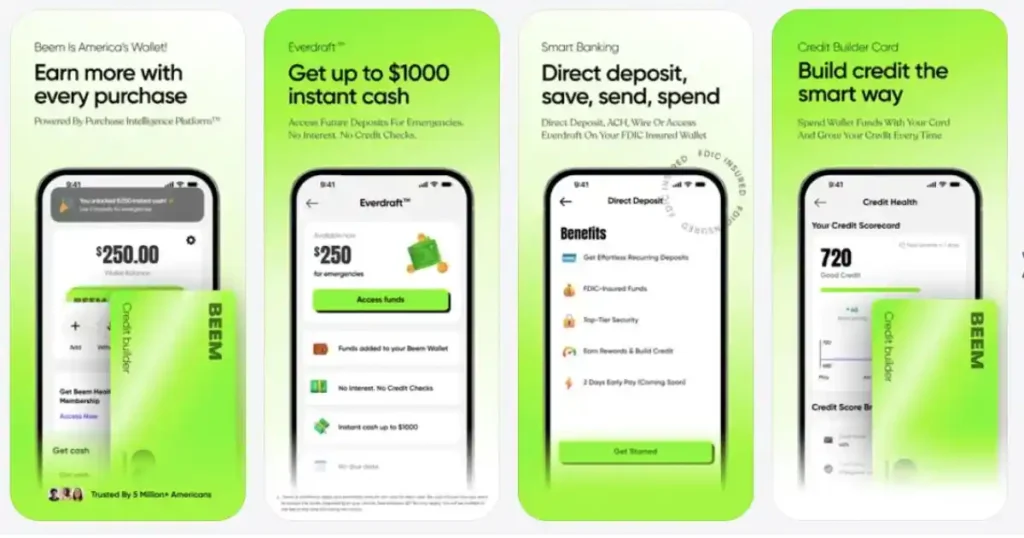
Holiday and temporary workers can access up to $1,000 through Beem Everdraft in 2026 by linking the bank account where their temporary employment deposits land and qualifying based on deposit activity and financial behavior rather than employment permanence or contract duration.
November arrives and with it the most concentrated hiring event in the American economy. Retailers add floor staff. Fulfillment centers scale up warehouse teams. Hotels staff for holiday travel. The seasonal workforce that powers this economy is substantial, economically essential, and financially underserved by almost every financial product it encounters.
The same worker who processes orders at a fulfillment center for eight weeks, earning $900 per week in reliable payroll deposits, cannot qualify for most cash advance apps because their contract ends in January. In 2026, Beem offers a direct alternative. Here is what it actually consists of.
The Temporary and Seasonal Worker Population in 2026
The holiday retail and e-commerce fulfillment workforce represents the largest single category of seasonal employment in the United States, with major retailers and logistics companies hiring hundreds of thousands of temporary workers between October and January. These workers typically earn $15 to $24 per hour, with overtime during peak weeks pushing weekly earnings substantially higher. Their financial profile during employment is often stronger than in the weeks surrounding it — the challenge is not income level. It is the gap between when holiday employment begins and when the first paycheck arrives, and the bridge between the final holiday paycheck and whatever income follows.
Beyond retail, the temporary workforce includes staffing agency professionals, agricultural laborers, tax season hires, and event industry workers — each with distinct financial rhythms and specific access challenges. Administrative professionals placed through agencies receive payroll under the agency’s name rather than the end employer’s, which creates eligibility problems for apps requiring recognized employer payroll.
Agricultural workers may receive weekly cash or check payments outside standardized payroll systems entirely. What all of these workers share is that the income they earn is real, their financial obligations are real, and the financial tools available to permanent workers should be equally available to them.

The Five Specific Financial Gaps That Temporary Workers Face
Gap One: The First Paycheck Delay
Every new assignment begins with a gap between the first day of work and the first paycheck — five to seven days for weekly pay, up to fourteen for biweekly. A holiday worker who starts November 4th and receives their first paycheck November 15th has worked eleven days before any income arrives. During that window, rent, utilities, transportation, and food continue without the new income to offset them.
Beem Everdraft bridges this gap precisely. A $400 to $600 advance taken on day three of a new seasonal assignment, repaying from the first paycheck deposit, covers the most urgent expenses at zero cost. The new employment income arrives, the advance repays cleanly, and the worker enters their first pay cycle with their bills current.
Gap Two: The Final Paycheck and Transition Gap
When a temporary assignment ends, the final paycheck arrives on the next regular payroll cycle — days to a week after the last shift. Between that final paycheck and the next income source, whether a new assignment, unemployment benefits, or another transition, a gap opens with nothing filling it.
For holiday retail workers whose assignments end January 2nd, whose final paycheck arrives January 8th, and whose next income begins January 15th, the seven-day gap is a real but temporary financial vulnerability. Beem Everdraft covers that window specifically, repaying from the first deposit of the next income source without a fixed repayment date creating pressure before that income arrives.
Gap Three: The Between-Assignment Gap
Temporary workers moving between assignments through a staffing agency or independent sourcing often face gaps ranging from a few days to several weeks. During these periods, no income arrives while regular expenses continue. Workers with existing deposit history in their linked bank account have the behavioral foundation for Everdraft eligibility, and the advance bridges the gap at zero cost.
For temporary professionals who work project-based assignments with predictable intervals between them, the between-assignment gap is a recurring structural feature rather than an unexpected event. BudgetGPT’s ability to map historical deposit patterns against recurring expenses allows these workers to plan for between-assignment periods proactively rather than managing them reactively after the pressure has already arrived.
Gap Four: The Holiday Season Expense Convergence
Temporary and seasonal workers hired specifically for the holiday season face a financial irony: the peak earning season coincides with the peak personal expense season. Holiday gifts, family travel, and seasonal celebrations arrive simultaneously with temporary employment income, but the spending needs often precede the paycheck timing.
A fulfillment center worker who starts November 18th receives their first paycheck in late November. Black Friday deals expire before that paycheck arrives. Family gifts need ordering weeks before the holiday. Travel arrangements need booking before prices peak. Beem Everdraft bridges the window between holiday expense timing and holiday employment income timing — allowing seasonal workers to access the income they are actively earning before the payroll cycle delivers it, at exactly zero additional cost.
Gap Five: The Staffing Agency Payroll Recognition Problem
Many temporary workers receive payroll through staffing agencies rather than directly from the end employer. The deposit appears labeled with the agency’s name — ADP TotalSource, Staffmark Group, Manpower, Kelly Services — rather than the workplace where the work actually happens. For cash advance apps that require payroll from a specific recognized employer, this creates an eligibility problem that has nothing to do with the worker’s income level or reliability.
Beem’s behavioral assessment evaluates deposit activity in the linked bank account rather than parsing the employer label on the payroll deposit. A staffing agency payroll deposit that arrives weekly and creates a consistent pattern is evaluated for what it actually demonstrates about financial behavior, regardless of whether the agency name matches any recognized employer list.
How Beem’s Assessment Works for Temporary Employment
A worker beginning a holiday assignment with limited prior deposit history in the linked bank account will present a thinner eligibility profile than a worker with months of consistent deposits. Initial Everdraft limits may be conservative, reflecting available deposit history rather than the income level of the current assignment.
The most effective approach is to link the bank account before the first day of work, deposit the first paycheck promptly, and build the deposit pattern through consistent payroll activity throughout the assignment. As deposit history accumulates, Beem Boost progressively increases the available advance limit.
Workers who have completed multiple consecutive temporary assignments build a cumulative deposit history that reflects sustained employment activity despite the absence of permanent employment. A worker who completed a summer retail assignment, an autumn warehouse assignment, and a current holiday fulfillment role has three consecutive periods of payroll deposit activity in their account.
That history tells the story of consistent employment more accurately than any employer verification could, because it reflects what actually happened financially rather than how those employment arrangements are classified administratively.
BudgetGPT for Temporary Workers: Planning the Full Employment Cycle
Before a seasonal assignment begins, BudgetGPT can analyze existing account history and current expense obligations to identify the specific financial gap between the assignment start date and the first paycheck. Knowing the size of that gap in advance — rather than discovering it when the first week’s bills arrive before the first paycheck — allows for proactive advance planning or spending adjustments. Even setting aside $100 to $200 per week in the weeks before a seasonal assignment begins can meaningfully reduce or eliminate the advance needed to bridge the initial gap.
During the active employment period, BudgetGPT maps weekly payroll deposit timing against recurring expense due dates to identify specific weeks where paycheck timing and bill cycles create cash flow pressure. As a temporary assignment approaches its end date, BudgetGPT models the cash flow impact of income cessation against the current expense calendar to identify where the transition creates the most significant pressure. This modeling allows for targeted advance requests that bridge the most acute post-assignment gaps rather than taking a general advance that may exceed what the transition actually requires.
Maximizing Beem Boost During a Short Assignment
Beem Boost builds advance limits through demonstrated financial behavior over time. For temporary workers whose assignments are short, the Boost-building window is limited by the assignment duration — which makes every payroll cycle and repayment event more significant. The fastest way to build Boost standing during a short assignment is to enable direct deposit to the linked account from the first paycheck and, where the employer offers daily, weekly, or biweekly pay options, choose the most frequent option available. Weekly deposits create twice the deposit events in the same period as biweekly, building frequency signals faster.
Every advance and repayment cycle within a short assignment is a Boost-building opportunity. Using advances for specific, defined needs with immediate repayment from the next paycheck creates clean advance-to-repayment records that contribute positively to Boost standing.
Multiple clean repayment cycles within a six-week holiday assignment can produce meaningful Boost progression despite the limited duration. Critically, Boost standing built during a temporary assignment does not disappear when that assignment ends. Workers who maintain their Beem account and continue building deposit activity from subsequent income sources carry their accumulated standing forward — each assignment adding to a cumulative record that grows access over time.
Read: Using BudgetGPT to Build a 30 Day Plan Around Each Paycheck Cycle
Practical Steps for Getting Started
Download Beem and link your primary bank account before your first day of work. Setting up the account and linking the bank before the assignment begins means Everdraft eligibility assessment starts the moment your first paycheck deposit arrives rather than from a standing start when you first need an advance. Complete direct deposit enrollment paperwork on day one and specify the linked bank account as the deposit destination. If your temporary employer offers daily, weekly, or biweekly pay options, choose the most frequent one.
Use BudgetGPT before the first paycheck arrives to map your current expense obligations against the expected first paycheck date and identify the specific advance amount needed to bridge the gap. A targeted advance sized to the actual gap is more effective and more Boost-favorable than a general advance that exceeds the specific need. Repay every advance from the earliest available deposit — for temporary workers whose assignment duration is limited, each repayment cycle is a Boost-building opportunity that compounds within the short assignment window.
The Bottom Line
The word temporary attached to an employment contract does not reduce the reality of the income it generates, the legitimacy of the financial obligations that income must cover, or the appropriateness of financial tools that workers in temporary positions deserve to access. A fulfillment center worker earning $900 per week for eight weeks has generated $7,200 in real income.
A holiday retail associate working 40 hours per week through December has the same income profile as any permanent part-time worker. The financial system that treats temporary employment as a disqualifying characteristic is not applying a reliability standard — it is applying an employment permanence preference that has no bearing on whether a temporary worker will repay an advance from the next paycheck they are currently earning.
Beem’s behavioral assessment evaluates repayment capacity directly from the deposit activity that temporary employment generates, without requiring that employment to be permanent before taking it seriously. No permanent position required. No minimum contract duration. No credit check. No interest. No fees. Up to $1,000 available based on the deposit activity that temporary employment generates, repaying from the next paycheck whether that paycheck is the seventh week of a holiday assignment or the first deposit of the post-assignment transition. That is what Beem offers holiday and temporary workers in 2026.
Frequently Asked Questions
Can holiday retail workers qualify for Beem Everdraft during a seasonal assignment?
Yes. Beem evaluates bank account deposit activity and financial behavior rather than requiring permanent employment or a specific contract duration. Holiday retail workers who receive consistent weekly or biweekly payroll deposits into their linked account during their seasonal assignment can qualify based on that deposit pattern. The temporary nature of the employment is not a disqualifying factor.
Does Beem accept staffing agency payroll deposits?
Yes. Beem’s behavioral assessment evaluates deposit activity in the linked bank account regardless of whether payroll originates from a direct employer or through a staffing agency. Deposits arriving consistently create the same frequency and amount signals as direct employer payroll. The agency label does not exclude a deposit from the eligibility assessment.
How quickly can a temporary worker build Beem eligibility during a short seasonal assignment?
Eligibility builds fastest when deposit frequency is maximized and advance repayments are made promptly from each qualifying deposit. Choosing the most frequent payroll option available and depositing paper checks immediately both accelerate the process. Meaningful eligibility and Boost progression can be established within two to four weeks of consistent deposit activity.
What happens to Beem Boost standing after a temporary assignment ends?
Boost standing built during a temporary assignment carries forward and does not disappear when the assignment ends. Workers who maintain their Beem account post-assignment and continue building deposit activity from subsequent income sources carry their accumulated standing forward. Each period of positive financial behavior adds to the cumulative record that drives limit progression over time.
Can Beem bridge the gap between a seasonal assignment ending and the next income starting?
Yes. Beem Everdraft ties repayment to the next qualifying deposit from whatever income source follows the temporary assignment. A holiday worker whose assignment ends January 5th and whose next income begins January 15th can advance to bridge the ten-day gap, with repayment processing from the first deposit of the new income source.