
Key Summary
The check is coming. You know it is coming. The government confirmed it is coming. But it is not here yet, and your landlord does not accept “pending” as a form of payment. The gap between knowing your benefit is on its way and actually having the money in your account is one of the most financially dangerous windows a benefits recipient faces. It can last days, weeks, or in some cases months, and during that window, bills do not pause, late fees do not pause, and life does not pause.
This guide is specifically about that waiting period. Not about whether your income qualifies for a cash advance (it likely does), but about what to do right now while you are sitting in the gap between benefit deposits.
The Five Types of Government Benefit Waiting Periods
Not all waiting periods are the same. The reason you are waiting determines how long the gap lasts, what your bank account looks like during it, and which cash advance strategy makes the most sense.
Type 1: Initial Application Processing
You filed for a government benefit and are waiting for the first payment to arrive. This is the longest and most financially devastating waiting period.
SSDI applications average 6 to 8 months for initial decisions. Appeals add another 12 to 18 months. During the entire process, you receive zero SSDI income unless you also qualify for SSI, which has its own 30 to 60 day processing window. State unemployment claims typically process in 2 to 4 weeks but can stretch to 6 weeks or longer during high-volume periods. TANF applications take 30 to 45 days in most states. VA disability claims average 150 to 200 days for initial rating decisions.
During an initial application wait, your bank account may have no benefit deposits at all. Everdraft™ evaluates whatever deposit activity does exist: prior employment income that is winding down, savings transfers, income from a working spouse, gig work, or any other source. The weaker your deposit activity during this period, the lower your eligible advance amount may be. But even a modest advance can prevent the cascade of late fees and missed payments that makes recovery harder once benefits finally start.
Type 2: Recertification and Renewal Gaps
Most government benefits require periodic recertification. You submit updated paperwork proving you still qualify. The agency processes it. During processing, your payment may be delayed or temporarily suspended.
SNAP recertification happens every 6 to 12 months in most states. If your paperwork is late or the agency has a processing backlog, your monthly EBT load can be delayed or your case closed entirely until the recertification is processed. Medicaid renewals can disrupt associated benefits. SSI and SSDI Continuing Disability Reviews (CDRs) can temporarily freeze payments if the SSA needs additional medical evidence. Housing voucher annual recertifications can delay rental assistance payments to landlords, creating indirect financial pressure on tenants.
Recertification gaps are particularly cruel because you did nothing wrong. You are still eligible. Your circumstances have not changed. The system simply needs time to confirm what it already knows, and your rent is due while it confirms.
Type 3: Payment Schedule Mismatches
Your benefit pays on the 3rd of the month. Your rent is due on the 1st. That two-day gap exists every single month, twelve times a year, and it generates a late fee every time unless you have cash to bridge it.
Social Security pays on the 2nd, 3rd, or 4th Wednesday of the month depending on your birth date. SSI pays on the 1st (or the prior business day). TANF payment dates vary by state. VA benefits pay on the 1st. Unemployment pays weekly or biweekly on state-determined days.
None of these schedules were designed to align with when your bills are due. The structural mismatch between government payment calendars and landlord, utility, and creditor due dates creates a recurring micro-gap that costs benefits recipients hundreds of dollars annually in late fees alone.
Type 4: Holiday and Weekend Payment Shifts
When a benefit payment date falls on a federal holiday or weekend, the deposit shifts. Usually it arrives on the last business day before the scheduled date, but sometimes processing delays push it to the first business day after. A one-day shift is manageable. A three-day shift over a holiday weekend when your auto-pay bills are already scheduled can overdraft your account.
The week between Christmas and New Year’s, the days around Thanksgiving, and federal holiday Mondays in February, May, September, October, and November are the most common periods where payment shifts create cash flow disruptions for benefits recipients.
Type 5: Administrative Errors and System Failures
Government payment systems occasionally fail. A direct deposit is sent to a closed account. A system glitch delays an entire batch of payments. A caseworker enters incorrect information that suspends your case. A change-of-address update disrupts your payment routing.
These errors are not your fault, but the financial consequences land entirely on you. Resolving an administrative error with a government agency can take days to weeks of phone calls, office visits, and documentation submissions. During the resolution period, your benefit income is effectively frozen.
Your Cash Advance Options During Each Waiting Period
Different waiting periods call for different approaches. Here is how to think about cash advances based on which type of gap you are in.
During Initial Application Processing (Weeks to Months)
This is the toughest scenario because your bank account may have limited recent deposit activity. Your options depend on what income, if any, is still flowing.
If you have any income depositing into your bank account (severance, spouse’s income, part-time work, savings drawdowns, support payments), link that account to Beem. Everdraft™ evaluates whatever activity exists. Your eligible amount may be lower than it would be with full benefit income flowing, but any access to a no-interest advance is better than the alternatives available to someone waiting on a government decision.
If you have a prior history of deposits from a job you recently left, that employment history is part of your bank account record. Everdraft™ looks at recent activity. If you apply to Beem while that employment deposit history is still fresh, the system has more data to work with than if you wait until the account has been dormant for months.
If you have zero deposit activity, building any form of income into your bank account improves your position. Even small gig deposits, selling items online, or small transfers from family create the activity Everdraft™ needs. Start depositing anything into your linked account as soon as possible.
During Recertification Gaps (Days to Weeks)
Recertification delays are shorter but unpredictable. Your bank account has a strong history of benefit deposits, and the gap is temporary. This is an ideal scenario for Everdraft™ because the system can see months of consistent prior activity and assess that the interruption is a pause, not a permanent stop.
Advance only the amount needed to cover the specific bills due during the recertification processing window. If your recertification typically takes 10 days and your rent plus utilities during that period total $900, an advance of $900 covers the gap cleanly and gets repaid once the benefit resumes.
During Payment Schedule Mismatches (Recurring Monthly)
A 2-day or 5-day gap between when your benefit arrives and when your rent is due happens every month. This is the most predictable cash advance scenario possible.
If you know your Social Security deposits on the 3rd Wednesday and your rent is due on the 1st, you can plan a small monthly advance to cover that specific window. An advance of $200 to $500 to pay rent on time, repaid within days when your benefit deposits, eliminates the late fee cycle that costs you $300 to $600 per year.
For recurring mismatches, the cost of the late fees you avoid is often greater than any cost associated with the advance itself. This is a mathematically clear use case.
During Holiday Payment Shifts (Days)
Holiday shifts are short but disruptive. If you know a federal holiday falls on your payment date, plan ahead by requesting a small advance 2 to 3 days before the holiday. This pre-bridges the gap rather than reacting after your account has already been overdrawn.
Check the federal holiday calendar at the beginning of each year and mark the months where your benefit date coincides with a holiday. Knowing the specific dates in advance turns a potential crisis into a planned action.
During Administrative Errors (Unpredictable)
Administrative errors create the most stressful waiting periods because you cannot predict when they will be resolved. Your bank account shows a sudden stop in deposits that was not supposed to happen. Everdraft™ still has your prior deposit history to evaluate, so eligibility should persist in the short term.
Document the error immediately. Call the agency. Get a case number. While you work through the bureaucratic resolution, an Everdraft™ advance covers the bills that the missing deposit was supposed to pay. When the error is corrected and deposits resume (sometimes with back-pay for the missed periods), your financial position stabilizes.
Download Beem and cover the gap while you wait.
Why Traditional Financial Products Fail During Benefit Waiting Periods
The waiting period between government benefit deposits is exactly when people need financial help most and exactly when most financial products become unavailable.
Banks Will Not Help
Most banks do not offer overdraft protection to accounts funded primarily by government benefits. Even if your account has overdraft coverage, fees of $30 to $35 per overdraft item make it an expensive way to bridge a short gap. Three overdrafts during a 10-day recertification delay cost $90 to $105 in fees, money that comes directly out of your benefit payment when it finally arrives.
Credit Cards Compound the Problem
Using a credit card to cover expenses during a benefit gap adds interest charges on top of the expenses themselves. If you carry a $500 balance at 24 percent APR for two months while waiting on a processing delay, you have added $20 in interest to the original $500 need. On a fixed benefit income, that $20 represents real purchasing power lost. And credit card applications during benefit gaps often get denied due to limited income reporting.
Payday Lenders Prey on the Gap
Payday lenders position themselves as the solution for people waiting on benefit deposits. They are not a solution. They are a trap. A $300 payday loan at 400 percent APR during a 30-day benefit processing delay costs $75 in interest. During a 6-month SSDI application wait, the same loan rolled over monthly costs $450 in interest on a $300 principal. That is 150 percent of the original amount, paid to a lender who knew you were vulnerable.
Friends and Family Strain Under Repeated Asks
Borrowing from family during a one-time benefit delay is manageable. Asking again during the next recertification gap, and again during the next holiday shift, and again during the next administrative error erodes relationships and creates dependency dynamics that harm both parties.
Beem Provides What These Options Cannot
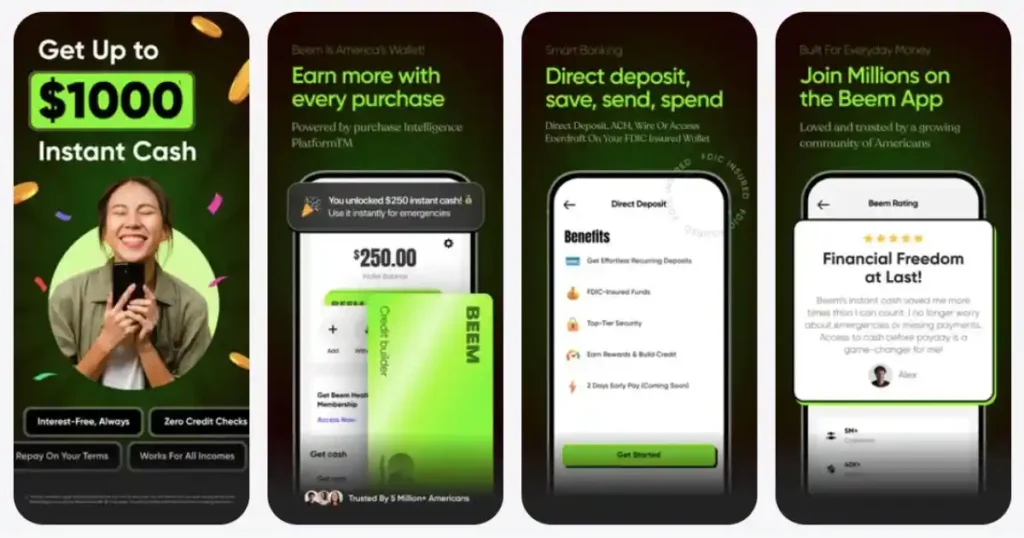
Everdraft™ offers up to $1,000 with no interest, no credit check, and no employer verification. It does not charge overdraft fees. It does not compound. It does not require collateral or create long-term debt. For someone waiting on a government benefit deposit, these are not just features. They are the difference between a financial pause and a financial collapse.

Building a Benefit Gap Survival System
Waiting on government benefits should not require improvisation every time. Here is how to build a repeatable system for managing gaps.
Map Your Benefit Calendar for the Entire Year
At the start of each year, write down every expected benefit payment date for all 12 months. Mark the federal holidays that could shift those dates. Identify the months where your payment date and your rent due date create the widest gap. Knowing when gaps will occur transforms them from emergencies into planned events.
Establish Your Beem Account Before You Need It
Do not wait until you are in a crisis to set up Beem. Link your bank account and let Everdraft™ build a profile while your benefits are flowing normally. When a gap occurs, your eligibility is already established and your advance is available immediately. Setting up during a gap means Everdraft™ has less data to work with and your eligible amount may be lower than if you had established the account during stable months.
Create a Gap-Specific Budget
Your regular monthly budget assumes your benefit arrives on time. A gap budget assumes it does not. Identify the absolute non-negotiable expenses during any waiting period (rent, medications, utilities on shutoff notice) and separate them from expenses that can wait a few days (subscription services, non-urgent purchases, discretionary spending). Knowing your gap budget amount tells you exactly how much to request from Everdraft™.
Keep One Bill Payment Ahead When Possible
If you can pay one month’s utility bill early during a month when your benefit arrives on time, you create a one-month buffer on that bill. The next time a benefit gap occurs, that utility bill is already covered and one less expense draws from your advance. Apply this approach to whichever bill is most disruptive when missed (usually rent or a utility on shutoff schedule).
Use BudgetGPT to Track Your Gap Patterns
Over time, you will see which months are worst for benefit gaps and which expenses consistently cause problems during delays. BudgetGPT can help you map these patterns and plan your spending around them rather than reacting after the gap has already created damage.
What to Do During Extended Government Processing Delays
Some waiting periods stretch far beyond what a single cash advance can cover. SSDI appeals that take over a year, housing voucher waitlists that span years, and benefit restoration processes after wrongful terminations all create extended periods of financial instability.
Recognize the Limits of a Cash Advance
Everdraft™ is a short-term bridge, not a long-term income replacement. During a 12-month SSDI appeal, a cash advance covers specific urgent expenses during the wait. It does not replace the missing $1,500 per month in SSDI income over the full appeal period. Using advances strategically for the most consequential expenses (keeping housing stable, maintaining medication access, preventing vehicle repossession) preserves the tool’s usefulness across the full waiting period.
Explore Interim Income Sources
Any deposit activity during an extended wait strengthens your Everdraft™ profile and provides baseline income. Part-time work within disability program limits, gig work, selling unneeded possessions, and community assistance programs all create bank account activity that supports continued access to Everdraft™.
Contact Benefit Advocacy Organizations
Legal aid organizations, disability rights groups, and benefits counselors can often expedite delayed government processing. A congressman’s office inquiry into a stalled SSDI case has been known to accelerate decisions. These are free resources that shorten the waiting period itself rather than just managing its financial consequences.
Get Beem set up now before your next benefit gap.
People Also Ask
Can you get a cash advance while waiting for government benefits?
Yes. If your bank account has deposit activity from any source, Beem’s Everdraft™ can evaluate your eligibility for a cash advance up to $1,000. Prior deposit history from employment, other benefits, or any income source contributes to your profile even during a current benefit processing gap.
What can I do if my government benefit payment is delayed?
Contact the issuing agency to confirm the delay and get an estimated resolution date. While waiting, a cash advance from Everdraft™ can cover urgent expenses without interest charges. Document the delay with a case number in case back-pay or retroactive adjustments are owed.
Does Beem work during SSDI application waiting periods?
Beem works based on your bank account activity. If you have deposits from any source during your SSDI application period (savings, spouse income, part-time work, other benefits), Everdraft™ can evaluate your eligibility. The longer you wait to set up Beem after your prior income stops, the less deposit history the system has to work with.
How do I cover rent when my benefit deposit is late?
If your benefit payment date falls after your rent due date, an Everdraft™ advance can cover rent on time and be repaid when the benefit deposits a few days later. This eliminates the recurring late fees that benefit schedule mismatches create every month.
Will using a cash advance affect my pending government benefit application?
Cash advances are not income. They do not get reported to government agencies as wages or earnings. For non-means-tested programs like SSDI, a cash advance has no impact on your application. For means-tested programs like SSI or TANF, the advance temporarily increases your bank balance, so manage timing and amounts to stay within asset limits.
Can I set up Beem before my benefits start?
Yes, and this is strongly recommended. Establishing your Beem account and letting Everdraft™ build a profile from your current bank activity (even if it is pre-benefit income) gives you immediate access to an advance when a gap occurs. Setting up during a gap means less data for Everdraft™ to evaluate.
The Bottom Line
Government benefit deposits are reliable. Government processing timelines are not. The gap between those two realities is where bills go unpaid, late fees accumulate, credit scores drop, and financial stability unravels. Beem’s Everdraft™ exists to fill that gap with up to $1,000 in no-interest advances based on your bank account activity.
Whether you are waiting on an initial application, sitting through a recertification delay, bridging a monthly payment schedule mismatch, or dealing with an administrative error that froze your deposit, the solution is the same: real cash when the government’s timeline does not match your life’s timeline.
Set up Beem before the gap. Use it during the gap. Repay when the deposit lands. That is the system.