

Key Summary
International money transfers have become part of everyday life for millions of Americans. Some people send money to support family members overseas, while others pay freelancers, business partners, students, or travel expenses abroad.
The process used to involve long bank visits, complicated paperwork, hidden fees, and slow transfer times. Today, mobile apps and digital financial platforms have made international money transfers much faster, more affordable, and significantly more convenient.
Modern money transfer apps allow users to send funds globally within minutes using smartphones, debit cards, bank accounts, or digital wallets. Many platforms also provide real-time exchange rate tracking, transparent pricing, and improved security protections.
However, not all international transfer apps work the same way.
Some focus on low fees, while others prioritize fast delivery speeds, wider country coverage, or better exchange rates. Certain apps are ideal for large international transfers, while others work better for smaller personal payments.
Choosing the right app matters because transfer costs, hidden conversion fees, and delivery delays can significantly affect how much money recipients actually receive.
This guide explores the best apps to send money internationally from the USA in 2026, how these platforms work, what features matter most, and how users can avoid unnecessary transfer costs.
Why International Money Transfer Apps Are Growing Rapidly
The demand for global money transfers continues increasing every year.
Several factors are driving this growth, including:
- Remote work opportunities
- Global freelancing
- International education
- Immigration and family support
- Cross-border business payments
- International travel
- Digital banking adoption
Traditional banks still offer international wire transfers, but many consumers now prefer fintech apps because they are often:
- Faster
- Easier to use
- More transparent
- Less expensive
- Mobile-friendly
Many digital transfer apps also provide live exchange rate visibility, allowing users to understand exactly how much money recipients will receive before completing transfers.
This transparency has helped modern transfer platforms compete aggressively against traditional banking systems.
What To Look for in an International Money Transfer App
Before choosing an app, users should compare several important factors carefully.
Exchange Rates
Exchange rates play a major role in international transfers.
Some apps advertise low fees while quietly offering weaker exchange rates that reduce the total amount recipients receive.
Even small differences in exchange rates can significantly impact larger transfers.
Transfer Fees
Transfer costs vary widely depending on:
- Destination country
- Payment method
- Transfer speed
- Currency conversion
- Bank partnerships
Some apps charge flat fees, while others use percentage-based pricing.
Delivery Speed
Certain apps provide transfers within minutes, while others may take several business days depending on the country and banking network involved.
Country Availability
Not every app supports every country or currency. Users should always confirm that the platform supports both the sending and receiving locations.
Security Protections
Financial apps handling international transfers should include:
- Encryption
- Fraud monitoring
- Identity verification
- Secure payment systems
- Multi-factor authentication
Payment Options
Modern apps may support transfers through:
- Bank accounts
- Debit cards
- Credit cards
- Digital wallets
- Mobile payment systems
The best app often depends on how users prefer to fund transfers and how recipients prefer receiving money.
Top 5 Apps to Send Money Internationally From the USA
Wise
Wise has become one of the most popular international money transfer platforms because of its transparent pricing and real exchange rates.
Unlike many traditional transfer providers, Wise uses the mid-market exchange rate instead of heavily marked-up conversion rates. This often helps users save money on international transfers.
The app supports transfers to dozens of countries and currencies while offering clear fee breakdowns before payments are sent.
Wise is especially popular among:
- Freelancers
- Remote workers
- International students
- Small businesses
- Families sending recurring transfers
Why Users Choose Wise
- Transparent exchange rates
- Lower overall transfer costs
- Multi-currency account support
- Strong international coverage
- Easy mobile app experience
Best For
Wise works particularly well for users prioritizing low conversion costs and transparent pricing.
Remitly
Remitly focuses heavily on international family remittances and fast delivery options.
The platform allows users to send money to many countries worldwide using several payout methods, including:
- Bank deposits
- Cash pickup
- Mobile wallets
- Home delivery in select regions
One major advantage of Remitly is flexibility. Users can often choose between economy transfers with lower fees or express transfers with faster delivery.
The app is especially popular among immigrant families sending regular support payments internationally.
Why Users Choose Remitly
- Fast international transfers
- Multiple delivery options
- Cash pickup availability
- Strong global coverage
- Flexible transfer speeds
Best For
Remitly is ideal for users sending family support payments internationally, especially to countries with strong cash pickup networks.
PayPal
PayPal remains one of the most recognized digital payment platforms globally.
Many users already have PayPal accounts, making international transfers convenient for personal payments and online transactions.
PayPal allows users to send money internationally using linked bank accounts, debit cards, PayPal balances, or credit cards.
However, transfer fees and exchange rate markups can sometimes be higher compared to specialized international transfer apps.
Despite this, PayPal remains extremely popular because of:
- Brand familiarity
- Widespread acceptance
- Buyer protection systems
- Easy account setup
Why Users Choose PayPal
- Global brand recognition
- Convenient account integration
- Fast digital payments
- Broad international availability
- Easy peer-to-peer transfers
Best For
PayPal works best for users prioritizing convenience and broad global accessibility over the absolute lowest transfer costs.
Xoom
Xoom, a PayPal service, specializes specifically in international money transfers.
The platform supports transfers to many countries with multiple payout methods including:
- Bank deposits
- Cash pickup
- Mobile wallet delivery
- Bill payments abroad
Xoom often focuses on faster transfer speeds and simplified international remittance services.
The platform also provides tracking features so users can monitor transfer progress in real time.
Many users prefer Xoom because it combines PayPal-backed infrastructure with international transfer specialization.
Why Users Choose Xoom
- Fast delivery speeds
- Strong international coverage
- Multiple payout methods
- Real-time tracking
- Backed by PayPal infrastructure
Best For
Xoom is ideal for users prioritizing speed and flexible recipient payout options.
OFX
OFX focuses more heavily on larger international transfers and business-related transactions.
Unlike many smaller transfer apps, OFX often provides competitive exchange rates for higher transfer amounts without charging traditional transfer fees.
The platform supports a wide range of currencies and also offers tools for businesses managing international payments regularly.
OFX is particularly attractive for:
- Business transfers
- Property purchases abroad
- Large family transfers
- International tuition payments
Why Users Choose OFX
- Competitive exchange rates
- No transfer fees on many transactions
- Strong support for larger transfers
- Business payment tools
- Global currency coverage
Best For
OFX works best for users sending larger international payments where exchange rate savings become especially important.
How Exchange Rates Affect International Transfers
Many users focus only on transfer fees while overlooking exchange rates.
In reality, exchange rate markups often cost more than visible fees.
For example, a provider may advertise:
- “Zero transfer fees”
- “Free transfers”
- “No hidden costs”
but still apply weaker currency conversion rates that reduce the total payout received internationally.
Even small exchange rate differences can become expensive for larger transfers.
For this reason, comparing both:
- Transfer fees
- Actual exchange rates
is extremely important before sending money internationally.
Common International Transfer Fees To Watch For
International money transfer costs can sometimes feel confusing because every provider structures pricing differently. Some apps advertise low fees upfront but recover costs through exchange rate markups or premium delivery charges later in the process.
Understanding how these fees work is important because even small charges can significantly affect how much money recipients actually receive.
Before sending money internationally, users should always review the full cost structure carefully instead of focusing only on the advertised transfer fee.
Below are some of the most common international transfer fees users should watch for.
Currency Conversion Markups
Currency conversion markups are one of the most overlooked international transfer costs and the same markup problem shows up for Canadians moving CAD/USD.
Many providers advertise:
- “Zero transfer fees”
- “Free transfers”
- “No commission”
but still make money by offering weaker exchange rates compared to the real market rate.
For example, the actual market exchange rate may convert:
- 1 USD = 0.92 EUR
but the transfer platform may offer:
- 1 USD = 0.88 EUR
That small difference may not seem significant initially, but on larger transfers, the hidden cost can become substantial.
Some providers intentionally emphasize “low fees” while quietly increasing profits through exchange rate spreads instead.
This is why users should always compare:
- The platform’s exchange rate
- The real mid-market exchange rate
- The final amount recipients will receive
In many cases, exchange rate markups cost more than visible transfer fees themselves.
Debit or Credit Card Processing Fees
Many international transfer apps allow users to fund payments using debit cards or credit cards for added convenience.
However, card-funded transfers often cost more than transfers funded directly through bank accounts.
Common card-related fees may include:
- Debit card processing charges
- Credit card transaction fees
- Cash advance fees from credit card companies
- Higher service charges for instant processing
Credit card-funded transfers can become especially expensive because some credit card issuers classify international transfers as cash advances.
This may trigger:
- Higher interest rates
- Immediate interest accrual
- Additional cash advance fees
Bank account transfers are often cheaper, although they may take longer to process.
Users prioritizing lower transfer costs usually benefit from comparing payment methods carefully before completing transactions.
Instant Transfer Charges
Speed often comes at a price with international money transfers.
Many apps provide standard delivery options at lower costs while charging extra for:
- Instant transfers
- Same-day delivery
- Express processing
- Priority payouts
For example, a standard transfer may arrive within several business days for a lower fee, while an express transfer may cost significantly more for near-instant delivery.
In emergency situations, paying extra for speed may make sense. However, users sending routine or nonurgent payments can often save money by selecting slower delivery options instead.
Before choosing instant delivery, users should compare:
- Delivery speed differences
- Additional express charges
- Total transfer costs
- Recipient urgency
Paying for faster service repeatedly can increase long-term transfer expenses considerably.

Recipient Bank Fees
In some countries, recipient banks may deduct additional fees before funds reach the final account.
These fees are not always controlled directly by the sending platform and may depend on:
- Local banking systems
- Currency conversion policies
- Intermediary banks
- International wire processing networks
As a result, the recipient may receive less money than expected even if the sender already paid transfer fees upfront.
Recipient bank deductions are more common with:
- Traditional wire transfers
- Certain international banking corridors
- Smaller regional banks
- SWIFT network transactions
Some modern fintech apps reduce these risks by partnering directly with local banking networks or digital payment systems.
Users sending larger amounts internationally should always confirm whether:
- Additional receiving fees apply
- Intermediary bank charges exist
- Currency conversion occurs on the receiving side
This helps avoid misunderstandings between senders and recipients later.
Transfer Cancellation Fees
Certain providers charge cancellation or reversal fees once transfer processing has already started.
While some apps allow free cancellations before funds are processed, others may deduct fees if:
- The transfer is already underway
- Currency conversion has been completed
- Funds have reached intermediary systems
- Payout processing has begun
Cancellation policies vary significantly between platforms.
Some providers may also:
- Delay refunds
- Deduct exchange rate losses
- Charge administrative processing fees
Before sending money internationally, users should review:
- Cancellation rules
- Refund timelines
- Modification policies
- Error correction procedures
This becomes especially important for larger transfers where cancellation costs may be more significant.
Why Understanding Fees Matters
International transfer pricing can sometimes appear simple on the surface while hiding additional costs within exchange rates, payout methods, or delivery upgrades.
Without careful review, users may end up paying far more than expected across repeated transactions.
Understanding the full fee structure helps users:
- Compare providers more accurately
- Avoid hidden charges
- Maximize recipient payouts
- Reduce long-term transfer costs
- Choose better payment methods
The cheapest-looking option is not always the most affordable overall.
In many cases, apps with transparent pricing and fair exchange rates provide better long-term value than platforms advertising “free” transfers with hidden markups.
Taking a few extra minutes to review all potential fees carefully can help users make smarter and more cost-effective international transfer decisions.
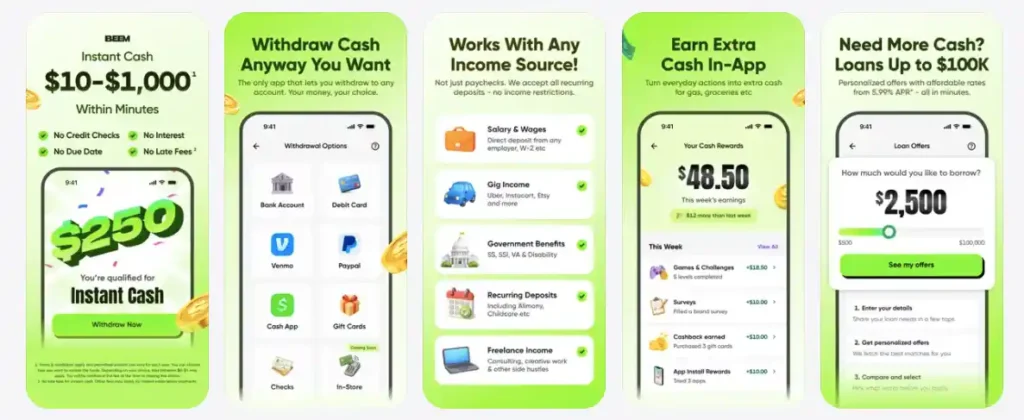
How Beem Helps Simplify Financial Transfers
Beem focuses on making digital financial management more convenient through user-friendly financial tools and smarter money management features.
For users handling cross-border financial responsibilities, budgeting support and financial visibility can become especially important when managing:
- International family expenses
- Recurring overseas support
- Travel costs
- Currency exchange planning
- Emergency money transfers
Beem’s broader financial wellness ecosystem helps users manage money more effectively while navigating modern financial needs.
Instead of focusing only on transactions, the platform supports healthier financial decision-making overall.
Are International Money Transfer Apps Safe?
Most established international money transfer apps use advanced security systems and fraud prevention technologies to protect users and financial transactions. Modern platforms invest heavily in encryption, identity verification, account monitoring, and transaction security because international payments involve highly sensitive financial information.
However, even the safest financial apps still require users to follow responsible security practices carefully.
Cybercriminals continue targeting digital payment systems through phishing scams, fake websites, identity theft attempts, and account hacking strategies. This means users should not rely only on the app’s security protections alone.
Understanding how to use international transfer apps safely can significantly reduce financial risks and help protect personal information during cross-border transactions.
Below are some of the most important safety practices every user should follow.
Use Trusted Platforms Only
One of the most important steps is choosing reputable and well-established money transfer platforms.
Trusted apps usually have:
- Strong customer reviews
- Transparent pricing policies
- Clear security practices
- Verified business information
- Reliable customer support
- Long-standing industry reputations
Well-known international transfer providers invest heavily in compliance systems, fraud prevention teams, and financial security infrastructure.
Before using any app, users should research:
- Company reputation
- Transfer policies
- Customer experiences
- Security features
- Licensing information
- Data privacy protections
Smaller or unfamiliar apps may sometimes offer attractive fees or promotions, but users should be cautious if the platform lacks transparency or credible business information.
A legitimate money transfer service should clearly explain:
- How transfers work
- What fees apply
- How user data is protected
- How customer support can be contacted
Using trusted platforms significantly reduces the chances of fraud, unauthorized withdrawals, or payment problems.
Enable Multi-Factor Authentication
Multi-factor authentication adds an extra layer of protection beyond passwords alone.
Most financial apps now offer multi-factor authentication through:
- SMS verification codes
- Authentication apps
- Email confirmations
- Device verification systems
- Biometric login features
This additional security step helps prevent unauthorized access even if someone obtains a user’s password.
For example, if a hacker gains access to login credentials through a phishing attack or data breach, multi-factor authentication can still block account access without the secondary verification code.
Users transferring money internationally should always enable:
- Two-factor authentication
- Face ID or fingerprint login
- Device verification alerts
- Account login notifications
Because international transfers often involve larger amounts of money and cross-border transactions, stronger login protection becomes especially important.
Accounts without multi-factor authentication are generally far more vulnerable to fraud and hacking attempts.
Double-Check Recipient Details
Incorrect recipient information is one of the most common international transfer mistakes.
Even a small error in banking details may cause:
- Delayed transfers
- Failed transactions
- Funds sent to the wrong account
- Additional correction fees
- Lengthy recovery processes
Before confirming any transfer, users should carefully verify:
- Recipient name spelling
- Bank account numbers
- Routing or SWIFT codes
- Mobile wallet details
- Currency selection
- Country information
International payments can sometimes be difficult or impossible to reverse once processing begins.
This becomes especially important for larger transfers involving:
- Tuition payments
- Family support
- Business transactions
- Property-related payments
Many users rush through payment screens quickly, especially when sending recurring transfers. However, taking a few extra moments to verify details carefully can prevent major financial problems later.
Some apps also allow users to save verified recipients securely for future transactions, helping reduce repeated data entry errors.

Avoid Public Wi-Fi for Transfers
Public Wi-Fi networks can create serious security risks for financial transactions.
Networks in locations such as:
- Airports
- Cafes
- Hotels
- Shopping centers
- Public transportation hubs
may not always be secure.
Cybercriminals sometimes use unsecured networks to intercept sensitive information such as:
- Login credentials
- Banking information
- Payment details
- Verification codes
When sending money internationally, users should always use:
- Secure home internet connections
- Trusted mobile data networks
- Password-protected Wi-Fi systems
If public Wi-Fi is unavoidable, using a trusted virtual private network (VPN) may provide additional protection.
Financial transactions should never be completed on networks that feel suspicious or unsecured.
Protecting internet connections is an important part of protecting financial accounts overall.
Watch for Phishing Scams
Phishing scams remain one of the biggest threats targeting digital payment users.
Fraudsters often impersonate financial companies through:
- Fake emails
- Text messages
- Phone calls
- Social media messages
- Fraudulent websites
These scams may attempt to trick users into revealing:
- Passwords
- Verification codes
- Banking details
- Personal identification information
For example, scammers may send messages claiming:
- “Your account has been locked”
- “Verify your transfer immediately”
- “Suspicious activity detected”
- “Update your payment information now”
The message may include fake links designed to steal login credentials or financial information.
Users should always:
- Verify website URLs carefully
- Avoid clicking suspicious links
- Contact companies directly through official apps or websites
- Ignore unexpected login requests
- Never share verification codes with unknown individuals
Legitimate financial companies typically do not request sensitive account information through unsolicited messages.
Staying alert to phishing attempts can significantly reduce fraud risks.
Additional Safety Tips for International Transfers
Beyond the basic precautions above, users can improve transfer security further by following a few additional habits.
Monitor Account Activity Regularly
Users should review account activity frequently to spot unauthorized transactions quickly. Early detection often makes fraud resolution much easier.
Use Strong Passwords
Financial accounts should always use unique and difficult-to-guess passwords. Avoid reusing passwords across multiple apps or websites.
Keep Apps Updated
Security updates help protect against newly discovered vulnerabilities and cyber threats. Using outdated app versions may increase security risks.
Verify Transfer Notifications Carefully
Fraudsters sometimes send fake transfer confirmations or payment alerts designed to create confusion. Users should always verify transactions directly inside official apps.
Why Security Matters More With International Transfers
International money transfers can sometimes involve:
- Larger payment amounts
- Multiple financial systems
- Currency conversions
- Overseas banking networks
- Delayed recovery processes
If fraud or transfer errors occur, resolving issues may become more complicated compared to domestic payments.
That is why using secure apps and responsible financial practices is especially important when sending money internationally.
Strong security habits help protect:
- Personal information
- Financial accounts
- Recipient payments
- Transaction histories
- Digital identities
The Role of Technology in Safer Global Transfers
Modern financial technology has improved international payment security dramatically in recent years.
Many established apps now use:
- AI-powered fraud detection
- Real-time transaction monitoring
- Biometric authentication
- Encryption technology
- Identity verification systems
These systems help identify suspicious activity quickly and reduce fraud risks before transactions are completed.
At the same time, scammers continue adapting their tactics constantly. This means users still play a critical role in maintaining account security.
The safest international transfer experience usually combines:
- Trusted financial platforms
- Strong app security systems
- Responsible user behavior
- Careful transaction monitoring
Using trusted apps responsibly can significantly reduce international transfer risks while helping users move money globally with greater confidence and peace of mind.
Why Transfer Speed Matters
Different situations require different transfer speeds.
For example:
- Emergency family support may require instant delivery
- Tuition payments may allow longer processing times
- Business invoices may depend on deadlines
- Travel emergencies may require same-day access
Faster transfers often cost more, so users should compare urgency versus overall cost carefully.
Economy transfers may save money when delivery speed is less important.
Digital Wallets Are Changing Global Transfers
The rise of mobile wallets and digital banking is transforming international payments rapidly.
In many countries, recipients now prefer receiving money through:
- Mobile wallets
- Digital banking apps
- QR-based payment systems
- Online transfer accounts
This reduces dependence on physical cash pickup locations and traditional banking infrastructure.
As digital payment adoption continues growing globally, international transfers will likely become even faster and more affordable in coming years.
How To Choose the Right International Transfer App
The best app depends heavily on the user’s financial priorities.
Some users prioritize:
- Lowest fees
- Fastest delivery
- Strongest exchange rates
- Business features
- Cash pickup availability
- Global coverage
There is no universal best app for every situation.
For example:
- Wise may work best for low-cost transparent transfers
- Remitly may work better for family remittances
- PayPal may offer greater convenience
- OFX may save more on larger transfers
- Xoom may provide faster delivery options
Comparing transfer details carefully before sending money is always the smartest approach.
Final Thoughts
International money transfers have become significantly easier thanks to modern financial apps and digital banking technology.
Platforms like Wise, Remitly, PayPal, Xoom, and OFX now allow users in the USA to send money internationally faster, more conveniently, and often more affordably than traditional bank wire systems.
However, transfer costs can vary substantially depending on exchange rates, transfer methods, delivery speed, and destination countries.
Before choosing a provider, users should carefully compare:
- Total transfer fees
- Exchange rates
- Delivery timelines
- Security protections
- Recipient payout options
Apps that combine financial convenience with transparency and strong security usually provide the best overall experience.
As international payments continue evolving, users now have more flexibility than ever to move money globally in smarter and more cost-effective ways.
Check out Beem for on-point financial insights and recommendations to spend, save, plan and protect your money like an expert. Download the Beem app today!
People Also Ask
What is the cheapest app to send money internationally from the USA?
Wise is often considered one of the cheapest options because of its transparent exchange rates and lower transfer costs.
Which app is best for sending money internationally fast?
Remitly and Xoom are commonly used for faster international money transfers and quick delivery options.
Are international money transfer apps safe?
Most established apps use encryption, fraud monitoring, and identity verification systems to protect users and transactions.
Do international transfer apps charge hidden fees?
Some apps may include exchange rate markups or fast transfer fees, so users should always review total transfer costs carefully.
Can I send money internationally without a bank account?
Some platforms support transfers using debit cards, digital wallets, or cash pickup systems depending on the destination country.