
Key Summary
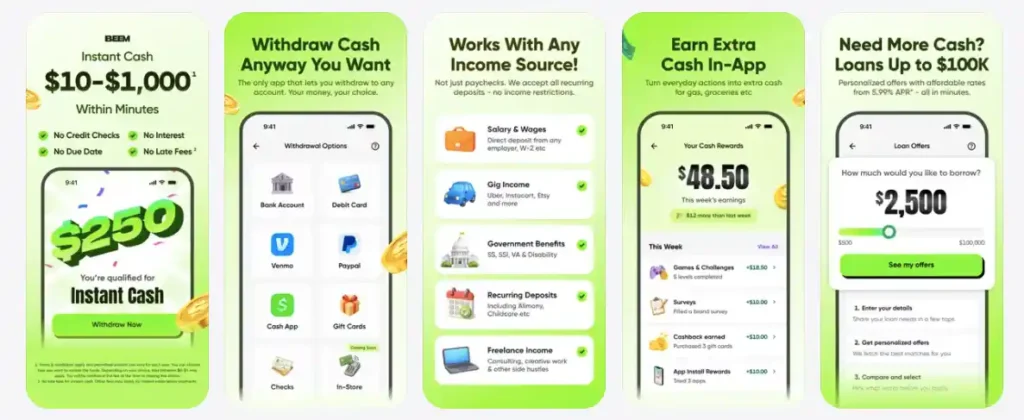
Yes. If unemployment benefits are depositing into your bank account, Beem can work for you. Everdraft™ does not ask whether you are employed, between jobs, or collecting benefits. It reads deposit activity.
And unemployment insurance deposits have characteristics that actually align well with what Everdraft™ evaluates: they arrive on a set schedule, they are a fixed amount, and they come from a verifiable government source.
But unemployment is temporary by nature, and that creates a different set of considerations than permanent income sources. Here is what you need to know.
The Unique Financial Profile of Someone on Unemployment
Unemployment is not just a different income source. It is a different financial state with its own pressures, timelines, and emotional weight. Understanding that profile is essential to understanding how Beem fits into it.
Income Dropped, Expenses Did Not
This is the core problem. When you lose a job, your income typically drops by 40 to 60 percent overnight. Unemployment insurance replaces a fraction of your former wages, capped at a state-determined maximum. In some states that cap is generous. In others, it barely covers rent.
Meanwhile, your mortgage or lease payment stays the same. Your car insurance premium stays the same. Your phone bill, your internet, your utilities, your groceries, your student loan minimums, none of these got the memo that your income just fell off a cliff. The gap between what unemployment pays and what your life costs is immediate, persistent, and often larger than people anticipate.
Every Dollar Is Already Allocated
People on unemployment do not have discretionary spending categories anymore. Every dollar of that benefit check is spoken for before it arrives. Rent takes the biggest piece. Groceries take the next.
Transportation for job interviews, healthcare if COBRA is too expensive, minimum debt payments to avoid collections, the math leaves nothing unassigned. When a $200 expense appears that was not in the mental budget, there is no line item to pull from.
The Timeline Creates Constant Pressure
Unemployment benefits are temporary. Most states provide 26 weeks of standard benefits, though some offer less. Extended benefits may be available during economic downturns, but they are not guaranteed. That clock starts ticking the day you file your claim, and every week that passes without a new job adds psychological pressure on top of financial pressure.
This timeline changes how people think about money. A freelancer with a slow month knows next month will probably be better. A retiree on Social Security knows the checks continue indefinitely. A person on unemployment knows there is a hard endpoint where the income stops entirely. That awareness makes every financial decision feel higher-stakes.

How Unemployment Deposits Appear to Everdraft™
State unemployment insurance systems pay benefits through direct deposit to a bank account or through a state-issued debit card. For Beem to work, the benefits need to land in a bank account you can link. Here is what Everdraft™ sees when it analyzes that account.
Weekly or Biweekly Government Deposits
Most states pay unemployment benefits weekly. Some pay biweekly. Either way, the deposits follow a fixed government schedule that does not vary. Once your claim is approved and you are certifying weekly, the payments arrive with mechanical consistency. This regular cadence creates a deposit velocity that Everdraft™ reads positively.
Fixed Benefit Amount
Your weekly unemployment benefit amount is calculated once based on your prior earnings and does not change week to week (unless you report partial earnings from part-time work).
If your state approved you for $450 per week, Everdraft™ sees $450 depositing every Tuesday (or whatever your state’s payment day is) for as long as you remain eligible. That level of deposit consistency is strong.
Clean Transaction Signature
Unemployment deposits are clearly labeled in bank statements. They arrive from a state agency via ACH transfer. There is no ambiguity about whether the deposit is income, a refund, a transfer, or a gift. Everdraft™ does not read labels, but the clean, recurring nature of these deposits is unmistakable in your transaction history.
Getting Started With Beem While on Unemployment
The signup process does not change based on your employment status. There is no field asking whether you are currently working. No checkbox for “unemployed.” No request for your separation notice or claim determination letter.
Link the Account Receiving Your Benefits
If your unemployment benefits deposit into a checking account at your bank, link that account to Beem. This is the account Everdraft™ will evaluate.
If your state pays benefits onto a government-issued debit card (like a ReliaCard, Way2Go card, or state-specific benefit card), those cards typically cannot be linked to third-party financial apps.
You will need to either transfer funds from the card to a bank account (most benefit cards allow this) or contact your state unemployment office to switch payment to direct deposit into your personal bank account.
What Happens if Your Account Has a Gap
If you were recently laid off, there may be a gap in your bank account between your last paycheck and your first unemployment deposit. State unemployment claims often take two to four weeks to process after filing. During that gap, your account shows reduced deposit activity.
Everdraft™ evaluates recent account history. If your account had strong activity before the gap and is now showing regular unemployment deposits, the system can work with that pattern. The transition period may temporarily affect your eligible amount, but as weekly unemployment deposits accumulate, your profile strengthens.
Download Beem and put your unemployment benefits to work.
The Expenses That Force Unemployed People Toward Cash Advances
Needing a cash advance while on unemployment is not about poor planning. It is about math. Here are the specific cost collisions that create the need.
COBRA Health Insurance Premiums
If your employer offered health insurance and you want to continue coverage through COBRA, the sticker shock is severe. COBRA requires you to pay the full premium that your employer was partially covering, plus a 2 percent administrative fee.
Average monthly COBRA premiums exceed $600 for individual coverage and $1,700 for family coverage in 2026. That single expense can consume your entire unemployment benefit in some states.
Many people on unemployment cannot afford COBRA but also cannot afford to be uninsured, particularly if they have ongoing medical needs. A cash advance does not solve this long-term, but it can cover the premium for one critical month while you transition to a marketplace plan or Medicaid.
Job Search Costs That Nobody Budgets For
Job hunting is not free. Professional clothing for interviews, gas or transit fare to get to them, resume printing, certification renewals, skills courses or license fees that a new position requires, laptop repairs when your personal computer becomes your primary job search tool.
These expenses are invisible in most financial discussions about unemployment but very real in the daily life of someone trying to find work.
Vehicle Maintenance During the Worst Possible Time
Your car does not know you lost your job. The check engine light, the bald tires, the expired inspection sticker, these show up on their own schedule. For job seekers who need their vehicle to reach interviews, a repair is not optional. Choosing between fixing the car and eating for the week is a decision nobody should have to make but unemployment forces regularly.
Childcare Gaps
If you had employer-subsidized childcare or a schedule that aligned with school hours, losing your job can disrupt your entire childcare arrangement. Picking up part-time childcare, paying for after-school programs, or covering babysitting costs during job interviews creates a new expense category at the exact moment your income dropped.
Rent Shortfalls in the First Month
The cruelest timing of unemployment is the gap between losing income and receiving benefits. You might be laid off on the 15th, file for unemployment on the 17th, wait three weeks for approval, and then wait another week for the first payment. Meanwhile, rent was due on the 1st. That first month’s shortfall is where many unemployed people fall behind on housing, and catching up from that hole while on reduced income is extremely difficult without a bridge.
Strategic Ways to Use Everdraft™ During Unemployment
A cash advance during unemployment is not free money. It is a tool that works best when used with intention.
Bridge the Claim Processing Gap
The period between your last paycheck and your first unemployment deposit is the most financially dangerous window. If your bank account has enough recent history for Everdraft™ to evaluate, an advance during this gap prevents the cascade of missed payments and late fees that makes recovery harder once benefits start flowing.
Cover One Specific Emergency, Not General Spending
Unemployment is not the time to take the maximum advance and spread it across general expenses. Identify the single most urgent cost, the COBRA premium, the car repair, the rent shortfall, and advance that amount specifically. This keeps the advance manageable and tied to a concrete outcome.
Preserve Your Credit Score
A missed rent payment can lead to eviction proceedings. A missed credit card minimum triggers late fees and credit score damage. A missed utility bill leads to service shutoffs and reconnection fees.
Each of these creates costs that exceed the original payment by a wide margin. Using an Everdraft™ advance to make a critical payment on time is often cheaper than dealing with the consequences of missing it.
Avoid Payday Lenders and Title Loans
Unemployment makes people desperate, and desperate people are who payday lenders target. A $300 payday loan at 400 percent APR turns into a debt that follows you long after you find a new job. Everdraft™ charges no interest. If you are considering a payday lender because you need cash before your next benefit payment, Beem is the alternative that does not create a second financial problem on top of the first.
What Happens When Unemployment Benefits Run Out
This is the question that sits in the back of every unemployed person’s mind and it directly affects how Beem works for you.
Everdraft™ Responds to Changing Account Activity
When your unemployment benefits expire, the deposits stop. Everdraft™ continuously evaluates your bank account activity. If deposits cease and no other income replaces them, your eligible advance amount will decrease over time to reflect the change in your financial profile. This is not a penalty. It is the system accurately reading that your income situation has shifted.
Transitional Income Keeps Your Access Active
If you begin part-time work, start freelancing, pick up gig jobs, or receive any other income that deposits into your linked bank account before unemployment expires, Everdraft™ sees that new activity and factors it in. Overlapping your transition from unemployment to new income with ongoing bank deposits maintains your eligibility through the career change.
Plan Your Advance Timing Around the Expiration Date
If you know your benefits expire in four weeks, taking a large advance in week three is riskier than taking a smaller one in week one. The closer you are to benefit exhaustion, the more conservative your advance strategy should be. The goal is to use Everdraft™ as a bridge to your next income source, not as a substitute for income that no longer exists.
State-by-State Realities That Affect the Math
Unemployment benefits vary dramatically by state, which means the financial pressure and the role a cash advance plays varies just as much.
High-Benefit States
States like Massachusetts, Washington, New Jersey, and Minnesota offer maximum weekly benefits above $800. Recipients in these states have more monthly income to work with, and a cash advance serves as a targeted tool for specific shortfalls rather than a general survival mechanism.
Low-Benefit States
States like Mississippi, Louisiana, Arizona, and Alabama cap weekly benefits below $300. At $275 per week, a recipient brings in roughly $1,100 per month before taxes. In these states, unemployment income alone rarely covers basic living expenses, and a cash advance from Everdraft™ can mean the difference between staying housed and falling behind.
States With Waiting Weeks
Some states impose a one-week waiting period before benefits begin. During that unpaid week, you have zero unemployment income despite having filed a valid claim. A cash advance during the waiting week prevents the early financial damage that makes the rest of the unemployment period harder to navigate.
States With Shorter Benefit Durations
While 26 weeks is standard, several states offer fewer weeks. North Carolina, for example, has provided as few as 12 weeks during certain periods. Shorter durations compress the financial pressure and make every week of benefits more precious, which in turn makes strategic use of a cash advance more important.
Start using Beem while your benefits are active.
People Also Ask
Can you get a cash advance if your only income is unemployment?
Yes. Beem’s Everdraft™ evaluates your bank account activity, and unemployment benefit deposits qualify as consistent, recurring income. You can access up to $1,000 without employment verification or a credit check.
Does Beem require you to be employed?
No. Beem does not ask about your employment status at any point. Whether you are employed, unemployed, self-employed, or retired, Everdraft™ bases eligibility entirely on your linked bank account deposit activity and spending patterns.
Will a cash advance affect my unemployment benefits?
No. State unemployment insurance programs do not count cash advances as earned income. An Everdraft™ advance is not wages and does not get reported to your state unemployment office. It has no impact on your weekly benefit amount or continued eligibility.
What if I receive unemployment on a government debit card?
Most state-issued benefit cards cannot be linked directly to Beem. You can either transfer funds from your benefit card to a personal bank account or contact your state unemployment office to switch your payment method to bank direct deposit. Once benefits are depositing into a standard bank account, Everdraft™ can evaluate your activity.
What happens to my Everdraft™ access when unemployment expires?
When unemployment deposits stop, Everdraft™ adjusts your eligible amount based on your current bank account activity. If new income (from a job, gig work, or other source) replaces the unemployment deposits, your eligibility continues based on that new activity. If no income replaces it, your eligible amount will decrease over time.
How quickly can I get a cash advance on unemployment through Beem?
Once your bank account is linked and Everdraft™ has enough deposit history to evaluate, you can request an advance and receive funds based on your bank’s processing speed. If your unemployment deposits have been flowing for several weeks, the system has a solid activity pattern to work with.
The Bottom Line
Unemployment is temporary. The bills it leaves behind are not. Every week on reduced income creates financial friction that compounds, from late fees to credit damage to the stress of choosing which essential expense to skip.
Beem’s Everdraft™ gives you a tool to manage that friction without taking on predatory debt or draining whatever small reserves you have left.
Your unemployment deposits are real income on a real schedule, and Everdraft™ treats them that way. Use it strategically, keep your advances tied to specific needs, and focus your energy on what matters most, finding the next chapter.